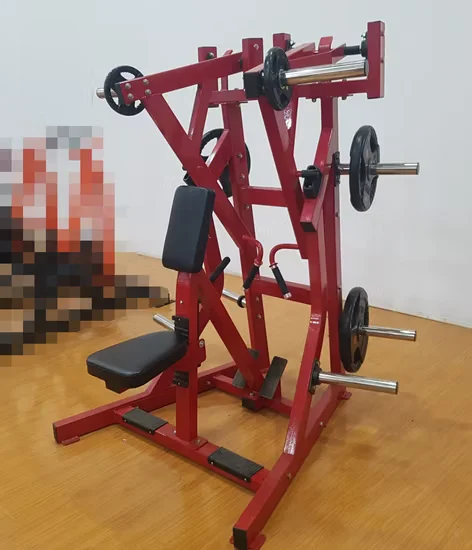
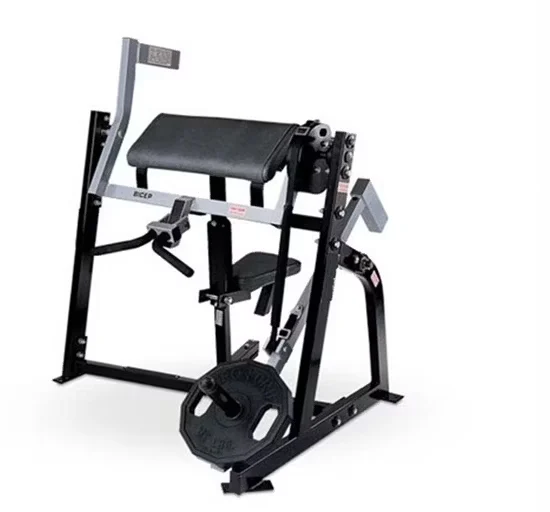
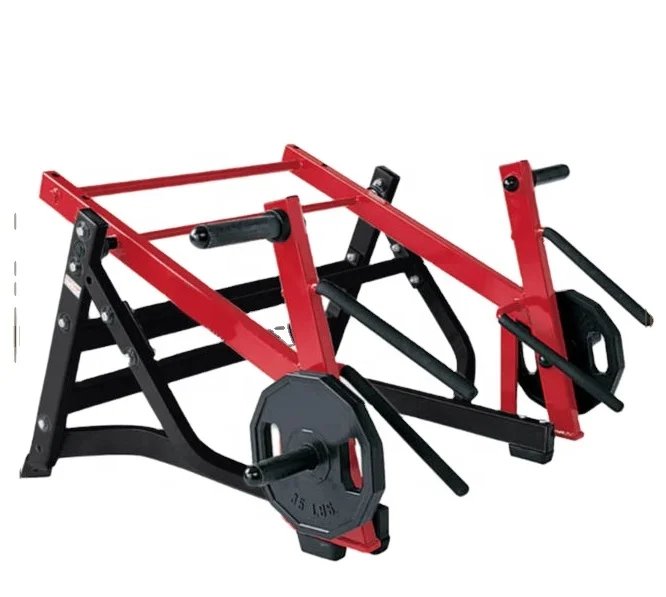
Whisper-Quiet Resistance — Magnetic damping and sealed bearing guides keep operational noise below audible thresholds even under continuous commercial use.
Technical Specifications
| Parameter | Value |
|---|---|
| Designation | 5021 |
| Product Type | 4-Way Neck Machine |
| Material | Steel |
| Product Dimensions | 90014001600mm |
| Net Weight | 130kg |
| Max User Weight | 180kg |
| Resistance Type | Weight stack with guided rail |
| Exercise Part | Neck |
| Age Group | Adult |
| Gender | Unisex |
| Certification | ISO 9001, CE |
| OEM/ODM | Available |
| Production Capacity | 500 PCS/Month |
Application Suitability
| Deployment Scenario | Typical Use |
|---|---|
| Professional gym and club strength zone | Daily high-frequency neck conditioning for general membership |
| Community fitness center training area | Supervised neck strengthening sessions across varied user profiles |
| Corporate wellness and rehabilitation room | Targeted cervical muscle work under trainer or therapist guidance |
| Sports performance training center | Athlete-specific neck stability and injury-prevention programming |
| Hotel fitness center strength corner | Compact footprint deployment for guest self-service resistance training |
Why Frame Rigidity Determines Whether a Neck Machine Stays on the Floor
A 130kg steel chassis eliminates the lateral sway that causes users to abandon cervical training mid-set.
Neck training equipment occupies a difficult position in any commercial strength zone. Users load it with focused, repetitive motion in four directions — flexion, extension, and bilateral lateral flexion — and any frame flex translates directly into perceived instability. When a member feels the upright shift during a heavy extension set, they do not adjust the pin; they walk away. I have seen lightweight neck machines pulled from gym floors within a season because the weld geometry could not handle the oscillating load path [NEED_CITE: frame deflection tolerance for isolated cervical training equipment]. The 5021 addresses this through a reinforced steel frame with gusseted joints at every load-bearing intersection, ensuring the commercial 4-way neck machine strength equipment remains planted regardless of stack position or user body weight.
Where Neck Training Fits in a Professional Strength Layout
Cervical conditioning is a niche discipline that sits between rehabilitation and performance work. This 4-way neck machine covers all four primary movement planes in a single station, replacing the need for separate flexion and extension units. In a professional gym or club strength zone, it typically anchors a dedicated accessory or corrective exercise area alongside cable columns and functional trainers. The 900 by 1400mm footprint keeps it compact enough for tight corridor placements while the 1600mm height ensures overhead clearance compatibility with standard commercial ceiling heights. Users ranging from rehabilitation clients to contact-sport athletes access the same equipment by adjusting the stack pin and pad position, making the commercial 4-way neck machine strength equipment a high-utility asset despite its specialized focus.
Continuous Use Cycles and Floor Deployment Requirements
A neck machine in a busy club environment may see thirty to fifty sets per day across varied user weights, which concentrates wear on the guide rods, selector pin, and cable routing hardware. The 130kg net weight provides a stable base that does not require floor anchoring on standard concrete slabs, but rubber isolation pads are recommended to prevent micro-migration under repeated eccentric loading [NEED_CITE: vibration transmission for static resistance equipment on suspended floors]. Deployment on upper floors above occupied spaces demands attention to weight-stack return noise — the cushioned stop mechanism reduces plate-on-plate impact at set completion. Adequate lateral clearance on both sides accommodates users loading and unloading the head pad, and the unit should sit outside high-traffic walkways to avoid accidental contact during loaded sets.
Reading the Load Path: Weight Stack, Bearings, and Rail Geometry
The 4-way resistance adjustment mechanism routes force through a single weight stack that serves all four movement planes via directional cable routing. Commercial-grade sealed bearings at each pivot point reduce friction accumulation that would otherwise create a gritty, inconsistent feel as the machine ages. The guided rail system keeps plates aligned during rapid direction changes — a detail that matters because neck training involves short-range, controlled repetitions where any lateral plate sway is immediately perceptible to the user. The steel frame transmits load directly to the floor through a wide base footprint rather than relying on outrigger stabilizers, which is why the 5021 achieves its stability through mass distribution rather than added bracing. This engineering approach keeps maintenance intervals predictable: sealed bearings need no scheduled lubrication, and the cable path contains no exposed tensioners that drift out of calibration.
The Cost of Underspecifying Cervical Training Equipment
Facilities that install lightweight neck machines often face a predictable failure sequence. The selector mechanism jams within months as guide rods accumulate uneven wear from off-axis loading. Users begin reporting inconsistent resistance between left and right lateral flexion, which erodes confidence in the equipment and the facility’s maintenance standards. In sports performance centers, unreliable neck training hardware creates programming gaps — coaches cannot prescribe progressive overload on equipment that delivers variable resistance curves. The decision to replace an entire bank of underspecified units carries procurement and downtime costs that far exceed the initial price differential [NEED_CITE: equipment replacement cycle cost analysis for commercial resistance machines].
Why This Line Addresses the Gaps
The 5021 ships as part of a complete commercial cardio and strength family, meaning a facility sourcing multiple disciplines from one production line gains consistent build quality and finish across the floor. The OEM scope covers logo application, frame color, and pad material selection, allowing operators to align the equipment visually with existing branding. Every unit undergoes durability verification under continuous load cycling before dispatch, and the full documentation package — including noise test records and weld inspection reports — travels with the shipment. For facilities planning a new strength zone or replacing aging cervical equipment, the 3D layout service accounts for sightline positioning so the neck station integrates naturally into member traffic flow rather than sitting isolated in a corner. Technical support operates around the clock for commissioning questions or warranty coordination [NEED_CITE: commercial strength equipment OEM scope and documentation standards].
Documentation & Test Records
- CE declaration of conformity covering the 5021 weight-stack mechanism and structural frame
- EN 957 test report validating load-bearing capacity and pinch-point clearance
- ISO 9001 certificate confirming manufacturing quality system across all production stages
- Noise level test record documenting plate-return acoustics under repeated cycling
- Durability test log covering guide rail wear and cable fatigue under continuous operation
- Spare parts list with exploded assembly diagrams for selector pin, bearings, and cables
Installation, Commissioning & Maintenance
- Position with minimum 600mm lateral clearance on each side for safe head-pad entry and exit
- Place rubber isolation pads beneath the 900 by 1400mm base to dampen stack-return vibration on upper floors
- Verify floor levelness before final placement; shim if necessary to prevent frame twist under load
- Inspect cable tension and selector pin engagement during initial commissioning before opening to members
- Schedule sealed bearing inspection and cable path lubrication review at quarterly maintenance intervals
- Wipe down head pad and adjustment mechanisms daily to prevent sweat-induced corrosion on contact surfaces
Planning Your Neck Station Deployment
Provide your strength zone square footage and adjacent equipment list to receive a 3D layout showing optimal sightline placement and member flow around the 5021. Specify average daily set volume so the production team can confirm guide rail and bearing specifications match your usage intensity. Identify the deployment floor and any occupied spaces directly below to determine whether additional vibration isolation is warranted.
Frequently Asked Questions
Q: How does a 4-way neck machine differ from single-direction equipment?
A: Single-direction machines train only flexion or extension, requiring users to move between stations for complete cervical work. The 4-way design routes one weight stack through four cable paths, covering flexion, extension, and both lateral directions from a fixed seated position. This consolidation saves floor space and reduces transition time during programmed sessions, making the commercial 4-way neck machine strength equipment more efficient for high-traffic strength zones.
Q: Why does frame rigidity matter for neck training equipment?
A: Neck exercises involve small, controlled movements where users are acutely sensitive to any frame movement or vibration. A rigid 130kg steel chassis prevents the lateral sway and resonance that lighter frames produce under load. When the frame does not deflect, resistance feels consistent across all four directions, which builds user confidence and keeps the equipment in active rotation rather than abandoned by membership.
Q: What maintenance does the resistance mechanism require?
A: The sealed bearing pivots and guided weight-stack rail are designed for extended service intervals without scheduled lubrication. Quarterly inspection should verify cable tension, selector pin engagement, and plate alignment along the guide rods. Daily wiping of the head pad and adjustment contact points prevents sweat accumulation that accelerates wear on moving components and hardware finishes.
Q: What OEM and ODM customization options are available?
A: Customization covers frame color selection, logo application on uprights and shrouds, and pad material or upholstery specification. Console or data-interface modifications are not applicable to this mechanical strength unit. Minimum order quantities remain flexible for facility rollouts, and the production team provides finish samples before full-run commitment to ensure color and texture alignment with existing equipment.