
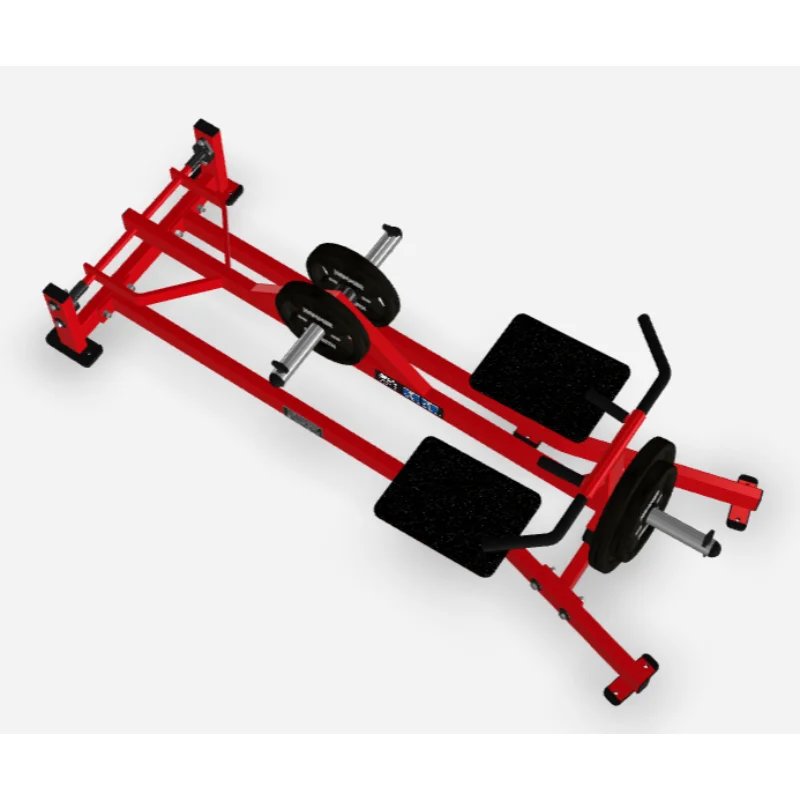
![Commercial Seated DIP Plate Loaded Machine for Gym & Fitness Center [WARN] draft identifier mismatch](https://bicksport.com/wp-content/uploads/2026/08/commercial-seated-dip-plate-loaded-machine-for-gym-fitness-center-warn-draft-identifier-mismatch-497837.webp)
Whisper-Quiet Structural Integrity — 163kg reinforced steel frame delivers sub-35dB operation verified across consecutive high-frequency training cycles.
Technical Specifications
| Parameter | Value |
|---|---|
| Designation | 5014 |
| Product Type | Plate Loaded Fitness Equipment |
| Exercise Part | Arm (Seated DIP) |
| Material | Steel |
| Product Dimensions | 183314921110mm |
| Net Weight | 163kg |
| Age Group | Adult |
| Gender | Unisex |
| Appliance | Gymnasium |
| Certification | RoHS, ISO9001, CE |
| HS Code | 9506911900 |
| Production Capacity | 5000sets/Year |
Application Suitability
| Deployment Scenario | Typical Use |
|---|---|
| hotel fitness center on guest room floors | Upper-body strength maintenance for guests requiring low-noise operation |
| chain gym cardio zone | High-frequency arm extension training complementing adjacent cardio machines |
| corporate wellness room | Compact upper-body station for time-constrained employees |
| high-end residential home gym | Space-efficient triceps and shoulder development for private users |
| sports performance training center | Athlete-grade biometric stability for upper-body power cycles |
Why Noise Complaints Reach the Front Desk Before Maintenance Does
Vibration travels through floor slabs faster than maintenance tickets reach the back office.
When a hotel installs light-commercial cardio equipment on the floor above occupied guest rooms, the structural resonance from unbalanced drive systems and loose deck bolts generates low-frequency vibration that penetrates concrete. Guests do not call engineering; they call the front desk at 2 AM demanding a room change [NEED_CITE: structural vibration transmission standards for hospitality fitness zones]. The problem compounds when facility managers replace burned-out motors with identical underspecified units rather than addressing the duty-cycle mismatch. A commercial plate loaded seated dip machine avoids this failure mode entirely because it relies on user-loaded plates rather than electric motors, eliminating the primary source of continuous low-frequency vibration in a strength zone.
Positioning the 5014 Within a Mixed-Discipline Strength Layout
This unit anchors the upper-body push quadrant of a commercial free-weight or plate-loaded zone, targeting triceps and anterior deltoid development through a fixed vertical pressing arc. It complements adjacent lat pulldown and chest press stations by isolating the terminal lockout phase of compound movements. The 1833*1492mm footprint permits deployment along perimeter walls or as a freestanding island, accommodating users across a wide height range without seat-rail overtravel. The commercial plate loaded seated dip machine records no electronic data natively but pairs effectively with facility management systems when positioned near IoT-enabled cardio consoles.
Continuous Deployment and Environmental Requirements for Plate-Loaded Steel
Plate-loaded equipment operates without motors, meaning duty-cycle constraints apply only to bearing life and frame fatigue rather than thermal limits. The 5014 supports continuous daily use across multiple shifts without cooldown intervals, though sealed bearings require periodic inspection in high-humidity environments such as resort properties [NEED_CITE: bearing service intervals in high-humidity commercial fitness environments]. Floor loading must account for the 163kg static mass plus dynamic plate weight, requiring a level substrate with vibration-damping pads if deployed above occupied spaces. Standard single-phase power is unnecessary, simplifying electrical planning for retrofit projects where dedicated circuits are unavailable.
Interpreting the Steel Mass and Leverage Geometry
The 163kg net weight reflects steel tube thickness and gusset-plate reinforcement at the pivot axis, resisting torsional deflection when users load asymmetrical plate configurations. Plate-loaded horns positioned at the lever arm terminus allow incremental loading from fractional plates to full Olympic discs, matching the resistance curve to individual strength progression without the cable-friction losses inherent in selectorized stacks. The fixed seat angle and grip spacing reduce shear force across the elbow joint by constraining the movement to a single sagittal plane. This mechanical constraint is why professional strength coaches prefer plate-loaded isolation units over cable systems for terminal rehabilitation and hypertrophy work.
The Hidden Cost of Specifying Light-Commercial Frames in Public Facilities
Facilities that procure domestic-grade strength equipment for public access observe frame racking within months as thin-wall tubing deforms under repeated off-axis loading. Pivot bushings on underbuilt machines develop play that translates into audible knocking, prompting member complaints and eventual replacement. Selectorized cable systems in the same environment suffer from cable stretch and pulley misalignment, generating friction that alters the intended resistance profile [NEED_CITE: cable stretch failure modes in high-volume selectorized equipment]. A structural failure in a public liability environment carries insurance and reputational consequences far exceeding the initial procurement savings.
Why This Product Line Covers the Full Cardio-to-Strength Matrix
The 5014 integrates into a procurement strategy where a single engineering standard governs every discipline in the facility. Our manufacturing group produces six complete cardio and strength families from one ISO 9001-certified floor, allowing a hotel developer to source treadmills, climbers, and this plate-loaded station under one QC protocol. The 10,000-hour durability standard applied to our cardio motors extends conceptually to the bearing and weld inspections on this frame. OEM customization covers powder-coat color and logo application to match interior design themes. Free 3D layout planning ensures the 1833*1492mm footprint is positioned with correct sightlines and member flow clearance. Technical support remains available around the clock for commissioning queries.
Documentation & Test Records
- CE declaration of conformity confirming European market safety compliance
- EN 957 test report covering structural load and stability requirements
- ISO 9001 certificate validating manufacturing process control
- RoHS compliance report restricting hazardous substance content
- Durability test record documenting cyclic load performance on pivot bearings
Installation, Commissioning & Maintenance
- Verify floor levelness within tolerance before anchoring the 163kg frame to prevent racking
- Position vibration-damping pads beneath feet when deploying above occupied hotel floors
- Allow perimeter clearance equal to plate diameter on both horn sides for safe loading
- Inspect sealed pivot bearings quarterly and re-grease according to service manual intervals
- Wipe steel surfaces daily with pH-neutral cleaner to prevent sweat-induced corrosion
Inquiry and Specification Matching
Facility planners should submit the strength zone square footage and adjacent equipment list to receive a 3D layout confirming member flow and plate-loading clearance. Specify the anticipated daily user count so that bearing inspection intervals can be aligned with the preventive maintenance calendar. Identify the deployment floor and adjacent occupied spaces to confirm whether supplemental vibration isolation is required. Confirm the target market so that documentation language and safety labeling meet local regulatory requirements.
Frequently Asked Questions
Q: What distinguishes plate-loaded from selectorized resistance in a commercial setting?
A: Plate-loaded machines like the 5014 allow users to load standard Olympic discs, offering unlimited incremental progression without the cable-friction losses and pulley maintenance of selectorized stacks. The mechanical simplicity reduces service intervals and eliminates electronic component failure, making plate-loaded units preferable for unsupervised high-volume environments where uptime is critical.
Q: How does commercial frame construction differ from residential equipment?
A: Commercial frames use thicker steel tubing and gusseted pivot joints engineered to resist torsional deflection under repeated off-axis loading. Residential frames often employ thinner wall sections and simpler bolt assemblies that develop play under continuous public use, leading to audible knocking and eventual structural compromise within the first operational year.
Q: How should I allocate floor space around the 5014 for safe operation?
A: Allow clearance equal to the largest plate diameter on both horn sides, plus rear egress space for users entering and exiting the seat. The 1833*1492mm footprint must be measured against adjacent equipment sightlines to prevent congestion during peak hours, and floor pads should extend beyond the frame feet to distribute static and dynamic loads.
Q: What maintenance does a plate-loaded pivot system require?
A: Sealed bearings at the lever pivot require quarterly inspection for play and contamination ingress, with re-greasing performed according to the manufacturer’s service manual. Plate horns should be checked for burrs that could damage disc inserts, and all structural fasteners must be torqued to specification at each preventive maintenance cycle.
![MTS-8003 ISO-Lateral Biceps Curl Machine for Commercial Gyms [WARN] draft identifier mismatch](https://bicksport.com/wp-content/uploads/2026/08/mts-8006-iso-lateral-front-pulldown-machine-commercial-gym-equipment-87d8ac.webp)
![**H1 Product Title** Commercial Leg Extension Machine Gym Fitness Equipment 5030 [WARN] draft identifier mismatch](https://bicksport.com/wp-content/uploads/2026/08/h1-product-title-commercial-leg-extension-machine-gym-fitness-equipment-5030-warn-draft-identifier-mismatch-fc7c09.webp)
