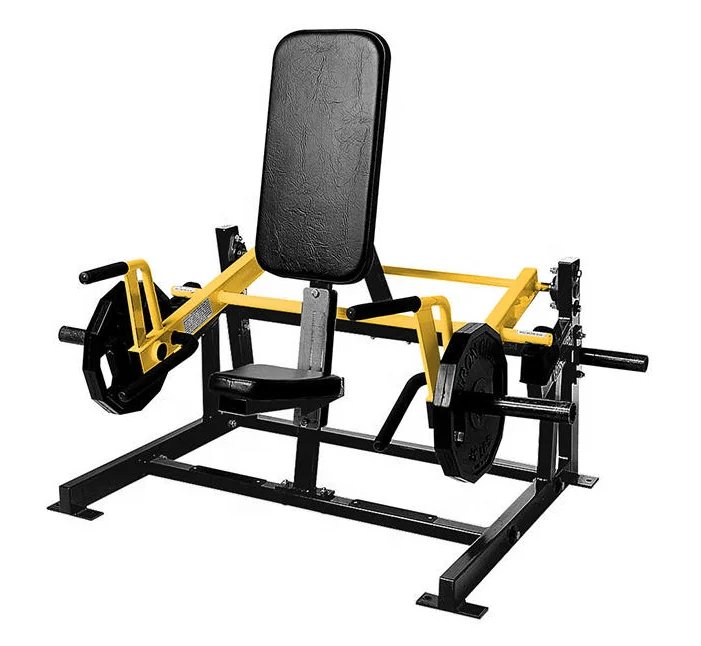
![**H1 Product Title** Commercial Leg Extension Machine Gym Fitness Equipment 5030 [WARN] draft identifier mismatch](https://bicksport.com/wp-content/uploads/2026/08/h1-product-title-commercial-leg-extension-machine-gym-fitness-equipment-5030-warn-draft-identifier-mismatch-fc7c09.webp)
Engineered for Stability — Reinforced steel frame and biomechanical pivot alignment eliminate flex under heavy commercial loads, ensuring a smooth and safe resistance curve for users of all levels.
Technical Specifications
| Parameter | Value |
|---|---|
| Designation | 5030 |
| Product Type | Leg Extension Machine |
| Exercise Part | Leg |
| Age Group | Adult |
| Gender | Unisex |
| Material | Steel |
| Product Dimensions | 144016951481mm |
| Net Weight | 103kg |
| Certification | ISO 9001, CE |
Application Suitability
| Deployment Scenario | Typical Use |
|---|---|
| Commercial Gymnasiums | Heavy-duty quadriceps isolation for high-traffic strength zones |
| Community Fitness Centers | Durable, adjustable lower-body training for diverse user groups |
| Hotel Fitness Centers | Compact, effective leg strengthening for guest wellness areas |
| Sports Performance Training | Controlled knee extension work for athlete rehabilitation and conditioning |
Why Frame Flex Under Load Sabotages Knee Safety and Biomechanics
A stable platform is the foundation of effective leg isolation.
When a commercial leg extension machine begins to wobble under heavy stack loads, the user’s body instinctively recruits stabilizing muscles to compensate for the shifting base. This defeats the purpose of the exercise and significantly increases the risk of knee strain. I have seen budget-grade frames twist slightly at the weld points, causing the pad alignment to drift mid-set. This forces the knee joint out of its natural pivot axis, creating shear forces that no amount of cushioning can fix [NEED_CITE: biomechanical impact of frame instability on joint shear force].
Defining the Commercial Leg Extension Machine’s Role in the Strength Zone
This commercial leg extension machine gym fitness equipment is designed to provide pure, isolated quadriceps engagement, from the rectus femoris down to the vastus medialis. In a comprehensive gym layout, it complements compound movements like squats and leg presses by allowing targeted fatigue without systemic central nervous system loading. It is best positioned in the dedicated isolation or rehabilitation corner of a high-density strength area. The multi-position thigh pads and adjustable backrest accommodate a wide range of limb lengths, ensuring that both a 150cm and a 195cm user can align their knee precisely with the machine’s pivot point.
Continuous Uptime and Environmental Demands for Strength Equipment
While cardio machines are judged by motor duty cycles, strength equipment like this must withstand thousands of high-torque repetitions and aggressive weight drops. The 103kg steel footprint provides the necessary inertia to remain planted during intense, heavy-load sets without requiring excessive floor anchoring. However, the floor itself must be level and capable of supporting concentrated static loads; a slight tilt will cause the weight stack to drag unevenly on the guide rods, leading to premature cable wear. For facilities on upper floors or shared residential spaces, the machine’s solid steel construction and controlled movement path minimize the transmission of impact vibration when the weight stack returns to rest. Deployment in high-humidity environments requires routine inspection of the upholstery stitching and the pivot bearings to prevent sweat-induced corrosion [NEED_CITE: structural fatigue analysis of commercial strength equipment welds].
Inside the Steel and Pivot Engineering
The choice of steel grade and tube thickness in the 144016951481mm frame is what separates commercial durability from home-use obsolescence. A reinforced frame resists the lateral torque generated when a user pushes maximally against the shin pad. The critical component is the pivot mechanism; high-quality sealed bearings at the articulation point ensure a friction-free arc that matches the natural biomechanics of the knee. If the pivot is sloppy, the shin pad will arc unnaturally, pulling the tibia forward and placing stress on the ACL. Furthermore, the high-density upholstery must resist compression set. After months of heavy use, cheap foam bottoms out, transferring the load directly to the tibia and causing discomfort that drives members away. The multi-position adjustment mechanisms must lock securely, preventing any slippage during a set.
The Hidden Costs of Specifying Budget-Grade Strength Equipment
The decision to save on the initial capital expenditure by selecting a lighter, less rigid leg extension machine often results in compounded losses. A frame that flexes under 80kg of resistance will develop stress fractures at the weld points within the first year of continuous commercial use. The downtime required to replace the unit, coupled with the potential for member injury and subsequent liability, far outweighs the initial savings. Furthermore, if the pivot bearings are not sealed, sweat and dust infiltration will cause the arm to grind, generating noise complaints and requiring frequent, disruptive maintenance. Facility managers who ignore the density of the upholstery pads find themselves replacing them annually as they flatten and tear, turning a capital asset into a recurring consumable expense [NEED_CITE: total cost of ownership for commercial gym strength equipment].
Why This Product Line Addresses Facility-Level Pain Points
The 5030 is built on the same engineering philosophy that resolved the low-frequency resonance issues in our five-star hotel cardio deployments. We apply that same rigor to static load-bearing and pivot precision. The reinforced steel frame is tested for long-term structural integrity, ensuring it does not develop a "rattle" after a few thousand cycles. The biomechanical pivot alignment is verified to minimize shear force, protecting users’ knees during heavy sets. As part of a full-series commercial offering, sourcing your leg extension from the same line as your treadmills and ellipticals simplifies maintenance protocols and aesthetic consistency. We provide a free 3D strength-zone layout that considers the 144016951481mm footprint, ensuring adequate clearance for loading plates and user entry/exit, optimizing member flow and sightlines across the entire gym floor.
Documentation & Test Records
- CE declaration of conformity for commercial strength equipment
- EN 957 test report verifying structural stability and safety
- ISO 9001 certificate covering manufacturing process control
- Noise level test report for pivot mechanism and weight stack return
- Durability test record for frame welds and cable fatigue
- Upholstery material specification and wear resistance data
Installation, Commissioning & Maintenance
- Position the 144016951481mm frame on a level, high-density rubber floor mat to dampen vibration.
- Verify that all pivot bearings and adjustment pins are fully seated and move without friction before first use.
- Ensure adequate clearance (minimum 1000mm) around the machine for safe weight plate loading and user approach.
- Inspect the high-density thigh and back pads monthly for stitching integrity and foam compression.
- Lubricate the weight stack guide rods and pivot points every six months to maintain a smooth resistance curve.
- Wipe down the steel frame and upholstery with non-corrosive cleaner after every shift to prevent salt buildup.
Specifying the Right Strength Equipment for Your Facility
Provide your strength zone square footage and current equipment list to receive a 3D layout that integrates this leg extension machine into the optimal member flow. Specify your expected daily user volume so we can confirm the frame and cable durability match your operational demands. If the machine will be deployed on an upper floor or in a noise-sensitive environment like a hotel or luxury apartment, confirm the floor construction so we can advise on vibration damping. Finally, let us know if you require specific upholstery colors or frame finishes to match your existing commercial interior design scheme.
Frequently Asked Questions
Q: How does the pivot point alignment affect knee safety during leg extensions?
A: The pivot point must align precisely with the user’s knee joint axis. If it is misaligned, the shin pad will pull the tibia forward or push it backward during the extension, creating dangerous shear forces on the ACL and meniscus. The 5030’s adjustable pivot and multi-position pads ensure this alignment is maintained for users of different limb lengths.
Q: What is the difference between commercial-grade and home-use upholstery?
A: Commercial-grade upholstery uses high-density foam that resists "compression set," meaning it does not permanently flatten after thousands of repetitions. The outer material is also treated to resist sweat absorption and tearing, which is critical in a shared facility. Home-use pads will break down quickly under high-frequency commercial loads.
Q: How often should the pivot bearings be maintained in a high-traffic gym?
A: In a facility with hundreds of daily users, the pivot bearings should be inspected and lubricated at least every three to six months. Sealed bearings require less frequent attention but should still be checked for grit or sw*ent indicates immediate maintenance is required to prevent joint strain.
Q: What are the space requirements and floor loading considerations for installation?
A: The machine requires a footprint of 144016951481mm, plus a safety perimeter of at least 1000mm on all sides for user access and plate loading. Because the unit weighs 103kg and supports heavy external loads, the floor must be structurally sound and level to prevent the weight stack from dragging on the guide rods.