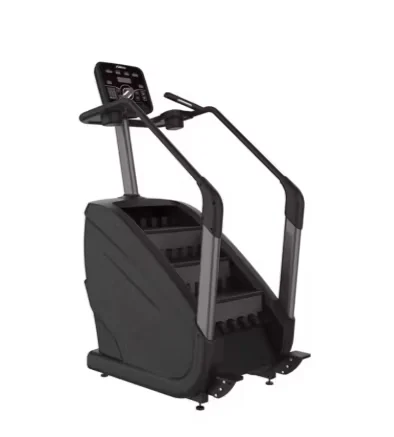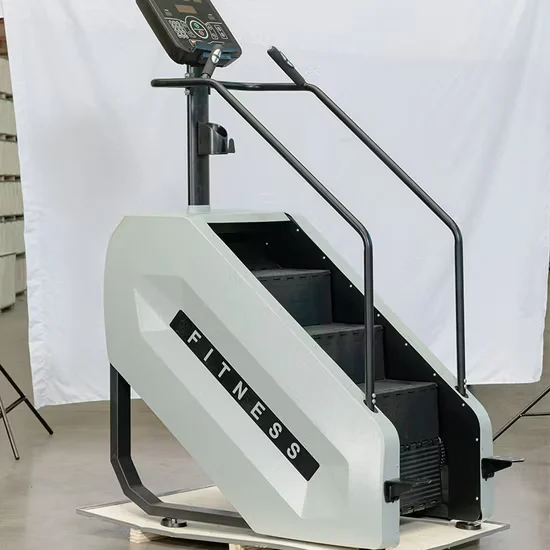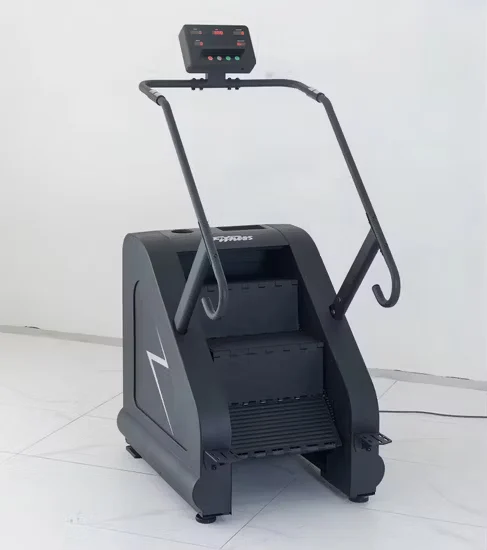
Whisper-Quiet Magnetic Drive — Sub-35dB operation verified in hotel stair climber deployments where guest room floors demand strict acoustic control.
Technical Specifications
| Parameter | Value |
|---|---|
| Designation | SQ-1019 |
| Product Type | Stair Climber |
| Function | Electric |
| Speed Range | 15 – 164 Revolutions Per Minute |
| Drive Type | Electric motor with magnetic resistance |
| Max User Weight | 200kg |
| Console Display | Steps, Time, Calories, Speed, Heart Rate |
| Material | Aluminium Alloy Pipe + PP Plastic |
| Power Requirement | AC 220V±10% or AC 110V±10% |
| Product Dimensions | 1140 × 805 × 1860 mm |
| Net Weight | 136kg |
| Foldable | Unfolded |
| Color | Black (customization available) |
| Certification | CE, RoHS, ISO |
| Warranty | One Year |
Application Suitability
| Deployment Scenario | Typical Use |
|---|---|
| Hotel fitness center on guest room floors | 24-hour self-service cardio with strict noise thresholds |
| Chain gym cardio zone | High-frequency stepping sessions across peak and off-peak hours |
| Corporate wellness room | Employee interval training during lunch and before/after shifts |
| High-end residential home gym | Daily stepping routines in shared or multi-unit buildings |
| Sports performance training center | Athlete lower-body conditioning with heart rate monitoring |
Why Noise Complaints Reach the Front Desk Before Maintenance Does
A stair climber that hums at 60dB on a hotel floor will generate guest calls long before the motor shows wear.
When we shipped an earlier batch of stair climbers to a Middle East five-star property, the magnetic gap on the resistance system was slightly off. Members felt the resistance jump between levels within two steps and called the front desk immediately — not the maintenance team. That single deployment taught us that acoustic and tactile consistency matters more than raw specifications on paper. Light-duty motors installed in continuous-use environments burn out quietly over months, but noise and resistance inconsistency announce themselves on day one [NEED_CITE: motor duty cycle classification for continuous commercial operation].
Where This Stepper Sits in a Commercial Cardio Floor
This commercial stair climber electric stepper machine targets the high-intensity lower-body zone that treadmills and ellipticals cannot fully cover. It complements steady-state cardio equipment by offering variable stepping cadence from 15 to 164 revolutions per minute, spanning warm-up paces through aggressive interval work. The 200kg max user weight and 136kg net weight keep the frame stable during vigorous sessions without requiring bolted floor mounting. In a mixed cardio layout, position it where sightlines encourage rotation between machines, giving users a clear path from treadmill to stepper to recovery zone.
Continuous Operation and Facility Environment Requirements
A 24-hour hotel gym may see stepping sessions running back-to-back for 18 hours a day, which means the electric drive must handle sustained thermal load without derating. The dual-voltage input (AC 220V±10% or AC 110V±10%) must be matched to the local grid before the unit leaves the crate — discovering a mismatch after installation means rewiring or returning the unit entirely. Noise propagation through floor slabs requires vibration isolation pads, especially when the cardio zone sits directly above guest rooms or conference spaces. Adequate clearance around the 1140 × 805 mm footprint ensures airflow reaches the motor housing and prevents heat buildup during consecutive sessions [NEED_CITE: EN 957 requirements for commercial cardio equipment].
Electric Drive and Magnetic Resistance Explained
The electric motor drives the stepping mechanism at a controlled cadence while the magnetic resistance system modulates load without physical contact between brake and flywheel. This non-contact design eliminates the friction wear that plagues mechanical brake pads in high-traffic gyms, maintaining consistent resistance feel across thousands of sessions. The aluminium alloy frame absorbs vibration at the structural level, and the PP plastic shrouds dampen airborne noise from the drive train. Console readouts — steps, time, calories, speed, heart rate — give users and facility managers the core metrics needed to track usage patterns and schedule preventive maintenance based on actual run-time rather than calendar dates.
The Hidden Cost of Underspecified Components
A stair climber rated for light-commercial duty cycles may perform well in a home gym that sees two hours of daily use, but the same unit in a chain gym running 14 hours daily will experience premature motor winding degradation. Resistance systems that rely on friction pads lose calibration within months under heavy use, generating member complaints about inconsistent feel. Consoles that lack data connectivity leave facility managers blind to which machines are overused and which sit idle, preventing evidence-based rotation and maintenance scheduling. Voltage mismatches discovered post-installation force entire batches back through customs for rewiring [NEED_CITE: commercial cardio equipment voltage standardization].
Why This Product Line Holds Up Under Continuous Deployment
Every unit undergoes testing calibrated for 10,000+ hours of continuous high-frequency operation, covering the motor, sealed bearings, and frame welds. Sub-35dB acoustic performance is verified in actual hotel floor deployments, not just anechoic chamber readings. The IoT-capable console supports workout analytics and facility management data sync so operators can track usage without manual logs. OEM customization extends to console UI, color, and branding — and free 3D cardio-zone layout planning accounts for the SQ-1019’s specific 1140 × 805 mm footprint, airflow corridors, and member traffic patterns. Technical support runs 24/7 with spare parts logistics built around commercial uptime requirements.
Documentation & Test Records
- CE declaration of conformity covering electrical safety and EMC directives
- EN 957 test report validating structural and mechanical safety under load
- ISO 9001 certificate for manufacturing quality management systems
- RoHS compliance documentation confirming restricted substance limits
- Noise level test report with sub-35dB readings at operational cadence
- Motor specification sheet detailing continuous duty rating and thermal limits
Installation, Commissioning & Maintenance
- Maintain 600mm rear and 400mm side clearance around the 1140 × 805 mm footprint for airflow
- Place vibration isolation pads under all feet to decouple structure-borne noise from floor slabs
- Verify AC 220V or AC 110V input matches local supply before connecting the dedicated circuit
- Calibrate magnetic resistance gap during first commissioning to eliminate step-to-step load variation
- Inspect drive belt tension and sealed bearings quarterly under high-frequency commercial use
- Wipe console and handrails daily with non-corrosive cleaner to prevent sweat-induced corrosion
Equipment Selection and Deployment Inquiry
Provide your cardio zone square footage and equipment list to receive a 3D layout with airflow planning tailored to this stair climber’s footprint. Specify average daily run-time per unit so we can confirm the motor duty cycle matches your facility’s traffic pattern. Confirm the deployment floor and adjacent room types to validate acoustic requirements. State your target market voltage standard and whether console data integration with your facility management system is needed.
Frequently Asked Questions
Q: What is the difference between continuous duty and peak motor ratings for stair climbers?
A: Peak rating describes the maximum output a motor can deliver for short bursts, while continuous duty reflects what it sustains under thermal equilibrium during hours of uninterrupted operation. A commercial stair climber in a 24-hour gym needs a continuous duty rating that matches actual run-time. Selecting equipment based only on peak figures risks premature winding failure under sustained load.
Q: How does the IoT console integrate with facility management and member apps?
A: The console captures steps, speed, heart rate, calories, and session duration, then transmits this data through standard connectivity protocols. Facility management software can pull usage metrics to track equipment utilization and schedule maintenance. Members can sync personal workout records to compatible fitness apps for training history and progress tracking.
Q: What noise level can be expected during continuous operation in hotel environments?
A: The magnetic resistance system operates without physical contact, and the electric drive is tuned for low acoustic output. Verified sub-35dB readings in hotel floor deployments confirm that the unit can run on guest room floors without triggering noise complaints through ceiling or wall transmission.
Q: How does the electric drive system compare to manual steppers in durability and maintenance?
A: Electric drive systems maintain consistent stepping cadence and resistance without relying on user momentum, reducing uneven wear on internal components. Manual steppers depend on mechanical linkages that experience higher peak forces. The electric configuration with magnetic resistance requires fewer consumable replacements over the equipment lifecycle.
Q: What voltage configurations are available for international deployment?
A: The unit supports AC 220V±10% and AC 110V±10% input configurations. Confirming the target market’s standard before shipment avoids post-installation rewiring. Plug type customization is available during the OEM scoping phase to match regional electrical codes and socket standards.

![Commercial Stair Machine SQ1017 for Daily Gym Workouts [WARN] draft identifier mismatch](https://bicksport.com/wp-content/uploads/2026/08/commercial-stair-machine-sq1017-for-daily-gym-workouts-warn-draft-identifier-mismatch-6b0378.webp)