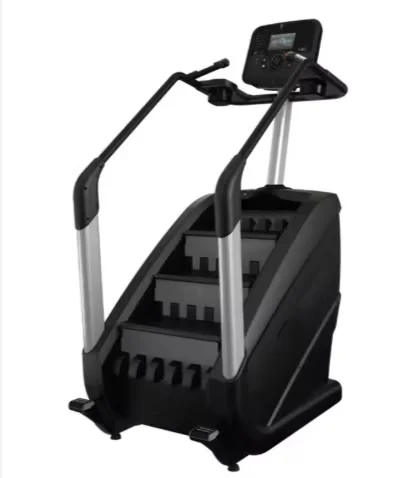
![Commercial Stair Machine SQ1017 for Daily Gym Workouts [WARN] draft identifier mismatch](https://bicksport.com/wp-content/uploads/2026/08/commercial-stair-machine-sq1017-for-daily-gym-workouts-warn-draft-identifier-mismatch-6b0378.webp)
Whisper-Quiet Operation — Motor-driven stepper validated below 35dB under continuous load, eliminating noise complaints when installed on hotel guest room floors.
Technical Specifications
| Parameter | Value |
|---|---|
| Designation | SQ1017 |
| Product Type | Stair Climber |
| Drive Type | Motor Drive |
| Running Velocity | 15–164 steps/minute |
| Max User Weight | 180kg |
| Step Area | 560 × 235 × 220mm |
| Mains Input | AC220V±10% / AC110V±10% |
| Material | Steel Pipe + PP Plastic |
| Console Display | Time, Climb, Calories, Steps, Heart Rate |
| Product Dimensions | 1450 × 820 × 2080mm |
| Net Weight | 148kg |
| Folded | Unfolded |
| Color | Black |
| Certification | CE |
| Customization | Available (logo, color, console UI, specification) |
Application Suitability
| Deployment Scenario | Typical Use |
|---|---|
| Hotel fitness center on guest room floors | 24-hour access cardio with strict noise control for adjacent occupied rooms |
| Chain gym cardio zone | High-frequency stepmill use across peak and off-peak operating hours |
| Corporate wellness room | Low-noise climbing sessions for employees during breaks and before/after shifts |
| High-end residential home gym | Heavy-duty stepping machine for daily personal training without floor vibration |
| Sports performance training center | Adjustable step velocity for athlete conditioning and lower-body endurance work |
Why Noise Complaints Reach the Front Desk Before Maintenance Does
A motor that sounds acceptable on a showroom floor behaves entirely differently at 2AM three floors below a sleeping guest.
When light-commercial stair climbers get deployed in hotels, the first signal of failure is rarely a maintenance ticket — it is a guest calling the front desk at night because a continuous low-frequency hum is vibrating through the ceiling. The motor in a commercial stair climber motor drive system must sustain load silently for hours, and most units spec’d for light duty simply cannot meet that threshold once installed above or beside occupied spaces. The step velocity range and frame mass must work together to keep operational noise below what guests perceive through solid structures. [NEED_CITE: acoustic transmission standards for fitness equipment on multi-story hospitality floors]
Where the SQ1017 Fits Within a Commercial Cardio Floor
This commercial stair climber motor drive unit covers continuous stepping from 15 steps per minute for rehabilitation protocols up to 164 steps per minute for high-intensity interval work, bridging the gap between low-impact cardio and athletic conditioning. In a facility layout, it complements treadmills and ellipticals by targeting glute and quad engagement through vertical loading patterns that those machines cannot replicate. The 180kg maximum user weight and 148kg net machine weight provide the stability needed for high-cadence sessions without lateral sway. Console readouts track time, climb height, calories, step count, and heart rate, giving users the feedback required for structured programs without prescribing specific training protocols.
Continuous Run-Time Demands and What the Facility Must Provide
A stair climber in a 24-hour hotel gym or a busy chain facility may operate eight to fourteen hours daily, which means the motor drive must handle a duty cycle far beyond what residential or light-commercial ratings cover. Noise conduction through floor structures requires that installation on upper levels accounts for vibration isolation beneath the unit’s footprint. The AC220V±10% / AC110V±10% dual-range mains input reduces the risk of voltage mismatch upon arrival in different export markets, though local plug standards still require confirmation before the container ships. Adequate airflow around the 1450 × 820 × 2080mm frame prevents heat buildup during consecutive high-velocity sessions, and the floor surface must be level to avoid uneven load on the step mechanism. [NEED_CITE: continuous duty cycle expectations for commercial cardio equipment in 24-hour facilities]
Motor Drive Mechanics and Step Velocity Control
The motor drive system in this commercial stair climber motor drive platform delivers step velocity continuously adjustable from 15 to 164 steps per minute, which covers everything from slow controlled stepping for joint rehabilitation to near-maximum cadence for athletic conditioning blocks. Unlike hydraulic or pneumatic resistance systems that can exhibit lag at transition points, a motor drive provides immediate response when the user changes pace or when a programmed interval demands sudden velocity shifts. The 560 × 235 × 220mm step area accommodates a wide range of foot sizes while maintaining a compact overall footprint, and the steel pipe construction distributes the 180kg maximum user load across a reinforced frame without flex. Console data capture for time, climb, calories, steps, and heart rate enables facility managers to monitor usage patterns through the IoT-enabled interface. The distinction between motor continuous-duty rating and peak rating matters here — a motor that peaks at a certain output but cannot sustain it will degrade rapidly under the constant-load profile of a stair climber in commercial deployment. [NEED_CITE: motor continuous-duty versus peak rating definitions for commercial fitness equipment]
The Hidden Cost of Specifying Below Commercial Grade
When a facility installs stair climbers with motors rated for light-commercial cycles in a high-traffic gym, the units may perform acceptably for the first weeks before winding noise increases and eventually the motor fails entirely. Noise complaints from guests or residents accumulate quietly until a batch replacement becomes unavoidable, costing far more than specifying continuous-duty equipment from the start. Step mechanisms that lack proper bearing seals develop play over months of use, creating lateral movement that members perceive as instability and that drives attrition toward competitors with better-maintained floors. Console systems that cannot sync with facility management software leave operators blind to usage data, making it impossible to justify equipment rotation or preventive maintenance schedules. Voltage mismatches discovered after shipment force return logistics or transformer installations that delay opening dates and strain contractor relationships.
Why This Product Line Addresses Those Failures
The sub-35dB operational noise level has been verified in hotel deployments where the equipment operates on floors adjacent to guest rooms, addressing the noise complaint problem at the source. Every motor, frame, and bearing in the line undergoes 10,000-hour durability testing to confirm that the continuous-duty rating holds under simulated high-frequency commercial use. The IoT-enabled console captures workout analytics and supports app sync, giving facility managers the data visibility needed for evidence-based equipment decisions. With six complete cardio series available from one product line, a facility can source treadmills, bikes, ellipticals, rowers, stair climbers, and spin bikes without managing multiple supplier relationships. OEM customization extends to console UI, ensuring that branded interfaces match the facility’s digital ecosystem. Free 3D cardio-zone layout planning accounts for the SQ1017’s 1450 × 820mm footprint, airflow requirements, and member sightlines to prevent underused equipment zones.
Documentation & Test Records
- CE declaration of conformity covering the complete SQ1017 assembly
- EN 957 test report validating structural and safety performance under load
- ISO 9001 certificate for the manufacturing quality management system
- Noise level test report confirming operational decibel range under continuous load
- Durability test record documenting 10,000-hour motor and bearing performance
- Motor specification sheet with continuous-duty and peak rating data
- Console technical documentation with data interface and app sync details
Installation, Commissioning & Maintenance
- Maintain minimum clearance around the 1450 × 820 × 2080mm frame for user safety and airflow
- Level the floor surface and apply vibration-dampening pads beneath the 148kg unit to control noise transmission
- Confirm AC220V or AC110V supply with dedicated circuit matching the local plug standard before powering on
- Calibrate step velocity range from 15 to 164 steps/minute during initial commissioning to verify motor response
- Inspect sealed bearings and step mechanism at scheduled intervals based on daily run-time hours
- Configure console data sync settings to connect with the facility management platform during setup
Scheduling Your Equipment Specification
Provide your cardio zone square footage and planned unit count so that a 3D layout with airflow planning can be generated for your space, positioning the SQ1017 alongside complementary equipment with correct spacing. Specify expected daily operating hours so that motor duty-cycle matching confirms this commercial stair climber motor drive system meets your throughput requirements. Identify deployment floor level and adjacent occupied spaces to validate that the sub-35dB noise profile satisfies your environment. Confirm target market voltage standard — AC220V or AC110V — and plug type to prevent mismatches at delivery. Indicate whether console data integration with your existing facility management software or member app is required for the deployment.
Frequently Asked Questions
Q: What is the difference between motor continuous-duty and peak ratings for stair climbers?
A: Peak rating reflects the maximum output a motor can produce for a brief burst, while continuous-duty rating indicates what it can sustain over hours of operation. A stair climber in a commercial gym runs under near-constant load, so the continuous-duty figure determines real-world lifespan. Specifying based on peak rating alone leads to premature motor failure in high-frequency facilities.
Q: How does motor drive compare to other drive types in noise and maintenance for commercial stair climbers?
A: Motor drive systems deliver immediate step velocity response and consistent resistance across the full cadence range, unlike hydraulic systems that can lag or drift with temperature changes. Properly engineered motor drives operate at lower audible noise levels than chain-driven alternatives and require less frequent mechanical adjustment, reducing maintenance intervals in high-traffic commercial deployments.
Q: Can the console data sync with our facility management or member app system?
A: The IoT-enabled console supports app sync and data export for workout analytics including time, climb, calories, steps, and heart rate. Integration capability depends on your facility management platform’s API or data format requirements. Confirming compatibility during the specification stage ensures the console communicates with your existing member tracking or operational monitoring systems upon deployment.
Q: What noise level is acceptable for hotel floor installations, and how is this verified?
A: Hotel fitness centers on guest room floors typically require equipment that operates below the threshold guests perceive through ceiling structures. The SQ1017 has been validated for sub-35dB operation under load in hotel deployments. A noise level test report is available upon request, documenting measured decibel levels during continuous stepping at various velocities to support your facility’s acoustic compliance review.
Q: How do we plan cardio zone layout and airflow for stair climber placement?
A: The 1450 × 820mm footprint requires clearance on all sides for user safety and adequate ventilation around the motor housing. Equipment spacing must account for member flow patterns and sightlines to prevent the cardio zone from feeling congested. A 3D layout plan can be provided covering square footage allocation, airflow paths, and optimal positioning relative to windows and HVAC returns.
![Commercial Electric Stair Climber Gym Machine for Fitness Center Cardio Training [WARN] draft identifier mismatch](https://bicksport.com/wp-content/uploads/2026/08/commercial-electric-stair-climber-gym-machine-for-fitness-center-cardio-training-warn-draft-identifier-mismatch-461462.webp)
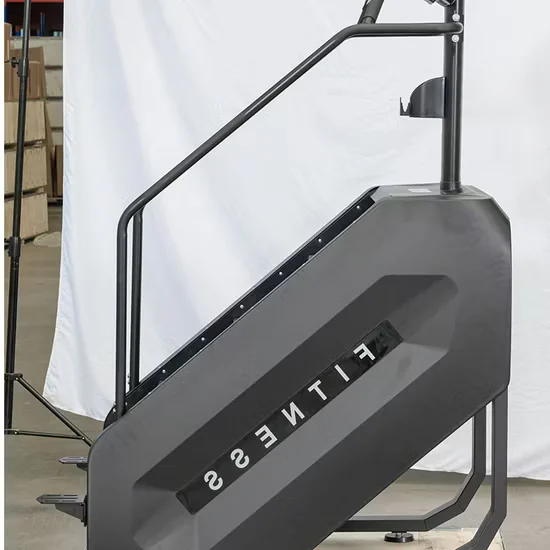
![Commercial Stair Climber Machine for Effective Fat Burning [WARN] draft identifier mismatch](https://bicksport.com/wp-content/uploads/2026/08/commercial-stair-climber-machine-for-effective-fat-burning-warn-draft-identifier-mismatch-3274be.webp)