
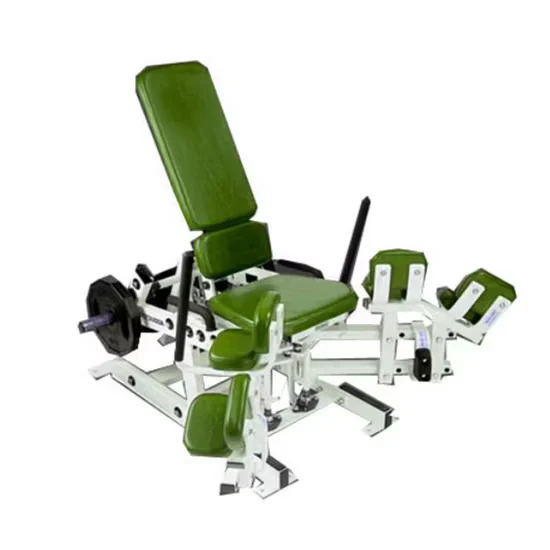
Engineered Steel Stability — The 139kg reinforced steel frame eliminates resonance and displacement noise under heavy inner-thigh training loads, verified across continuous commercial deployments.
Technical Specifications
| Parameter | Value |
|---|---|
| Product Type | Strength Equipment (Leg / Inner Thigh) |
| Model NO. | 5027 |
| Exercise Part | Leg |
| Frame Material | Steel |
| Product Dimensions | 1690 × 730 × 750 mm |
| Net Weight | 139 kg |
| Max User Weight | 180 kg |
| Age Group | Adult |
| Gender | Unisex |
| Certification | ISO 9001, CE |
| HS Code | 9506911900 |
Application Suitability
| Deployment Scenario | Typical Use |
|---|---|
| Chain gym strength zone | High-frequency inner thigh and hip conditioning for general membership |
| Community fitness center | Durable adduction training accessible to adult users of varied fitness levels |
| Hotel comprehensive fitness area | Compact leg machine complementing cardio rows in limited floor plans |
| Corporate employee wellness room | Targeted lower-body work for time-constrained professionals |
Why Strength Equipment Noise Reaches Adjacent Zones Before Anyone Notices
A 139kg steel frame and reinforced pivot assemblies prevent the metal-on-metal rattle that migrates from strength floors into neighboring cardio and lounge areas.
Most noise complaints in mixed-use fitness facilities do not originate from treadmills. They come from strength stations where loosened bushings, thin-gauge uprights, and worn guide rods produce sharp metallic transients that travel through shared floor slabs. When a commercial adductor machine inner thigh gym equipment unit sits two meters from a hotel guest room wall or a quiet stretching zone, every repetition cycle broadcasts structural vibration into occupied spaces [NEED_CITE: structural vibration transmission through gym floor assemblies]. Facility operators often discover the problem only after front-desk logs show a pattern, and by then the equipment has already run thousands of cycles with degrading hardware. Addressing this requires selecting strength equipment engineered from the frame up for continuous public deployment, not residential duty cycles retrofitted with commercial paint.
Positioning the Adductor Station Within a Mixed-Use Training Floor
This commercial adductor machine inner thigh gym equipment occupies the isolation segment of a strength zone, targeting hip adduction through a controlled seated movement path. It complements compound lower-body stations such as leg presses and abductor machines, filling the gap that free-weight work leaves for medial thigh activation. The 1690 × 730 mm footprint allows placement along perimeter walls or between larger rack stations without disrupting primary traffic flow. Its fixed movement track suits users across a wide range of body sizes, with seat and pad adjustments accommodating different femur lengths without requiring spotters or setup assistance.
Continuous Deployment and Environmental Considerations
In facilities running sixteen or more hours daily, this unit cycles through hundreds of adduction sets, placing repetitive lateral loads on every pivot point and guide surface [NEED_CITE: load cycle expectations for commercial strength equipment in high-traffic facilities]. The 139kg net weight anchors the frame against lateral drift, reducing the need for frequent leveling adjustments on concrete or raised access floors. Deployment on upper hotel floors or above occupied commercial spaces benefits from supplemental anti-vibration pads beneath the four contact points, further attenuating structure-borne noise. Adequate clearance on both sides ensures users can mount and adjust without encroaching on adjacent equipment lanes, and the open-frame design permits unobstructed airflow from overhead HVAC, preventing heat buildup around seated users during extended sessions.
Decoding the Frame and Pivot Engineering
The 1690 × 730 × 750 mm dimensions reflect a geometry optimized for the seated adduction arc rather than a compacted footprint that would compromise movement range. Steel tube gauge and welding patterns at the main load junctions — where the seat carriage meets the upright and where the pivot arm connects to the resistance mechanism — determine whether the frame absorbs cyclic loading silently or transmits it as audible fatigue crackling over time. Sealed bushings at the pivot axis prevent grease washout from cleaning chemicals and sweat corrosion, maintaining smooth articulation through tens of thousands of repetitions. The fixed-path design removes cable-and-pulley variables entirely: there are no cables to stretch, no pulleys to develop flat spots, and no weight-stack guide rods to accumulate friction deposits that generate scraping sounds audible across the room.
The Hidden Cost of Underspecified Strength Stations
Facilities that procure inner-thigh machines built on lighter residential frames encounter a predictable sequence: seat wobble appears within months, pivot bushings ovalize and produce knocking on each rep, and the unit gets tagged out of service while members migrate to competitors [NEED_CITE: member retention impact of equipment downtime in commercial fitness]. The procurement savings vanish when replacement bushings, re-welding, and eventual full-unit swap are factored in, not to mention the reputational drag of visible out-of-order signage across the strength floor. Voltage mismatches do not apply here, but floor-loading miscalculations do — placing a 139kg unit on an upper floor without confirming slab capacity invites structural review delays that stall the entire equipment commissioning timeline.
Why This Product Line Fits the Deployment
Every unit ships from a vertically integrated facility where frame welding, CNC machining, powder coating, and assembly occur under one roof, eliminating the hand-off tolerances that cause misalignment in outsourced builds. The 10,000-hour durability testing protocol applied to cardio motors extends to strength pivot assemblies, validating bushing and bearing life under continuous cyclic loading. A complimentary 3D floor layout maps this adductor station alongside the rest of the cardio and strength catalog, confirming sightlines, airflow corridors, and member traffic patterns before any equipment ships. Full OEM/ODM scope covers frame color, pad material, and logo application, so the unit visually integrates with the facility brand palette. Technical support responds around the clock with spare part identification and installation guidance, minimizing downtime if field service is ever required.
Documentation & Test Records
- CE declaration of conformity for commercial strength equipment
- EN 957 test report covering static and dynamic load verification
- ISO 9001 quality management system certificate
- Structural weld inspection and frame fatigue test record
- Upholstery abrasion and sweat-corrosion resistance report
- Installation guide with torque specifications and spare parts list
Installation, Commissioning & Maintenance
- Allow minimum 600mm clearance on each side and 800mm rear access for the 1690mm frame length
- Install on level concrete with anti-vibration pads to isolate the 139kg static load from floor structure
- Verify seat carriage travel and pivot smoothness during first commissioning before releasing to members
- Inspect sealed bushings and pivot bolts quarterly, retorquing to spec and replacing if lateral play is detected
- Wipe down pads and steel surfaces daily with pH-neutral cleaner to prevent sweat-induced corrosion
- Keep a spare bushing and bolt kit on site for immediate swap if play develops during peak operating hours
Specifying the Right Configuration for Your Facility
Provide your strength zone square footage and adjacent equipment list so the 3D layout team can position this adductor unit within optimal member flow and sightline corridors. Confirm daily operating hours and expected user volume to validate that the pivot and bushing assembly matches your duty-cycle requirements. Specify the deployment floor level and what occupies the space directly below to determine whether supplemental vibration isolation is warranted. State your target market so that pad labeling and user instruction graphics can be localized during OEM customization.
Frequently Asked Questions
Q: How does a commercial-grade adductor frame differ structurally from a light-commercial or home version?
A: Commercial frames use heavier-gauge steel tubing, reinforced gussets at high-stress junctions, and sealed industrial bushings rather than nylon sleeves. The 139kg net weight reflects this structural mass, which directly correlates to vibration dampening and long-term alignment stability. Light-commercial versions typically save cost by thinning tube walls and using unsealed pivots that degrade within months of public use, generating noise and wobble that force early replacement.
Q: What spatial planning rules govern strength and cardio zone separation?
A: Maintain a minimum buffer zone between vibration-producing cardio equipment and precision strength stations to prevent sympathetic resonance through shared flooring. The 3D layout plan models equipment placement against HVAC airflow paths and member circulation corridors, ensuring the adductor station sits where traffic density supports usage without creating bottlenecks. Sound transmission paths through ceiling plenums and floor slabs are mapped so that noise from adjacent zones does not compromise the training environment.
Q: Which components demand the most frequent inspection under heavy commercial use?
A: Pivot bushings, seat carriage guide surfaces, and pad mounting bolts experience the highest cyclic stress on an adductor machine and should be checked quarterly for play, wear, and corrosion. Upholstery seams and foam density also warrant attention, as compressed pads alter the user’s biomechanical position and reduce training effectiveness. Keeping a small inventory of bushings, bolts, and replacement pad covers enables same-day repairs without waiting for parts shipment.
Q: How should maintenance intervals be adjusted for 24-hour facility operation?
A: Facilities operating around the clock should halve the standard inspection intervals, moving from quarterly to bimonthly checks on pivot assemblies and pad integrity. Night-shift maintenance windows allow lubrication and bolt retorquing without disrupting member access. Documenting each service event creates a wear-pattern history that predicts component replacement timing, enabling proactive parts ordering rather than reactive downtime when a worn bushing finally fails mid-session.
![Seated DIP Machine Osh014 Commercial Fitness Equipment for Gym [WARN] draft identifier mismatch](https://bicksport.com/wp-content/uploads/2026/08/seated-dip-machine-osh014-commercial-fitness-equipment-for-gym-warn-draft-identifier-mismatch-befbc1.webp)
![Commercial Adjustable Bench Steel Gym Equipment for Fitness Center Use [WARN] draft identifier mismatch](https://bicksport.com/wp-content/uploads/2026/08/commercial-adjustable-bench-steel-gym-equipment-for-fitness-center-use-warn-draft-identifier-mismatch-5b67c3.webp)

