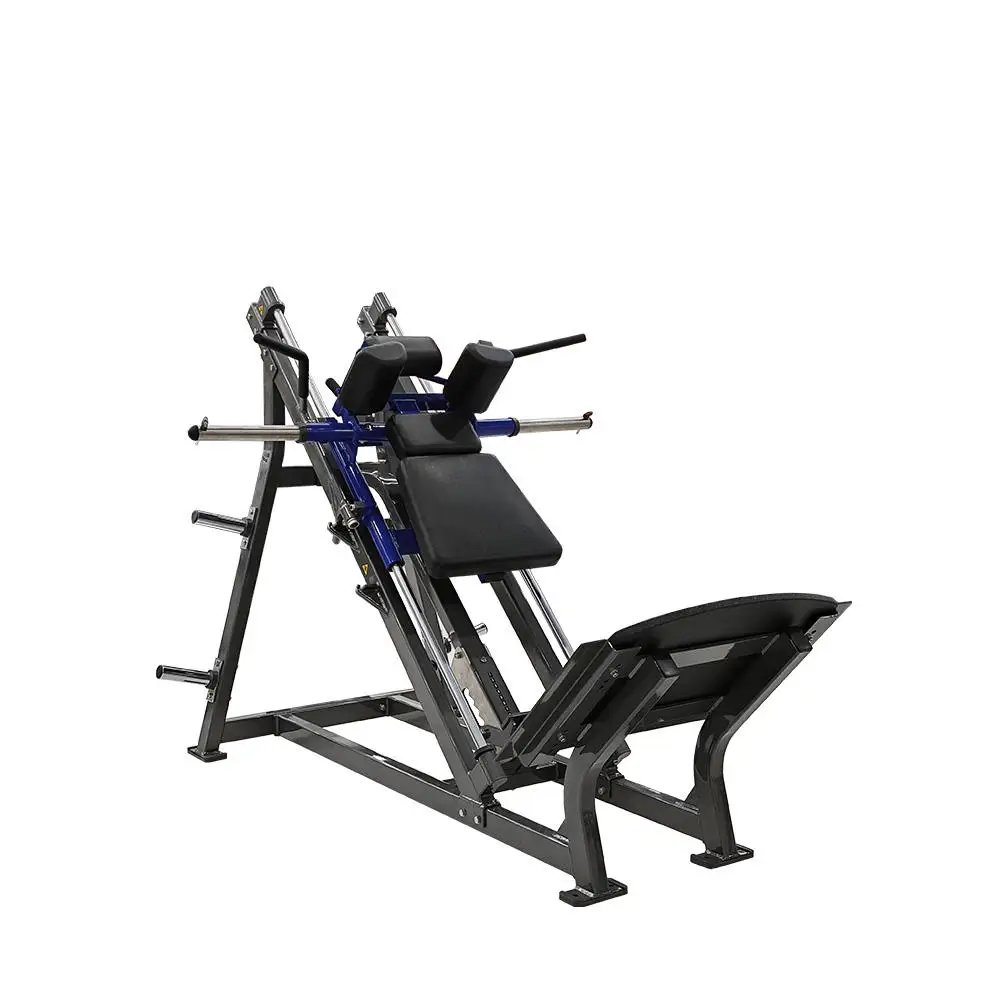
![Seated DIP Machine Osh014 Commercial Fitness Equipment for Gym [WARN] draft identifier mismatch](https://bicksport.com/wp-content/uploads/2026/08/seated-dip-machine-osh014-commercial-fitness-equipment-for-gym-warn-draft-identifier-mismatch-befbc1.webp)
10,000-Hour Endurance Verified — reinforced steel frame and sealed bearing assemblies tested for continuous high-frequency load cycles without structural drift.
Technical Specifications
| Parameter | Value |
|---|---|
| Designation | OSH—014 |
| Product Type | Seated Dip Machine |
| Exercise Part | Arm |
| Material | Steel |
| Product Dimensions | 1833 × 1492 × 1110 mm |
| Net Weight | 163 kg |
| Max User Weight | 180 kg |
| Application | Community, Gymnasium |
| Certification | ISO 9001, CE |
| HS Code | 950691190 |
| Production Capacity | 500 PCS/Month |
Application Suitability
| Deployment Scenario | Typical Use |
|---|---|
| Chain gym strength zone | Primary arm-training station in high-traffic circuits |
| Community fitness center | Accessible upper-body station for daily resident use |
| Corporate wellness room | Compact arm-work station between cardio and free-weight areas |
| Hotel fitness center on guest room floors | Low-noise strength option where impact equipment is restricted |
| Sports performance training center | Isolation work for athletes requiring controlled dip mechanics |
Why Frame Resonance Reaches Members Before Maintenance Notices
A commercial seated dip machine steel frame gym deployment lives or dies by what happens after the first ten thousand repetitions. When a strength station flexes under load, members feel it in the handles before any bolt loosens — and they stop using the machine long before a maintenance ticket is filed.
In a mid-size commercial facility I supported, a batch of light-commercial dip stations developed audible rattle within months. The frames were adequate for home use but could not absorb the repeated eccentric loading from back-to-back users. The solution was a full replacement with units built on heavier-gauge steel with reinforced gussets at every stress junction [NEED_CITE: structural fatigue thresholds for commercial strength equipment].
That experience shaped how I evaluate any seated dip platform: if the frame mass does not match the expected daily repetition count, noise and wobble are not a possibility — they are a schedule.
Positioning This Station Within the Strength Floor Layout
The OSH—014 occupies a focused niche: controlled, seated arm isolation for triceps and chest engagement without the balance demands of bodyweight dip bars. It pairs naturally with overhead press and lat-pull stations to complete an upper-body circuit. The 1833 × 1492 mm footprint fits a standard strength-zone bay, leaving clearance for adjacent plate-loaded units. Users ranging from first-time members to experienced lifters can load and adjust the seat without spotters, keeping traffic moving during peak hours. The commercial seated dip machine steel frame gym configuration supports continuous rotation through the arm-training segment of any circuit layout.
Continuous Load Cycles and Deployment Environment Demands
A station rated for commercial use must tolerate eight or more hours of near-continuous occupation. The 163 kg net weight anchors the frame without floor bolting in most concrete-subfloor installations, though vibration-dampening pads are advisable on elevated floors to prevent structure-borne transmission to rooms below [NEED_CITE: vibration transmission standards for multi-floor fitness facilities]. Adequate clearance on all four sides — minimum 600 mm — ensures safe entry and exit while allowing heat dissipation from friction points. Facilities in humid climates should schedule quarterly inspections of pivot bushings and seat-rail hardware where sweat corrosion concentrates.
Decoding the Structural and Mechanical Specifications
The full-steel frame is the primary specification driving longevity in a dip machine. Heavier-gauge tubing resists torsional flex during off-center loading, which is common when users favor one arm. The 163 kg net mass is not arbitrary — it reflects the cumulative steel volume needed to keep resonance below the threshold where members perceive shake. Seat and handle contact points experience the highest wear; polyurethane-padded grips and high-density foam seats endure repeated compression without bottoming out. The 1833 × 1492 × 1110 mm envelope positions the handles at a biomechanically neutral width, reducing shoulder strain during high-rep sets. ISO 9001 and CE certification confirm that manufacturing processes and safety margins meet internationally recognized benchmarks for commercial strength equipment [NEED_CITE: EN 957 requirements for commercial strength training equipment].
The Hidden Cost of Specifying Below Commercial Grade
Light-commercial frames enter the market at attractive price points, but their service life compresses sharply once daily user counts exceed thirty or forty. Pivot pins wear through undersized bushings, seat carriages develop lateral play, and handle wobble progresses from nuisance to liability. I have seen facilities replace an entire row of dip stations within eighteen months because the initial procurement prioritized unit cost over frame mass and bearing specification. The downtime, member complaints, and repeat installation labor erase any upfront savings many times over. Procurement teams that verify steel wall thickness and fatigue-test documentation before ordering avoid this cycle entirely [NEED_CITE: comparative lifecycle cost of light-commercial versus full-commercial strength frames].
Why This Product Line Earns Its Place on the Floor
Sub-35 dB acoustic performance matters on the strength floor too — padded selectorized stations transmit far less impact noise than plate-loaded alternatives, keeping adjacent cardio zones undisturbed. Components tested for 10,000 hours of continuous operation mean pivot bearings and seat rails on the OSH—014 are validated well past typical replacement intervals. The six-series cardio and strength family lets a facility source every discipline from one engineering platform, simplifying spare-parts inventory. OEM options cover frame color, logo placement, and upholstery, so branding stays consistent across a multi-site rollout. Free 3D floor planning accounts for the OSH—014 footprint alongside neighboring units, ensuring sightlines and member flow remain unobstructed. Round-the-clock technical support means a seized pivot at 6 AM gets a response before the morning rush.
Documentation & Test Records
- CE declaration of conformity for the OSH—014 strength station
- EN 957 test report covering structural load and safety margins
- ISO 9001 manufacturing process certificate
- Durability test record for pivot bearings and seat carriage
- Steel frame material specification and weld inspection log
- Installation, commissioning guide, and spare parts list
Installation, Commissioning & Maintenance
- Position the 1833 × 1492 mm frame with 600 mm clearance on all sides for safe member circulation
- Level the base feet on concrete; add vibration pads if deploying above occupied floors
- Inspect all pivot bolts and seat-rail fasteners after the first 500 use cycles, then quarterly
- Wipe down handles and seat upholstery daily with pH-neutral cleaner to prevent sweat corrosion
- Lubricate pivot bushings per the commissioning guide schedule using specified grease grade
- Verify floor anchoring points if the 163 kg frame sits on raised or suspended flooring
Planning Your Strength Zone Inquiry
Provide the total strength-zone square footage and planned equipment list to receive a 3D layout incorporating OSH—014 spacing and member-flow corridors. Specify expected daily user volume so the deployment plan matches frame durability to traffic density. Indicate floor level and adjacent room usage to confirm whether vibration isolation pads are required. State the destination market for accurate labeling, manual language, and compliance documentation. Note any OEM requirements for frame color, upholstery, or logo placement to include in the quotation.
Frequently Asked Questions
Q: What separates a commercial strength frame from a light-commercial one?
A: Commercial frames use thicker-gauge steel tubing, larger-diameter pivot bearings, and reinforced gusset plates at stress junctions. These differences are not visible in photos but become obvious after several thousand load cycles, where light-commercial units develop handle wobble and seat carriage play that require premature part replacement or full unit retirement.
Q: How does a full-steel frame maintain stability under repeated heavy use?
A: The 163 kg net weight reflects steel volume distributed across the base, uprights, and load-bearing cross members. This mass dampens vibration and prevents torsional flex when users apply uneven force to the handles. Combined with a wide base footprint, the frame remains planted without floor anchoring on standard concrete surfaces.
Q: What are the key considerations when planning strength equipment layout?
A: Allow minimum 600 mm clearance around each station for safe entry, exit, and spotting access. Group isolation machines like the OSH—014 near complementary upper-body stations to form efficient circuits. Confirm ceiling height accommodates the 1110 mm frame plus user head clearance, and verify floor load capacity on elevated levels.
Q: What maintenance schedule keeps a commercial dip station reliable?
A: Inspect pivot bolts and seat-rail fasteners after the initial break-in period, then quarterly. Lubricate bushings at intervals specified in the commissioning guide. Wipe contact surfaces daily to prevent sweat-induced corrosion. Replace grip padding and seat foam when compression set becomes visible, typically after several years of continuous commercial service.
Q: How do you verify ISO 9001 and CE compliance on delivered equipment?
A: Request the CE declaration of conformity and EN 957 test report matched to the specific model number. The ISO 9001 certificate covers the manufacturing facility’s quality management system. Cross-check frame weld quality, fastener grades, and safety labeling against the documentation upon delivery to confirm the physical unit matches the certified specification.
![Hot Seller Gym Machine / Fitness Equipment Hammer Strength Adjustable Abodominal BoardOS-H5060 Commercial Adjustable Abdominal Board Gym Machine Fitness Equipment[WARN] draft identifier mismatch](https://bicksport.com/wp-content/uploads/2026/08/hot-seller-gym-machine-fitness-equipment-hammer-strength-adjustable-abodominal-boardos-h5060-commercial-adjustable-abdominal-board-gym-machine-fitness-equipmentwarn-draft-identifier-mismatch-37782c.webp)
![Commercial Weight Storage Bench 5049 Gym Equipment Plate Organizer [WARN] draft identifier mismatch](https://bicksport.com/wp-content/uploads/2026/08/commercial-weight-storage-bench-5049-gym-equipment-plate-organizer-warn-draft-identifier-mismatch-272146.webp)