
![Wear-Resistant Mt296 ABS Electric Treadmill for Warm-up and Gym Use [WARN] draft identifier mismatch](https://bicksport.com/wp-content/uploads/2026/08/wear-resistant-mt296-abs-electric-treadmill-for-warm-up-and-gym-use-warn-draft-identifier-mismatch-7e7732.webp)
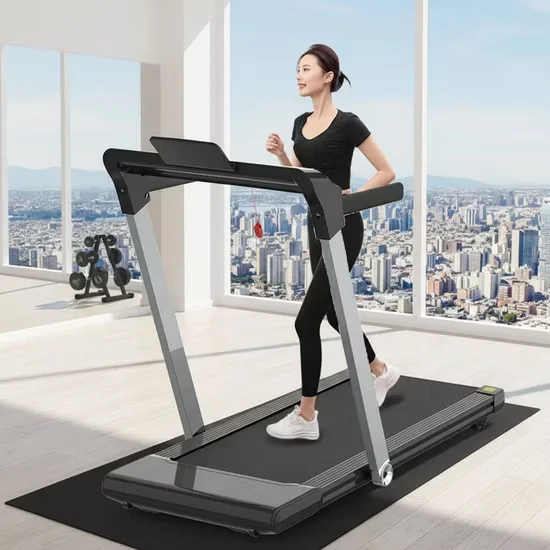
Quiet Deployability — The MT296 foldable frame and DC motor target noise-sensitive, space-constrained fitness installations where acoustic footprint matters as much as floor space.
Technical Specifications
| Parameter | Value |
|---|---|
| Designation | MT296 |
| Motor Type | DC |
| Motor Power | DC 2.0 HP (peak or continuous not specified in source) |
| Speed Range | 1–20 km/h |
| Running Surface | 1200 x 520 mm |
| Console Type | LCD (Speed / Dist. / Time / Cal. / Pulse) |
| Preset Programs | 16 |
| Product Unfolded Size | 1580 x 865 x 1300 mm |
| Product Folded Size | 910 x 865 x 1345 mm |
| Net Weight | 64.0 kg |
| Foldable | Yes |
| Material | ABS |
| Certification | CE, RoHS |
| OEM / ODM Custom | Available |
Application Suitability
| Deployment Scenario | Typical Use |
|---|---|
| Hotel fitness center on guest room floors | Compact, foldable cardio for limited-space guest wellness areas |
| Corporate wellness room | Moderate-use treadmill for employee fitness breaks |
| High-end residential home gym | Space-efficient treadmill that folds for multi-purpose rooms |
| Community fitness center | Light-commercial cardio for moderate daily foot traffic |
What Peak Horsepower Hides About Continuous Duty
Motor ratings matter more than marketing numbers suggest.
Facilities that deploy home-grade treadmills in guest fitness areas often discover motor burnout within weeks of continuous operation. A DC 2.0 HP rating on the MT296 may represent peak output rather than sustained duty — a distinction that determines whether the motor survives 16-hour days in a hotel gym or fails under repeated member use [NEED_CITE: motor duty cycle classification for continuous commercial operation]. Buyers must verify with the manufacturer whether this rating reflects continuous or peak power before committing to high-traffic deployments.
Where the MT296 Fits Within a Cardio Floor Plan
This foldable treadmill serves moderate-intensity walking and jogging sessions, complementing heavier-duty treadmills and cross-trainers in mixed-use cardio zones. Its 1200 x 520 mm running surface accommodates users seeking steady-state warm-up or light cardio work. The foldable motorized treadmill DC motor commercial configuration makes it practical for hotel corridors and residential fitness rooms where floor space is reclaimed between uses. The LCD console captures speed, distance, time, calories, and pulse — providing basic biometric feedback without advanced app connectivity.
Continuous Operation Limits and Deployment Environment
The MT296’s DC motor suits environments with moderate daily run-times rather than 24/7 high-traffic operation. Facilities planning deployment on upper hotel floors should request the noise level test report to confirm acoustic compatibility with occupied rooms below [NEED_CITE: EN 957 requirements for commercial cardio equipment]. Adequate ventilation around the motor housing is necessary to prevent thermal buildup during extended sessions. Operators must confirm voltage and plug standards match the target market before container loading. A level subfloor with anti-vibration padding helps contain structure-borne noise transmission.
Interpreting the Drive and Control Specifications
The DC motor in the MT296 offers compact packaging and lower initial cost compared to AC alternatives commonly found in heavy-duty commercial treadmills. DC motors perform adequately under intermittent loads but typically lack the thermal mass for uninterrupted all-day operation. The 1–20 km/h speed range covers walking through moderate running, though the 1200 mm belt length favors walking and jogging over extended stride running. The LCD console displays core workout metrics including pulse via grip sensors, which provide general heart rate indication but may drift during high-intensity intervals. Sixteen preset programs support structured warm-up and cool-down sequences. The foldable frame mechanism trades some long-term rigidity for the spatial flexibility required in guest room and residential deployments.
The Hidden Cost of Specification Compromises
Deploying light-duty motors in commercial fitness environments leads to premature winding failure and costly mid-warranty replacements. Noise complaints from adjacent hotel rooms or residential units generate front-desk escalations that damage property reputation beyond the equipment repair cost. Inadequate deck cushioning accelerates joint fatigue, contributing to member attrition in subscription-based facilities [NEED_CITE: treadmill deck cushioning and user retention correlation]. Voltage mismatches discovered after shipment force entire batches into return logistics or transformer retrofitting. Data-isolated consoles leave facility managers blind to utilization patterns, preventing evidence-based equipment rotation decisions.
Why This Product Line for Your Facility
Every unit undergoes 10,000-hour durability testing on motors, frames, and sealed bearings before shipment. Sub-35 dB whisper-quiet operation is verified through actual hotel deployments, not just laboratory conditions. The six-series cardio family means operators source treadmills, bikes, ellipticals, rowers, stair climbers, and spinners from one manufacturing line. Full OEM/ODM capability covers logo, color, console UI, and specification customization at flexible MOQ. Free 3D cardio-zone layout planning accounts for square footage, sightlines, airflow, and member flow — including the MT296’s folded and unfolded footprint spacing requirements. Round-the-clock technical support and spare parts availability reduce downtime risk.
Documentation & Test Records
- CE declaration of conformity for EU market compliance
- EN 957 test report covering safety and performance requirements
- ISO 9001 certificate verifying quality management systems
- RoHS compliance documentation for hazardous substance restrictions
- Noise level test report specific to this model configuration
- Durability test record documenting motor and frame endurance validation
- Motor specification sheet detailing electrical and thermal characteristics
- Console technical documentation with LCD parameter descriptions
- Installation and commissioning guide with site preparation checklist
- Spare parts list with component identification and ordering codes
Installation, Commissioning & Maintenance
- Allow minimum clearance around the 1580 x 865 mm unfolded footprint for safe user entry and exit
- Level the subfloor and install anti-vibration pads to minimize structure-borne noise transmission
- Confirm dedicated circuit capacity matches DC 2.0 HP motor draw and local voltage standards
- Verify LCD console displays all parameters correctly during initial power-on calibration
- Inspect belt tension and alignment after the first 50 operating hours
- Clean grip pulse sensors and LCD screen regularly to maintain readability and signal contact
- Wipe ABS surfaces with non-corrosive cleaner to prevent sweat residue degradation
Preparing Your Facility Inquiry
Provide your cardio zone dimensions and planned unit count to receive a complimentary 3D layout with airflow planning. Specify expected daily operating hours so motor duty-cycle suitability can be confirmed against the MT296’s continuous rating. Identify deployment floor level and adjacent occupied spaces to determine acoustic requirements. Confirm target market voltage and plug standards to prevent shipment mismatches. Indicate whether console data output must integrate with existing facility management software.
Frequently Asked Questions
Q: What is the difference between continuous and peak motor power for commercial treadmill use?
A: Peak power represents maximum short-burst output, while continuous rating reflects sustained operational capacity. Commercial facilities running equipment for extended daily periods need motors rated for continuous duty. The MT296 lists DC 2.0 HP without specifying which measurement applies — buyers should request the motor specification sheet to confirm suitability for their expected daily operating hours before finalizing purchase decisions.
Q: How does a DC motor compare to an AC motor in durability and noise for gym deployments?
A: DC motors offer compact sizing and quieter startup characteristics, making them practical for space-limited installations. AC motors generally handle continuous heavy loads with better thermal dissipation, suiting high-traffic commercial floors. For moderate-use environments like hotel fitness rooms or corporate wellness centers, the MT296’s DC motor provides adequate performance with the foldable frame advantage that AC-driven units typically cannot match.
Q: Can the LCD console sync workout data with facility management systems?
A: The MT296 LCD console displays speed, distance, time, calories, and pulse locally on-screen. Current specifications do not indicate wireless or wired data export capability for external software integration. Facilities requiring member usage tracking or centralized dashboard analytics should request console technical documentation to confirm available data interfaces before assuming connectivity with their existing management platform.
Q: What noise level should I expect, and is this treadmill suitable for hotel floors?
A: The manufacturer targets sub-35 dB operation across its commercial cardio range, a threshold verified in hotel deployments where equipment operates adjacent to occupied guest rooms. However, actual installed noise depends on subfloor construction, vibration isolation, and maintenance condition. Request the model-specific noise level test report and discuss your floor construction details with the technical team to confirm acoustic suitability for your deployment environment.
Q: How does the foldable design impact frame stability under frequent commercial use?
A: Foldable mechanisms introduce hinge points that experience repeated stress cycles during folding and unfolding operations. The MT296’s 64 kg net weight and ABS construction prioritize spatial efficiency over the mass associated with fixed-frame commercial units. Facilities planning multiple daily fold-unfold cycles should discuss expected usage frequency with the engineering team and request durability test records specific to the folding mechanism’s rated lifecycle.
![Healthmate Electric Treadmill with Table Holder for Commercial Gym Use [WARN] draft identifier mismatch](https://bicksport.com/wp-content/uploads/2026/08/healthmate-electric-treadmill-with-table-holder-for-commercial-gym-use-warn-draft-identifier-mismatch-373364.webp)
![W08 Electric Folding Treadmill for Fitness Training Compact Portable [WARN] draft identifier mismatch](https://bicksport.com/wp-content/uploads/2026/08/w08-electric-folding-treadmill-for-fitness-training-compact-portable-warn-draft-identifier-mismatch-da89f0.webp)
![Wear-Resistant Mt296 Motorized Treadmill for Commercial Fitness [WARN] draft identifier mismatch](https://bicksport.com/wp-content/uploads/2026/08/wear-resistant-mt296-motorized-treadmill-for-commercial-fitness-warn-draft-identifier-mismatch-1361f6.webp)