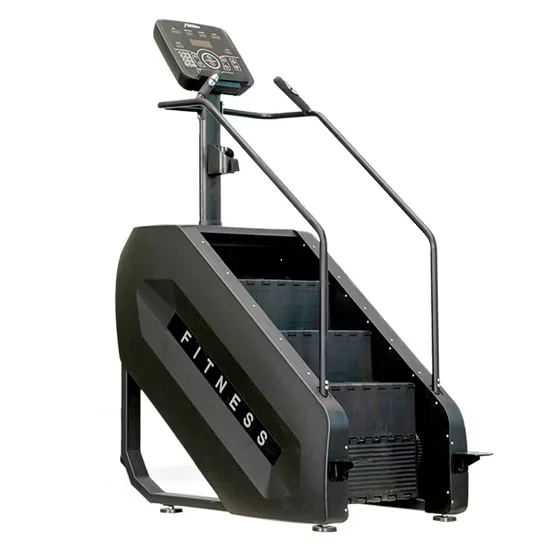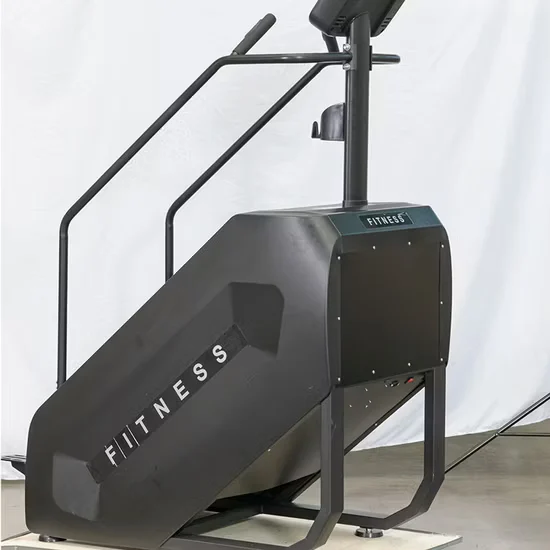
Motor-Driven Endurance — Dual-voltage input and motor-drive mechanism engineered for continuous commercial stair climber deployment across international facility markets.
Technical Specifications
| Parameter | Value |
|---|---|
| Designation | SQ1017 |
| Product Type | Stair Climber |
| Drive Type | Motor Drive |
| Function | Electric |
| Step Velocity Range | 15–164 steps/minute |
| Step Area | 560 x 235 x 220 mm |
| Power Requirement | AC220V±10% / AC110V±10% |
| Console Display | Time, Climb, Calories, Steps, Heart Rate |
| Frame Material | Steel Pipe + PP Plastic |
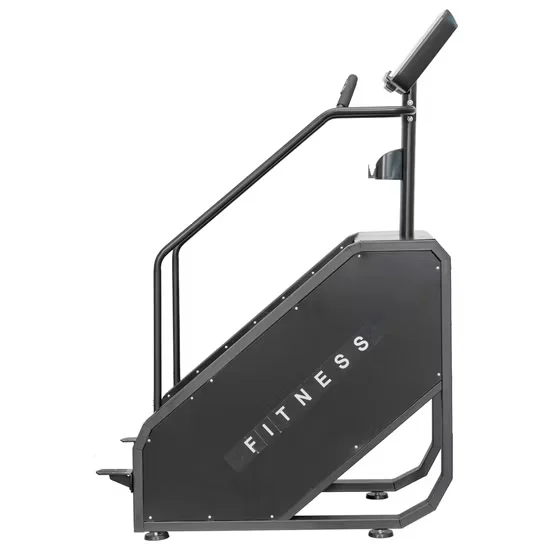
| Product Dimensions | 1450 x 820 x 2080 mm |
| Net Weight | 148 kg |
| Foldable | Unfolded |
| Target User | Adult |
| Customization | Available with customized color and branding |
| Certification | CE |
| Condition | New |
Application Suitability
| Deployment Scenario | Typical Use |
|---|---|
| Hotel fitness center on guest room floors | Low-noise vertical climbing for early-morning and late-night guest sessions |
| Chain gym cardio zone | High-frequency interval and steady-state climbing with console data capture |
| Corporate wellness room | Compact motor-driven stair climbing for employee fitness during breaks |
| High-end residential home gym | Dual-voltage stair climbing compatible with domestic power standards |
| Sports performance training center | Athlete conditioning at step rates up to 164 steps/minute |
What Peak Horsepower Hides About Continuous Duty
Motor-drive stair climbers must sustain full load through thousands of consecutive operating hours.
Facility operators often discover that a commercial stair climber motor drive gym unit rated for peak output fails within months when subjected to continuous public-facility run-times. Light-duty motors designed for intermittent home use cannot dissipate heat generated during back-to-back member sessions, leading to thermal shutdown and eventual winding failure [NEED_CITE: motor duty cycle classification for continuous commercial operation]. The SQ1017 motor-drive system is built for sustained load, paired with sealed bearings and a reinforced steel frame that maintain alignment under high-frequency step cycles. Voltage mismatch — another frequent deployment failure — is addressed through dual AC110V/AC220V input, eliminating the costly discovery that arrives only after the container clears customs.
Positioning Within the Cardio Floor Plan
The SQ1017 occupies a vertical-climbing niche that complements treadmills and ellipticals by loading the lower body through a distinct movement pattern. Step velocity from 15 to 164 steps per minute covers rehabilitation-grade warm-ups through high-intensity athlete protocols, making this commercial stair climber motor drive gym fixture suitable for facilities serving diverse membership bases. Its 1450 x 820 mm footprint fits standard cardio-zone spacing, and the 2080 mm height requires overhead clearance verification before placement. The console captures steps, calories, climb time, and heart rate, providing the usage data that facility managers need without prescribing specific training programs.
Continuous Operation and Deployment Environment
Facilities running sixteen or more hours daily demand a motor-drive system rated for sustained thermal load and mechanical duty cycle [NEED_CITE: EN 957 requirements for commercial cardio equipment]. The SQ1017 dual-voltage input removes the risk of ordering 220V units for a 110V market, a mistake that delays deployment by weeks and incurs return-shipping costs. Noise transmission through floor slabs matters when the unit sits above occupied guest rooms or office spaces, so vibration isolation pads and level substrate are prerequisites. Adequate lateral airflow around the motor housing prevents heat accumulation during consecutive user sessions. The console OSD provides real-time parameter tracking, and facilities requiring data integration should confirm interface protocols before finalizing the purchase order.
Decoding the Motor-Drive and Step Mechanism
Motor-drive stair climbers differ fundamentally from self-powered alternatives: the electric motor controls step descent speed, delivering consistent resistance regardless of user weight or fatigue level. The SQ1017 step area of 560 x 235 mm provides a platform surface that accommodates a range of foot sizes while maintaining a compact overall footprint. Step velocity spanning 15 to 164 steps per minute allows the unit to serve users progressing from low-intensity mobility work to near-maximal cardiovascular output. The steel pipe frame resists torsional flex during heavy-user loading cycles, and PP plastic shrouds protect internal components from dust ingress and accidental impact. Dual-voltage capability means the same motor-drive platform ships to markets operating on either 110V or 220V mains without requiring a step-down transformer, simplifying procurement for international gym chains managing facilities across multiple electrical standards.
The Hidden Cost of Specification Compromise
Selecting a stair climber with a motor rated for intermittent duty may reduce the initial purchase price, but thermal failure under continuous commercial load generates replacement costs and member complaints that far exceed the savings [NEED_CITE: commercial cardio motor thermal failure rates in high-frequency facilities]. Units lacking dual-voltage input create procurement errors that surface only when electricians open the crate and find an incompatible plug standard. Noise levels that seem acceptable in a showroom become problematic when transmitted through hotel floor slabs to the rooms below, triggering guest complaints and front-desk escalation. Consoles without data-export capability leave facility managers blind to utilization patterns, preventing evidence-based decisions about equipment rotation and cardio-zone rebalancing.
Why This Product Line Earns Its Placement
Motor-drive systems across the range undergo 10,000-hour continuous-operation testing on motors, frames, and sealed bearings before production release. The SQ1017 benefits from this testing protocol, ensuring the step mechanism withstands the repetitive loading cycles of a busy commercial stair climber motor drive gym environment. Console UI customization is available through OEM channels, allowing branded interfaces that align with a facility’s digital ecosystem. The six-series cardio family means a single supplier covers treadmills, bikes, ellipticals, rowers, climbers, and spin bikes, consolidating procurement and after-sales support. Free 3D cardio-zone layout planning accounts for this unit’s 1450 x 820 mm footprint and 2080 mm height, verifying overhead clearance and member flow paths before equipment ships. Technical support responds around the clock across time zones, and spare parts documentation accompanies every order.
Documentation & Test Records
- CE declaration of conformity for the SQ1017 stair climber platform
- EN 957 test report covering mechanical safety and structural integrity
- ISO 9001 certificate validating manufacturing quality management
- Noise level test record verifying acoustic output during operation
- Motor specification sheet detailing duty-cycle rating and thermal limits
- Console technical documentation with OSD parameter definitions
Installation, Commissioning & Maintenance
- Verify 1450 x 820 mm footprint with clearance on all sides for safe user entry and exit
- Install vibration isolation pads beneath the frame to reduce structure-borne noise transmission
- Confirm AC110V or AC220V supply matches unit configuration before energizing the motor drive
- Level the steel frame on the substrate to prevent step-mechanism binding during operation
- Schedule sealed-bearing inspection and step-surface cleaning at intervals matched to daily usage volume
- Configure console OSD parameters and verify heart-rate sensor function during initial commissioning
Request a Deployment Assessment
Provide your cardio-zone floor area and planned unit count to receive a 3D layout that accounts for the SQ1017 footprint, overhead clearance, and airflow requirements. Specify expected daily operating hours so the motor duty-cycle rating can be confirmed against your facility’s usage pattern. Indicate deployment floor level and adjacent occupied spaces to verify acoustic suitability, and state the target market voltage standard to ensure the correct dual-voltage configuration ships. If console data must integrate with existing facility management software, describe the required interface protocol early in the inquiry.
Frequently Asked Questions
Q: How does motor drive type affect noise level and deployment suitability in shared spaces?
A: Motor-drive stair climbers control step descent through an electric motor rather than user-generated momentum, producing a consistent acoustic signature throughout the speed range. This predictability allows facility planners to assess noise transmission to adjacent rooms and floors before installation, making motor-drive units suitable for hotel guest floors and residential buildings where variable noise levels trigger complaints.
Q: What is the difference between continuous-duty and peak motor ratings for commercial stair climbers?
A: Peak ratings describe the maximum output a motor can sustain briefly, while continuous-duty ratings reflect output maintained over extended operating periods without thermal failure. Commercial facilities running equipment for many consecutive hours require continuous-duty specifications, as motors rated only for peak output overheat and degrade rapidly under sustained commercial loads.
Q: Can the console data sync with existing facility management software or member apps?
A: Console integration depends on the data interface protocol supported by the facility management platform. Operators should request the console technical documentation and share it with their software provider to confirm compatibility before ordering. OEM console UI customization is available for facilities requiring branded interfaces or specific data-export formats.
Q: How does dual-voltage input simplify international deployment and prevent post-arrival mismatches?
A: Dual-voltage capability means the same commercial stair climber motor drive gym unit accepts either AC110V or AC220V input, removing the risk of receiving equipment incompatible with the destination market’s electrical standard. This eliminates costly transformer additions, return shipments, and deployment delays that occur when voltage mismatches are discovered after container arrival.
Q: What maintenance intervals are required for motor drive and step mechanism in high-frequency commercial use?
A: Maintenance frequency depends on daily operating hours and user volume. Sealed bearings reduce lubrication requirements, but step surfaces and the motor housing should be inspected regularly for dust accumulation and wear. Facilities should establish a schedule based on their specific usage patterns and request the spare parts list to plan long-term component replacement.
![SQ1017 Commercial Stair Climber Machine Motor Drive for Fitness Facilities [WARN] draft identifier mismatch](https://bicksport.com/wp-content/uploads/2026/08/sq1017-commercial-stair-climber-machine-motor-drive-for-fitness-facilities-warn-draft-identifier-mismatch-df6ff6.webp)
![High-Performance Commercial Stair Climber Motor Drive for Gym Professionals and Trainers [WARN] draft identifier mismatch](https://bicksport.com/wp-content/uploads/2026/08/high-performance-commercial-stair-climber-motor-drive-for-gym-professionals-and-trainers-warn-draft-identifier-mismatch-0b1b32.webp)