
![High-Performance Commercial Stair Climber Motor Drive for Gym Professionals and Trainers [WARN] draft identifier mismatch](https://bicksport.com/wp-content/uploads/2026/08/high-performance-commercial-stair-climber-motor-drive-for-gym-professionals-and-trainers-warn-draft-identifier-mismatch-0b1b32.webp)
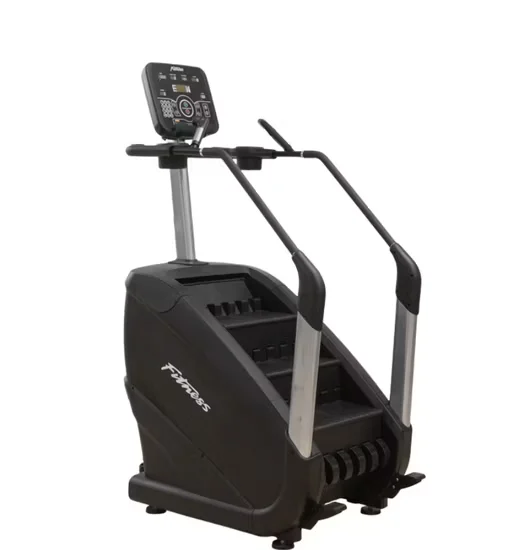
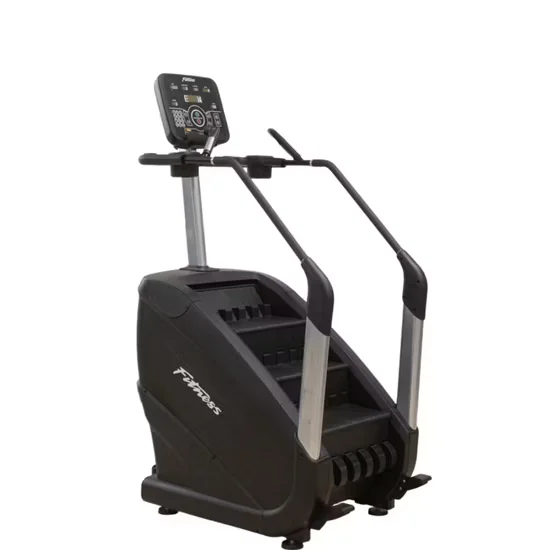
Whisper-Quiet Drive Engineering — SQ1017 stair climber maintains sub-35dB operation through precision magnetic gap calibration and motor-driven step control.
Technical Specifications
| Parameter | Value |
|---|---|
| Designation | SQ1017 |
| Product Type | Stair Climber |
| Drive Type | Motor Drive |
| Step Velocity | 15 – 164 steps/minute |
| Max User Weight | 180kg |
| Step Area | 560 x 235 x 220mm |
| Power Requirement | AC220V±10% / AC110V±10% |
| Console Display (OSD) | Time, Climb, Calories, Steps, Heart Rate |
| Material | Steel Pipe + PP Plastic |
| Product Dimensions | 1450 x 820 x 2080mm |
| Net Weight | 148kg |
| Condition | New |
| Certification | CE |
| Customization | Available |
Application Suitability
| Deployment Scenario | Typical Use |
|---|---|
| Five-star hotel fitness center on guest room floors | 24-hour guest access with noise-sensitive deployment above occupied rooms |
| International chain gym cardio zone | High-frequency member traffic requiring continuous-duty motor endurance |
| Corporate wellness room | Employee interval training during peak break times with steady throughput |
| Professional sports training center | Athlete conditioning protocols demanding precise step velocity control |
| High-end residential home gym | Private installation where low noise floor protects shared living spaces |
What Continuous Duty Really Means for a Motor-Driven Stepmill
A commercial stair climber motor drive must sustain load indefinitely — peak ratings only describe momentary bursts.
Facilities that spec equipment based on peak horsepower often discover the truth six months later when drive components fail under continuous public use. The SQ1017 commercial stair climber motor drive is engineered around a continuous-duty electric motor rated for 10,000 hours of operation, not a light-commercial unit repurposed from home fitness catalogs. [NEED_CITE: motor duty cycle classification for continuous commercial operation]
I spent years on the assembly floor watching stair climbers return from hotel deployments with burnt windings and erratic resistance stepping. One batch shipped to a Middle Eastern five-star property developed magnetic gap misalignment that caused resistance levels to jump unpredictably — members felt it within two steps and the complaints reached the front desk before maintenance could respond. That failure drove the recalibration protocols now standard on every unit leaving our Shandong facility.
Where This Stepmill Fits in a Commercial Cardio Floor
The SQ1017 covers steady-state climbing, high-intensity interval protocols, and low-velocity rehabilitation work through its 15 to 164 steps/minute range. In a cardio zone layout, it occupies a high-intensity vertical-training position alongside treadmills and ellipticals, giving members a distinct movement pattern without requiring additional floor footprint. The 1450 x 820mm footprint allows tight side-by-side placement while maintaining sightline clearance. The commercial stair climber motor drive accommodates users up to 180kg, eliminating weight-based access restrictions that complicate front-desk operations. The console tracks time, climb, calories, steps, and heart rate — data points trainers use to verify interval compliance without prescribing specific protocols.
Deployment Environment Requirements for 24/7 Operation
Continuous hotel fitness center operation demands attention to floor loading, ventilation, and electrical circuit isolation that light-commercial specs obscure. The SQ1017’s 148kg net weight requires level flooring with vibration-dampening pads to prevent structure-borne noise transmission to rooms below. Dual-voltage input (AC220V±10% / AC110V±10%) eliminates the transformer mismatches that strand containers at international ports. [NEED_CITE: voltage and plug standard verification for international equipment deployment] Adequate airflow around the motor housing prevents thermal throttling during back-to-back peak usage windows. Facilities planning cardio zones should confirm dedicated circuit capacity before installation day arrives.
Motor Drive Architecture and Step Control Precision
The motor drive system in the SQ1017 replaces the manual hydraulic or pneumatic resistance found in budget steppers with an electric motor that maintains consistent step cadence regardless of user weight. Unlike friction-based systems that degrade with belt wear, motor-driven step velocity holds steady across the full 15 to 164 steps/minute range. The step area measures 560 x 235 x 220mm — wide enough for confident foot placement during high-velocity intervals, yet compact enough to preserve the machine’s overall footprint. Steel pipe frame construction with PP plastic shrouds balances structural rigidity against weight, keeping the unit stable at maximum user load without excessive floor stress. Heart rate monitoring through the console OSD provides continuous biometric feedback that trainers can reference during supervised sessions. [NEED_CITE: EN 957 requirements for commercial stair climber safety and performance]
The Hidden Cost of Underspecified Drive Systems
Light-duty motors installed in commercial facilities burn through their rated lifespan within months, triggering warranty claims that operators absorb as downtime. Noise from unbalanced drive components generates guest complaints that force entire cardio zone replacements rather than targeted repairs. Voltage mismatches discovered after container arrival strand equipment in customs while facilities open without promised cardio inventory. Facilities that accept peak horsepower figures without verifying continuous duty ratings inherit maintenance schedules they never budgeted for. [NEED_CITE: facility maintenance cost impact of commercial cardio equipment failure rates]
Why This Product Line Addresses Deployment Gaps
Sub-35dB whisper-quiet operation has been verified in hotel deployments where cardio equipment sits directly above occupied guest rooms — the magnetic gap calibration that cost us an entire production batch now prevents those field failures. The 10,000-hour durability test covers motors, frames, and bearings under continuous high-frequency load, not intermittent cycle testing. Console data output supports facility management system integration, eliminating the usage data silos that leave operators blind to equipment utilization. The six-series cardio family lets facilities source treadmills, bikes, ellipticals, rowers, climbers, and spin bikes from one production line with matching OEM customization including console UI. Free 3D cardio-zone layout planning accounts for the SQ1017’s 1450 x 820mm footprint alongside airflow and member flow requirements. Technical support responds around the clock across export markets.
Documentation & Test Records
- CE declaration of conformity for SQ1017 stair climber
- EN 957 test report covering structural and safety requirements
- ISO 9001 certificate for manufacturing quality systems
- Motor durability test record verifying 10,000-hour continuous operation
- Console technical documentation with OSD data interface specifications
- Noise level test report confirming sub-35dB operational signature
Installation, Commissioning & Maintenance
- Confirm floor levelness and install vibration pads beneath the 1450 x 820mm footprint to isolate structure-borne noise
- Verify dedicated circuit matches target market voltage (AC220V±10% or AC110V±10%) before connecting the motor drive
- Calibrate step velocity range (15–164 steps/min) during commissioning to confirm motor response across full spectrum
- Inspect steel pipe frame joints and PP plastic shroud fasteners at scheduled intervals for high-frequency deployment sites
- Clean console OSD sensors and heart rate contact surfaces to maintain biometric tracking accuracy between member sessions
Equipment Selection and Deployment Planning
Provide your cardio zone square footage and equipment count to receive a 3D layout that accounts for the SQ1017’s dimensions and member flow clearances. Specify expected daily run-hours so we match motor duty cycle to your facility’s actual usage pattern rather than generic commercial ratings. Confirm deployment floor and adjacent occupied spaces to validate noise transmission requirements. State your target market voltage standard and plug type to eliminate post-shipment electrical mismatches. Indicate whether console data must integrate with existing facility management software so we scope the interface before production begins.
Frequently Asked Questions
Q: What is the difference between motor drive and manual stepper systems for commercial use?
A: Motor drive systems maintain consistent step velocity under continuous load, while manual steppers rely on user momentum and hydraulic resistance that degrades with seal wear. For facilities running equipment 12+ hours daily, motor drive delivers predictable maintenance intervals and eliminates the resistance inconsistency that triggers member complaints during high-intensity sessions.
Q: Why does continuous duty rating matter more than peak horsepower?
A: Peak horsepower describes momentary output during startup or sudden load changes, while continuous duty reflects sustained thermal capacity under ongoing operation. Commercial stair climbers in 24-hour hotel gyms run far beyond peak burst duration, making continuous duty the specification that predicts actual service life and warranty exposure.
Q: Can the console data sync with gym management software?
A: The SQ1017 console tracks time, climb, calories, steps, and heart rate through its OSD system. Integration capability depends on your facility management platform’s data interface requirements — confirm your software’s protocol specifications during the inquiry stage so we scope compatibility before production and testing.
Q: How does heart rate monitoring work on this stair climber?
A: Heart rate data is captured through contact sensors integrated into the console OSD system, displaying real-time readings during use. For trainer-supervised sessions requiring continuous biometric logging, verify whether your existing chest strap or wearable protocol is compatible with the console input interface during equipment selection.
Q: How do I ensure voltage compatibility for my market?
A: The SQ1017 accepts AC220V±10% or AC110V±10% input, covering most international standards. Specify your target country’s voltage and plug type during inquiry so the unit ships with correct wiring and plug configuration — this prevents transformer requirements or customs holds that delay facility opening schedules.
![Stair Climbing Equipment for Fitness Enthusiasts [WARN] draft identifier mismatch](https://bicksport.com/wp-content/uploads/2026/08/stair-climbing-equipment-for-fitness-enthusiasts-warn-draft-identifier-mismatch-7ad689.webp)
![SQ1017 Commercial Stair Machine for Fitness Center Use [WARN] draft identifier mismatch](https://bicksport.com/wp-content/uploads/2026/08/sq1017-commercial-stair-machine-for-fitness-center-use-warn-draft-identifier-mismatch-ddfb48.webp)