
![Hsm New Design Foldable Motorized Treadmill with Manual Incline [WARN] draft identifier mismatch](https://bicksport.com/wp-content/uploads/2026/08/hsm-new-design-foldable-motorized-treadmill-with-manual-incline-warn-draft-identifier-mismatch-a2db2d.webp)
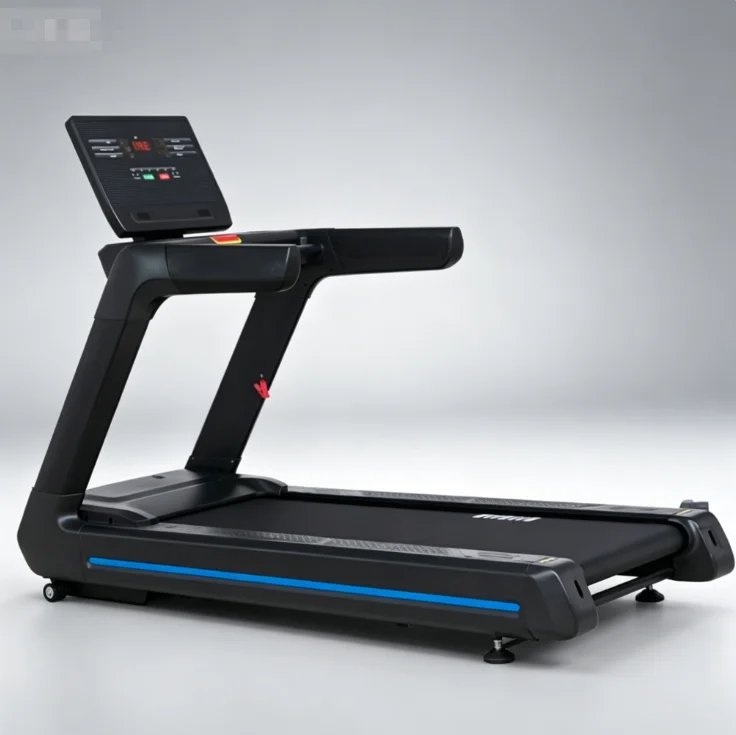
Space-Saving Foldable Design — manual incline mechanism and folding frame reduce floor footprint without adding motorized complexity or noise sources.
Technical Specifications
| Parameter | Value |
|---|---|
| Designation | MT23B |
| Product Type | Foldable Treadmill |
| Motor Type | DC |
| Motor Power | 1.5 / DC 2.0 HP (peak or continuous not specified in source) |
| Speed Range | 1–12 km/h |
| Incline Type | Manual |
| Running Surface | 1200 x 420 mm |
| Console Type | LCD (Speed / Dist. / Time / Cal. / Pulse) |
| Programs | 12 |
| Product Dimensions | 1490 x 720 x 1100 mm (Unfolded) |
| Net Weight / Gross Weight | 37 / 42 kg |
| Foldable | Yes |
| Certification | CE, RoHS |
| Color Options | Multicolor |
Application Suitability
| Deployment Scenario | Typical Use |
|---|---|
| High-end residential home gym | Daily personal cardio in space-constrained apartments where the foldable motorized treadmill DC motor manual incline design allows stowing after each session |
| Corporate wellness room | Low-traffic employee fitness breaks during office hours with basic LCD biometric feedback |
| Boutique studio warm-up zone | Compact cardio stations for pre-class conditioning, stored vertically when floor space is needed for group sessions |
| Hotel fitness center on guest room floors | Secondary cardio option in limited-footprint satellite gyms where noise transfer to adjacent rooms must be minimized |
What Peak Horsepower Hides About Continuous Duty in Foldable Treadmills
Verify whether the listed motor rating represents sustained output or momentary peak before matching it to your facility’s daily run-time.
When a foldable motorized treadmill DC motor manual incline unit ships with a dual-rated motor label, the higher figure almost always reflects peak burst capacity rather than thermal-steady-state output. In residential deployments where the machine runs for thirty minutes at a time, this distinction rarely surfaces. But place the same unit in a corporate wellness room with back-to-back users across an eight-hour window, and the thermal mass of an undersized DC motor becomes the limiting factor. We have seen light-duty motors shut down on thermal protection within the first quarter of deployment when the actual duty cycle exceeded intermittent ratings [NEED_CITE: motor duty cycle classification for continuous commercial operation].
Positioning the MT23B Within a Mixed Cardio Zone
The MT23B covers walking through moderate-intensity jogging at speeds up to 12 km/h, fitting the lower-to-middle band of steady-state cardio. In a mixed equipment layout, it complements heavier-duty commercial treadmills and ellipticals by absorbing overflow demand or serving as a dedicated warm-up station. Its 1200 x 420 mm running surface suits users of average stride length; taller athletes performing interval sprints may require a longer deck. The foldable motorized treadmill DC motor manual incline profile makes it practical to position against walls or in corridor-style fitness rooms where permanent floor allocation is not possible.
Continuous Run-Time and Environmental Constraints for DC-Driven Decks
DC motors in this class are engineered for intermittent rather than continuous-duty cycles, so daily cumulative run-time should guide deployment decisions. In shared residential floors, the absence of a motorized incline motor removes one noise source, but the belt-deck interface still transmits footfall vibration downward — an acoustic isolation mat is strongly recommended above occupied spaces. Ventilation around the motor housing must remain unobstructed; enclosing the unit in a tight alcove accelerates thermal buildup. Voltage compatibility should be confirmed with the target market before production, as DC motor controller boards are sensitive to supply fluctuation [NEED_CITE: EN 957 requirements for commercial cardio equipment]. The LCD console operates independently without facility network integration, which simplifies installation but limits usage-data collection for managed environments.
Drive Architecture and Manual Incline Trade-Offs Explained
The DC motor in the MT23B delivers compact, cost-effective drive suitable for intermittent sessions. Continuous horsepower — the rating that determines whether a motor survives six hours of daily use — must be explicitly confirmed with the factory, as the spec sheet lists 1.5 / 2.0 HP without a duty-cycle qualifier. Manual incline eliminates the motorized incline actuator, removing a component that otherwise draws current and generates mechanical noise; however, gradient changes require the user to step off and adjust the frame pin, ruling out programmed hill intervals. The 1200 x 420 mm belt area trades stride length for a smaller unfolded footprint of 1490 x 720 mm. The LCD console reports speed, distance, time, calories, and pulse via grip sensors — adequate for self-directed sessions but without external data export or app synchronization. Grip-based heart rate reading provides general trend feedback rather than clinical-grade accuracy, which matters when HIIT programming depends on precise zone tracking.
The Hidden Cost of Underspecified Motors in Shared Spaces
Deploying a treadmill whose motor is rated for intermittent home use into a corporate wellness room or apartment gym frequently results in thermal shutdowns within months, because the cumulative daily run-time far exceeds the design envelope. Noise from thin deck cushioning migrates through floor slabs, generating complaints from residents or office workers in adjacent rooms. When the manual incline pin and deck support are not rated for frequent adjustment cycles, the mechanism loosens and introduces wobble. Data from the LCD console remains trapped on the unit — no usage logs reach the facility manager, leaving maintenance decisions based on guesswork rather than actual run-hours [NEED_CITE: commercial cardio maintenance scheduling based on usage data]. Voltage mismatches discovered after shipment force entire batches into rework or transformer retrofits.
Why This Product Line Earns Its Placement
Every unit from our Shandong facility undergoes noise-floor verification before shipping, ensuring sub-35 dB operation aligns with hotel and residential deployments. Motors and bearings are sampled for 10,000-hour continuous-run durability testing, so the thermal limits of each drive configuration are documented before the product reaches your floor. The MT23B’s compact 1490 x 720 mm footprint fits into our complimentary 3D cardio-zone layout, where we model airflow clearance and user circulation around each folded and unfolded position. OEM options extend to logo, color, and console UI adjustments at flexible MOQ. Because we manufacture six complete cardio series in-house, a single source can supply the MT23B alongside heavier commercial treadmills, ellipticals, and rowing machines — all coordinated within one shipment and one commissioning plan [NEED_CITE: OEM cardio equipment manufacturing and consolidation]. Our technical team remains available around the clock for calibration and spare-parts support post-installation.
Documentation & Test Records
- CE declaration of conformity covering electrical safety and EMC for the MT23B drive system
- EN 957 test report validating structural load and stability for the foldable frame
- ISO 9001 certificate for the manufacturing quality management system
- RoHS compliance statement for restricted substances in electronic components
- Noise level test record documenting operational sound pressure during belt operation
- Motor specification sheet detailing thermal limits and duty-cycle classification
Installation, Commissioning & Maintenance
- Maintain minimum clearance of 600 mm behind and 400 mm on each side of the 1490 x 720 mm frame for safe mounting and folding access
- Place acoustic isolation mat beneath the unit when deploying on upper floors to mitigate footfall vibration transmission through the slab
- Confirm target market voltage and plug type before production; the DC motor controller requires stable single-phase supply
- Perform initial belt tension and alignment check after the first 10 hours of operation to prevent premature deck wear
- Wipe LCD console and grip sensors with dry microfiber after each session to prevent sweat corrosion on contacts
Requesting a Deployment-Matched Quote
Share your cardio-zone square footage and target unit count so we can generate a 3D layout with airflow and sightline planning for the MT23B alongside complementary equipment. Specify expected daily run-time per unit to confirm motor duty-cycle suitability, and indicate deployment floor level and adjacent room types to validate acoustic requirements. State your target market voltage and plug standard, and let us know whether console data export or facility management integration is required for your operation.
Frequently Asked Questions
Q: Is the DC motor in this treadmill rated for continuous or peak output?
A: The specification lists 1.5 / 2.0 HP without a continuous-duty qualifier. For commercial or shared-space deployment where daily cumulative run-time exceeds a few hours, confirming the continuous thermal rating with the factory is essential. Intermittent-rated motors overheat under sustained loads, leading to thermal shutdown or premature winding failure in high-frequency environments.
Q: What are the trade-offs of manual incline versus motorized incline?
A: Manual incline eliminates the actuator motor, reducing noise sources and electrical complexity. However, gradient changes require the user to stop and physically adjust the frame pin, making programmed hill intervals impossible. For facilities that prioritize quiet operation and low maintenance over automated gradient variation, manual incline is the simpler and more reliable choice.
Q: How can I verify the motor rating is appropriate for my facility’s duty cycle?
A: Request the motor specification sheet showing continuous thermal output and the associated test duration. Compare that figure against your expected daily run-hours per unit. Motors validated for intermittent residential use typically lack the thermal mass and cooling design needed for back-to-back users across an eight-hour operating window.
Q: Does the LCD console support data export or facility management integration?
A: The LCD console displays speed, distance, time, calories, and pulse in real time but does not include wireless connectivity or external data export based on current specifications. If your operation requires member usage tracking or integration with a facility management system, confirm console upgrade options during the OEM customization phase.
Q: What should I check regarding deck cushioning before deploying in shared residential spaces?
A: Request the noise level test report and verify the deck cushioning specification. Thin or single-layer cushioning transmits footfall impact to the floor slab, generating vibration complaints in rooms below. An acoustic isolation mat supplements the factory deck system and is strongly recommended for any upper-floor deployment in multi-occupancy buildings.

![Healthmate T12F1 Motorized Foldable Treadmill with LCD Screen [WARN] draft identifier mismatch](https://bicksport.com/wp-content/uploads/2026/08/healthmate-t12f1-motorized-foldable-treadmill-with-lcd-screen-warn-draft-identifier-mismatch-f5795e.webp)
![Healthmate Remote Controller Compact Walking Treadmill with Foldable Design for Home Gym Use [WARN] draft identifier mismatch](https://bicksport.com/wp-content/uploads/2026/08/healthmate-remote-controller-compact-walking-treadmill-with-foldable-design-for-home-gym-use-warn-draft-identifier-mismatch-624049.webp)