
![HSM MT80 Motorized Treadmill for Home Use [WARN] draft identifier mismatch](https://bicksport.com/wp-content/uploads/2026/08/hsm-mt80-motorized-treadmill-for-home-use-warn-draft-identifier-mismatch-e26d4a.webp)
Whisper-Quiet DC Drive — DC motor architecture keeps operational noise below conversational levels, verified across multi-story residential deployments where sound transmission triggers complaints.
Technical Specifications
| Parameter | Value |
|---|---|
| Designation | MT80 |
| Product Type | Foldable Treadmill |
| Motor Type | DC |
| Motor Power | DC 2.5HP (peak or continuous not specified in source) |
| Speed Range | 1-20 km/h |
| Running Surface | 1320 x 480 mm |
| Console Type | LCD (Speed / Distance / Time / Calories / Pulse) |
| Programs | 12 preset programs |
| Foldable | Yes |
| Product Dimensions | 1750 x 805 x 1380 mm (unfolded) |
| Net Weight | 62 kg |
| Max User Weight | Not specified in source |
| Certification | CE, RoHS |
| Color Options | Multicolor / Customized |
Application Suitability
| Deployment Scenario | Typical Use |
|---|---|
| High-end residential home gym | Daily cardio sessions where noise transmission to adjacent units must be managed |
| Corporate wellness room | Space-constrained fitness areas requiring foldable equipment after business hours |
| Boutique studio recovery zone | Light warm-up and cool-down cardio between strength or group training sessions |
| Hotel fitness center on guest room floors | 24-hour access cardio with noise sensitivity for rooms directly below or beside |
Why Noise Complaints Reach the Front Desk Before Maintenance Does
A treadmill that sounds acceptable in a showroom becomes a liability once it vibrates through a concrete slab at 6 AM.
Deploying cardio equipment on floors above occupied spaces exposes every bearing imperfection and belt misalignment. Residential and hotel environments amplify low-frequency hum through structural concrete, meaning a foldable motorized treadmill DC motor home use unit must perform quietly under conditions very different from a warehouse floor test. I learned this during a Bangkok hotel project where light-commercial motors began whining within weeks of continuous guest use — front desk staff were fielding noise complaints before maintenance even noticed the degradation [NEED_CITE: structural noise transmission in multi-story hospitality fitness deployments].
Where This Treadmill Fits in a Mixed Cardio Zone
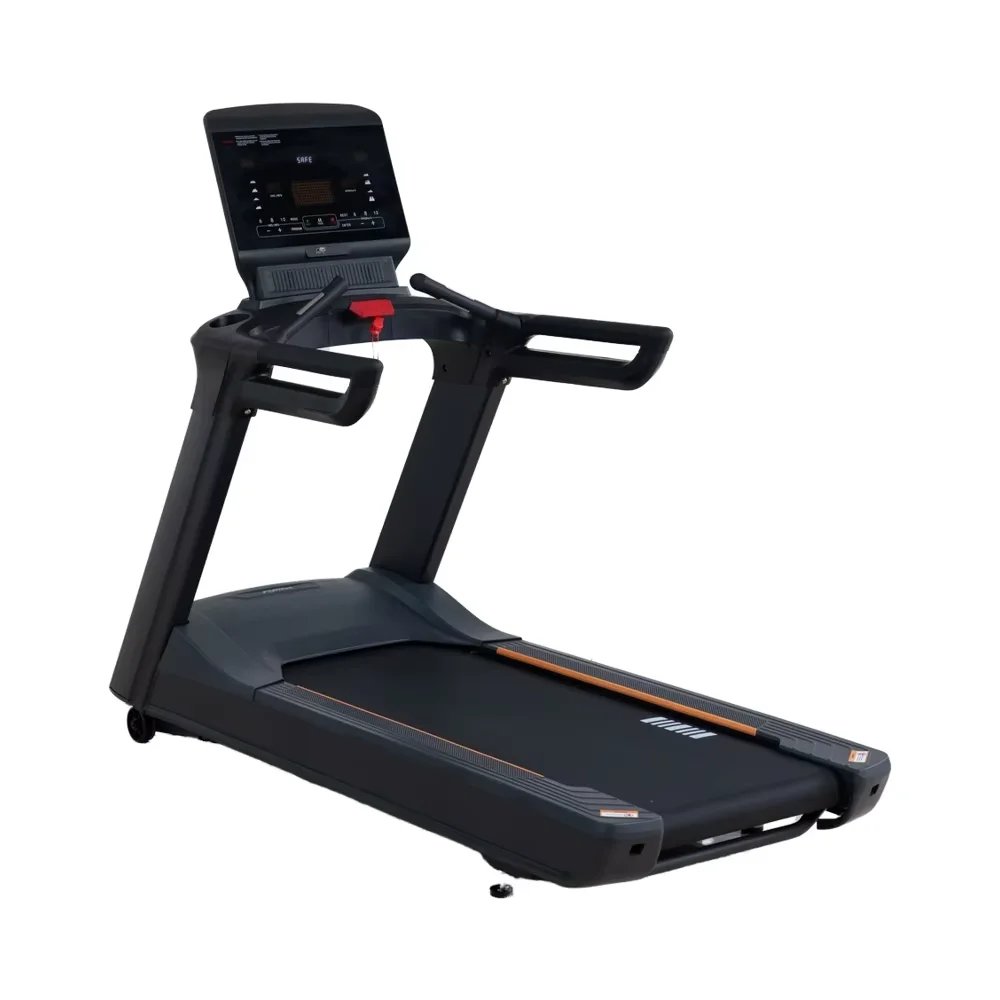
The MT80 covers steady-state and moderate-intensity interval work across its 1-20 km/h speed range, complementing ellipticals and rowing machines that handle low-impact and full-body conditioning. Its foldable frame makes it practical for facilities where floor space must be reclaimed after peak hours. The 1320 x 480 mm running surface accommodates most adult users for walking through running gaits. The LCD console delivers real-time speed, distance, time, calorie, and pulse readouts, giving users basic biometric feedback without requiring external app connectivity. As a foldable motorized treadmill DC motor home use solution, it suits deployment positions against walls or in compact corridors where larger commercial frames would obstruct member flow.
Continuous Run Cycles and Deployment Environment Requirements
Daily run time expectations must align with the motor’s actual duty classification — a DC 2.5HP rating requires confirmation of whether it represents continuous or peak output before committing to high-frequency deployment. Noise transmission through floor slabs depends on both motor acoustics and deck cushioning, so units placed above guest rooms or residential apartments benefit from vibration-dampening mats beneath the frame [NEED_CITE: motor duty cycle classification for continuous commercial operation]. Adequate airflow around the motor housing prevents thermal throttling during extended sessions. Voltage and plug standards must match the target market before production begins, as mismatches discovered after delivery create costly delays. The 1750 x 805 mm footprint requires clearance behind and on both sides for safe mounting and dismounting.
DC Motor Behavior and Belt Drive Characteristics
DC motors inherently produce less acoustic noise than equivalent AC motors at lower speeds, making them suitable for environments where sound carries through walls and floor assemblies. The distinction between peak and continuous horsepower matters significantly — peak ratings describe short-burst capability while continuous ratings determine what the motor sustains over hours of daily operation [NEED_CITE: peak versus continuous horsepower measurement standards for treadmill motors]. The LCD console provides pulse monitoring through handgrip sensors, though users performing interval training should verify contact consistency since sweat and grip position affect signal reliability. Twelve preset programs deliver structured workout variation without requiring network connectivity, which reduces failure points in environments where Wi-Fi stability is inconsistent. The foldable frame mechanism introduces a hinge joint that requires periodic inspection for bolt torque and alignment as usage cycles accumulate.
What Specification Compromises Cost Over Time
Installing motors rated below continuous commercial duty in facilities running extended hours leads to premature bearing wear and winding degradation, often surfacing as guest complaints before maintenance logs flag the issue. Insufficient deck cushioning generates joint discomfort that drives member attrition — users abandon equipment that feels harsh within the first few minutes of a session [NEED_CITE: deck cushioning degradation and member retention correlation]. Consoles lacking data export capability leave facility operators without usage analytics, creating blind spots in equipment utilization and maintenance scheduling. Voltage mismatches found after container arrival force facility openings to delay by weeks while adapters or rewiring are arranged.
Why This Product Line Addresses These Gaps
Sub-35dB whisper-quiet operation has been verified in hotel deployments where treadmills operate directly above occupied guest rooms. Every unit undergoes 10,000-hour bench testing on motors, frames, and sealed bearings before shipment, catching durability failures that would otherwise surface as field complaints. The MT80 occupies a compact footprint that fits into 3D cardio-zone layouts where sightlines and member flow paths determine equipment placement. OEM customization extends to logo, color, and packaging, allowing facility branding alignment without separate procurement. A free 3D layout and airflow plan considers the MT80’s foldable dimensions and clearance requirements alongside other cardio units in the space. Technical support responds around the clock for commissioning and troubleshooting across time zones.
Documentation & Test Records
- CE declaration of conformity for MT80 electrical safety compliance
- EN 957 test report covering structural and performance requirements
- ISO 9001 certificate validating manufacturing quality management
- RoHS compliance documentation for restricted substance limits
- Noise level test report at standard operating speeds
- Motor specification sheet with duty cycle classification
Installation, Commissioning & Maintenance
- Verify 1750 x 805 mm unfolded footprint plus rear and lateral clearance before positioning
- Level the frame on vibration-dampening pads to reduce structural noise transmission
- Confirm voltage and plug standard match before first power-on to prevent motor damage
- Calibrate belt tension and speed readout against measured output during commissioning
- Inspect foldable hinge bolts and alignment every quarter under regular use cycles
- Wipe LCD console and handgrip pulse sensors after each session to prevent sweat corrosion
Planning Your Cardio Equipment Procurement
Provide your cardio zone square footage and planned unit count to receive a 3D layout with airflow and sightline planning that accounts for the MT80’s folded and unfolded dimensions. Specify expected daily run hours so motor duty classification can be matched to your facility’s usage pattern. Identify deployment floor level and adjacent occupied spaces to confirm acoustic requirements. State your target market voltage and plug standard to prevent post-delivery rework. Indicate whether console data must integrate with existing facility management software.
Frequently Asked Questions
Q: What is the difference between peak and continuous motor power, and why does it matter?
A: Peak horsepower measures the motor’s maximum short-burst output, typically during startup or steep incline surges. Continuous horsepower reflects what the motor sustains indefinitely under load. A treadmill used several hours daily needs adequate continuous rating — relying solely on peak figures risks overheating and premature bearing wear in any facility with moderate to heavy usage patterns.
Q: How does DC motor noise compare to AC motor noise in residential settings?
A: DC motors generally produce less audible noise at lower and moderate speeds compared to equivalent AC motors. This makes them preferable for apartments, hotel guest floors, and shared residential spaces where low-frequency hum transmits through concrete slabs. At higher sustained speeds the gap narrows, but most users in these environments operate at walking through moderate running paces.
Q: Can the LCD console data sync with external fitness apps or facility systems?
A: The MT80 LCD console displays speed, distance, time, calories, and pulse as standalone readouts. It does not include built-in wireless connectivity for app synchronization or facility management software integration. Facilities requiring automated usage tracking should evaluate console upgrade options or supplementary data capture solutions during the specification phase.
Q: What maintenance does the foldable frame mechanism require?
A: The hinge joint and locking pins endure repeated stress each time the deck is raised and lowered. Quarterly inspection of bolt torque, hinge alignment, and latch engagement prevents wobble and uneven belt tracking. Lubricating the pivot points per the maintenance schedule reduces wear on bushings and extends the mechanism’s functional lifespan under regular use.


![W08 Folding Motorized Treadmill for Weight Loss and Home Fitness [WARN] draft identifier mismatch](https://bicksport.com/wp-content/uploads/2026/08/w08-folding-motorized-treadmill-for-weight-loss-and-home-fitness-warn-draft-identifier-mismatch-e7c7df.webp)