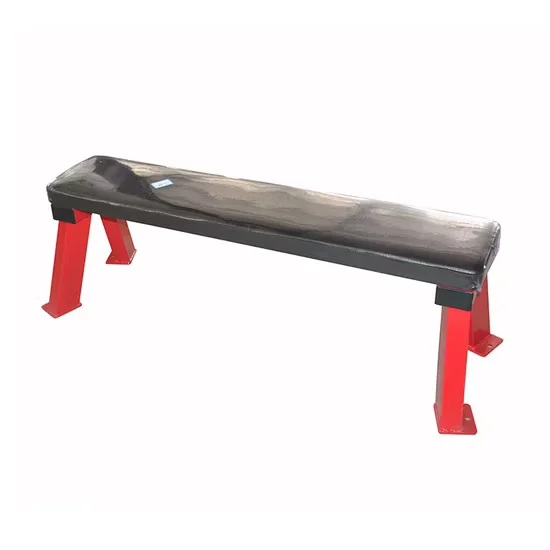
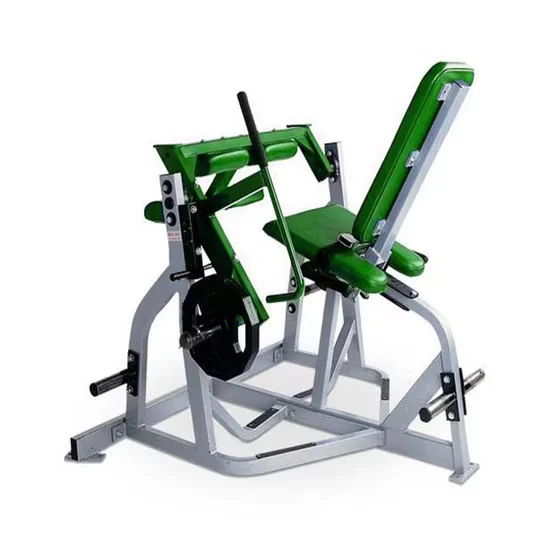
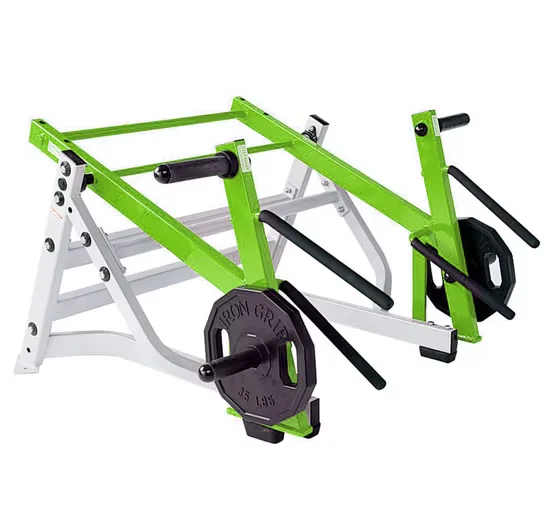
Structural Rigidity Under Load — the 88kg steel frame and fixed-path geometry resist flex during heavy pressing cycles in commercial strength zones.
Technical Specifications
| Parameter | Value |
|---|---|
| Product Type | Shoulder Press Machine (Strength Equipment) |
| Model NO. | 5053 |
| Exercise Part | Chest / Shoulder |
| Frame Material | Steel |
| Product Dimensions | 1763 × 1210 × 1669 mm |
| Net Weight | 88 kg |
| Max User Weight | Not specified |
| Resistance Type | Plate-loaded / Weight stack (verify configuration) |
| Age Group | Adult |
| Gender | Unisex |
| Certification | ISO 9001, CE |
| Appliance | Gymnasium |
Application Suitability
| Deployment Scenario | Typical Use |
|---|---|
| Hotel fitness center strength zone | Guest self-service pressing work during off-peak hours |
| Chain gym free-weight and machine area | High-frequency shoulder and upper-body training between classes |
| Corporate wellness room | Employee strength sessions during lunch breaks and after work |
| High-end residential home gym | Private pressing work without spotter requirement |
| Sports performance training center | Controlled overhead pressing for athlete upper-body development |
Why Frame Flex Matters More Than Plate Count on a Commercial Gym Floor
A shoulder press machine lives or dies by what happens at the welds when a 120kg athlete pushes through the sticking point.
Commercial strength equipment takes abuse that home-grade units never see. I once walked into a facility where a lightweight shoulder press frame was visibly twisting under load — the seat carriage was shifting laterally, and the guide rods showed uneven wear patterns after only six months. Members stop using equipment that feels unstable overhead, and operators end up replacing the entire unit. The commercial hammer strength shoulder press machine addresses this with a steel frame built for repeated heavy cycles, and the fixed movement path keeps the load vector predictable. [NEED_CITE: EN 957 requirements for structural integrity of commercial strength equipment]
Where This Machine Sits in a Commercial Strength Layout
Shoulder pressing occupies a specific niche in the upper-body training sequence — it follows chest work and precedes isolation movements. This commercial hammer strength shoulder press machine fills the gap between free-weight overhead pressing and cable-based alternatives, offering a controlled fixed-path motion that reduces stabilizer fatigue. In a typical strength zone, it pairs with a chest press and lat pulldown to cover the primary pushing and pulling patterns. The 1763 × 1210 mm footprint fits standard machine-row spacing, and the unisex design accommodates a wide range of user heights without requiring extensive seat adjustments between sets.
Continuous Use and Floor-Level Deployment Considerations
An 88kg net weight provides a stable base that resists walking or rocking during explosive concentric phases, but floor anchoring should still be evaluated for high-traffic installations. In a hotel fitness center on a guest room floor, vibration transmission through the structure becomes a concern — placing this unit on a dedicated rubber mat reduces resonance transfer to rooms below. Operators running 24-hour facilities need to plan maintenance windows around pivot-point lubrication and guide-rod inspection, since shoulder press mechanisms accumulate wear at the carriage bearings. The steel construction tolerates humidity variations in basement or poolside locations without frame degradation. [NEED_CITE: recommended maintenance intervals for commercial plate-loaded strength equipment]
Reading the Build Quality Behind the Specification Sheet
The 88kg net weight signals substantial steel gauge in the main uprights and base rails — lighter frames in this category typically sit around 55-65kg and rely on thinner tubing that flexes under asymmetric loading. The fixed-path hammer strength design constrains the pressing arc to a biomechanically consistent trajectory, which reduces shear force on the shoulder joint compared to free-weight alternatives. Guide-rod diameter and bearing surface area determine long-term smoothness; undersized rods develop play that manifests as lateral carriage wobble. Weld quality at the seat-back junction and load-arm pivot points dictates whether the frame holds alignment through thousands of press cycles. ISO 9001 manufacturing oversight and CE conformity testing provide a baseline for these structural claims.
The Hidden Cost of Cutting Corners on Strength Equipment Specs
Facilities that source shoulder press units based on price alone discover the real cost within the first year. Lightweight frames develop weld cracks at stress concentration points, particularly where the press arm meets the main upright. Carriage bearings on undersized guide rods wear unevenly, creating a gritty feel that members notice immediately. When a machine feels unreliable overhead — where a failed rep has real consequences — users simply avoid it. The unit becomes dead floor space while the facility still carries the depreciation. In some cases, operators have had to pull entire batches of under-built strength machines after repeated member complaints about instability. [NEED_CITE: failure mode analysis for commercial strength equipment frames]
Why This Product Line Holds Up in the Field
The shoulder press unit sits within a broader strength equipment family designed around the same structural principles: steel frames sized for commercial duty cycles, fixed-path geometry that keeps movement patterns consistent, and build weights that prevent unit migration under load. For facility planners, sourcing the shoulder press alongside other hammer strength machines from one product line simplifies maintenance — bearing sizes, guide-rod specifications, and upholstery materials stay consistent across the floor. The 1763 × 1210 mm footprint has been verified against standard machine-row clearances, and the team provides 3D layout planning that accounts for user flow and equipment sightlines. Every unit ships with full technical documentation and 24/7 support access.
Documentation & Test Records
- CE declaration of conformity covering structural and mechanical safety requirements
- EN 957 test report validating load capacity and durability cycles
- ISO 9001 certificate confirming manufacturing quality management systems
- Frame material specification sheet with steel grade and gauge details
- Assembly and commissioning guide with torque specifications
- Spare parts catalog with bearing and guide-rod replacement references
Installation, Commissioning & Maintenance
- Verify the 1763 × 1210 × 1669 mm footprint against floor plan clearances including user entry and exit space
- Install on a level surface with commercial-grade rubber matting to dampen vibration transmission
- Inspect all frame bolts and guide-rod fasteners after the first 500 press cycles and retorque to specification
- Lubricate carriage bearings and pivot points on a schedule matched to daily usage volume
- Check seat adjustment mechanism for play and re-tension the detent pins as needed
- Wipe down upholstery and steel surfaces daily with pH-neutral cleaner to prevent sweat corrosion
Planning Your Strength Equipment Inquiry
Provide your strength zone dimensions and target machine count so the layout team can generate a 3D placement plan with proper clearance mapping. Specify expected daily usage volume to confirm that the frame and bearing specifications match your duty cycle requirements. If the installation is above occupied floors, flag the deployment level so vibration isolation recommendations can be included. Confirm target market standards for any documentation requirements tied to local safety inspections.
Frequently Asked Questions
Q: How does hammer strength design compare to plate-loaded shoulder press for commercial use?
A: Hammer strength machines use a fixed-path lever arm that controls the pressing arc, reducing the need for user stabilization and making the movement safer for unsupervised environments like hotel fitness centers. Plate-loaded units allow more freedom of movement but require greater user experience. For high-traffic commercial floors with diverse user ability levels, the fixed-path design reduces injury risk and maintenance complexity.
Q: What maintenance schedule does a commercial shoulder press machine require?
A: The primary maintenance points are the carriage bearings on the guide rods and the pivot bushings at the press arm junction. In a facility with high daily usage, inspect these components monthly for play and lubricate per manufacturer specification. Frame bolts should be retorqued quarterly, and upholstery should be checked for seam separation. A well-maintained unit in a commercial gymnasium setting delivers consistent performance across thousands of cycles.
Q: How do I verify frame durability before committing to a large order?
A: Request the EN 957 test report and review the cyclic loading data — this standard requires repeated load application to structural joints at forces exceeding normal use. Check the net weight as an indicator of steel gauge; an 88kg frame in this category suggests heavier tubing than budget alternatives. Ask for weld inspection documentation and material certificates that trace the steel grade used in the main uprights and base rails.
Q: What are the space requirements for shoulder press equipment in a commercial layout?
A: The unit measures 1763 × 1210 mm at the base, but operational clearance must account for user entry from the seat side and plate loading access at the rear. Allow at least 600mm on each side for safe passage and 900mm behind for loading clearance. When planning a machine row, factor in sightline requirements so members can see across the floor. A 3D layout helps verify these clearances against your actual wall positions and adjacent equipment placements.