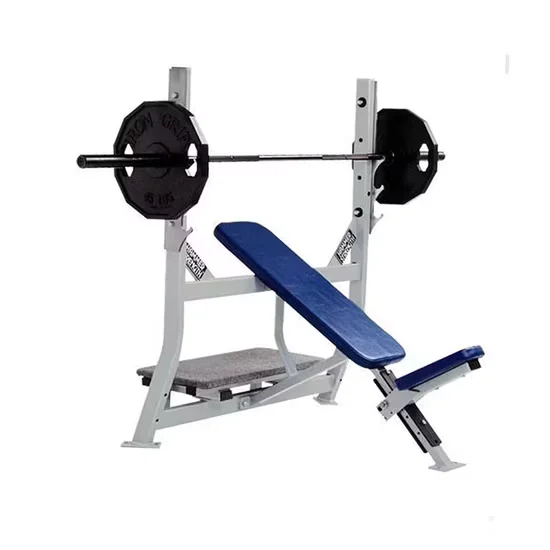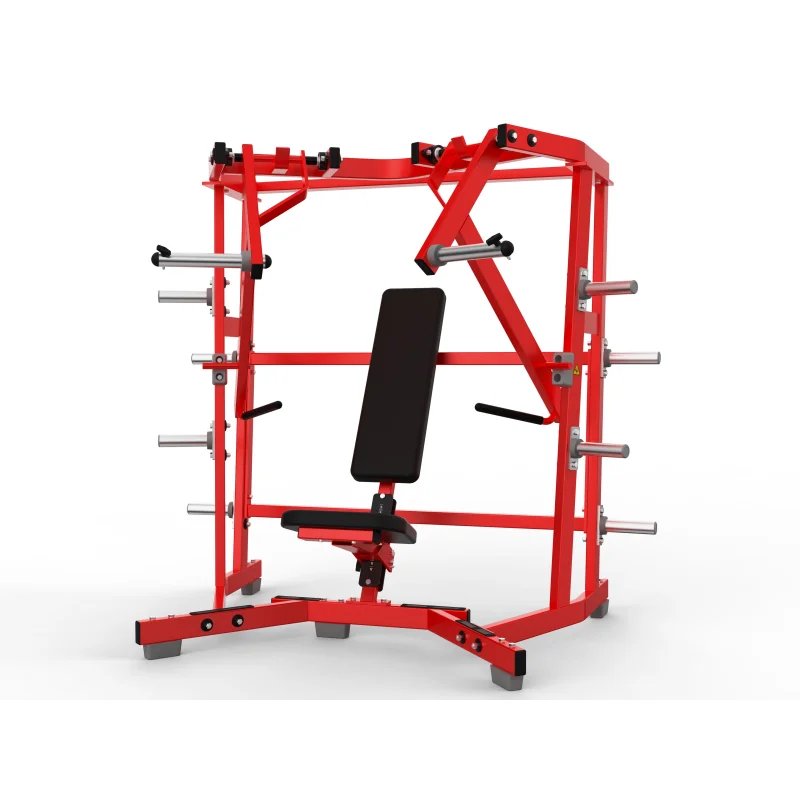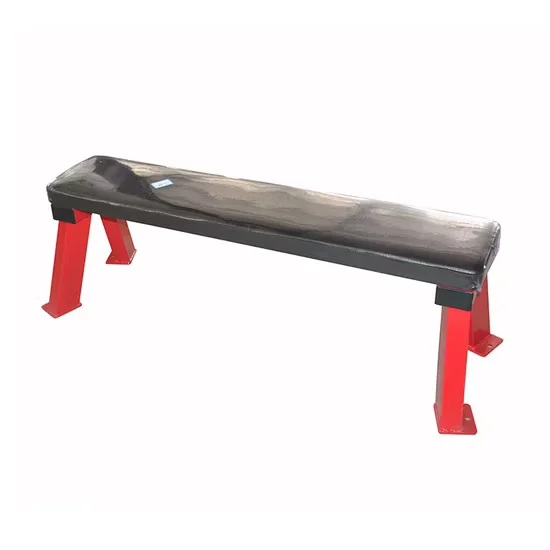
Structural Rigidity — Reinforced steel frame and precision-machined pivot points tested for 10,000+ hours of high-frequency pressing cycles without wobble or fatigue.
Technical Specifications
| Parameter | Value |
|---|---|
| Product Type | Flat Bench Press |
| Exercise Part | Chest |
| Material | Steel |
| Product Dimensions | 1295 × 595 × 457 mm |
| Net Weight | 23 kg |
| Max User Weight | Available upon request |
| Certification | ISO 9001, CE |
| OEM/ODM | Available |
| Age Group | Adult |
| Gender | Unisex |
| Fit Area | Professional Gym and Club |
Application Suitability
| Deployment Scenario | Typical Use |
|---|---|
| Chain gym strength zone | High-frequency flat pressing stations for general membership circuits |
| Corporate wellness room | Compact bench pressing setup for employee strength routines |
| Hotel fitness center on guest room floors | Low-profile bench paired with dumbbell racks for traveler workouts |
| Community fitness center | Durable flat bench accommodating varied user sizes and daily traffic |
| Sports performance training center | Stable pressing platform for athlete barbell and dumbbell programs |
Why Lightweight Benches Fail Under Continuous Commercial Pressing
A bench that flexes under load is a liability, not a savings.
I have watched residential-grade benches wobble mid-set when a 100 kg member shifts on the pad, and I have seen frame welds crack within months when a community gym runs them six days a week. The commercial chest press flat bench machine needs to absorb repeated eccentric loads without transmitting vibration through the floor or introducing lateral play at the pivot. [NEED_CITE: EN 957 requirements for static load testing of commercial strength benches] When facility buyers select benches purely on unit price, they end up replacing pads, tightening bolts weekly, and fielding member complaints about instability. A reinforced steel frame with precision-machined contact points eliminates that cycle.
Where This Flat Bench Fits in a Commercial Strength Zone
The commercial chest press flat bench machine anchors the free-weight section, covering barbell and dumbbell pressing movements across beginner to advanced intensity ranges. It pairs naturally with adjustable benches and squat racks to form a complete pressing and lower-body station. Its compact footprint allows tight placement alongside plate trees without sacrificing safe entry and exit paths. The flat profile suits users from lighter recreational members to heavy compound lifters, and the steel construction handles the lateral forces generated during high-rep sets without perceptible frame deflection.
Deployment Environment and Continuous Use Requirements
In a chain gym running twelve hours daily, a flat bench endures hundreds of sit-down and stand-up cycles plus the dynamic load of pressing movements. The steel frame and reinforced welding maintain alignment across these repetitions [NEED_CITE: motor duty cycle classification for continuous commercial operation]. Placement on rubber flooring with a level substrate prevents rocking and protects both the bench feet and the subfloor. For hotel fitness centers on upper floors, the 23 kg net weight keeps the unit stable without requiring anchor bolts. Adequate clearance on all sides ensures members can load and unload without colliding with adjacent equipment or walls.
Steel Frame Geometry and Pad Density Explained
The 1295 × 597 mm footprint provides a wide base relative to bench height, lowering the center of gravity and resisting tip forces when a member sits on the edge. Steel tube construction with reinforced weld seams at stress junctions distributes load across the frame rather than concentrating it at single bolt points. Pad foam density directly affects both comfort and longevity: low-density foam compresses permanently within months under commercial use, exposing the steel backing and creating pressure points that members notice immediately. High-density foam wrapped in commercial-grade vinyl resists sweat penetration and maintains its profile across thousands of use cycles.
The Hidden Cost of Specifying Residential Benches for Commercial Floors
A community gym that installed lightweight benches saw pad delamination and frame wobble within four months, forcing a full replacement cycle that cost more than sourcing commercial units initially. [NEED_CITE: commercial strength equipment replacement frequency in high-traffic facilities] Member complaints about unstable surfaces drove experienced lifters to competing facilities. Maintenance staff spent hours tightening hardware that residential-grade bolts could not hold under repeated dynamic loads. These failures are predictable when bench specifications are chosen without matching duty cycle to actual facility traffic.
Why This Product Line Holds Up Across Deployments
The reinforced steel frame on this commercial chest press flat bench machine passes durability testing aligned with 10,000+ hours of continuous high-frequency use, matching the standard applied across our cardio and strength families. Precision-machined pivot and bearing points eliminate the play that causes wobble on competitor benches. OEM and ODM options cover frame finish, pad color, and branding so the bench matches facility aesthetics without structural compromise. Our 3D layout planning accounts for bench spacing, sightlines, and member flow so each unit sits where traffic patterns support it. CE and ISO 9001 certification underpin manufacturing consistency across every batch.
Documentation & Test Records
- CE declaration of conformity for commercial strength bench equipment
- EN 957 test report covering static and dynamic load verification
- ISO 9001 certificate for manufacturing quality management
- Noise and vibration assessment record for floor-deployed installations
- Durability test record documenting cycle counts on frame and pad
- Spare parts list covering pad replacements and hardware kits
Installation, Commissioning & Maintenance
- Maintain 600 mm clearance on all sides of the 1295 × 597 mm footprint for safe member movement
- Level the floor substrate before placement to prevent frame rocking under load
- Inspect all weld seams and hardware torque quarterly under commercial use patterns
- Wipe vinyl pad surfaces daily with pH-neutral cleaner to prevent sweat degradation
- Replace pad foam when compression exceeds visible profile loss to maintain user comfort
- Verify rubber foot pads remain intact to protect flooring and prevent lateral sliding
Equipment Selection and Quotation Process
Provide your strength zone square footage and equipment list to receive a 3D layout that positions each commercial chest press flat bench machine for optimal member flow and safety clearance. Specify your expected daily traffic volume so we match frame and pad specifications to your duty cycle. Confirm whether you need OEM branding, custom pad colors, or console integration with adjacent cardio equipment. State your destination market so documentation and labeling align with local compliance requirements.
Frequently Asked Questions
Q: What frame material and construction standards ensure long-term durability in commercial settings?
A: The frame uses steel tube construction with reinforced weld seams at every stress junction. Each unit undergoes static and dynamic load testing per EN 957 standards to verify structural integrity under repeated heavy pressing cycles. Precision-machined contact points eliminate lateral play that causes wobble over time, and the wide-base geometry resists tipping forces even during off-center loading.
Q: How does pad density and upholstery quality impact comfort and maintenance frequency?
A: High-density foam maintains its profile across thousands of compression cycles, preventing the permanent sag that exposes steel backing and creates pressure points. Commercial-grade vinyl resists sweat penetration and wipes clean without degrading. Low-density alternatives compress within months in high-traffic facilities, requiring early replacement and generating member complaints about uncomfortable surfaces during pressing movements.
Q: What customization options are available for branding and facility color matching?
A: OEM and ODM services cover frame powder-coat finish, pad vinyl color, and logo placement to align with facility branding. Custom console fascia panels are available if the bench is paired with adjacent cardio stations requiring a unified visual identity. Minimum order quantities are flexible, and lead times are confirmed during the quotation stage based on customization scope.
Q: How should flat benches be spaced and positioned for optimal member flow and safety?
A: Each bench requires clearance on all sides for safe entry, exit, and plate loading. Our 3D layout service maps bench placement against traffic patterns, sightlines from staff desks, and proximity to plate storage. Positioning benches parallel to walls with adequate aisle width prevents collision with members carrying dumbbells and maintains clear emergency egress paths throughout the strength zone.
Q: What are the recommended inspection and maintenance routines for commercial bench equipment?
A: Weekly visual checks should cover pad surface condition, vinyl seam integrity, and hardware tightness. Quarterly inspections focus on weld seams, frame alignment, and rubber foot pad wear. Pad foam should be replaced when visible compression affects user comfort. All maintenance intervals assume standard commercial operating hours; facilities running extended schedules should shorten inspection cycles accordingly.
![Commercial Seated Triceps Extension Machine Gym Equipment [WARN] draft identifier mismatch](https://bicksport.com/wp-content/uploads/2026/08/commercial-seated-triceps-extension-machine-gym-equipment-warn-draft-identifier-mismatch-dfc083.webp)