
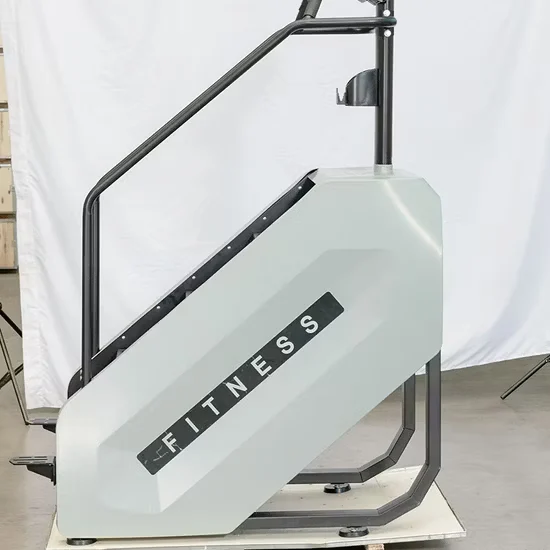
![Commercial Stair Machine for Gyms Multifunctional New Arrival[WARN] draft identifier mismatch](https://bicksport.com/wp-content/uploads/2026/08/commercial-stair-machine-for-gyms-multifunctional-new-arrivalwarn-draft-identifier-mismatch-8b2695.webp)
Continuous Duty Motor Drive — a commercial stair climber built with motor-driven mechanics and dual-voltage input rated for 10,000+ hour continuous operation in high-traffic cardio zones.
Technical Specifications
| Parameter | Value |
|---|---|
| Product Type | Stair Climber |
| Type of Drive | Motor Drive |
| Step Velocity Range | 15–164 steps/minute |
| Mains Input | AC220V±10% / AC110V±10% |
| Step Area | 560 × 235 × 220 mm |
| Console OSD | Time, Climb, Calories, Steps, Heart Rate |
| Function | Electric |
| Product Dimensions | 1450 × 820 × 2080 mm |
| Net Weight | 148 kg |
| Material | Steel Pipe + PP Plastic |
| Color | Black |
| Folded | Unfolded |
| Certification | CE |
| Condition | New |
Application Suitability
| Deployment Scenario | Typical Use |
|---|---|
| hotel fitness center on guest room floors | 24-hour cardio access with low-noise motor operation for overnight guests |
| chain gym cardio zone | high-frequency stair training across peak-hour member volumes |
| corporate wellness room | structured climbing sessions during employee break windows |
| high-end residential home gym | dedicated climbing equipment with AC110V or AC220V flexibility |
| sports performance training center | interval protocols using 15–164 steps/minute range |
Why Motor Burnout Happens Before the Warranty Expires
Light-duty motors rated for intermittent use cannot survive continuous commercial duty cycles.
Facilities that install stair climbers with underspec’d motors face predictable failure sequences: the drive overheats under sustained member traffic, thermal cutoff trips mid-session, and maintenance logs fill with repeat incidents. A commercial stair climber motor drive gym deployment demands a motor rated for continuous output, not peak bursts measured on a test bench. I’ve seen gym floors lose entire cardio zones because purchasing decisions prioritized sticker price over duty-cycle documentation [NEED_CITE: motor duty cycle classification for continuous commercial operation].
Stair Training Positioning in a Multi-Discipline Cardio Layout
This stair climber fills the vertical-loading gap between treadmill running and elliptical cross-training, targeting glute and quad activation through step-based resistance. The 15–164 steps/minute velocity range supports warm-up protocols at the lower end and high-intensity interval sessions at the upper end. In a cardio zone configuration, it complements treadmills for lower-body variety and rowing machines for posterior-chain balance. The 1450 × 820 mm footprint fits standard commercial spacing grids. Users up to the rated capacity can access the full step range, making it suitable for general member populations and athletic conditioning alike.
Continuous Operation Demands and Facility Infrastructure
A stair climber running in a 24/7 gym cardio zone accumulates operational hours fast, and the motor drive must handle sustained load without thermal derating. Noise transmission through floor slabs is a concern when equipment sits above occupied spaces — the motor drive system and reinforced steel pipe frame help keep mechanical vibration in check [NEED_CITE: acoustic transmission standards for cardio equipment on suspended floors]. Dual-voltage input (AC220V±10% / AC110V±10%) eliminates transformer mismatches at international deployment sites. The unit requires a level floor with adequate clearance on all sides for safe boarding, and a dedicated circuit to prevent voltage sag when multiple units start simultaneously.
Motor Drive and Console Specifications in Practice
Motor drive stair climbers differ fundamentally from manual-resistance stepmills: the electric motor controls step velocity precisely, so the user sets cadence through the console rather than fighting gravity alone. The 15–164 steps/minute range covers rehabilitation-level stepping through advanced athletic intervals without mechanical adjustment. The OSD console surfaces time, climb height, calories, steps, and heart rate in a single display, giving trainers and members immediate session feedback. Heart rate monitoring through the console supports pacing decisions during structured workouts. The dual AC220V/AC110V input means the same unit ships to 50 Hz and 60 Hz markets without rewiring [NEED_CITE: dual-voltage motor design for international cardio equipment deployment]. Steel pipe construction with PP plastic covers balances structural rigidity against weight, keeping the net at 148 kg for stability under dynamic loading.
What Specification Shortcuts Cost After Installation
Gym operators who select stair climbers without verifying continuous duty ratings on the motor drive face cascading consequences: premature motor failures disrupt member experience and trigger equipment downtime. Noise complaints escalate when vibration damping is inadequate for upper-floor hotel deployments, leading to unit relocation or full replacement. When consoles lack basic data output, facility managers lose visibility into usage patterns and cannot plan maintenance intervals around actual run-hours. Voltage mismatches discovered at the container level mean expensive rewiring or equipment returns [NEED_CITE: common deployment failures from voltage and plug standard mismatches in commercial cardio].
Why This Product Line for Stair Climber Deployments
Every unit undergoes 10,000-hour continuous operation validation on motors, frames, and bearings before leaving the facility. The sub-35dB noise floor is verified in hotel deployments where cardio equipment sits directly above guest rooms. The console delivers workout analytics and heart rate tracking without requiring external sensors or app dependencies. OEM customization covers console UI, color, and branding at flexible MOQ, so operators align equipment aesthetics with their facility identity. A free 3D cardio-zone layout accounts for this stair climber’s 1450 × 820 mm footprint alongside spacing for member flow and airflow clearance. Technical support responds around the clock for commissioning and field service.
Documentation & Test Records
- CE declaration of conformity for this stair climber model
- EN 957 test report covering structural and safety requirements
- ISO 9001 certificate for manufacturing quality systems
- Motor specification sheet with continuous duty rating data
- Console technical documentation and OSD parameter reference
- Noise level test report from deployment-verified measurements
Installation, Commissioning & Maintenance
- Allow clearance around the 1450 × 820 mm footprint for safe user boarding and ventilation
- Level the floor and place vibration-damping pads beneath the steel pipe frame
- Connect to a dedicated AC220V or AC110V circuit matching the deployment market
- Verify OSD parameters and heart rate sensor function during initial power-on
- Inspect motor drive components and step mechanism at scheduled run-hour intervals
- Clean console display and handrails regularly to prevent sweat corrosion
Planning Your Stair Climber Deployment
Share your cardio zone square footage and target unit count to receive a 3D layout with airflow and sightline planning for this stair climber. Specify daily operational hours so the motor duty cycle matches your facility’s actual traffic pattern. Confirm the deployment floor and adjacent occupied spaces to validate noise requirements. Indicate your target market voltage standard to ensure correct AC220V or AC110V configuration. State whether console data needs to integrate with your facility management software.
Frequently Asked Questions
Q: How does motor drive differ from manual resistance in a commercial stair climber?
A: Motor drive controls step velocity electronically, delivering consistent cadence regardless of user fatigue. Manual resistance units depend on user effort to move the steps, creating uneven pacing. Motor-driven systems operate with less mechanical noise because the motor manages the load cycle, making them better suited for hotel floors and shared residential spaces where acoustic standards are strict.
Q: What step velocity range is appropriate for different user fitness levels?
A: The 15–164 steps/minute range accommodates rehabilitation and beginner sessions at the lower end, where controlled stepping builds baseline conditioning. Intermediate users typically train in the mid-range for steady-state cardio. Advanced athletes and sports performance programs use the upper range for high-intensity intervals, leveraging the console’s real-time step and heart rate feedback.
Q: Can the console data integrate with facility management systems?
A: The OSD tracks time, climb, calories, steps, and heart rate for session-level data capture. Integration capability depends on the console configuration selected at order. Request the console technical documentation during specification review to confirm data output format and any available connectivity options for your facility management platform.
Q: Does dual-voltage input require special wiring at the deployment site?
A: The AC220V±10% and AC110V±10% input covers both 50 Hz and 60 Hz power standards used across international markets. No external transformer is needed. Confirm the correct plug type and circuit rating for your deployment country during the specification phase to avoid mismatches when the equipment arrives on site.
Q: What frame and bearing specifications support continuous commercial use?
A: The steel pipe frame and motor drive assembly are tested for 10,000+ hours of continuous high-frequency operation. Sealed bearings reduce maintenance intervals compared to exposed bushings. Request the durability test record and motor specification sheet to verify continuous duty ratings match your facility’s daily operational demands before finalizing your order.
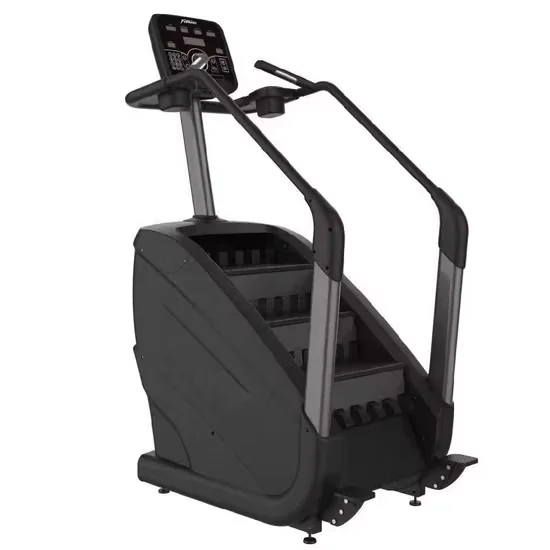
![SQ1017 High Performance Motor Drive Commercial Stair Machine [WARN] draft identifier mismatch](https://bicksport.com/wp-content/uploads/2026/08/sq1017-high-performance-motor-drive-commercial-stair-machine-warn-draft-identifier-mismatch-c50b40.webp)
![Stair Climber Machine with Easy Assembly Guide for Beginners [WARN] draft identifier mismatch](https://bicksport.com/wp-content/uploads/2026/08/stair-climber-machine-with-easy-assembly-guide-for-beginners-warn-draft-identifier-mismatch-d78b7a.webp)