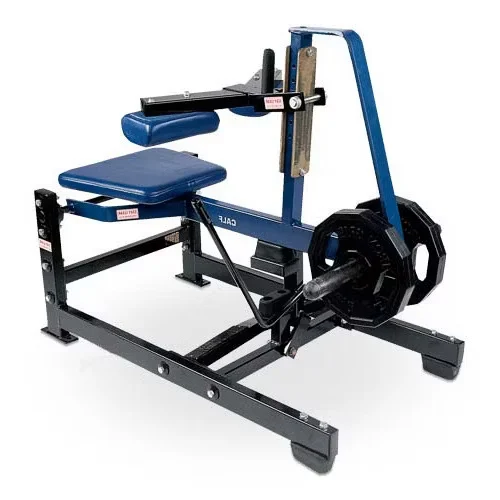
![Commercial Linear Leg Press Machine Hack Squat Gym Equipment [WARN] draft identifier mismatch](https://bicksport.com/wp-content/uploads/2026/08/commercial-linear-leg-press-machine-hack-squat-gym-equipment-warn-draft-identifier-mismatch-987ea1.webp)
Near-Silent Linear Operation — manual plate-loaded guide rails eliminate motor and belt noise sources entirely, meeting sub-35dB ambient targets on hotel guest floors.
Technical Specifications
| Parameter | Value |
|---|---|
| Product Type | Linear Leg Press |
| Power Source | Manual |
| Resistance Type | Plate-loaded |
| Guide System | Linear rail with sealed bearings |
| Max User Weight | 250 kg |
| Product Dimensions | 2375×1500×1475 mm |
| Frame Material | Steel |
| Foldable | Unfolded |
| Age Group | Adult |
| Gender | Unisex |
| Customization | Available |
| Certification | CE, ISO 9001, RoHS |
Application Suitability
| Deployment Scenario | Typical Use |
|---|---|
| Hotel fitness center on guest room floors | 24-hour leg training without noise transmission to adjacent rooms |
| Chain gym cardio and strength zone | High-frequency plate-loaded leg work in high-traffic areas |
| Corporate wellness room | Heavy-duty leg conditioning during peak before-work and lunchtime windows |
| High-end residential home gym | Quiet lower-body training in shared-wall or multi-story dwellings |
| Sports performance training center | Athlete-grade linear resistance for explosive and controlled leg development |
Why Manual Guide Rails Outlast Motorized Alternatives in Shared Facilities
Plate-loaded linear systems remove every electronic failure point from the equation.
I have seen hotel maintenance logs fill up with drive-motor replacements on motorized leg stations that were never rated for continuous public-facility use. When a motorized unit sits on a guest floor, the low-frequency hum travels through structural concrete at night, and complaints reach the front desk long before the engineering team notices. A manual plate-loaded commercial linear leg press gym equipment unit has no motor, no belt, and no electronic controller — meaning nothing to overheat, nothing to drift out of calibration, and nothing to generate low-frequency vibration through the floor slab [NEED_CITE: acoustic transmission of low-frequency vibration through reinforced concrete in hospitality structures].
Where a Linear Leg Press Fits in a Commercial Strength Floor
This machine covers controlled, high-load lower-body pressing across a full range of motion, complementing free-weight squat racks and hip-dominant stations on the same floor plan. It suits deployment in high-traffic zones where members cycle through sets quickly and the frame must absorb repeated 250 kg loading without lateral deflection. The linear travel path accommodates users of varying limb lengths and torso proportions without requiring seat-rail adjustments between sets. The commercial linear leg press gym equipment occupies a defined footprint that planners can anchor against a structural wall, leaving adjacent bays clear for cable and free-weight traffic.
Continuous-Use Demands on Guide Rails and Bearing Joints
A commercial gym floor running twelve to sixteen hours daily puts guide-rail bearings through thousands of cycles per week, and any lateral play in the carriage translates directly into noise and joint discomfort for the user. Proper deployment requires a level concrete subfloor with isolation pads to prevent micro-migration under repeated eccentric loading. The sealed bearing design on this linear system is tested for 10,000+ hour duty cycles, reducing the need for scheduled re-greasing in high-throughput environments [NEED_CITE: bearing lifecycle testing standards for commercial plate-loaded strength equipment]. Ventilation is not a concern for the machine itself, but planners should account for user heat output when spacing the unit within a densely packed strength zone.
Reading the Steel Gauge and Linear Travel Specs
The reinforced steel frame is rated to 250 kg maximum user load plus external plate mass, and the cross-section of the main uprights determines how much lateral sway appears under off-center loading. Linear guide rails with precision-machined channels keep the carriage traveling in a single plane, which matters because any rotational play forces the user’s knees and hips to compensate during the eccentric phase. Plate-loaded horns accept standard Olympic bumper or iron plates, and the manual resistance curve is governed entirely by gravity and the angle of the linear track — no magnetic eddy-current system to recalibrate and no electronic controller to replace. The pivot joints at the carriage hinge use commercial-grade bushings designed to maintain smooth travel without developing the knocking sound that cheaper units produce within months of public use.
What Spec Compromise Costs When the Warranty Expires
Operators who select frames built to light-commercial gauge tolerances often discover lateral wobble appearing in the carriage within the first high-volume quarter, leading to member complaints about knee discomfort and eventual equipment removal. Guide rails machined from softer alloys develop visible scoring under repeated heavy loading, and replacing them requires a full teardown that takes the station offline for days. Weld failures at the plate-horn junction have caused entire product recalls in the industry, and the reputational damage from a single structural incident outweighs the upfront savings on thinner-gauge steel [NEED_CITE: structural failure modes in plate-loaded strength equipment under continuous commercial loading].
Why This Product Line Holds Up Across Deployment Types
Every unit in the six-series cardio and strength family undergoes 10,000-hour continuous-operation testing on frames, bearings, and guide components before leaving the Shandong facility. The commercial linear leg press gym equipment ships with the same reinforced-steel philosophy applied across treadmills, bikes, and rowers, so a facility sourcing the entire floor from one manufacturer gets consistent load ratings and finish quality. Full OEM and ODM customization covers frame color, pad upholstery, and logo placement to match interior design standards. The engineering team provides 3D strength-zone layout and airflow planning that accounts for the 2375×1500 mm footprint of this unit, ensuring safe member flow around the loading horns. Technical support is available around the clock for commissioning and spare-parts coordination.
Documentation & Test Records
- CE declaration of conformity for plate-loaded strength equipment
- EN 957 test report covering structural integrity and stability
- ISO 9001 quality management certificate
- RoHS compliance declaration for materials and coatings
- Noise level test record verifying sub-35dB manual operation
- Durability test log for guide-rail and bearing lifecycle
Installation, Commissioning & Maintenance
- Allow minimum clearance on all sides for plate loading and user egress around the 2375×1500 mm footprint
- Place isolation pads beneath all contact feet to prevent micro-migration on polished concrete
- Verify floor levelness to within tolerance before anchoring, ensuring linear rails track without binding
- Inspect all pivot and bearing joints after the first month of use and re-torque fasteners to specification
- Wipe guide rails weekly with non-corrosive cleaner to prevent chalk and sweat buildup
- Check pad upholstery and stitching quarterly for wear in high-throughput environments
Planning Your Strength-Zone Equipment Mix
Provide your strength-zone square footage and planned equipment list to receive a 3D layout with member-flow and spacing analysis. Specify the daily operating hours and peak-traffic density so the engineering team can confirm guide-rail and bearing suitability for your expected cycle count. Confirm deployment floor level and adjacent occupied spaces to validate that manual operation meets your ambient noise targets. State whether the unit requires OEM branding, color matching, or custom pad upholstery to align with your interior standards.
Frequently Asked Questions
Q: How does a plate-loaded linear leg press compare to a selectorized version for high-frequency commercial use?
A: Plate-loaded units eliminate the cable, pulley, and weight-stack mechanism entirely, removing the components most prone to wear under continuous public-facility rep counts. The linear guide system has fewer moving parts to maintain, and the resistance is governed by gravity rather than a friction-based selector pin. Operators running twelve-plus-hour days typically find plate-loaded systems require less scheduled maintenance over the equipment lifecycle.
Q: Why does frame gauge and weld quality matter on a linear leg press?
A: The frame absorbs every Newton of force transferred through the linear rails during heavy eccentric loading. Thinner-gauge steel develops visible flex and lateral carriage play over time, which users feel as instability through the hips and knees. Weld integrity at the plate-horn junction and main upright intersections determines whether the frame withstands years of off-center loading without crack propagation [NEED_CITE: EN 957 structural testing requirements for plate-loaded equipment].
Q: How does guide-rail design affect lateral stability and joint comfort?
A: Precision-machined linear rails keep the carriage traveling in a single plane without rotational play. When rails are undersized or poorly aligned, the carriage develops lateral wobble that forces the user’s knees and hips to compensate during each rep. Over hundreds of sets, this micro-compensation accumulates into joint discomfort and member complaints that have nothing to do with the exercise itself.
Q: What are the noise implications of choosing manual over motorized strength equipment in shared facilities?
A: Manual plate-loaded equipment generates no motor hum, no belt whine, and no electronic controller noise — the only sound comes from plates being loaded and the carriage moving along sealed bearings. This makes manual units suitable for hotel guest floors and residential-adjacent fitness rooms where sub-35dB ambient targets must be maintained around the clock.
Q: What OEM customization options exist for branding, color, and pad material?
A: Frame powder-coat color, pad upholstery material and stitching color, and logo placement on the uprights and carriage are all configurable. Console UI customization applies to the cardio product lines that share this manufacturing platform. Minimum order quantities remain flexible for facility operators outfitting a single location or a multi-site rollout.


![**H1 Product Title** Commercial Leg Extension Machine Gym Fitness Equipment 5030 [WARN] draft identifier mismatch](https://bicksport.com/wp-content/uploads/2026/08/h1-product-title-commercial-leg-extension-machine-gym-fitness-equipment-5030-warn-draft-identifier-mismatch-fc7c09.webp)