
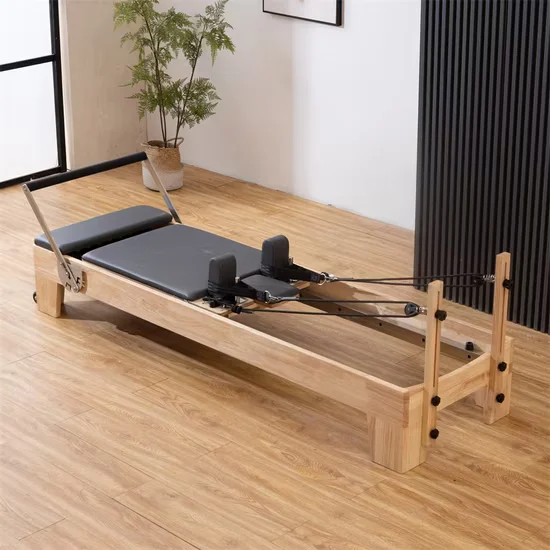
Spring-Based Precision — Reinforced 100 kg steel chassis and progressive spring resistance eliminate motor noise and electronic failure points across continuous studio sessions.
Technical Specifications
| Parameter | Value |
|---|---|
| Product Type | Pilates Reformer with Tower / Half Trapeze Reformer |
| Model NO. | SRY-02 |
| Dimensions | 2460 × 730 × 680 mm |
| Net Weight | 100 kg |
| Resistance Type | Spring-based progressive load |
| Accessories | Long Box / Jump Board / Platform |
| Color | Solid Color (custom options available) |
| Logo | Customized Is Allowed |
| User Group | Adult / Unisex |
| Warranty | 3 Years |
| HS Code | 9506911900 |
| Origin | China |
Application Suitability
| Deployment Scenario | Typical Use |
|---|---|
| Boutique Pilates studio | Full tower and half trapeze class programming in a single reformer footprint |
| Rehabilitation and physiotherapy center | Progressive spring resistance with jump board and platform for graded recovery protocols |
| Corporate wellness center | Branded solid-color equipment integrated into premium interior environments |
| High-end residential home gym | Comprehensive Pilates discipline coverage without multi-unit floor sprawl |
| Sports performance training center | Athletic conditioning through trapeze and spring-loaded resistance work |
Why Studios Replace Reformers Before the Springs Even Sag
Frame resonance during jump board work exposes structural shortcuts faster than any wear test.
Boutique studios running back-to-back classes discover that a reformer’s real failure point is not the springs or the carriage wheels — it is the frame’s inability to absorb dynamic loading without transmitting vibration into the floor. In multi-story deployments, that vibration reaches the room below as a low-frequency thud that generates complaints before the equipment itself shows any mechanical wear [NEED_CITE: structural vibration transmission in multi-floor fitness deployments]. The commercial Pilates reformer with tower half trapeze configuration concentrates more moving mass into a single footprint than any other studio apparatus, making frame rigidity the first specification worth verifying.
Where This Reformer Sits in a Studio Equipment Matrix
The SRY-02 covers the full intensity spectrum from rehabilitation-level spring tension through advanced athletic trapeze sequences, occupying the center of a studio floor plan as the primary apparatus. It complements mat zones and smaller apparatus like chairs and barrels by handling the discipline’s highest-load movements — jump board plyometrics, long box series, and half trapeze suspension work — within a single commercial Pilates reformer with tower half trapeze footprint. The 2460 mm length accommodates tall users during full-extension exercises, while the 730 mm width allows side-by-side placement in group class layouts with adequate instructor circulation space.
Continuous Class Turnover and the Floor Below
A reformer in a studio running six to eight classes daily endures continuous carriage travel and repeated jump board impacts across ten or more hours of operation. The 100 kg frame mass dampens carriage vibration and prevents floor resonance that migrates through structural slabs — a deployment factor that matters most when the studio occupies an upper floor above occupied commercial or residential space [NEED_CITE: impact load transmission standards for fitness equipment on suspended floors]. Adequate ventilation around the unit’s perimeter prevents upholstery moisture buildup during high-humidity seasons, and a level subfloor with vibration-damping pads extends carriage bearing life by eliminating lateral drift.
Spring Tension, Carriage Bearings, and What Actually Wears First
Spring-based resistance delivers a progressive load curve that increases with extension, unlike pneumatic or magnetic systems that maintain flat resistance through range of motion. This curve matches the biomechanics of most Pilates exercises — where muscular demand peaks at mid-range — and it does so without motors, electronics, or software that can fail mid-session. The carriage rail material and bearing type determine long-term smoothness: sealed bearings on hardened steel rails maintain glide consistency through thousands of cycles, while unsealed alternatives introduce friction variance as dust and chalk residue accumulate. The 100 kg net weight anchors the frame during jump board and trapeze exercises where lateral forces would shift a lighter unit.
What Lightweight Frames Cost After Six Months of Classes
Studios that select reformers below the commercial weight threshold encounter progressive problems: carriage drift during bilateral exercises, joint rattle that amplifies through hard flooring, and frame flex that compromises exercise precision. The result is member attrition driven by equipment feel rather than instruction quality — a loss mechanism that is difficult to diagnose because departing clients rarely articulate the mechanical cause [NEED_CITE: equipment perception and member retention in boutique fitness studios]. Replacement costs compound when an entire fleet must be swapped simultaneously to maintain visual and functional consistency across the studio floor.
Why This Product Line Covers the Deployment Gap
The SRY-02 is built around a reinforced steel chassis tested for continuous studio-duty cycles, with spring resistance that eliminates electronic failure points entirely. Senrui’s manufacturing integration — spanning frame welding, assembly, and quality control across dedicated facilities — ensures that the 100 kg frame specification reflects actual structural mass rather than accessory-laden totals. The 3-year warranty on frame and moving components reflects confidence in commercial-frequency operation. Custom logo placement and solid-color finish options allow brand-aligned deployment without extending lead times, and the complete accessory package (long box, jump board, platform) means a studio sources full-spectrum Pilates capability from a single unit rather than managing multiple vendor relationships.
Documentation & Test Records
- CE declaration of conformity covering structural and mechanical safety requirements
- EN 957 test report validating static and dynamic load performance
- ISO 9001 certificate for manufacturing quality management systems
- Frame weld inspection and structural load verification records
- Spring tension curve and fatigue cycle test documentation
- Assembly guide with accessory swap-out procedures and spare parts list
Installation, Commissioning & Maintenance
- Allow minimum 600 mm clearance on all sides of the 2460 × 730 mm footprint for instructor access
- Install vibration-damping pads beneath the frame to isolate jump board impacts from structural flooring
- Verify floor levelness across the full carriage travel range before securing the unit
- Inspect carriage bearing smoothness and rail alignment after the first 200 hours of class operation
- Clean spring coils and attachment hardware monthly to prevent chalk and sweat residue buildup
- Check long box, jump board, and platform attachment mechanisms quarterly for secure locking
Specifying the Right Configuration for Your Facility
Provide your studio floor area and target unit count to receive a 3D layout plan that accounts for instructor circulation, sightlines, and ventilation spacing around each reformer. Specify your deployment floor level and the occupancy of adjacent or below-grade spaces so that vibration isolation requirements can be matched to the installation. Indicate whether custom color matching or logo placement is required so that finish options and lead times are confirmed before proforma invoice stage.
Frequently Asked Questions
Q: What resistance type is used and how does it compare to reformers with adjustable spring stacks?
A: The SRY-02 uses a spring-based progressive resistance system where load increases with extension, matching the natural strength curve of most Pilates movements. Unlike flat-resistance pneumatic or magnetic systems, springs deliver heavier load at mid-range where muscular demand peaks. There are no motors or electronics to fail during class, and spring replacement is straightforward when tension degrades after extended commercial use.
Q: Can the tower and half trapeze be configured for both rehabilitation and advanced athletic conditioning?
A: Yes. The tower and half trapeze support the full intensity spectrum by combining variable spring attachment points with the long box, jump board, and platform accessories. Rehabilitation users work at lower spring tensions with controlled range of motion, while athletic conditioning leverages the same frame for plyometric jump board sequences and loaded trapeze suspensions. The reinforced frame maintains stability across both ends of that programming range.
Q: How does the 100 kg frame weight contribute to stability during jump board exercises?
A: The 100 kg net weight reflects the reinforced steel chassis mass that anchors the reformer against lateral and vertical forces generated during jump board plyometrics. Lighter frames shift on hard flooring during repeated impacts, compromising exercise precision and transmitting vibration to floors below. This mass keeps the unit planted through dynamic sequences without requiring permanent floor anchoring in most commercial installations.
Q: What custom branding options are available for color, logo placement, and upholstery?
A: The SRY-02 supports solid-color finish customization with logo placement on designated frame surfaces to match studio branding standards. Color matching and logo positioning are scoped during the OEM consultation phase, with samples confirmed before production. Lead times for branded orders depend on quantity and finish complexity, and the manufacturer provides mock-ups for approval before the production run begins.
Q: What is covered under the 3-year warranty and what is the expected service interval for carriage bearings and springs?
A: The 3-year warranty covers the frame and moving components against manufacturing defects under normal commercial use. Springs should be inspected for tension loss and replaced when progressive load response degrades, typically after sustained high-frequency class programming. Carriage bearings require periodic cleaning and lubrication to maintain smooth travel, with service intervals depending on studio usage volume and environmental dust levels.
![Wholesale Pilates Reformers Cadillac with Tower for Home Gym [WARN] draft identifier mismatch](https://bicksport.com/wp-content/uploads/2026/08/wholesale-pilates-reformers-cadillac-with-tower-for-home-gym-warn-draft-identifier-mismatch-426e26.webp)


