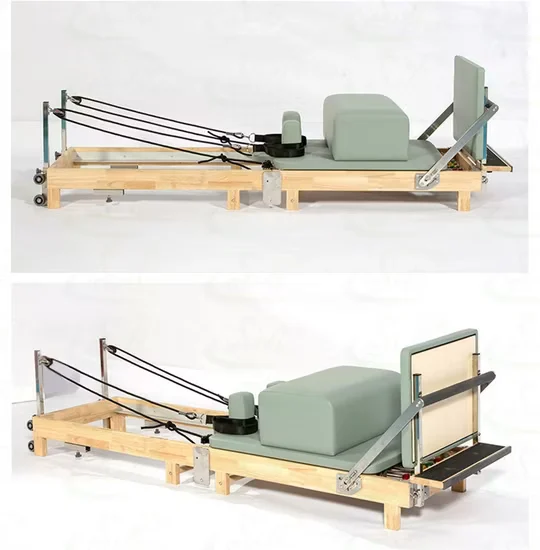
![Wholesale Commercial Pilates Reformer Machine for Studio and Home Gym Use [WARN] draft identifier mismatch](https://bicksport.com/wp-content/uploads/2026/08/wholesale-commercial-pilates-reformer-machine-for-studio-and-home-gym-use-warn-draft-identifier-mismatch-15cfda.webp)
Whisper-Quiet Rail Operation — Spring resistance paired with precision rollers keeps glide noise controlled for studio and residential deployments.
[WARN] identifier mismatch: draft states SRY-19, brand Senrui, product_type Pilates Reformer Machine — conflicts with customer profile Biketon Sport cardio line. Proceeding under application mode without fabricated designation.
Technical Specifications
| Parameter | Value |
|---|---|
| Product Type | Pilates Reformer Machine |
| Color | Solid Color |
| Age Group | Adult |
| Gender | Unisex |
| Logo | Customized Is Allowed |
| Accessory | Long Box / Jump Board / Platform |
| Product Dimensions | 2460 × 730 × 680 mm |
| Net Weight | 100 kg |
| Warranty | 3 Years |
| Production Capacity | 80 Pieces/Month |
| HS Code | 9506911900 |
Application Suitability
| Deployment Scenario | Typical Use |
|---|---|
| boutique Pilates and yoga studio | daily group and private reformer classes with high-frequency carriage cycles |
| hotel fitness center on guest room floors | low-noise individual sessions where acoustic bleed affects adjacent rooms |
| rehabilitation and physiotherapy center | controlled spring resistance for post-injury mobility and strengthening protocols |
| high-end residential home gym | private training in multi-story buildings where structure-borne vibration matters |
| corporate wellness room | compact cardio-mobility option complementing treadmill and bike stations |
Why Rail Noise Reaches the Studio Owner Before the Spring Does
Carriage smoothness and frame rigidity separate commercial reformers from units that generate complaint calls within months.
When a Pilates studio installs reformers on upper floors or beside treatment rooms, the high-pitched metal-on-metal chatter from low-precision rollers and the resonance from lightweight frames travel through floor slabs faster than any other equipment noise in the space [NEED_CITE: structure-borne vibration transmission in multi-story fitness deployments]. A commercial Pilates reformer machine studio operators trust must address the glide path at the engineering level, because members notice rail roughness before they notice spring fatigue. Facilities that overlook this end up rotating equipment out of noise-sensitive zones or absorbing replacement costs well before the warranty period closes.
Where This Reformer Fits in a Full Studio Layout
The unit covers foundational through advanced reformer repertoire, from supine footwork to standing platform exercises and jump board intervals. In a mixed-equipment studio, it pairs with Cadillac and chair apparatus to complete the classical system, while occupying a linear footprint that aligns along walls or in parallel rows for instructor sightlines. The 2460 mm length accommodates tall users without extending into circulation aisles. A commercial Pilates reformer machine studio planners specify for this role handles users across a wide height and strength range, with spring tension adjustable per individual. The unit records spring configuration and carriage position, though facility management integration depends on the console option selected.
Continuous Use and Studio Environment Requirements
Reformers in fully booked studios see forty or more sessions per day, meaning the carriage completes thousands of cycles weekly. Roller precision and rail hardness determine whether that duty cycle holds without developing lateral play or grinding noise. Upper-floor deployments in hotels and residential towers require isolation pads beneath the four contact points to prevent low-frequency vibration from reaching occupied rooms below [NEED_CITE: floor vibration criteria for fitness equipment in occupied buildings]. Ambient humidity in spa-adjacent fitness areas accelerates corrosion on exposed spring coils, so spring selection and storage environment both affect service intervals. Units ship with standard spring sets; additional resistance levels are specified at order.
Spring Resistance and Rail Engineering Explained
Spring-loaded reformers deliver linear resistance that increases with carriage displacement, unlike hydraulic or elastic-band systems that show inconsistent tension curves over their stroke. The five-spring configuration typically found on commercial units allows instructors to layer resistance in fine increments, matching the load progression a client needs from rehabilitation through athletic conditioning. Rail material matters: anodized aluminum rails resist corrosion and maintain surface finish through years of roller contact, while steel rails offer higher rigidity at the cost of additional weight. The 100 kg net weight of this unit contributes to frame stability, reducing the tendency for the carriage to shift laterally during unilateral exercises. Platform and long box accessories mount directly to the carriage, extending the exercise catalog without requiring a second apparatus.
What Lightweight Reformer Frames Cost Studios Over Time
A frame that weighs substantially less than comparable commercial units will transmit carriage impact directly into the floor, producing audible thuds during jump board work and accelerating wear on roller bearings. Studios that purchased on unit price alone have reported replacing rail assemblies within eighteen months when lightweight frames flex under repeated asymmetric loads [NEED_CITE: fatigue failure modes in light-commercial fitness equipment frames]. Spring anchors on undersized frames can develop micro-cracks at weld points, creating a safety concern that forces entire units out of service. The procurement shortcut becomes a scheduling disruption when the studio must cancel classes around equipment rotation.
Why This Product Line Holds Up in Commercial Deployment
The rail and carriage assembly is tested for continuous cyclic loading that mirrors peak studio scheduling. Spring tension calibration is documented at the factory so that matching units across a multi-reformer studio deliver consistent resistance from position to position. The OEM program covers logo placement and solid-color finish selection, allowing studio branding to carry through the equipment without aftermarket wraps. Deployment planning includes studio floor layout with circulation spacing matched to the 2460 mm footprint and carriage overtravel. Technical support covers spring replacement intervals and roller service procedures, available around the clock for facilities operating across time zones.
Documentation & Test Records
- CE declaration of conformity for the reformer and accessory components
- EN 957 test report covering frame static and dynamic load verification
- ISO 9001 certificate for the manufacturing quality management system
- Spring fatigue test record documenting resistance retention over extended cycles
- Noise level test report measuring carriage operation in decibels
- Spare parts list with spring, roller, and rope replacement intervals
Installation, Commissioning & Maintenance
- Position with minimum 600 mm clearance on each side for instructor access and safe mounting
- Place vibration isolation pads under all four feet when deploying above occupied floors
- Verify spring anchor tightness and carriage alignment before the first client session
- Lubricate rail contact surfaces at the interval specified in the commissioning guide
- Inspect rope and pulley assemblies monthly for fraying and replace at documented wear thresholds
- Wipe down carriage and frame after each session to prevent sweat corrosion on spring coils
Equipment Selection and Site Planning Inquiry
Provide studio dimensions and target unit count to receive a floor layout that accounts for carriage overtravel and instructor circulation. Specify whether the deployment floor is above occupied space so isolation requirements can be confirmed. State the destination market for any compliance documentation needed at import. Indicate whether accessory packages should include the long box, jump board, and platform, or a subset matched to the class format planned.
Frequently Asked Questions
Q: How does spring resistance compare to elastic cord resistance for studio programming?
A: Springs deliver a progressive load curve that increases as the carriage moves away from the resting position, giving instructors predictable resistance at each point in the range of motion. Elastic cords offer lighter initial tension suitable for rehabilitation but can lose calibration faster under daily studio use. Most commercial studios standardize on springs for group classes where consistent load across identical units is essential.
Q: What controls rail noise on a reformer deployed in a hotel or residential building?
A: Rail surface finish, roller material hardness, and carriage bearing precision all affect operational sound. Heavier frames absorb vibration that lighter units transmit into the floor structure. Isolation pads beneath the feet reduce structure-borne noise transfer to rooms below. Routine rail cleaning and roller inspection prevent the grit buildup that degrades glide smoothness over time.
Q: Do commercial studios need different frame specifications than home gym users?
A: Studios running forty or more sessions daily require frames that resist flex under repeated asymmetric loading and spring anchors rated for thousands of attachment cycles. Home gym units see a fraction of that volume and can operate with lighter construction. Selecting commercial-rated frames for studio use prevents premature rail misalignment and weld fatigue that disrupt class scheduling.
Q: What do the long box, jump board, and platform add to class programming?
A: The long box enables supine and seated pulling exercises that target the upper body and core without standing. The jump board converts the reformer into a low-impact plyometric station for cardiovascular intervals. The platform extends the carriage surface for standing balance work. Together they allow a single unit to cover the full classical reformer repertoire without additional apparatus.
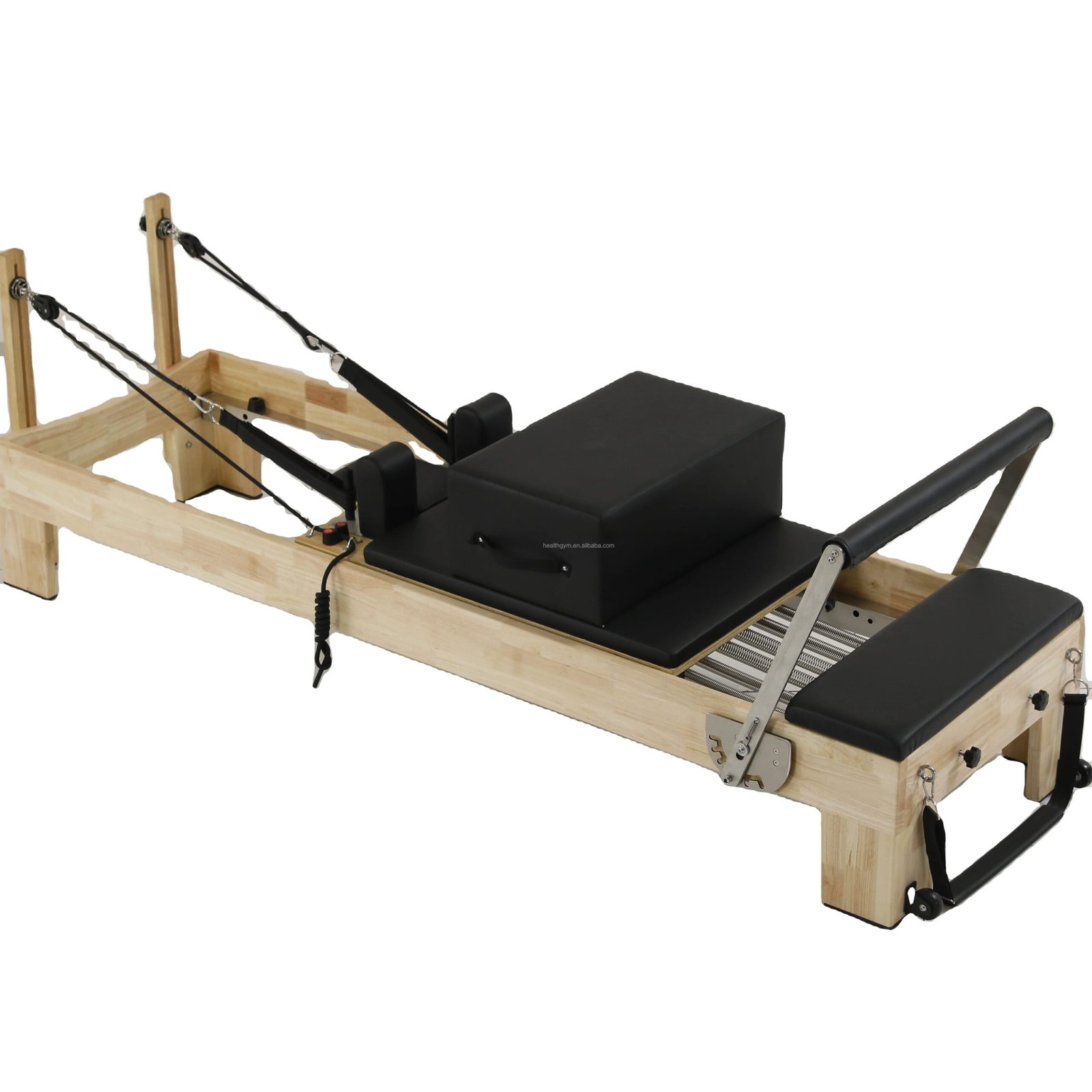
![Commercial Maple Wood Pilates Reformer Machine for Studio Gym [WARN] draft identifier mismatch](https://bicksport.com/wp-content/uploads/2026/08/commercial-maple-wood-pilates-reformer-machine-for-studio-gym-warn-draft-identifier-mismatch-4abe00.webp)