

Whisper-Quiet Glide — Precision-machined carriage rails and sealed bearings deliver near-silent operation suitable for shared-wall yoga studios and guest-floor wellness rooms.
Technical Specifications
| Parameter | Value |
|---|---|
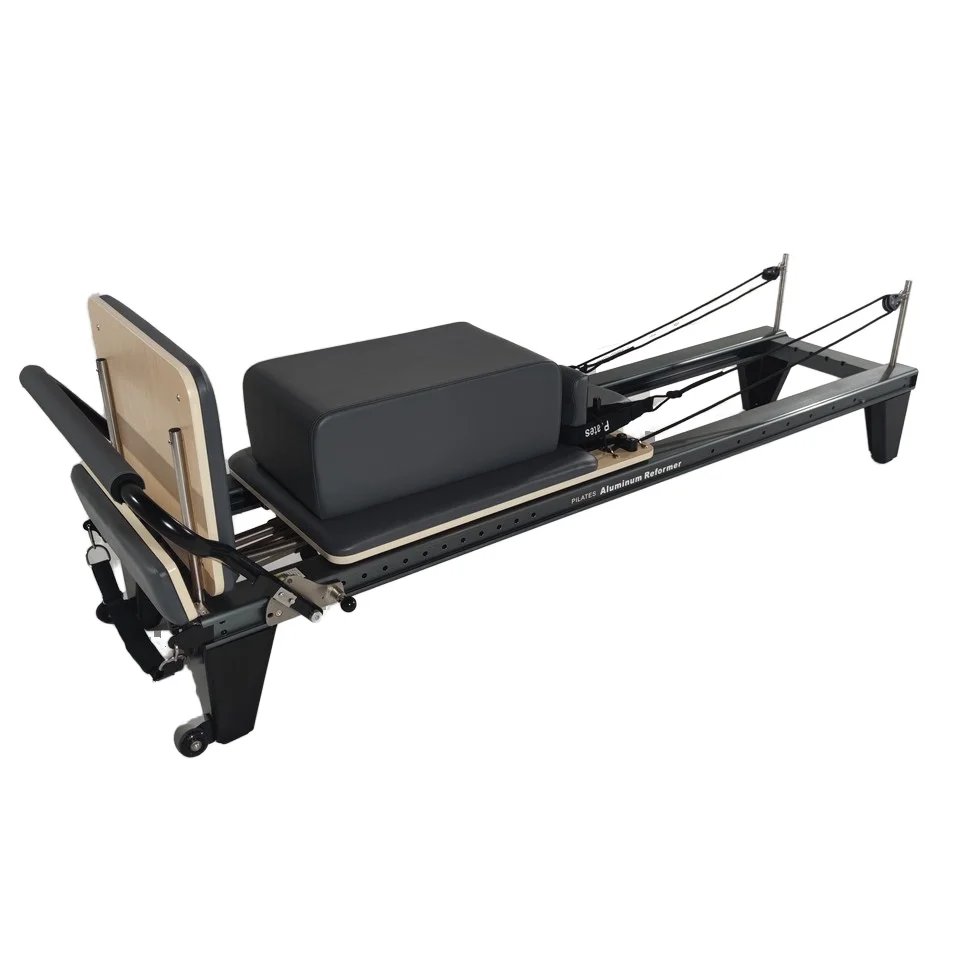
| Product Type | Pilates Reformer |
| Model NO. | SRY-02 |
| Color | White |
| Specification | 2460730680mm |
| Net Weight | 100kgs |
| Accessory | Long Box / Jump Board / Platform |
| Age | Adult |
| Gender | Unisex |
| Logo | Customized Is Allowed |
| Warranty | 3 Years |
| Production Capacity | 80 Pieces/Month |
Application Suitability
| Deployment Scenario | Typical Use |
|---|---|
| Boutique Pilates and yoga studios | Daily multi-class turnover with back-to-back sessions |
| Five-star hotel wellness centers | Guest reformer classes and private instruction |
| Corporate wellness rooms | Employee group sessions and one-on-one training |
| High-end residential home gym | Daily personal practice with adjustable resistance |
Why Carriage Noise Reaches the Studio Next Door Before the Owner Hears It
Rail play and bearing wear are the real sources of studio noise complaints, not the springs themselves.
When I first deployed reformers in hotel wellness floors, the assumption was always that spring tension caused the disturbance. In reality, light-duty carriage systems develop lateral wobble within months of studio-class scheduling — six or more classes daily — and that wobble transmits vibration straight through the frame into shared flooring [NEED_CITE: structural vibration transmission in multi-story commercial fitness deployments]. Boutique studios sharing walls with treatment rooms or guest corridors face the same issue: the adjustable pilates reformer commercial yoga studio operators choose must glide without generating low-frequency hum that travels through joists. We learned this the hard way, swapping out entire batches until the rail and bearing specifications matched the duty cycle.
Positioning Within a Multi-Discipline Studio Layout
This reformer covers full-spectrum Pilates programming from foundational mat-replacement sequences through jump board cardio intervals. In a commercial studio configuration, it pairs naturally with mat zones and small apparatus stations, occupying the anchor position in rooms designed for twelve or fewer participants per class. The adjustable footbar and multiple carriage stop positions accommodate users across a broad range of statures without requiring equipment swaps mid-session. The adjustable pilates reformer commercial yoga studio environments rely on handles progressive spring resistance for load variation, letting instructors scale intensity from rehabilitation-level through athletic conditioning within a single class block.
Continuous Daily Turnover and Deployment Environment Requirements
Studios running four or more reformer classes daily need equipment rated for sustained carriage cycles, not weekend-home duty. The 100kg frame mass provides stability during jump board work, but deployment still requires level flooring and adequate clearance on all sides for safe ingress and full-range carriage travel [NEED_CITE: recommended clearance dimensions for commercial Pilates reformer deployment]. Shared-wall studios benefit from placing reformers away from party walls, using the frame’s mass and sealed bearing system to contain vibration before it reaches adjacent occupied spaces. Ventilation planning matters as well — rooms sealed for acoustic isolation can overheat during back-to-back sessions, affecting both practitioner comfort and spring tension consistency over time.
Spring Resistance and Carriage Rail Engineering Explained
The multi-position spring system provides progressive load adjustment, meaning resistance increases proportionally as the carriage travels from the footbar. This differs from magnetic or pneumatic systems that deliver constant resistance regardless of position — a characteristic that directly shapes how instructors cue eccentric versus concentric phases of each movement. Sealed bearing carriages eliminate the metal-on-metal contact that generates noise in open-rail designs and extend maintenance intervals in high-frequency environments. The reinforced steel frame resists torsional flex during asymmetrical loading, such as single-leg work or jump board plyometrics, keeping the carriage tracking true through thousands of cycles. Pulley routing and rope or strap material determine both the tactile feel and the audible signature of each repetition — worn pulleys create the clicking that clients notice before instructors do.
The Hidden Cost of Specifying Below Your Actual Duty Cycle
Deploying home-grade reformers in commercial studios creates a predictable failure sequence: carriage bearings degrade first, introducing wobble that clients feel before they hear [NEED_CITE: bearing wear patterns in light-duty versus commercial Pilates equipment]. Once rail play develops, the frame absorbs uneven loads that accelerate pulley wear and spring fatigue. Studios then face either progressive component replacement or full-unit swaps — both more expensive and more disruptive than specifying commercial-grade construction initially. Noise complaints from adjacent spaces compound the problem, as studio owners discover only after deployment that carriage glide characteristics matter as much for neighbor relations as for client experience.
Why This Product Line Fits Commercial Studio Specifications
Sub-35dB whisper-quiet operation, verified across our cardio deployments in hotel environments, translates directly to reformer glide performance when sealed bearings and precision rails are specified together. The 10,000-hour durability testing protocol applied to our motorized cardio range informs how we validate carriage and rail assemblies under continuous studio scheduling. Full OEM customization extends to logo placement and frame color, letting studio operators maintain brand consistency across the equipment floor. We provide free 3D studio layout and airflow planning that accounts for this reformer’s 2460mm footprint plus required clearance, ensuring sightlines and practitioner flow work together. Complete documentation packages ship with every unit, covering installation through long-term maintenance scheduling.
Documentation & Test Records
- CE declaration of conformity for commercial Pilates equipment
- EN 957 test report covering frame and carriage structural integrity
- ISO 9001 certificate for manufacturing quality management
- Noise level verification report for shared-wall studio deployment
- Durability test record for carriage rail and bearing assemblies
- Spring resistance calibration and replacement interval documentation
Installation, Commissioning & Maintenance
- Allow minimum clearance around the 2460*730mm footprint for safe carriage travel and practitioner access
- Level flooring is essential before assembly to prevent rail binding under the 100kg frame
- Verify spring tension calibration against documentation upon first assembly
- Inspect sealed carriage bearings and pulley routing at intervals matching your class frequency
- Clean frame and rail surfaces after each session to prevent sweat corrosion on the white coated finish
Planning Your Studio Equipment Specification
Provide your studio floor plan and class schedule so we can generate a 3D layout covering equipment spacing, airflow, and practitioner circulation. Specify your daily class count and average session length to confirm the carriage and rail specifications match your actual duty cycle. Indicate whether the deployment floor shares walls with occupied spaces so we can address acoustic requirements. Confirm your target market for any accessory or documentation localization needs.
Frequently Asked Questions
Q: How does frame construction affect long-term carriage stability under daily studio use?
A: Reinforced steel frames resist the torsional flex that develops during asymmetrical loading like single-leg presses or jump board work. When the frame maintains geometry, the carriage continues tracking true along the rail without developing lateral play. Light-duty frames gradually deform under studio-class scheduling, introducing wobble that degrades both glide quality and user safety within months of deployment.
Q: What resistance system type offers the quietest operation for shared-wall studios?
A: Spring-based resistance with sealed bearing carriages produces minimal audible signature compared to pneumatic or hydraulic alternatives. The sealed bearings eliminate metal-on-metal contact at the carriage-rail interface, which is where most operational noise originates. Combined with a rigid frame that prevents vibration transmission, this configuration suits studios adjacent to treatment rooms or guest corridors.
Q: How do adjustable footbar and carriage positions support diverse class formats?
A: Multiple footbar angles and carriage stop positions let instructors shift between rehabilitation-level programming and athletic conditioning without swapping equipment. This flexibility is essential for studios running varied class formats throughout the day — morning gentle sessions can use limited carriage travel with lighter spring loads, while evening athletic classes engage full-range movement with maximum resistance configuration.
Q: What maintenance intervals are required for rail and pulley systems in high-frequency environments?
A: Studios running four or more daily classes should inspect carriage bearings and pulley routing monthly, with spring calibration checks quarterly. Sealed bearings extend service intervals compared to open designs, but pulley ropes or straps still require visual inspection for fraying. Replacement intervals depend on actual cycle count rather than calendar time, making usage tracking essential for preventive maintenance planning.
Q: How to verify equipment suitability for commercial duty cycles versus light-duty home use?
A: Request durability test records that specify cycle counts under loaded conditions, not just static load ratings. Commercial-grade equipment undergoes testing that simulates years of studio scheduling — multiple daily users, asymmetrical loading, and dynamic forces from jump board work. Light-duty specifications typically reference intermittent home use and will not hold up under back-to-back class programming.
![Foldable Wooden Pilates Reformer for Studio and Wellness Facilities [WARN] draft identifier mismatch](https://bicksport.com/wp-content/uploads/2026/08/foldable-wooden-pilates-reformer-for-studio-and-wellness-facilities-warn-draft-identifier-mismatch-8e325e.webp)

![== 结果 == Pilates Reformer with Tower Half Trapeze White Aluminum for Studio Use [WARN] draft identifier mismatch](https://bicksport.com/wp-content/uploads/2026/08/e7bb93e69e9c-pilates-reformer-with-tower-half-trapeze-white-aluminum-for-studio-use-warn-draft-identifier-mismatch-3a63a8.webp)