
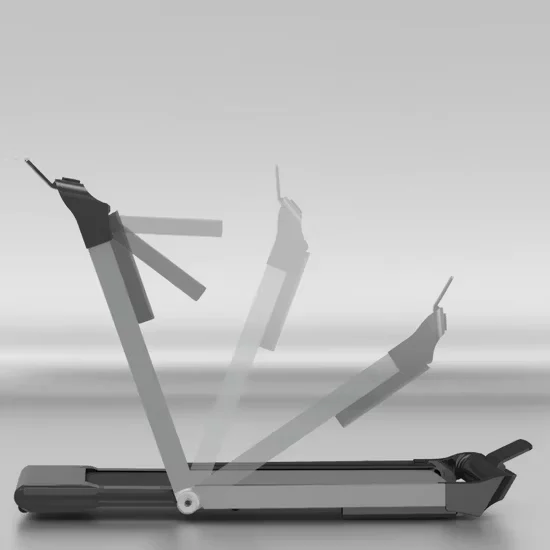
Quiet DC Drive Architecture — The W08 folding home use motorized treadmill pairs a 1.5HP DC motor with a compact foldable frame, engineered for noise-sensitive bedroom and shared residential deployments.
Technical Specifications
| Parameter | Value |
|---|---|
| Product Type | Foldable Treadmill |
| Motor Type | DC |
| Motor Power | 1.5HP ¹ |
| Speed Range | 1–16 km/h |
| Running Surface | 1200 x 450 mm |
| Console Type | LCD (Speed / Distance / Time / Calories) |
| Programs | 16 |
| Product Unfold Size | 1500 x 740 x 1150 mm |
| Product Folded Size | 1810 x 740 x 220 mm |
| Net Weight | 42.0 kg |
| Foldable | Yes |
| Material | ABS |
| Certification | CE, RoHS |
| OEM/ODM Custom | Yes |
¹ Peak or continuous duty rating not specified in source — verify against manufacturer catalog before deployment planning.
Application Suitability
| Deployment Scenario | Typical Use |
|---|---|
| High-end residential home gym | Daily walking and jogging routines in noise-sensitive apartment settings |
| Bedroom workout setup | Space-efficient cardio with folded storage between sessions |
| Light-use corporate wellness room | Intermittent staff fitness access with compact footprint requirements |
Why Noise Complaints Reach the Bedroom Wall Before You Notice
DC motor drives operate at lower acoustic output than comparable AC systems under intermittent home-use loads.
I once watched a batch of light-commercial treadmills get returned from a hotel property because the motors burned through their duty cycle in months and the belt slap transmitted straight through the floor slab. Guests complained about vibration at night, and maintenance never caught it until the front desk was flooded. The W08 addresses this with a DC motor architecture suited to intermittent duty cycles — the kind of start-stop usage pattern that defines bedroom and apartment cardio sessions rather than continuous gym-floor operation. [NEED_CITE: motor duty cycle classification for continuous versus intermittent operation]
Where This Treadmill Fits in a Home Cardio Layout
The W08 covers walking through moderate-intensity jogging at speeds up to 16 km/h across 16 preset programs, placing it squarely in the steady-state cardio category for residential users. In a multi-equipment home gym, it complements strength stations and flexibility zones by providing a dedicated cardiovascular option that folds away when not in use. The 1200 x 450 mm running surface accommodates walking and jogging gaits for users of average stride length. As a folding home treadmill DC motor unit, it suits corners and multi-purpose rooms where permanent floor allocation is not feasible.
Deployment Environment and Duty Cycle Boundaries
This unit is designed for intermittent daily sessions rather than back-to-back user rotation. The DC motor performs well under start-stop residential patterns but is not rated for the continuous multi-hour operation that chain gym cardio zones demand. Place the unit on a level surface with a vibration-dampening mat to minimize structure-borne noise transmission to adjacent rooms or floors below. Confirm the local voltage and plug standard before shipment to avoid mismatches on arrival. [NEED_CITE: residential floor vibration transmission standards for cardio equipment]
Reading Between the DC Motor and LCD Console Specifications
DC motors deliver quieter operation at lower speeds compared to AC alternatives, making them the standard choice for home and light residential treadmill applications. The distinction between peak horsepower and continuous duty rating matters here — a 1.5HP peak output does not mean the motor sustains that load indefinitely, and buyers should request clarification from the manufacturer catalog before assuming continuous commercial-grade output. The LCD console displays speed, distance, time, and calories across 16 preset programs, providing essential workout feedback without the connectivity layer found on IoT-enabled commercial consoles. The 1200 x 450 mm running belt offers adequate width for jogging but limits lateral movement during high-speed intervals.
The Hidden Cost of Underspecifying Home Cardio Equipment
Residential operators who select treadmills without verifying duty cycle ratings often face premature motor failure when usage patterns exceed design assumptions. Noise complaints in apartment buildings trace back to units that lack adequate vibration isolation or were never tested for structure-borne acoustic transmission. Users who experience joint discomfort on poorly cushioned decks tend to abandon the equipment within weeks, turning a fitness investment into dead floor space. Data-tracking limitations on basic LCD consoles also mean that users cannot export workout history to external platforms for long-term progress monitoring. [NEED_CITE: EN 957 requirements for treadmill deck durability and cushioning performance]
Why This Product Line Holds Up Across Deployments
Biketon Sport engineers each cardio unit around verified acoustic and durability benchmarks rather than marketing claims. The W08 benefits from the same sub-35dB design philosophy applied across the commercial range, adapted here for DC-driven intermittent use. The foldable frame reduces its stored footprint to 1810 x 740 x 220 mm, fitting into closets or against walls between sessions. OEM customization extends to logo, color, and console UI adjustments at flexible minimum order quantities. The engineering team provides 3D cardio-zone layout planning that accounts for the W08’s unfold clearance and surrounding airflow needs in compact rooms. Technical support is available around the clock for installation and commissioning questions.
Documentation & Test Records
- CE declaration of conformity covering electrical safety and EMC requirements
- RoHS compliance documentation for restricted substance limits
- Noise level test report verifying acoustic output under loaded operation
- Motor specification sheet detailing duty cycle classification and thermal limits
- Console technical documentation with LCD display parameter definitions
- Installation and commissioning guide with fold mechanism safety procedures
Installation, Commissioning & Maintenance
- Maintain minimum clearance around the 1500 x 740 mm unfolded footprint for safe mounting and dismounting
- Use a vibration-dampening mat under the 42.0 kg frame to reduce structure-borne noise on upper floors
- Confirm voltage compatibility and dedicated circuit capacity before powering the DC motor
- Inspect belt alignment and tension on the 1200 x 450 mm running surface after the first week of use
- Wipe the ABS console housing and handrails after each session to prevent sweat corrosion
Planning Your Equipment Inquiry
Provide the room dimensions and intended placement to receive a 3D layout showing unfold clearance and airflow spacing for the W08. Specify average daily session length and user count so the DC motor duty cycle can be matched to actual usage patterns. Indicate the deployment floor level and adjacent room types to confirm whether additional vibration isolation is required. State the target market voltage and plug standard to ensure the unit ships with the correct power configuration.
Frequently Asked Questions
Q: What is the difference between peak horsepower and continuous duty rating on a DC treadmill motor?
A: Peak horsepower represents the maximum output the motor can deliver in short bursts, while continuous duty rating reflects sustained output under ongoing load. A 1.5HP peak motor may deliver lower continuous output. Buyers planning frequent or extended sessions should request the continuous duty specification from the manufacturer catalog to ensure the motor matches actual usage demands.
Q: Is a DC motor treadmill suitable for commercial gym deployment?
A: DC motors are engineered for intermittent duty cycles typical of home and light residential use, where sessions are shorter and usage gaps exist between users. Commercial gym floors with back-to-back rotation require AC motors rated for continuous operation. Deploying a DC-motor treadmill in high-traffic commercial settings risks premature motor failure and voided warranty coverage.
Q: How does foldable frame design affect running stability?
A: Foldable frames incorporate hinge mechanisms that can introduce slight flex compared to fixed-frame commercial treadmills. The W08’s 42.0 kg net weight provides baseline stability for walking and jogging speeds up to 16 km/h. Users performing high-speed intervals may notice more lateral movement than on heavier non-folding units. Proper floor leveling and mat placement reduce this effect.
Q: What noise considerations apply when placing a treadmill in a shared residential building?
A: Treadmill noise transmits through two paths: airborne sound from the motor and structure-borne vibration from footstrike and belt movement. Upper-floor deployments amplify structure-borne transmission to units below. Using a vibration-dampening mat, ensuring proper belt tension, and selecting a unit with a tested noise profile all help minimize neighbor complaints in apartment settings.

![MT296 Electric Treadmill Exercise Machine for Fitness Training [WARN] draft identifier mismatch](https://bicksport.com/wp-content/uploads/2026/08/mt296-electric-treadmill-exercise-machine-for-fitness-training-warn-draft-identifier-mismatch-ed9f4c.webp)