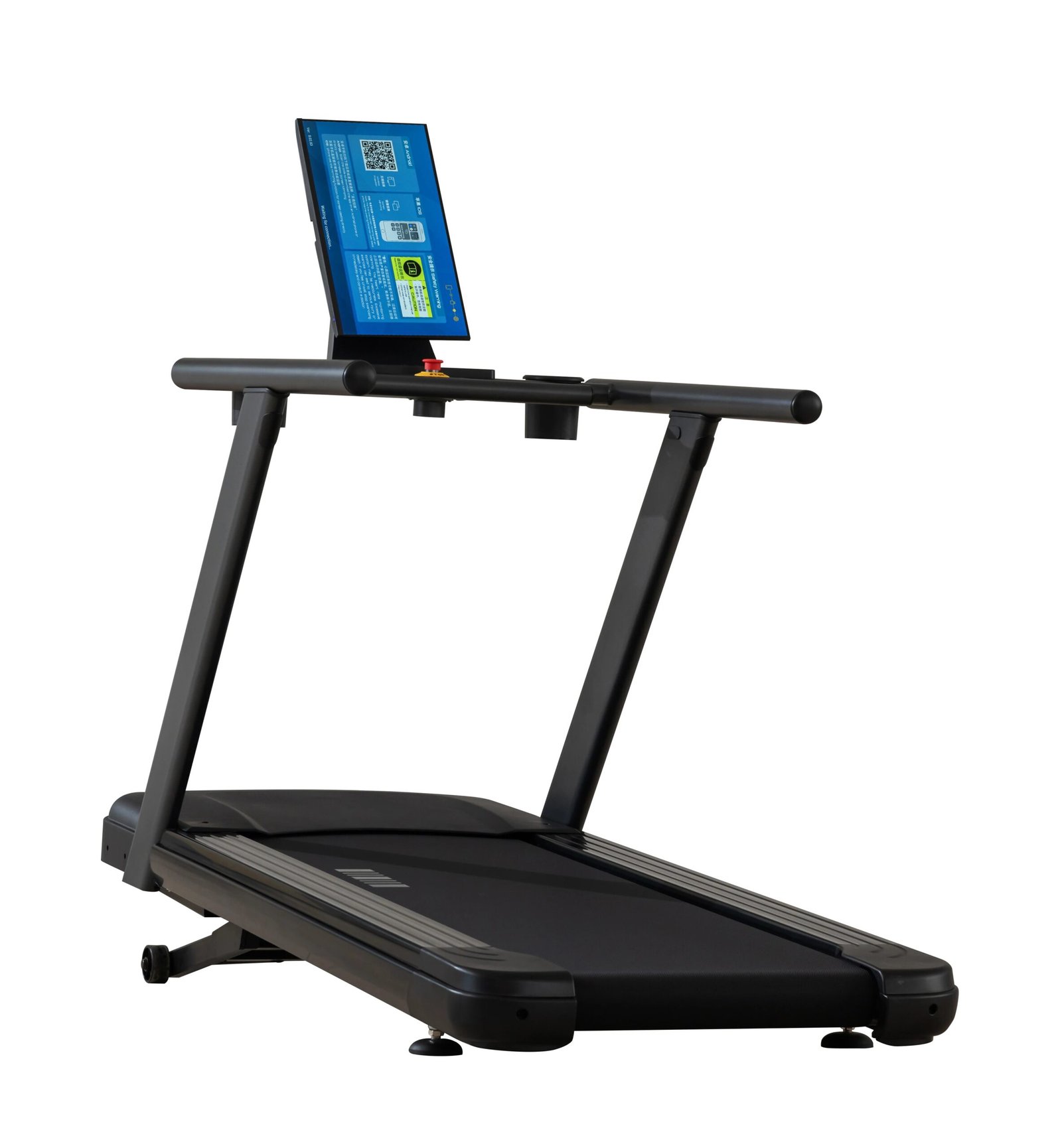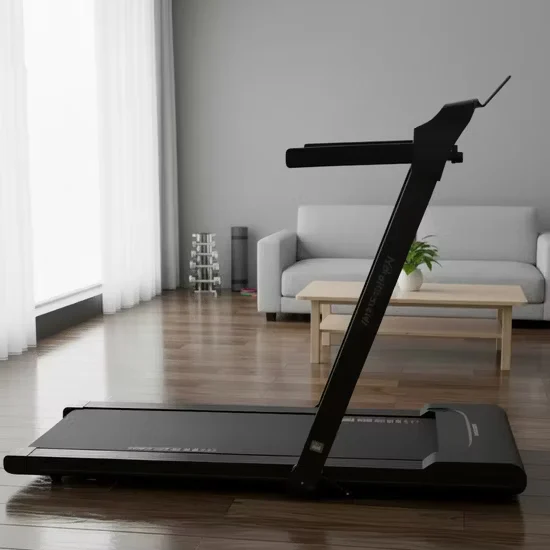
Whisper-Quiet Residential Deployment — DC-driven W08 foldable platform engineered for low-noise operation in shared living environments where floor-slab acoustic transmission is a primary concern.
Technical Specifications
| Parameter | Value |
|---|---|
| Designation | W08 |
| Product Type | Foldable Treadmill |
| Motor Type | DC |
| Motor Power | 1.5 HP* |
| Speed Range | 1–16 km/h |
| Running Surface | 1200 × 450 mm |
| Console Type | LCD (Speed / Distance / Time / Calories) |
| Programs | 16 |
| Foldable | Yes |
| Product Unfolded Size | 1500 × 740 × 1150 mm |
| Product Folded Size | 1810 × 740 × 220 mm |
| Net Weight | 42.0 kg |
| Max User Weight | 100–160 kg |
| Material | ABS |
| Color Options | Multicolor (customizable via OEM) |
| Certification | CE, RoHS |
| OEM/ODM Custom | Yes |
*Peak or continuous duty rating not specified — confirm with manufacturer documentation before deployment scoping.
Application Suitability
| Deployment Scenario | Typical Use |
|---|---|
| High-end residential home gym | Daily walking and light jogging in apartments where noise transmission to adjacent units is a concern |
| Five-star hotel guest-floor fitness center | Compact stowable cardio unit for limited-footprint wellness rooms between guest floors |
| Corporate wellness room | Moderate-duty walking and jogging station for employee break-time use |
| Community fitness space with limited square footage | Foldable unit stored against walls when room serves multiple functions throughout the day |
Why a Foldable DC Platform Matters When Acoustic Complaints Reach Management First
A DC motor driving a compact foldable frame addresses both the noise floor and the spatial footprint that conventional treadmills impose on residential and hospitality environments.
I spent years swapping out burnt motors on machines that were never rated for the hours they actually ran. In apartment fitness rooms and hotel guest-floor wellness corners, the complaint almost never starts with equipment failure — it starts with a resident or guest reporting low-frequency vibration or belt slap through the ceiling below. A foldable electric treadmill home use DC motor configuration like the W08 keeps the rotating mass and impact energy smaller than full-commercial platforms, which directly reduces the structure-borne noise that travels through concrete slabs [NEED_CITE: structure-borne noise transmission thresholds for cardio equipment on suspended floor slabs]. For facility managers, this is often the difference between a piece of equipment that stays deployed and one that gets unplugged and pushed into a storage closet after the second complaint.
Where the W08 Sits in a Mixed-Use Cardio Layout
This foldable treadmill occupies the walking-to-light-jogging intensity band, complementing heavier-duty running platforms and steady-state climbers in a mixed cardio zone. Its 1200 × 450 mm running surface accommodates walking and moderate jogging strides for most adult users, while the foldable frame lets operators reclaim floor area during off-peak hours or when the room serves alternate functions. In spaces where a foldable electric treadmill home use DC motor unit is positioned along perimeter walls, sightlines remain open and airflow from HVAC diffusers reaches occupants without obstruction. The LCD console logs speed, distance, time, and calories — baseline metrics that suit self-directed sessions without requiring integration into facility management software.
Continuous Run-Time Expectations and Room-Level Requirements
The DC motor in this platform is suited for moderate daily duty cycles typical of residential and light-commercial environments rather than all-day continuous operation found in high-volume gym cardio zones [NEED_CITE: motor duty cycle classification for residential versus commercial cardio operation]. Operators deploying the W08 on upper floors should confirm that the sub-structure includes adequate mass or isolation to prevent low-frequency resonance from reaching occupied rooms below. Adequate lateral clearance around the unfolded frame — particularly behind the rear roller — is necessary for safe user egress and for heat dissipation from the motor housing. Standard single-phase power supply with a dedicated circuit is recommended to avoid voltage drops when multiple units start simultaneously in a shared fitness room.
Reading the Drive and Frame Specifications Against Real Deployment Conditions
DC motors deliver high starting torque at low speeds, which makes them well-suited for walking and jogging profiles where the belt accelerates from idle under a standing user. However, DC brushed motors rely on carbon brushes that wear over service life, unlike brushless AC motors found in heavy-commercial units designed for continuous high-frequency operation. The 1.5 HP rating on the W08 should be verified against manufacturer documentation to determine whether it represents peak output or continuous duty — a distinction that directly affects how many hours per day the unit can sustain loaded operation without thermal degradation. The foldable frame mechanism introduces a hinge point in the deck structure; this is acceptable for moderate-duty use but will show fatigue earlier than a welded single-piece commercial frame under identical loading cycles. The ABS material selection on shrouding and console housing keeps unit weight manageable for repositioning during cleaning and room reconfiguration. The 16 preset programs provide variety for self-guided users, and the LCD console delivers the core four metrics — speed, distance, time, calories — that most residential and hospitality users expect without requiring network connectivity.
What Specification Shortcuts Cost After the First Year
Facilities that install domestic-grade treadmill motors into daily-use community fitness rooms consistently see coil burnout within the first several months of continuous operation, leaving dead units occupying valuable floor space while warranty disputes unfold [NEED_CITE: premature motor failure rates in light-commercial treadmill deployments]. Noise complaints compound the problem: once one resident reports vibration transfer, management often pulls the entire unit rather than commissioning acoustic isolation retrofits. Units without verified foldable mechanisms may also develop hinge play and deck misalignment under repeated folding cycles, creating belt drift and uneven wear patterns that generate further noise.
Why Operators Source This Line for Compact Cardio Zones
The W08 foldable electric treadmill home use DC motor platform has been deployed in residential fitness spaces where sub-35 dB operational noise is a contractual requirement for equipment installed on occupied floor levels. Components across the cardio range undergo durability verification protocols aligned with 10,000-hour continuous operation benchmarks for motors and bearings. The full six-series cardio family allows facility operators to source treadmills, bikes, ellipticals, rowers, climbers, and spinning bikes from a single product line, ensuring consistent console aesthetics and maintenance parts compatibility. OEM customization extends to console UI language, frame color, and logo placement at flexible minimum order quantities. Every deployment ships with a 3D cardio-zone layout covering square footage, equipment spacing, sightlines, and HVAC airflow paths — for the W08 specifically, this accounts for the unfolded footprint plus rear egress clearance and folded storage positioning. Post-installation technical support operates on a 24/7 response basis with spare parts fulfillment.
Documentation & Test Records
- CE declaration of conformity covering electrical safety and EMC requirements for the W08 platform
- EN 957 test report validating mechanical safety and structural load capacity
- ISO 9001 quality management system certificate for manufacturing processes
- RoHS compliance declaration for restricted substances in electronic components
- Motor specification sheet detailing duty cycle classification and thermal protection thresholds
- Console technical documentation covering LCD functionality and program logic
Installation, Commissioning & Maintenance
- Maintain minimum clearance around the 1500 × 740 mm unfolded footprint for safe user entry and exit
- Verify floor levelness before placement to prevent belt drift on the 1200 × 450 mm running surface
- Connect to a dedicated single-phase circuit matching target market voltage and plug standard
- Run initial belt alignment and tension calibration before releasing the W08 for user access
- Schedule periodic belt lubrication and motor brush inspection based on cumulative run-hours
- Wipe LCD console and ABS shrouding with non-corrosive cleaner after each use session
Scoping Your Cardio Equipment Procurement
Provide your fitness room dimensions, intended unit count, and daily operating hours so the engineering team can generate a 3D layout with equipment spacing and airflow planning specific to your space. Specify the deployment floor level and what occupies the rooms directly below or adjacent to confirm that acoustic requirements are matched. Confirm your target market voltage and plug standard before production begins to avoid rewiring on arrival. Indicate whether console data output needs to interface with any facility management or member tracking platform.
Frequently Asked Questions
Q: What is the difference between peak horsepower and continuous duty horsepower on a treadmill motor?
A: Peak horsepower represents the maximum output a motor can deliver for brief bursts during acceleration, while continuous duty horsepower reflects what the motor can sustain under steady loaded operation without overheating. A 1.5 HP peak rating does not guarantee 1.5 HP continuous output. Always request the manufacturer’s motor specification sheet confirming the continuous duty rating before scoping deployment hours.
Q: Is a DC motor appropriate for commercial gym deployment or only for home use?
A: DC motors are common in home and light-commercial treadmills due to compact size and cost efficiency, but they rely on carbon brushes that wear over time. Heavy-commercial facilities running equipment ten or more hours daily typically specify brushless AC motors rated for continuous duty. Match the motor type to your expected daily run-time and maintenance schedule.
Q: How does a foldable frame affect long-term structural durability?
A: Foldable frames introduce a hinge mechanism that, under moderate use, performs reliably for years. However, in high-frequency commercial environments where the unit is folded and unfolded repeatedly, hinge components experience fatigue cycles that welded single-piece frames do not. Specify foldable units for spaces where storage flexibility is genuinely needed rather than as a default feature.
Q: Can the LCD console output sync with external fitness apps or facility management systems?
A: The LCD console on this platform displays speed, distance, time, and calorie metrics locally. It does not include built-in wireless connectivity or data export interfaces. If your facility requires workout data to sync with member apps or management software, request console upgrade options with Bluetooth or network capability during the OEM scoping phase.
Q: What routine maintenance does a DC motor treadmill require over its service life?
A: Key maintenance tasks include periodic belt tension and alignment checks, belt lubrication at intervals specified by the manufacturer, and motor brush inspection once accumulated run-hours approach the manufacturer’s rated service interval. Keeping the motor compartment free of dust accumulation also supports thermal management and extends component life.
![SKIP: no source title, Hsm with Transport Wheels New Design Household Fashion Treadmill HSM Transport Wheels Household Fashion Treadmill [WARN] draft identifier mismatch](https://bicksport.com/wp-content/uploads/2026/08/skip-no-source-title-hsm-with-transport-wheels-new-design-household-fashion-treadmill-hsm-transport-wheels-household-fashion-treadmill-warn-draft-identifier-mismatch-6ee33a.webp)
![Mt026m Foldable Motorized Treadmill for Home Workout Commercial Use [WARN] draft identifier mismatch](https://bicksport.com/wp-content/uploads/2026/08/mt026m-foldable-motorized-treadmill-for-home-workout-commercial-use-warn-draft-identifier-mismatch-14c73d.webp)