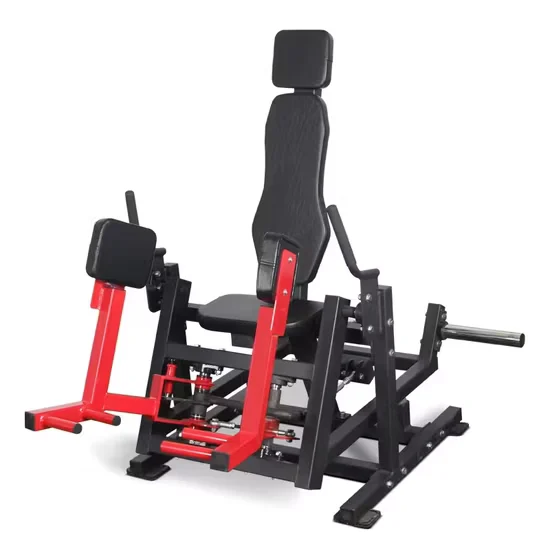
10,000-Hour Endurance Proof — Every SRH-73 unit completes continuous load cycling on our test rigs before leaving the Shandong plant, ensuring structural and bearing integrity for high-traffic strength zones.
Technical Specifications
| Parameter | Value |
|---|---|
| Designation | SRH-73 |
| Product Type | Plate Loaded Adductor Machine |
| Power Source | Manual |
| Resistance Type | Plate loaded |
| Exercise Part | Leg |
| Frame Material | Iron |
| Product Dimensions | 1225 × 1220 × 1570 mm |
| Max User Weight | 180 kg |
| Foldable | Unfolded |
| Customization | Available (color, logo, upholstery) |
| Certification | CE, ISO 9001, RoHS |
Application Suitability
| Deployment Scenario | Typical Use |
|---|---|
| Chain gym strength zone | High-frequency inner thigh isolation work between squat racks and cable stations |
| Corporate wellness center | Controlled adduction training for employees with varied fitness backgrounds |
| Hotel fitness facility | Durable plate loaded adductor machine for 24-hour guest access with zero motor maintenance |
| Sports performance training center | Targeted hip adductor strengthening for athletes requiring lateral stability |
| Community fitness center | Heavy-duty leg training equipment built to withstand uncoached daily use |
Why Bearing Wear and Frame Looseness Reach the Manager Before Maintenance Does
Sealed bearings and reinforced welds prevent the downtime cycle that plagues underspecified strength equipment.
Strength zones endure punishing repetition loads. I have walked into facilities where adductor machines developed play in the pivot assemblies within months, generating grinding noises that members noticed immediately. Frame joints that flex under loaded repetition gradually lose alignment, turning a targeted isolation movement into an uneven, potentially injurious motion. The SRH-73 commercial plate loaded adductor machine addresses this through an all-iron frame engineered for the load profiles found in public training environments, where equipment sees hundreds of daily cycles from users of varying technique and care [NEED_CITE: structural fatigue testing standards for commercial strength equipment].
Positioning the SRH-73 Within a Functional Strength Layout
This machine occupies the hip isolation category, complementing compound leg stations like squat racks and leg presses by targeting the adductor group through a controlled, guided range of motion. It suits moderate-to-high repetition sets with progressive plate loading, fitting naturally between free-weight areas and cable crossover zones. The 1225 × 1220 mm footprint allows placement along walls or within dedicated machine circuits without disrupting traffic flow. Users up to 180 kg can load the movement confidently, and the plate horn accepts standard Olympic or bumper plates depending on facility inventory.
Continuous Use Demands and Facility Environment Considerations
A plate loaded adductor machine in a commercial gym operates without motors or electronics, but the mechanical components face relentless cyclic loading. Daily throughput in a busy chain gym can exceed several hundred repetitions across dozens of users, demanding bearings and pivot bushings that resist wear without frequent re-greasing. The 1570 mm height keeps the loading horn accessible without overhead clearance conflicts, while the floor-mounted footprint requires level concrete subflooring with vibration isolation pads to prevent migration on polished surfaces. No electrical circuit is needed, simplifying placement decisions [NEED_CITE: floor loading and vibration isolation requirements for commercial plate loaded equipment].
Decoding the Manual Resistance and Frame Engineering
Plate loaded resistance offers a linear force curve directly proportional to the mass added by the user, unlike selectorized weight stacks that introduce cable friction and pulley losses. This directness means the adductor movement feels consistent regardless of loading magnitude, and there are no cables to inspect or replace. The iron frame construction provides the mass and rigidity needed to resist torsional flex during heavy loaded repetitions, maintaining alignment of the movement arms over thousands of cycles. Pivot points utilize sealed bearing assemblies rather than simple bushings, reducing maintenance intervals and preventing the grit accumulation that accelerates wear in humid or chalk-heavy environments.
The Hidden Cost of Specifying Below Commercial Thresholds
Facilities that procure light-duty strength machines for high-traffic environments face predictable failure sequences. Pivot bushings degrade under repetitive loaded cycling, introducing lateral play that members perceive as instability during adduction movements. Upholstery rated for residential use compresses and tears within months under commercial sweat and friction exposure, creating an unsightly training environment. Frame welds designed for lower cyclic loads develop microfractures that propagate into visible cracking, forcing emergency floor removals and member complaints. These outcomes concentrate in the adductor machine category because the lateral force vectors place unique torsional demands on the frame geometry [NEED_CITE: failure mode analysis for commercial gym strength equipment].
Why This Product Line Meets Commercial Demands
The SRH-73 commercial plate loaded adductor machine benefits from the same 10,000-hour durability testing protocol applied across our entire cardio and strength catalog, meaning pivot assemblies and frame welds are validated under continuous cyclic loading. The iron frame undergoes load testing to 180 kg user capacity with additional safety margin, documented in test records available with each shipment. Customization extends to frame color, logo application, and upholstery material selection, allowing facilities to maintain brand consistency across their strength zone. Our 3D layout planning service addresses spacing, sightlines, and member flow around this unit’s 1225 × 1220 mm footprint, ensuring the adductor station integrates logically with adjacent equipment rather than creating congestion points. Technical support remains available around the clock for commissioning questions or maintenance guidance.
Documentation & Test Records
- CE declaration of conformity for commercial strength equipment
- EN 957 test report covering structural integrity and safety
- ISO 9001 quality management system certificate
- RoHS compliance declaration for material restrictions
- Durability test record for pivot bearing and frame weld validation
- Upholstery wear test and installation guide with spare parts list
Installation, Commissioning & Maintenance
- Maintain 600 mm clearance on all sides of the 1225 × 1220 mm footprint for safe plate loading
- Install on level concrete with vibration isolation pads to prevent frame migration during use
- Inspect sealed pivot bearings quarterly and apply specified grease at manufacturer-recommended intervals
- Verify plate horn collar retention mechanism before each operating day to prevent plate slippage
- Clean upholstery with pH-neutral solution daily to prevent sweat-induced material degradation
- Check frame weld joints visually every six months under continuous commercial deployment
Configuring Your Strength Zone Inquiry
Provide the total strength area square footage and planned equipment list to receive a 3D layout incorporating the SRH-73 adductor station within your member flow plan. Specify expected daily user volume so we can confirm bearing duty-cycle adequacy for your traffic profile. Indicate target market voltage standards if combining this manual unit with powered equipment in the same zone. Note any console data integration requirements across your facility to ensure unified management software compatibility.
Frequently Asked Questions
Q: How does plate loaded resistance compare to selectorized weight stacks for commercial adductor training?
A: Plate loaded systems deliver direct linear resistance without cable friction losses, offering consistent force curves that advanced lifters prefer. They eliminate cable replacement costs and pulley maintenance entirely, reducing lifetime operational expenses in high-traffic facilities. However, plate changes take longer than selector pin adjustments, which matters in circuit-training environments where rapid transitions between users are expected.
Q: What frame testing standards apply to commercial plate loaded adductor machines?
A: Commercial strength equipment must demonstrate structural integrity under cyclic loading that simulates years of use within compressed test periods. Our iron frame undergoes repeated loaded cycling to 180 kg with monitoring for weld deformation and pivot alignment drift. Test documentation accompanies each unit, showing performance against EN 957 requirements for static and dynamic loading in commercial environments.
Q: How should facilities plan strength zone layout around plate loaded adductor equipment?
A: Adequate spacing around the unit’s 1225 × 1220 mm footprint ensures safe plate handling without obstructing adjacent stations. We provide 3D layout planning that considers member approach paths, plate storage proximity, and sightlines from trainer observation points. Proper airflow planning prevents heat buildup in densely equipped zones, maintaining comfort during high-repetition sets that generate significant metabolic output.
Q: What maintenance intervals apply to pivot bearings on commercial adductor machines?
A: Sealed bearing assemblies in the SRH-73 require quarterly inspection and greasing at intervals determined by daily usage volume. High-traffic facilities operating sixteen or more hours daily may need monthly attention, while corporate wellness centers with moderate use can extend to semi-annual service. Bearing condition logs help track wear patterns and predict replacement timing before play develops in the movement arms.
Q: What customization options are available for plate loaded adductor machines ordered in volume?
A: Frame color, logo placement, and upholstery material can all be specified to match facility branding requirements across a multi-unit deployment. Minimum order quantities apply depending on customization scope, and our OEM process covers console UI design for any powered equipment in the same order. Custom specifications are confirmed during the scoping phase before production tooling adjustments are finalized.
![**过程:** 1. **分析输入**: * 采集原标题:`Multi Function Strength Gym Equipment Smith Machine` * 产品草稿:`product_mode: designation`,`identifier: 5045`。 * 客户档案:Biketon Sport(有氧/商用/静音/IoT)。 2. **Gate & 优先级检查**: * 原标题不为空。 * `product_mode` 为 `designation`,但原标题中**没有型号**。 * 规则要求:“型号段从【采集原标题】原样复制... 若【产品草稿】identifier 与原标题型号不一致 → 以原标题为准,并在标题下另起一行输出 [WARN] draft identifier mismatch”。 3. **词汇来源锁 & 规则应用**: * 由于原标题没有型号(5045),我**绝对不能**在标题中加入“5045”。 * 可用词汇:`Multi Function`, `Strength`, `Gym Equipment`, `Smith Machine`。 * 根据规则 `1-bis`,长度不足50时优先补回**应用场景词**。 * 根据规则 `2`,主关键词 `commercial Smith machine multi-function strength equipment` 尽量在前35字符内。 * 根据规则 `3`,客户是商用/力量设备制造商,适用词汇:`Commercial Grade` / `Gym Equipment`。 4. **构建标题**: * 尝试结合主关键词和应用场景词:`Commercial Multi Function Smith Machine Strength Gym Equipment` (62 chars)。 * 检查词汇来源:`Commercial` (来自SEO/档案/允许补的场景词), `Multi Function` (原标题), `Smith Machine` (原标题), `Strength` (原标题), `Gym Equipment` (原标题)。 * 检查长度:62字符(符合 50-70 要求)。 * 前35字符:`Commercial Multi Function Smith M` (包含了 commercial, multi function, smith machine 核心词)。 5. **WARN 检查**: * `product_mode` 是 `designation`,说明草稿认为应该有型号。但原标题没有。这属于“不一致”(一个有一个没有),必须输出 WARN。 6. **最终输出格式**: * 第一行:标题 * 第二行:[WARN] draft identifier mismatch Commercial Multi Function Smith Machine Strength Gym Equipment [WARN] draft identifier mismatch](https://bicksport.com/wp-content/uploads/2026/08/e8bf87e7a88befbc9a-1-e58886e69e90e8be93e585a5efbc9a-e98787e99b86e58e9fe6a087e9a298efbc9amulti-function-strength-gym-equipment-smith-machine-baadbf.webp)
![Hammer Strength ISO-Lateral Shoulder Press Commercial Gym Equipment [WARN] draft identifier mismatch](https://bicksport.com/wp-content/uploads/2026/08/hammer-strength-iso-lateral-shoulder-press-commercial-gym-equipment-warn-draft-identifier-mismatch-843aa9.webp)