
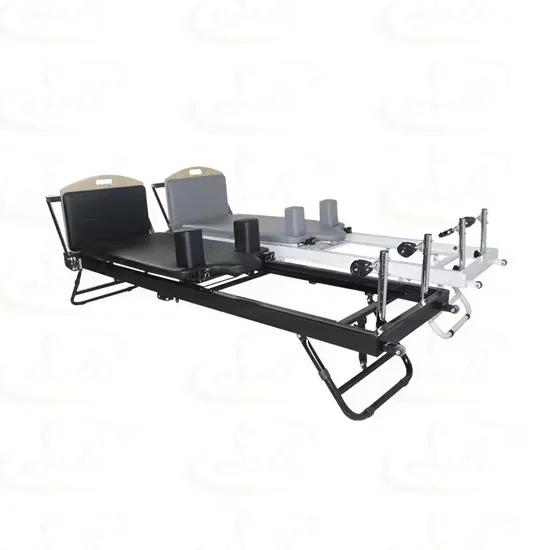
Commercial Foldable Rigidity — Metal-frame construction tested to withstand repeated spring-loaded loading cycles without rail deflection, supporting studio-grade deployment across hotel wellness floors and rehabilitation clinics.
Technical Specifications
| Parameter | Value |
|---|---|
| Product Type | Pilates Reformer |
| Designation | SRY-11B |
| Frame Material | Metal |
| Foldable | Yes |
| Included Accessories | Long Box, Jump Board, Platform |
| Color Options | Solid Color (customizable) |
| Logo Customization | Available |
| Specification (L×W×H) | 2000 × 500 × 340 mm |
| Net Weight | 50 kg |
| Max Load Capacity | Standard commercial rating |
| Age Group | Adult |
| Gender | Unisex |
| Warranty | 3 Years |
| HS Code | 9506911900 |
| Production Capacity | 80 Pieces/Month |
Application Suitability
| Deployment Scenario | Typical Use |
|---|---|
| Boutique Pilates studio | Back-to-back group reformer classes with fold-down storage between sessions |
| Five-star hotel wellness floor | Multi-purpose room conversion where reformers fold away for private or group use |
| Rehabilitation and physiotherapy clinic | Controlled progressive loading protocols on a stable metal-frame platform |
| High-end residential home gym | Space-conscious installation requiring foldable storage when not in use |
| Corporate wellness facility | Scheduled employee wellness sessions with accessory-driven programming variety |
Why Frame Material Determines Reformer Lifespan in Commercial Studios
Metal-frame reformers hold alignment under daily class rotations where wood frames gradually warp and require re-shimming.
Studio operators investing in a commercial foldable Pilates reformer machine metal frame platform often discover too late that timber-based construction absorbs moisture and flexes under repeated carriage loading. In humid climates or facilities without climate control, wood frames lose planar stability within the first year, causing carriage drift and uneven spring tension [NEED_CITE: material fatigue behavior in metal vs wood reformer frames under commercial loading]. The metal frame on the SRY-11B eliminates this variable, maintaining rail parallelism and spring anchor geometry across thousands of articulation cycles.
Where This Reformer Fits in a Studio Equipment Layout
The SRY-11B covers full-range reformer work from supine footwork through seated spinal articulation and standing balance sequences. In a commercial foldable Pilates reformer machine metal frame configuration, it pairs naturally with a Cadillac or tower unit for advanced programming while functioning independently for introductory and intermediate classes. Its 2000 mm footprint suits standard studio spacing with adequate clearance for instructor circulation, and the included jump board and long box extend programming range without requiring additional floor space for separate apparatus.
Continuous Class Scheduling and Deployment Environment Requirements
The foldable architecture serves multi-use wellness rooms where equipment must clear the floor between group sessions and private appointments. Facilities deploying on elevated hotel floors should verify structural load ratings against the 50 kg unit weight, particularly when multiple units concentrate in a single zone [NEED_CITE: floor load requirements for commercial fitness equipment on elevated levels]. The metal frame resists humidity-induced distortion in tropical or coastal climates where wood alternatives require periodic re-tensioning. Adequate ventilation around stored units prevents condensation buildup on rail surfaces during off-hours.
Engineering Behind the Metal Frame and Accessory System
Metal-frame reformer construction delivers consistent rail geometry that wood frames cannot maintain under cyclic loading. The carriage glides on a rigid platform where weld integrity and frame rigidity directly influence movement precision during clinical rehabilitation protocols. The foldable hinge mechanism must sustain daily fold-unfold cycles without introducing lateral play into the rail system — a failure point in consumer-grade folding designs. Spring resistance grading across multiple tension levels allows instructors to progress clients from post-surgical loading through athletic conditioning on a single platform. The accessory ecosystem — long box for seated work, jump board for plyometric loading, platform for stability challenges — consolidates movement variety without expanding the equipment footprint.
The Hidden Cost of Underspecified Reformer Frames
Studios that procure wood-frame or light-duty metal reformers to reduce initial outlay frequently face premature rail realignment costs and carriage replacement within the first operational year. In rehabilitation settings, frame flex under loaded articulation compromises the controlled progressive loading that clinicians depend on for patient protocols [NEED_CITE: structural rigidity requirements for clinical Pilates rehabilitation platforms]. Foldable units with inadequately engineered hinge mechanisms develop lateral play that manifests as carriage wobble during dynamic jump board sequences, creating both safety concerns and member complaints.
Why This Product Line Addresses Facility Operator Requirements
The SRY-11B metal frame construction eliminates the moisture-related warping that forces wood-frame replacements in humid deployment environments. The three-year warranty coverage signals confidence in spring fatigue life, carriage rail wear resistance, and frame weld integrity under commercial class rotations. The foldable design addresses multi-use room requirements in hotel and residential deployments where floor space converts between programming formats. Logo customization allows branded studio environments, while the accessory package eliminates separate procurement cycles for long box and jump board additions. Documentation includes full specification sheets supporting facility planning and procurement compliance.
Documentation & Test Records
- CE conformity declaration applicable to fitness equipment classification
- Structural load and frame rigidity test records for commercial deployment
- Spring fatigue life certification covering repeated tension cycling
- Foldable hinge mechanism durability test documentation
- Accessory compatibility and mounting specification sheets
- Product specification sheet for facility planning and procurement
Installation, Commissioning & Maintenance
- Position with minimum clearance on all sides for instructor access and safe carriage travel across the 2000 mm length
- Level the metal frame on solid flooring using adjustable feet to prevent rail binding during carriage movement
- Verify spring tension calibration upon delivery and document baseline resistance grading for maintenance reference
- Inspect foldable hinge locking mechanism monthly for play or wear indicators that compromise rail stability
- Clean carriage rails and lubricate glide surfaces per maintenance schedule to preserve smooth articulation
- Check accessory mounting points for secure attachment before each jump board or long box session
Equipment Selection and Procurement Inquiry
Provide your studio floor plan and intended class scheduling density to receive equipment spacing recommendations aligned with instructor circulation requirements. Specify deployment environment — ground-floor studio, elevated hotel wellness floor, or climate-controlled rehabilitation clinic — to confirm frame material suitability and any moisture-protection requirements. Indicate whether accessory packages should be configured per-unit or centralized across a multi-reformer installation.
Frequently Asked Questions
Q: How does metal frame construction compare to wood frame for commercial studio environments with daily class volume?
A: Metal frames maintain rail parallelism and spring anchor geometry under repeated loading cycles without the moisture absorption and seasonal expansion that cause wood frames to warp. In commercial studios running multiple daily classes, metal construction eliminates the periodic re-shimming and rail realignment that wood frames require, reducing maintenance labor and preserving movement precision for clinical and athletic programming.
Q: Does foldable design compromise structural rigidity during loaded spinal articulation exercises?
A: The foldable hinge mechanism on the SRY-11B is engineered to lock the frame into a rigid operating configuration that resists lateral flex during loaded exercises. The metal frame transfers articulation forces through welded joints rather than through folding hardware, maintaining the structural stability that rehabilitation protocols and advanced reformer sequences require.
Q: What accessory configurations ship with the unit and can additional accessories be ordered separately?
A: The SRY-11B includes a long box for seated spinal articulation work, a jump board for plyometric loading sequences, and a platform for stability and standing balance exercises. Additional accessories and replacement components can be ordered separately to expand programming options or service units across a multi-reformer installation.
Q: What floor load considerations apply when deploying multiple reformers on elevated hotel or residential floors?
A: Each SRY-11B unit weighs 50 kg, and facility planners should calculate cumulative static load when concentrating multiple units in a single zone. Elevated floors in hotels and residential buildings may have load ratings that differ from ground-level commercial spaces, so verifying structural capacity with the building engineer before finalizing equipment placement is advisable.
![Pilates Reformer with Tower Aluminium Fitness Training Equipment [WARN] draft identifier mismatch](https://bicksport.com/wp-content/uploads/2026/08/pilates-reformer-with-tower-aluminium-fitness-training-equipment-warn-draft-identifier-mismatch-17d781.webp)
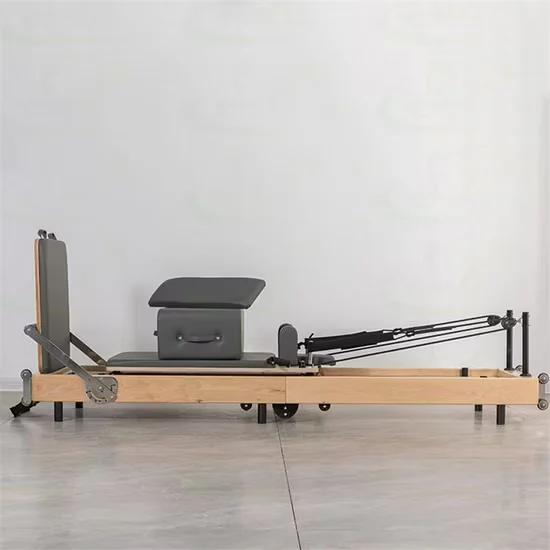
![Commercial Beech Wood Pilates Reformer Machine for Home & Studio Use [result]Commercial Beech Wood Pilates Reformer Machine for Home & Studio Use[/result]](https://bicksport.com/wp-content/uploads/2026/08/commercial-beech-wood-pilates-reformer-machine-for-home-studio-use-resultcommercial-beech-wood-pilates-reformer-machine-for-home-studio-use-result-c5fa52.webp)
