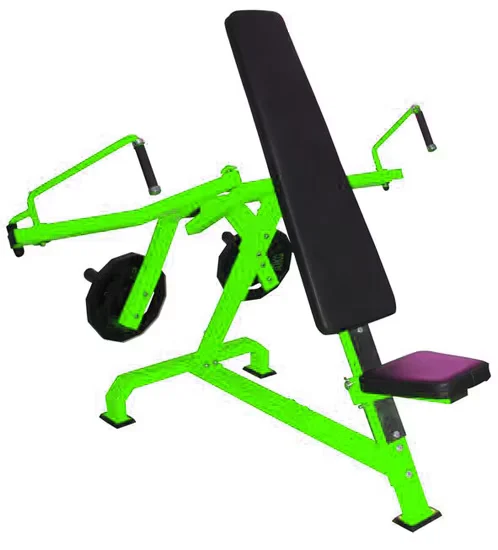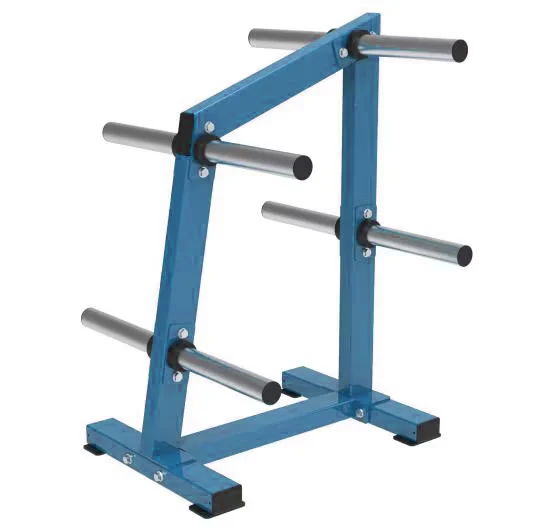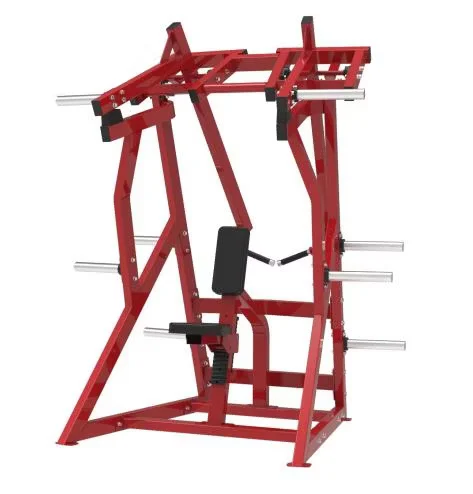
Steel Welded Frame — all-steel welded construction and plate-loaded resistance eliminate cables and pulleys, ensuring consistent load transfer across continuous high-frequency deployments.
Technical Specifications
| Parameter | Value |
|---|---|
| Product Type | ISO-Lateral Wide Chest Press (Plate Loaded Strength Machine) |
| Model NO. | 5019 |
| Exercise Part | Arm |
| Power Source | Manual (Plate Loaded) |
| Material | Steel |
| Resistance Type | Plate Loaded |
| Net Weight | 141kg |
| Product Dimensions | 134319811761MM |
| Foldable | Unfolded |
| Age Group | Adult |
| Gender | Unisex |
| Appliance | Community, Gymnasium |
| Certification | ISO 9001, CE |
Application Suitability
| Deployment Scenario | Typical Use |
|---|---|
| chain gym strength zone | primary horizontal pressing station for general membership and personal training |
| community fitness center | durable, low-maintenance chest press for unsupervised high-traffic use |
| hotel fitness facility | quiet plate-loaded operation compatible with guest-floor ambient noise limits |
| corporate wellness center | space-efficient pressing station for employee fitness programs |
| sports performance training center | independent-arm pressing for athlete strength assessment and programming |
Why Cable Failures Never Happen on a Plate Loaded Hammer Strength Wide Chest Machine
No cables, no pulleys — the resistance path is a solid steel lever arm loaded with Olympic plates.
Cable-driven chest machines dominate commercial floors because they feel smooth on day one. But after months of high-frequency use, cable stretch introduces uneven resistance curves, pulleys develop lateral play, and maintenance teams spend hours re-tensioning and replacing worn sheaves. A plate loaded hammer strength wide chest machine sidesteps every one of those failure points. The resistance comes directly from gravity acting on steel plates — there is nothing to stretch, nothing to slip, and nothing to recalibrate [NEED_CITE: mechanical failure rates of cable vs. plate loaded strength equipment in commercial facilities]. For facilities running sixteen or more hours daily, that distinction determines whether the station stays operational or becomes a recurring service ticket.
Independent-Arm Biomechanics in the Strength Zone
The ISO-lateral design gives each arm its own pivot axis, allowing converging press paths that track the natural fiber direction of the pectoralis major. In a strength zone, this plate loaded hammer strength wide chest machine pairs with vertical pulling and lower-body stations to form a balanced full-body circuit. The independent arms accommodate left-right strength imbalances, which makes the station suitable for both novice members learning pressing mechanics and experienced lifters working through rehabilitation or hypertrophy cycles. The movement arc suits users across a wide range of torso lengths and arm spans because each side travels freely without forcing the weaker limb to compensate.
Continuous Uptime and Floor Deployment Considerations
A plate-loaded station draws no electrical current, which eliminates voltage-mismatch issues entirely during international deployment. The primary deployment concern is floor loading: at 141kg net weight plus Olympic plates, the point load requires a level concrete subfloor or commercial-grade rubber flooring rated for static and dynamic loads [NEED_CITE: floor loading standards for plate loaded commercial gym equipment]. Noise transmission is minimal — there is no motor vibration, no fan whir, only the controlled contact of steel plates on loading horns. This makes the station compatible with upper-floor hotel fitness rooms and shared-use residential facilities where sub-35dB ambient targets apply to adjacent occupied spaces.
Lever-Arm Engineering and Load Transfer
The ISO-lateral pivot relies on sealed bearings at each arm’s rotation point, converting vertical plate gravity into a horizontal pressing arc. Unlike cable machines where resistance drifts as sheaves wear, the plate-loaded system delivers a fixed moment arm — the resistance curve is determined by the lever geometry and remains constant for the life of the frame. The all-steel welded construction distributes load through the main spine rather than relying on bolted joints at stress points. The 134319811761MM footprint provides a wide base for lateral stability during heavy unilateral loading, preventing frame rock even when one horn carries significantly more weight than the other.
What Underspec’d Frames Cost Over Time
Commercial gyms that purchase light-duty chest presses built with thinner-gauge tubing and basic bushings discover frame flex within months — the pivot develops play, the pressing arc drifts, and members notice the uneven feel before the maintenance team logs a ticket. In high-traffic community fitness centers, bushings wear through within a single operating cycle and replacement downtime pulls the station off the floor for days [NEED_CITE: pivot bearing service intervals in continuous-use commercial strength equipment]. Facilities that replace entire units rather than rebuild them absorb procurement delays, shipping costs, and member frustration simultaneously.
Why This Product Line Holds Up
The 10,000-hour durability testing protocol covers pivot bearings, frame welds, and loading horn sleeves under continuous high-frequency loading — the same standard applied across the entire cardio family. The ISO-lateral pivot uses sealed bearings rather than open bushings, extending service intervals in 24/7 gym environments. Full OEM customization extends to frame color, upholstery, and logo integration for facility branding consistency. The 3D gym layout and airflow planning service maps this station’s 134319811761MM footprint alongside adjacent equipment to ensure member flow clearance and safe plate-loading zones. The CE and ISO 9001 certification documentation ships with every unit, and 24/7 technical support covers pivot adjustment and parts identification globally.
Documentation & Test Records
- CE declaration of conformity for plate-loaded strength equipment
- EN 957 test report covering static and dynamic load testing
- ISO 9001 quality management system certificate
- Noise level test report for plate loading operation
- Frame weld integrity and steel grade specification sheet
- Pivot bearing type and service interval documentation
Installation, Commissioning & Maintenance
- Confirm 134319811761MM footprint clearance with safe plate-loading zones on both sides
- Level concrete subfloor and install commercial rubber mats to manage point loads from 141kg frame plus plates
- Verify standard Olympic plate compatibility on loading horn sleeve diameter before stocking
- Inspect sealed pivot bearings and confirm smooth ISO-lateral travel on each independent arm
- Establish quarterly pivot bearing inspection schedule based on facility traffic volume
- Wipe steel frame and upholstery after each use to prevent sweat corrosion on welded joints
Request a Deployment Assessment
Provide your strength zone square footage and equipment list to receive a 3D layout with plate-loading clearances and member flow paths. Specify daily operating hours so we can confirm pivot bearing service intervals match your traffic volume. Confirm deployment floor and adjacent room usage to verify noise compatibility. State your target market so loading horn specifications align with locally available Olympic plates.
Frequently Asked Questions
Q: How does plate loaded resistance compare to cable-driven chest machines for long-term durability?
A: Plate loaded systems eliminate cables, pulleys, and tensioning mechanisms entirely. The resistance comes from gravity on steel plates through a fixed lever arm, so there is no cable stretch, no sheave wear, and no resistance drift over time. Maintenance reduces to periodic pivot bearing inspection, which is a notably simpler service requirement than cable replacement schedules on high-traffic commercial floors.
Q: What is the biomechanical difference between ISO-lateral independent arms and a fixed-bar converging press?
A: ISO-lateral arms move on separate pivot axes, allowing each side to travel independently through the pressing arc. This accommodates left-right strength imbalances and reduces the chance that the dominant side compensates during heavy loads. A fixed-bar system forces both arms along a single path, which can increase shoulder stress when the user’s natural pressing symmetry does not match the machine geometry.
Q: How should I verify frame durability for continuous commercial deployment?
A: Request the steel grade specification sheet and frame weld integrity report from the manufacturer. Confirm that pivot bearings are sealed units rated for the expected service interval rather than open bushings. Ask for the durability test record showing continuous load cycles. Cross-reference these documents against your facility’s daily operating hours and member volume to ensure alignment.
Q: What space planning considerations apply around a plate loaded chest press station?
A: The 134319811761MM footprint requires additional clearance on both sides for plate loading and unloading. Allow member passage behind the station and sufficient approach space in front for mounting and dismounting. Include these clearances in your 3D layout alongside adjacent equipment spacing to prevent congestion during peak hours and ensure safe plate handling.