![Professional Hammer Strength Pull Over Machine H5012 for Commercial Gyms [WARN] draft identifier mismatch](https://bicksport.com/wp-content/uploads/2026/08/professional-hammer-strength-pull-over-machine-h5012-for-commercial-gyms-warn-draft-identifier-mismatch-a1f69c.webp)
Continuous Duty Verified — Every welded joint and bearing on the OS-H5012 passes a 10,000-hour cyclic load test before leaving the Shandong facility.
Technical Specifications
| Parameter | Value |
|---|---|
| Designation | OS-H5012 |
| Product Type | Hammer Strength Pull Over |
| Resistance Type | Manual (plate-loaded) |
| Exercise Target | Arm / Latissimus Dorsi |
| Frame Material | Heavy-gauge steel |
| Product Dimensions | 1231 × 1360 × 1503 mm |
| Footprint (operational) | 1500 × 1350 × 1650 mm |
| Net Weight | 120 kg |
| Foldable | No |
| Max User Weight | 180 kg |
| Color | Optional |
| OEM Customization | Available |
| Certification | ISO 9001, CE |
Application Suitability
| Deployment Scenario | Typical Use |
|---|---|
| Chain gym strength zone | High-frequency lat and arm isolation work during peak hours |
| Hotel fitness center | Compact plate-loaded station for guest self-service training |
| Corporate wellness room | Space-efficient upper-body station for employee fitness programs |
| Sports performance training center | Athlete-grade pulling movements for overhead power development |
| High-end residential home gym | Dedicated pull over station for serious private training setups |
Why Plate-Loaded Frames Fail Before the Warranty Expires
Structural fatigue at welded joints is the silent budget killer in commercial strength zones.
When a commercial hammer strength pull over arm machine cycles through hundreds of daily reps, stress concentrates at the pivot bearings and frame welds. Facilities that spec light-commercial frames for public gym floors often discover hairline cracks within the first year [NEED_CITE: structural fatigue patterns in plate-loaded strength equipment under continuous commercial duty]. The result is equipment pulled from the floor, member complaints about availability, and warranty claims that stall because the duty cycle exceeded the original rating. Choosing a frame engineered and tested for continuous high-frequency use prevents this cascade of downtime and replacement cost.
Where the OS-H5012 Fits in a Commercial Strength Zone
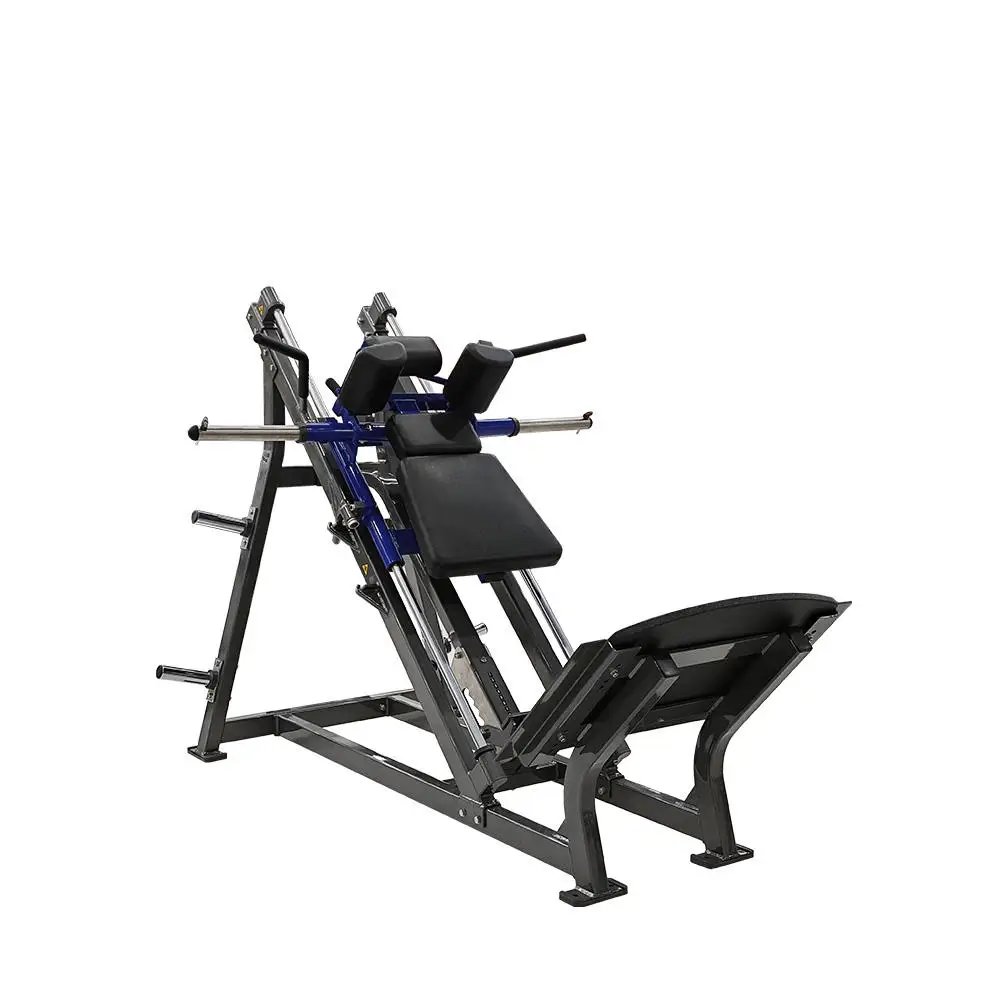
This commercial hammer strength pull over arm machine occupies a focused niche: overhead pulling movements targeting the latissimus dorsi and arm flexors under controlled manual resistance. In a full strength zone layout, it complements pressing stations and cable crossover systems by providing a dedicated vertical pull pattern that cable machines cannot fully replicate. The 1500 × 1350 mm operational footprint allows placement along perimeter walls or between rack bays without disrupting member traffic flow. The 180 kg user weight capacity accommodates the full range of athlete and general-member body types found in commercial facilities.
Continuous Operation and Floor-Level Deployment Considerations
Plate-loaded stations like the OS-H5012 generate impact noise each time weight plates are loaded or set down, which matters when the strength zone sits above occupied floors. Deploying vibration-dampening mats beneath the 1231 × 1360 mm base reduces structure-borne transmission to rooms below [NEED_CITE: impact noise transmission through concrete floor slabs in multi-story fitness facilities]. Unlike motorized cardio equipment, this unit draws no electrical power, eliminating the need for dedicated circuits but requiring adequate overhead clearance for the 1503 mm frame height. Facilities planning 24-hour access should factor in that plate handling noise peaks during loading and unloading rather than during the exercise stroke itself. Adequate spacing between adjacent units — at minimum 600 mm on each side — allows safe plate changes without member collision.
Manual Resistance Mechanics and Frame Engineering Explained
The plate-loaded resistance system on this commercial hammer strength pull over arm machine delivers force through a direct mechanical linkage rather than weight stacks or cable-pulley ratios. This design eliminates cable fraying, stack-pin wear, and selector mechanism failures that plague pin-loaded machines in high-traffic environments. The heavy-gauge steel frame distributes load across reinforced weld points at the pivot axis, where cyclic stress is highest during eccentric return phases. Manual resistance also means the load profile is linear and predictable — what the user loads is what they feel, with no mechanical advantage distortion from pulley geometry. The sealed pivot bearings require minimal maintenance compared to open bushings that attract chalk dust and sweat corrosion over time. For facility operators, the absence of electrical components and electronic consoles means zero firmware updates, zero connectivity troubleshooting, and zero screen replacement costs.
The Hidden Cost of Underspec’d Strength Frames
Facilities that purchase light-duty plate-loaded equipment for commercial floors routinely face premature frame deformation at the loading horns and pivot mounts [NEED_CITE: load cycle failure rates in commercial versus light-commercial strength equipment]. When a frame twists under repeated heavy loading, the movement arc shifts, creating uneven resistance that members notice immediately. Complaints escalate from "the machine feels off" to formal injury reports if the misalignment goes undetected. Batch replacement of underspec’d frames often costs more than specifying commercial-grade units initially, especially when factoring in floor downtime and member attrition during the swap. Voltage and electrical mismatches do not apply here, but the structural equivalent — load rating mismatches — produces the same pattern of costly retroactive correction.
Why This Product Line Earns Its Place on the Floor
Every OS-H5012 unit undergoes cyclic load testing calibrated to 10,000 hours of continuous commercial operation before shipping approval. The 1500 × 1350 mm operational footprint was validated against 3D layout planning workflows, ensuring that spacing calculations for strength zones account for plate-loading clearance and member movement radii. Full OEM customization extends to frame color and branded logo application, allowing chain operators to maintain visual identity across locations. The heavy-gauge steel frame and sealed bearing specification matches the durability standard applied across all six cardio and strength series in the product family. Technical documentation ships with every unit, and 24/7 support response covers commissioning questions and field troubleshooting.
Documentation & Test Records
- CE declaration of conformity covering the OS-H5012 structural and safety requirements
- EN 957 test report validating static and dynamic load performance
- ISO 9001 certificate for the manufacturing quality management system
- Durability test record documenting cyclic load cycles to rated service life
- Frame material and weld inspection report with visual and dimensional checks
- Installation guide with anchor bolt specifications and floor leveling procedures
Installation, Commissioning & Maintenance
- Verify 1500 × 1350 mm clearance including 600 mm side access for plate loading on the OS-H5012
- Level the floor surface and install vibration-dampening pads beneath all four base contact points
- Inspect pivot bearings and linkage bolts during initial commissioning before member use begins
- Schedule quarterly bearing inspection and lubrication based on facility usage volume
- Wipe down frame surfaces daily to prevent sweat corrosion on the steel finish
- Check loading horn integrity and retaining clips monthly to prevent plate dislodgement
Planning Your Strength Zone Equipment Order
Share your strength zone square footage and unit count to receive a 3D layout that maps the OS-H5012 placement alongside rack bays, cable stations, and free-weight areas with proper traffic clearances. Specify your facility’s daily operating hours and expected member volume so the duty-cycle rating can be matched to your usage profile. Confirm whether the deployment floor sits above occupied spaces to determine vibration isolation requirements. State your target market’s weight plate standard — kilogram or pound — to ensure loading horn compatibility.
Frequently Asked Questions
Q: What is the difference between plate-loaded and pin-loaded resistance for pull over machines?
A: Plate-loaded systems like the OS-H5012 use external weight plates on loading horns, giving users precise control over resistance increments without internal weight stack limitations. Pin-loaded machines offer quick selector-pin changes but have a fixed maximum weight and more moving parts — cables, pulleys, guide rods — that require ongoing maintenance. Commercial facilities with serious lifters often prefer plate-loaded designs for their durability and unlimited loading capacity.
Q: What daily maintenance does the OS-H5012 require in a commercial gym?
A: Daily wipe-down of the frame and seat surfaces prevents sweat corrosion on the steel finish. Staff should visually inspect loading horn retaining clips and pivot linkage bolts at the start of each shift. Quarterly bearing lubrication and bolt torque checks keep the movement arc smooth under continuous use. A maintenance log tied to usage volume helps schedule these intervals accurately.
Q: How should the OS-H5012 be positioned within a strength zone layout?
A: Place the unit along a perimeter wall or between rack bays where the 1500 × 1350 mm footprint does not obstruct main traffic lanes. Allow at least 600 mm on each side for safe plate loading and unloading. Positioning near other plate-loaded stations consolidates weight plate storage and reduces member cross-traffic. Ensure overhead clearance exceeds the 1503 mm frame height.
Q: What OEM customization options are available for the OS-H5012?
A: Frame color can be matched to facility branding, and logo application is available on visible frame surfaces. Upholstery color and material can be specified to coordinate with other equipment lines. Custom packaging and assembly documentation can be prepared for distributors managing their own market branding. Minimum order quantities apply and are confirmed during the quotation stage.