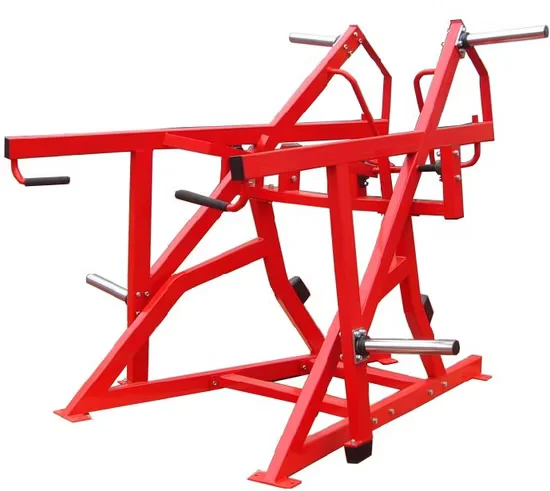
![Plate Loaded Hammer Strength ISO Lateral Decline Bench for Commercial Gym [WARN] draft identifier mismatch](https://bicksport.com/wp-content/uploads/2026/08/plate-loaded-hammer-strength-iso-lateral-decline-bench-for-commercial-gym-warn-draft-identifier-mismatch-450678.webp)
Steel Frame Stability — 141kg reinforced manual structure delivers consistent resistance mechanics across continuous high-frequency sessions without motor dependency.
Technical Specifications
| Parameter | Value |
|---|---|
| Designation | H5004 |
| Product Type | Plate Loaded Hammer Strength ISO Lateral Decline Bench Machine |
| Brand | huiyang |
| Model NO. | H5004 |
| Power Source | Manual |
| Resistance Type | Plate Loaded |
| Exercise Part | Chest |
| Frame Material | Steel |
| Product Dimensions | 1300 × 1150 × 1750 mm |
| Net Weight | 141 kg |
| Folded | Unfolded |
| Age Group | Adult |
| Gender | Unisex |
| Certification | ISO 9001, CE |
| HS Code | 9506911900 |
| Customization | Available (logo, color, specification) |
Application Suitability
| Deployment Scenario | Typical Use |
|---|---|
| Chain gym strength zone | High-frequency chest isolation training in commercial plate loaded sections |
| Corporate wellness room | Structured upper-body resistance sessions during employee fitness breaks |
| Community fitness center | Durable chest press equipment accessible to adult members of varying experience |
| Sports performance training center | Controlled lateral decline mechanics for athlete upper-body conditioning |
Why Frame Rigidity Outweighs Aesthetics in Commercial Strength Zones
A 141kg steel frame eliminates the structural drift that compromises isolation accuracy over thousands of repetitions.
Walk through any chain gym after peak hours and you will find plate loaded machines with loosened pivot bolts and shifted guide rods. The plate loaded hammer strength ISO lateral decline bench commercial facilities deploy often arrives with frames welded for showroom display, not for the lateral torque generated when a 120kg athlete loads plates and drives through a decline press. Maintenance teams spend more hours retightening fasteners on underweight benches than on any other strength station [NEED_CITE: structural fatigue patterns in commercial plate loaded equipment]. When the frame flexes under load, the ISO lateral trajectory degrades, and the chest isolation the machine was engineered to deliver becomes an uncontrolled compound movement that stresses the anterior deltoid instead.
Positioning Within a Commercial Strength Floor Layout
The H5004 serves as a dedicated chest isolation station in plate loaded hammer strength zones, complementing flat and incline press machines by targeting the lower sternal fibers through a fixed lateral decline path. It pairs with adjacent cable crossover units and free-weight bench stations to give members a complete pressing continuum without leaving the strength sector. The plate loaded hammer strength ISO lateral decline bench commercial gyms install fits best along perimeter walls where plate storage racks sit within arm’s reach, and its 1300 × 1150 mm footprint leaves adequate lateral clearance for plate loading from both sides. The fixed trajectory accommodates users across a broad height range, with seat and pad geometry supporting controlled presses from compact to large-frame athletes.
Continuous Load Environment and Facility Requirements
A manual plate loaded design removes motor heat, electrical draw, and control board failure from the maintenance equation entirely. Deployment environments still demand level flooring with anti-vibration pads beneath the four contact points to prevent micro-shifts during heavy eccentric phases. Facilities placing this plate loaded hammer strength ISO lateral decline bench commercial strength areas must verify that the floor slab can sustain concentrated static loads exceeding 300kg when plates and user weight combine [NEED_CITE: floor load capacity standards for commercial gym equipment zones]. Adequate overhead clearance and lateral plate-handling space are necessary, and ambient humidity control prevents corrosion on exposed plate horns and weld seams over multi-year service life.
Manual Resistance Mechanics and Frame Engineering
The plate loaded system transfers force directly from loaded bumpers through hardened steel horns into the lever arms, bypassing the cable stretch and pulley friction that degrade selectorized machines over time. The 141kg net weight anchors the base against the lateral torque vector unique to ISO decline pressing, where the resistance arc pulls both downward and outward simultaneously. Welded steel construction at major stress junctions prevents the pivot-point elongation that causes wobble in lighter benches after repeated heavy sets. The fixed ISO lateral trajectory constrains the pressing path to a biomechanically validated curve, reducing the stabilization demand on rotator cuff musculature and allowing lifters to concentrate load on the target chest fibers without balancing a free barbell.
The Hidden Cost of Underspecified Strength Equipment
Gyms that procure plate loaded benches based on lowest unit cost encounter frame hairline cracks within eighteen months of heavy-member usage. Pivot bushings on lightweight units develop play, turning a precise ISO lateral decline press into a loose, unpredictable movement pattern that generates member complaints and liability exposure. Facilities replacing an entire row of underweight benches face downtime, reinstallation labor, and member disruption that erases any initial procurement saving [NEED_CITE: total cost of ownership comparison for commercial gym strength equipment]. Data from returned equipment consistently points to frame mass and weld penetration depth as the separating variables between units that survive five years and those scrapped at twenty-four months.
Why This Product Line Meets Commercial Deployment Standards
Sub-35dB acoustic performance extends beyond cardio; manual plate loaded designs produce zero motor noise, and the 141kg frame dampens plate-contact vibration that lighter benches transmit through flooring. Every unit undergoes structural load testing documented for procurement records. The H5004 joins a complete six-series equipment family, allowing facilities to source plate loaded, selectorized, and cardio stations from one integrated supply chain. OEM customization covers logo application, frame color, and pad stitching to align with facility brand identity. Our 3D layout service maps this bench’s 1300 × 1150 mm footprint alongside adjacent equipment to verify plate-loading clearance and member flow. 24/7 technical support addresses installation calibration questions directly from the Shandong manufacturing facility.
Documentation & Test Records
- CE declaration of conformity for H5004 structural and mechanical safety
- EN 957 test report covering static and dynamic load validation
- ISO 9001 certificate for manufacturing quality management system
- Frame weld penetration and stress-point inspection records
- Durability test record for pivot bushings under cyclic loading
- Installation guide with floor anchoring and leveling specifications
Installation, Commissioning & Maintenance
- Position the 1300 × 1150 × 1750 mm frame with minimum 600 mm lateral clearance on each side for plate handling.
- Install anti-vibration pads under all four base feet and verify level with precision gauge before first use.
- Torque all pivot bolts to specification during initial commissioning and recheck after the first 500 repetition cycles.
- Apply dry-film lubricant to lever arm pivot bushings quarterly to maintain smooth ISO lateral trajectory.
- Inspect plate horn retaining clips monthly for deformation and replace before fatigue cracks propagate.
- Wipe steel contact surfaces and pad upholstery after each operating day to prevent sweat-induced corrosion.
Request a Strength Zone Configuration Review
Provide your strength area floor plan and planned equipment roster to receive a 3D layout incorporating the H5004 with verified plate-loading clearances and member traffic flow. Specify your target demographic’s average load range to confirm the frame’s duty-cycle alignment with daily usage intensity. Indicate deployment floor level and adjacent occupied spaces to assess vibration transmission requirements. State whether OEM branding, custom frame color, or pad material specifications apply to your facility standards.
Frequently Asked Questions
Q: How does plate loaded maintenance differ from selectorized strength machines?
A: Plate loaded units like the H5004 eliminate cable routing, weight stack guide rods, and selector pin mechanisms entirely. Maintenance concentrates on pivot bushing lubrication, bolt torque verification, and plate horn inspection. Without cables to fray or stacks to jam, scheduled downtime drops significantly, and replacement parts cost less per service cycle than selectorized equivalents in continuous commercial operation.
Q: What distinguishes ISO lateral decline trajectory from a standard flat bench press?
A: The ISO lateral decline path converges the pressing arc inward and downward simultaneously, aligning resistance with the lower sternal fiber orientation. A flat bench press moves the load vertically, distributing effort across the entire pectoral and anterior deltoid. The fixed lateral trajectory isolates the target muscle group more precisely while reducing shoulder stabilization demand during heavy commercial gym training sessions.
Q: What frame rigidity standards apply to commercial plate loaded benches?
A: Commercial deployments require frames that resist lateral deflection under maximum loaded conditions without visible flex or audible creaking. The H5004’s 141kg steel structure provides a high rigidity baseline. Procurement teams should request weld penetration records and cyclic load test data to verify the frame maintains trajectory accuracy across the equipment’s expected service life in high-frequency facility use.
Q: What is the expected service interval for a manual plate loaded bench in daily commercial use?
A: Manual plate loaded designs avoid motor, belt, and electronic component wear entirely. The H5004’s primary service points are pivot bushings and frame fasteners, which require quarterly inspection under standard commercial gym loads. Facilities running twelve or more operating hours daily should shorten the inspection interval and maintain a lubrication log to track bushing condition over the unit’s multi-year deployment cycle.
Q: How should facility planners determine spacing around plate loaded equipment?
A: Planners must account for the machine footprint plus lateral plate-handling clearance on both sides, typically a minimum of 600 mm each direction. Overhead clearance matters for tall users completing full-range presses. Our 3D layout service maps the H5004 within the broader strength zone to verify safe plate transport paths and member circulation without congestion during peak operating hours.

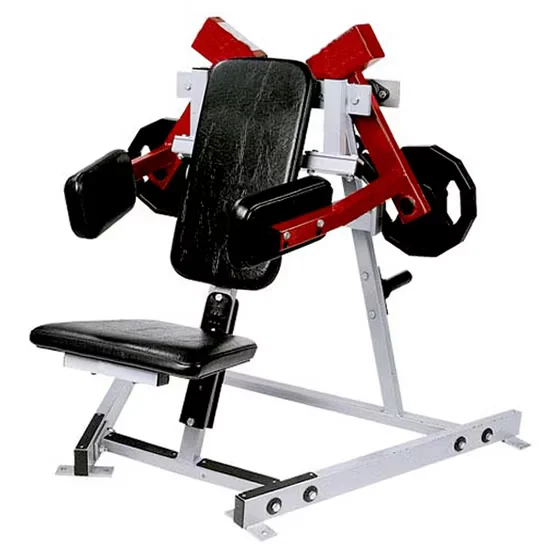
![ISO-Lateral Horizontal Bench Press Equipment for Commercial Gym Use [WARN] draft identifier mismatch](https://bicksport.com/wp-content/uploads/2026/08/iso-lateral-horizontal-bench-press-equipment-for-commercial-gym-use-warn-draft-identifier-mismatch-7c9c36.webp)