

Consistent Tension Retention — Laboratory fatigue cycling confirms these springs maintain resistance profiles across extended commercial use without measurable degradation.
Technical Specifications
| Parameter | Value |
|---|---|
| Product Type | Pilates Reformer Springs |
| Model NO. | SRY-spring |
| Specification | 2.225450mm |
| Weight | 1.2kgs |
| Color | Solid Color |
| Logo | Customized Is Allowed |
| Age Group | Adult |
| Gender | Unisex |
| Warranty Time | 3 Years |
| Production Capacity | 80000 Pieces/Month |
| Certification | CE |
Application Suitability
| Deployment Scenario | Typical Use |
|---|---|
| Commercial Pilates studios | High-frequency class scheduling with daily spring loading cycles |
| Rehabilitation and physical therapy centers | Consistent resistance delivery for controlled therapeutic movements |
| Boutique fitness studios | Branded equipment aesthetics with custom logo integration |
| Home Pilates setups | Long-interval replacement cycles for personal reformer frames |
Why Springs Fail Before Studios Notice the Drift
Tension loss accumulates silently until instructors compensate by adding springs, altering intended exercise progressions.
Studio operators rarely track spring age the way they track motor hours on cardio equipment. A reformer spring that has lost tension forces instructors to add extra springs or modify cueing, which changes the biomechanical intent of every exercise in the sequence. In high-frequency Pilates reformer replacement springs commercial environments, this drift compounds across dozens of daily sessions before anyone files a maintenance request [NEED_CITE: spring fatigue testing methodology for commercial fitness components]. The result is inconsistent client experience across identical reformer frames in the same room.
Resistance Architecture Across the Reformer Footprint
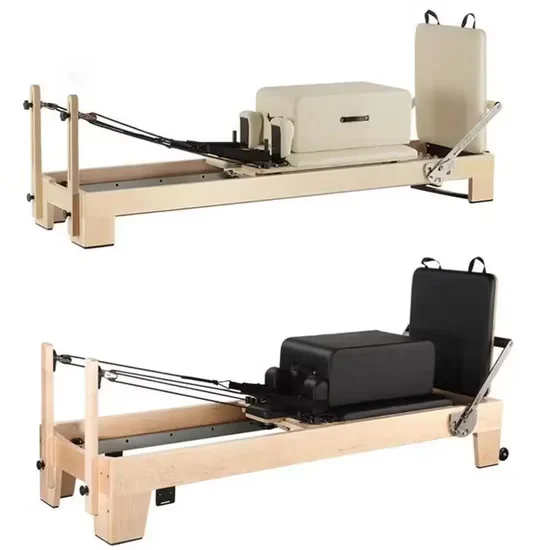
These Pilates reformer replacement springs commercial units serve the full resistance spectrum required in group reformer classes and private sessions. In a studio layout, springs pair with carriage weight and pulley geometry to create the loading environment — they are the primary variable instructors adjust between exercises and between clients of different strength levels. The 2.225450mm specification fits standard commercial reformer frames, covering the long-spring positions that govern footwork, leg circles, and long spine work. User body weight range does not affect spring compatibility, though it does influence which resistance level an instructor selects for each client.
Continuous Loading and Studio Environment Demands
A commercial Pilates studio running back-to-back classes subjects each spring to repeated full-extension cycles throughout operating hours. Unlike cardio motors that run continuously, reformer springs experience intermittent peak loads with complete release between repetitions, creating a distinct fatigue pattern. Ambient humidity in studios with adjacent showers or pools can accelerate surface corrosion on unprotected wire [NEED_CITE: environmental factors affecting spring steel fatigue life]. Proper ventilation around stored reformers and reformer accessories extends component service intervals. No electrical supply or data connection is required for spring installation, though studios tracking equipment maintenance schedules benefit from logging replacement dates.
Wire Gauge, Coil Geometry, and Tension Behavior
The 2.2mm wire diameter and 25mm outer coil diameter define the force-deflection curve these springs deliver under load. Thicker wire gauge produces higher resistance at a given extension length, while coil diameter influences how linearly that resistance builds through the range of motion. Music wire or high-carbon spring steel compositions resist permanent set — the condition where a spring fails to return to its resting length after repeated cycling. The 450mm free length determines maximum working extension and the point at which the spring approaches solid height, where coil bind creates abrupt resistance spikes [NEED_CITE: spring rate calculation standards for fitness equipment components]. Solid color finishing protects against surface oxidation while maintaining visual consistency across a studio’s reformer fleet.
The Hidden Cost of Deferred Spring Replacement
Studios that delay Pilates reformer replacement springs commercial swaps accumulate costs in less visible ways. Instructors spend class time adjusting spring configurations to compensate for tension loss, reducing effective teaching time. Clients who experience inconsistent resistance across different reformers in the same studio attribute the variation to equipment quality rather than worn components. Rehabilitation centers face greater risk, as therapists prescribing specific resistance levels for patient protocols depend on predictable spring behavior session after session [NEED_CITE: resistance consistency requirements in clinical rehabilitation settings]. Batch replacement on a scheduled interval costs less than reactive replacement driven by instructor complaints and client attrition.
Why This Spring Line Holds Up Under Studio Schedules
Consistent tension retention under repeated load cycling is the baseline requirement, verified through fatigue testing before production release. The 3-year warranty reflects confidence in material durability across commercial use patterns. Custom logo and color options let studios align spring appearance with branded equipment aesthetics without compromising mechanical specification. The standardized 2.225450mm dimension ensures these springs mount to existing commercial reformer frames without adapter hardware. Production capacity of 80,000 pieces per month supports bulk orders for multi-location studio networks and OEM partners requiring branded spring sets. CE certification confirms compliance with European safety requirements for fitness equipment components.
Documentation & Test Records
- CE declaration of conformity for fitness equipment component compliance
- Tension retention test records documenting resistance stability under repeated cycling
- Material composition certificate confirming spring steel grade and heat treatment
- Dimensional inspection report verifying 2.225450mm specification tolerances
- Custom branding specification sheet with logo placement and color matching guidelines
- Installation and replacement guide with hook orientation and safety inspection checkpoints
Installation, Commissioning & Maintenance
- Verify hook engagement on both carriage and frame anchor points before each class session
- Inspect coil surface for visible corrosion or deformation during weekly studio maintenance rounds
- Replace springs in matched sets to maintain balanced resistance across carriage attachment points
- Log installation date on equipment maintenance tracker to schedule next replacement interval
- Store spare springs in original packaging to prevent coil deformation during inventory holding
- Clean spring surface with dry cloth only — solvent cleaners degrade protective finish coating
Planning Your Reformer Fleet Maintenance Cycle
Provide your studio’s reformer count and daily class schedule to determine optimal batch replacement timing and spring quantity. Specify which reformer frame models are in use to confirm anchor point compatibility before ordering. Indicate whether custom branding with your studio logo is required, including color codes and artwork files. For rehabilitation facilities, share prescribed resistance level protocols to ensure spring selection matches clinical loading requirements. State your facility’s humidity conditions if reformers are positioned near pools, steam rooms, or exterior walls with condensation risk.
Frequently Asked Questions
Q: How can I tell when reformer springs need replacement?
A: Inspect springs for visible stretching where coils no longer return to their original resting length when unloaded. Compare resistance feel across identical spring positions on different reformers — noticeable inconsistency signals fatigue in the older set. Surface corrosion, hook deformation, or audible clicking during extension also indicate the spring has exceeded its service life and should be replaced to maintain exercise integrity and client safety.
Q: What distinguishes light, medium, and heavy resistance springs?
A: Resistance levels correspond to wire diameter and coil geometry, producing different force-deflection curves. Light springs build tension gradually through extension range, suitable for rehabilitation and beginner exercises. Medium springs offer moderate resistance across the full range for general conditioning work. Heavy springs deliver higher initial tension and steeper resistance buildup, supporting advanced strength exercises. Studios stock multiple levels so instructors can match resistance to individual client capacity.
Q: Are these springs compatible with major reformer brands?
A: The 2.225450mm specification fits standard commercial reformer frames that accept long springs with hook-end attachments. Before ordering, verify your reformer’s anchor point design and maximum spring length clearance. Some proprietary reformer systems use unique attachment mechanisms or non-standard dimensions that require adapter hardware or brand-specific springs. Share your reformer model information during inquiry to confirm compatibility.
Q: What customization options are available for studio branding?
A: Custom logo application and solid color finishes are available to match studio branding requirements. Minimum order quantities apply for branded orders, with lead time depending on customization complexity and production scheduling. Provide vector artwork files and Pantone color references during the scoping phase. Custom branding does not alter spring mechanical specification or tension characteristics — only external appearance changes to support your studio’s visual identity.
Q: What lifespan should I expect under daily commercial use?
A: Springs in high-frequency studio environments typically require evaluation for replacement after sustained daily class use. Actual service life depends on class volume, exercise selection patterns, and environmental conditions including humidity exposure. The 3-year warranty covers manufacturing defects under normal commercial use. Implementing scheduled inspection intervals and batch replacement cycles helps studios avoid the inconsistent client experience that results from staggered individual spring failures across the reformer fleet.
![Beech Wood Pilates Reformer Bed for Commercial Studio Equipment [WARN] draft identifier mismatch](https://bicksport.com/wp-content/uploads/2026/08/beech-wood-pilates-reformer-bed-for-commercial-studio-equipment-warn-draft-identifier-mismatch-32d5bd.webp)
![Pilates Reformer Core Training Bed Foldable Home Gym SRY-20B [WARN] draft identifier mismatch](https://bicksport.com/wp-content/uploads/2026/08/pilates-reformer-core-training-bed-foldable-home-gym-sry-20b-warn-draft-identifier-mismatch-715544.webp)
![Senrui Fitness Folding Reformer Bed Oak Wood Foldable Pilates Reformer [WARN] draft identifier mismatch](https://bicksport.com/wp-content/uploads/2026/08/senrui-fitness-folding-reformer-bed-oak-wood-foldable-pilates-reformer-warn-draft-identifier-mismatch-1ad75d.webp)