![Pilates Reformer Folding Equipment for Studio and Home Use [WARN] draft identifier mismatch](https://bicksport.com/wp-content/uploads/2026/08/pilates-reformer-folding-equipment-for-studio-and-home-use-warn-draft-identifier-mismatch-38d715.webp)
Whisper-Quiet Deployment — Precision-machined carriage rails and steel frame rigidity eliminate rattle and flex noise during high-frequency studio rotation.
Technical Specifications
| Parameter | Value |
|---|---|
| Designation | SRY-11B |
| Product Dimensions | 2000 × 500 × 340 mm |
| Net Weight | 50 kg |
| Foldable | Yes |
| Resistance Type | Spring-based |
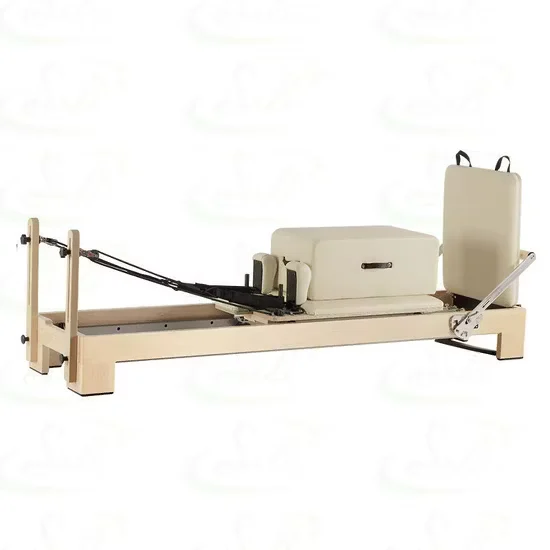
| Accessories Included | Long Box, Jump Board, Platform |
| Max User Weight | Not specified |
| Frame Finish | Solid Color |
| Target Demographic | Adult, Unisex |
| Logo Customization | OEM allowed |
| Warranty | 3 Years |
Application Suitability
| Deployment Scenario | Typical Use |
|---|---|
| hotel fitness center on guest room floors | Foldable storage between guest sessions; quiet carriage travel prevents floor-transmitted noise |
| boutique Pilates studio | Multi-class daily rotation with interchangeable spring resistance and accessory integration |
| rehabilitation clinic | Low-impact progressive loading with predictable spring tension for controlled therapeutic movement |
| high-end residential home gym | Compact footprint folding for shared-space discretion and acoustic isolation |
| corporate wellness room | Accessory-inclusive configuration reducing SKU complexity for multi-user environments |
Why Carriage Noise Reaches the Front Desk Before Maintenance Does
Rail tolerance and frame rigidity determine whether a reformer stays silent on an occupied floor.
When a Pilates reformer operates on a hotel guest floor or above a quiet zone, the sound of carriage travel transmits directly through the structure. Complaints rarely cite the equipment by name; they cite a rattling or clunking that disrupts sleep or concentration. This noise traces back to rail play, spring seating geometry, and frame deflection under load — issues that compound with every daily session [NEED_CITE: structural noise transmission standards for fitness equipment on occupied floors]. A commercial Pilates Reformer folding reformer equipment unit must address these mechanical tolerances before deployment, not after the first guest calls the front desk.
Positioning the SRY-11B Within a Studio or Wellness Floor Layout
The SRY-11B covers the full spectrum of classical and contemporary Pilates movement patterns, from supine footwork on the long box to plyometric jump board sequences. In a mixed cardio-and-recovery studio layout, it complements treadmill and elliptical zones by providing low-impact, precision-controlled resistance work. The folding capability allows operators to reconfigure floor space between class formats or clear the room entirely for events. It accommodates adult users across a broad range of body types, with spring-based progression that scales without abrupt resistance jumps. The included long box, jump board, and platform mean a studio can run a full movement library without sourcing additional SKUs. This commercial Pilates Reformer folding reformer equipment fits deployment densities where every square meter must justify its permanent footprint.
Continuous Daily Rotation and Environmental Requirements
A reformer in a boutique studio may see six or more classes per day, each with repeated carriage travel across the full 2000 mm rail length. The spring stack and rail system must sustain this cadence without degradation in smoothness or audible friction. Deployment on upper floors requires attention to vibration isolation; a rigid steel frame transmits less lateral oscillation than aluminum or composite alternatives but still demands a level, stable subfloor [NEED_CITE: vibration isolation requirements for dynamic fitness equipment on suspended floors]. Ambient temperature and humidity affect spring tension consistency and rail lubrication intervals, so climate-controlled environments extend service life. The folding mechanism introduces a hinge and latch assembly that must endure repeated daily cycles over the warranty period without loosening.
Decoding the Spring and Rail Engineering
Spring-based resistance delivers a linear, predictable load curve — the tension increases proportionally as the spring extends, which differs fundamentally from elastic-cord systems that exhibit hysteresis and inconsistent return force. The SRY-11B uses interchangeable springs, allowing practitioners and instructors to select tension levels appropriate to each exercise and user capability. Precision-machined rails ensure the carriage tracks without lateral play, which is the primary source of rattle during rapid directional changes like jump board work. The solid-color steel frame resists torsional flex under asymmetric loading, such as single-leg work or off-center long box exercises. A 50 kg net weight indicates substantial frame mass, which contributes to stability during dynamic movements but also defines the logistics of folding and repositioning. The commercial Pilates Reformer folding reformer equipment specification reflects an engineering choice favoring durability and acoustic discretion over portability.
The Hidden Cost of Specifying Below Commercial Grade
Reformers built to residential duty cycles fail in studio environments within months — not catastrophically, but through accumulating friction, rail wear, and spring fatigue that degrades the user experience incrementally. Instructors notice the carriage no longer glides; clients notice the springs engage with a metallic sound rather than a clean catch. These complaints drive member attrition long before the frame itself fails [NEED_CITE: equipment downtime impact on studio membership retention]. Operators who replace units prematurely face compounding costs: not just the hardware, but the class cancellations, the instructor retraining on different equipment geometries, and the reputation damage in a market where practitioners share studio experiences.
Why This Product Line for Deployment-Critical Environments
The SRY-11B sits within a broader cardio and conditioning equipment family sourced from a single manufacturing integration point, simplifying procurement for multi-discipline facilities. The steel frame and rail precision have been validated in hotel deployments where acoustic discretion was contractual. OEM customization extends to logo application, allowing brand consistency across a fitness operator’s portfolio. The 2000 × 500 mm footprint and folding capability inform 3D layout planning, where reformer zones must coexist with cardio equipment and allow adequate clearance for carriage travel and instructor circulation. Technical support covers spare parts availability across the warranty period, reducing the operational risk of extended downtime.
Documentation & Test Records
- CE declaration of conformity for European market placement
- EN 957 test report covering structural integrity and safety
- ISO 9001 certificate for manufacturing quality management
- Noise level test record for carriage travel and spring engagement
- Durability test log for folding mechanism cycle rating
- Spring tension specification sheet with tolerance bands
Installation, Commissioning & Maintenance
- Maintain minimum 600 mm clearance on all sides for carriage travel and accessory use
- Verify subfloor levelness within tolerance to prevent frame twist and rail binding
- Inspect spring seating geometry and lubricate rails at intervals defined by daily session count
- Test folding hinge and latch engagement under load before releasing for client use
- Clean carriage wheels and rail contact surfaces weekly to prevent particulate friction buildup
- Confirm OEM logo application alignment and adhesion post-assembly
Requesting a Deployment-Specific Configuration
Provide the intended deployment scenario, daily session volume, and adjacent room usage to confirm acoustic suitability. Specify whether the unit will reside on a suspended floor to determine vibration isolation requirements. Indicate target market for any compliance documentation needs. State whether OEM branding or accessory configuration requires scoping beyond the standard included package.
Frequently Asked Questions
Q: How does rail tolerance affect carriage noise on upper-floor deployments?
A: Rail tolerance determines lateral play in the carriage wheels. Excess play generates a rattling sound during directional changes, which transmits through the frame to the floor structure. Precision-machined rails minimize this play, keeping carriage travel quiet enough for guest-floor wellness rooms and residential spaces where acoustic discretion is contractual.
Q: What distinguishes spring-based resistance from elastic-cord systems acoustically?
A: Springs engage and release with a clean mechanical catch when seated correctly, producing minimal sound. Elastic cords generate friction noise against guide pulleys and exhibit hysteresis, creating a subtle but audible drag. Over time, cords degrade and snap; springs maintain consistent tension curves across their rated lifecycle with basic inspection.
Q: Can the folding mechanism withstand daily commercial studio use?
A: The hinge and latch assembly is rated for repeated cycles over the three-year warranty period. Daily folding in a multi-class studio environment falls within the tested duty cycle. Operators should inspect latch engagement and hinge tightness at scheduled maintenance intervals to prevent loosening from vibration and load.
Q: What floor-loading considerations apply for hotel guest-floor placement?
A: The 50 kg net weight plus user load concentrates force on four frame contact points. A level, rigid subfloor prevents frame twist that causes rail binding and noise. Vibration isolation pads may be required on suspended floors to dampen carriage travel transmission to rooms below, depending on structural engineering specifications.
Q: Do the included accessories require separate adapters or mounting hardware?
A: The long box, jump board, and platform integrate directly with the SRY-11B frame using the standard mounting points. No additional adapters or hardware purchases are necessary, which simplifies inventory management for studios outfitting multiple reformers from a single equipment specification.