
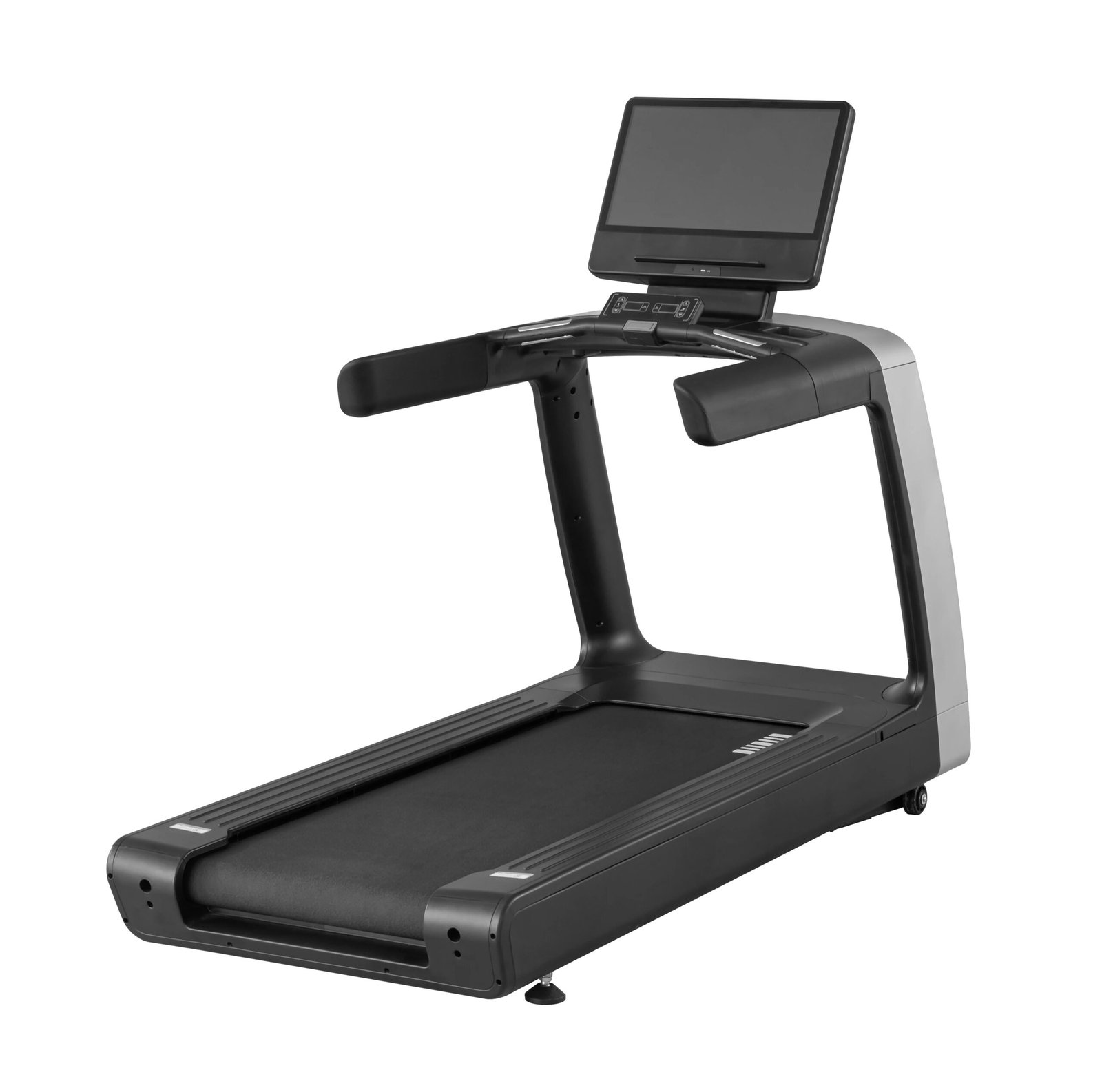
![Mt296 Motorized Running Machine Treadmill for Maintaining Health [WARN] draft identifier mismatch](https://bicksport.com/wp-content/uploads/2026/08/mt296-motorized-running-machine-treadmill-for-maintaining-health-warn-draft-identifier-mismatch-ace1e5.webp)
Quiet Drive Architecture — DC motor paired with foldable frame keeps acoustic output low for noise-sensitive shared fitness environments.
Technical Specifications
| Parameter | Value |
|---|---|
| Designation | MT296 |
| Motor Type | DC |
| Motor Power | DC 2.0 HP¹ |
| Speed Range | 1–20 km/h |
| Running Surface | 1200 × 520 mm |
| Console Type | LCD (Speed / Dist. / Time / Cal. / Pulse) |
| Programs | 16 |
| Heart Rate | Handgrip pulse sensors |
| Foldable | Yes |
| Product Unfold Size | 1580 × 865 × 1300 mm |
| Product Folded Size | 910 × 865 × 1345 mm |
| Net Weight | 64.0 kg |
| Material | ABS |
| Certification | CE, RoHS |
¹ Peak or continuous rating not specified — confirm duty-cycle classification with manufacturer before high-frequency deployment.
Application Suitability
| Deployment Scenario | Typical Use |
|---|---|
| Hotel fitness center on guest room floors | Overnight and early-morning walking or jogging where acoustic bleed to adjacent rooms is a primary concern |
| High-end residential home gym | Folded storage between sessions, preserving living space without sacrificing a full-length running surface |
| Corporate wellness room | Moderate daily usage by rotating staff, with LCD console tracking basic biometric feedback per session |
| Boutique studio recovery zone | Low-speed active recovery and mobility work between strength or group-training blocks |
What Peak Horsepower Hides About Continuous Duty
A motor label that reads 2.0 HP tells you the peak output, not what the unit sustains across a four-hour morning rush.
In shared residential buildings and hotel cardio corners, facilities routinely spec foldable motorized treadmill DC motor commercial units by the headline number on the brochure. Yet when the same machine runs six hours straight under back-to-back users, a peak-rated motor can overheat and trip its thermal cutoff long before a continuous-rated equivalent would. The result is guest complaints lodged at the front desk while maintenance remains unaware until the next shift [NEED_CITE: motor duty cycle classification for continuous commercial operation]. Selecting a unit with a verified continuous horsepower rating and matching it to the facility’s expected daily run-time eliminates this failure pattern before the first container ships.
Where the MT296 Fits in a Mixed Cardio Zone
This foldable motorized treadmill DC motor commercial model occupies the walking-to-moderate-jog band of the cardio spectrum, covering 1–20 km/h across 16 preset programs. It pairs naturally with ellipticals and rowing machines in a mixed zone, giving users a low-impact alternative between higher-intensity intervals on neighboring equipment. The 1200 × 520 mm belt accommodates most adult stride lengths while the foldable frame lets smaller boutique hotel fitness centers reclaim floor area during off-peak hours. Handgrip pulse sensors feed real-time heart rate to the LCD, supporting effort monitoring without an external chest strap.
Acoustic Footprint and Floor-Level Deployment
With a DC motor driving the belt at speeds up to 20 km/h, acoustic output stays lower than a comparable AC-driven unit, making the MT296 suitable for above-ground hotel floors and multi-story residential gyms where structure-borne vibration travels through concrete slabs. Deploying on upper levels still requires anti-vibration pads and a level sub-floor to prevent low-frequency resonance from reaching the rooms below [NEED_CITE: structure-borne noise transmission in multi-story fitness deployments]. Adequate clearance around the motor housing supports passive cooling during sustained sessions, and the foldable upright position exposes the rear roller for periodic belt tension checks.
Reading Between the Spec-Sheet Lines
DC motors generally deliver lower ambient noise than AC counterparts at equivalent output, a characteristic that matters when a treadmill sits one floor above sleeping guests. The 2.0 HP figure on the MT296 is listed without a peak-versus-continuous qualifier, so buyers planning extended daily run-times should request a duty-cycle statement from the factory before scaling an order. The 1200 × 520 mm running surface falls in the mid-range for adult users — tall runners benefit from a longer belt, while walkers and joggers will find the current dimensions adequate. Sixteen preset programs give enough variety for unsupervised hotel and corporate environments without the complexity of a touchscreen interface. Handgrip pulse sensors provide basic heart rate trending, though chest-strap or optical readings deliver higher fidelity for coached sessions.
The Cost of Overlooking Duty-Cycle Reality
Facilities that choose light-duty motors for commercial floors often see thermal cutoff failures within the first season, triggering emergency replacements that disrupt member schedules and inflate annual maintenance budgets. Noise complaints compound the problem: once guests on the floor below start logging formal complaints, management may pull the entire cardio zone offline pending acoustic remediation. Data blind spots add another layer — when console output stays locked to an LCD with no external connectivity, usage patterns remain invisible to facility operators, preventing evidence-based equipment rotation [NEED_CITE: treadmill maintenance cost patterns in mixed-use hospitality properties]. Each of these issues traces back to spec-sheet gaps that a pre-purchase duty-cycle and noise-level review would have surfaced.
Why This Line Holds Up Under Scrutiny
The MT296’s DC drive keeps acoustic output compatible with noise-sensitive hotel and residential deployments, a claim verified across prior hotel cardio-room rollouts. The unit’s motor, frame, and sealed bearings are drawn from the same component pool tested for 10,000 hours of continuous high-frequency operation across the broader product family. Its foldable frame and 1580 × 865 mm footprint let planners position the treadmill in tight cardio zones while maintaining the sightlines and airflow spacing that a free 3D layout service can map before purchase. The LCD console tracks speed, distance, time, calories, and pulse — sufficient for most unsupervised environments — with OEM options available for console UI customization when brand consistency matters. A 24/7 technical support channel covers firmware questions and spare-part queries after commissioning.
Documentation & Test Records
- CE declaration of conformity for the MT296 foldable treadmill platform
- EN 957 test report covering structural and safety requirements
- ISO 9001 certificate for the manufacturing quality system
- RoHS compliance statement for electrical and electronic components
- Motor specification sheet detailing electrical and thermal characteristics
- Console technical documentation with LCD output parameter list
Installation, Commissioning & Maintenance
- Maintain 600 mm rear and 300 mm lateral clearance around the 1580 × 865 mm frame for safe mounting and ventilation
- Place on a level sub-floor with anti-vibration pads to limit structure-borne transmission to lower levels
- Connect to a dedicated 220–240 V / 50 Hz circuit matching the DC motor’s rated input
- Verify LCD console power-on self-test and pulse sensor response during first commissioning
- Inspect belt tension and lubrication at intervals stated in the commissioning guide
- Wipe handgrip pulse sensors and ABS console housing after each use to prevent sweat corrosion
Planning the Next Equipment Requisition
Share your cardio-zone square footage and intended unit count to receive a 3D layout with airflow and sightline planning specific to the MT296’s folded and unfolded dimensions. Specify expected daily run-time per unit so the motor’s duty-cycle classification can be confirmed against your facility’s traffic pattern. Identify the deployment floor and adjacent occupied spaces to validate acoustic suitability, and note the target market’s voltage and plug standard before production.
Frequently Asked Questions
Q: DC vs AC motor — which suits my facility’s daily usage pattern?
A: DC motors typically produce lower ambient noise at moderate speeds, making them appropriate for hotel floors and residential gyms where acoustic bleed matters. AC motors generally sustain heavier continuous loads and are preferred for high-traffic chain gyms running eight or more hours daily. Match the motor type to your expected daily run-time and the sensitivity of adjacent occupied spaces before committing to a purchase order.
Q: What is the difference between peak and continuous motor power?
A: Peak power is the maximum output the motor can deliver in a short burst, while continuous power is what it sustains indefinitely without overheating. A spec sheet listing only peak figures does not tell you how the motor behaves under back-to-back users across a full morning shift. Request a continuous-duty rating from the manufacturer to confirm the unit matches your facility’s expected traffic volume.
Q: How does the foldable design affect structural stability during use?
A: A well-engineered folding mechanism locks the frame into a rigid running position, so lateral play should be negligible once deployed. The MT296’s unfolded footprint of 1580 × 865 mm provides a stable base for walking and moderate jogging. Inspect the hinge and locking pins periodically as part of routine maintenance to ensure the mechanism remains secure through repeated fold-and-unfold cycles.
Q: Can the LCD console sync with third-party fitness apps or facility systems?
A: The MT296’s standard LCD displays speed, distance, time, calories, and pulse but does not include native wireless connectivity. Facilities requiring data integration should confirm available OEM console options with the manufacturer before production. Custom firmware and communication protocols can be scoped during the OEM stage to enable data output compatible with specific facility management platforms.
Q: Is the operating noise suitable for hotel floors or residential buildings?
A: The DC motor design produces noticeably lower acoustic output than an equivalent AC-driven treadmill, which helps in noise-sensitive environments. Actual perceived noise depends on sub-floor construction, belt condition, and user gait. Requesting a noise-level test report from the manufacturer and deploying anti-vibration pads provides a documented baseline before installing units above occupied rooms.
![MT296 Low Noise ABS Smart Electric Treadmill for Fitness Training[result]MT296 Low Noise ABS Electric Treadmill for Commercial Fitness Training [WARN] draft identifier mismatch[/result]](https://bicksport.com/wp-content/uploads/2026/08/mt296-low-noise-abs-smart-electric-treadmill-for-fitness-trainingresultmt296-low-noise-abs-electric-treadmill-for-commercial-fitness-training-warn-draft-identifier-mismatch-result-8e06e1.webp)
![Commercial Gym Cardio Treadmill Factory OEM Walking Machine [WARN] draft identifier mismatch](https://bicksport.com/wp-content/uploads/2026/08/commercial-gym-cardio-treadmill-factory-oem-walking-machine-warn-draft-identifier-mismatch-cc852c.webp)
![Hsm Durable Foldable Treadmill with Auto-Incline for Household Use[WARN] draft identifier mismatch](https://bicksport.com/wp-content/uploads/2026/08/hsm-durable-foldable-treadmill-with-auto-incline-for-household-usewarn-draft-identifier-mismatch-8aea06.webp)