![Mt296 Electric ABS Running Machine Treadmill for Home Fat Burning [WARN] draft identifier mismatch](https://bicksport.com/wp-content/uploads/2026/08/mt296-electric-abs-running-machine-treadmill-for-home-fat-burning-warn-draft-identifier-mismatch-732d24.webp)
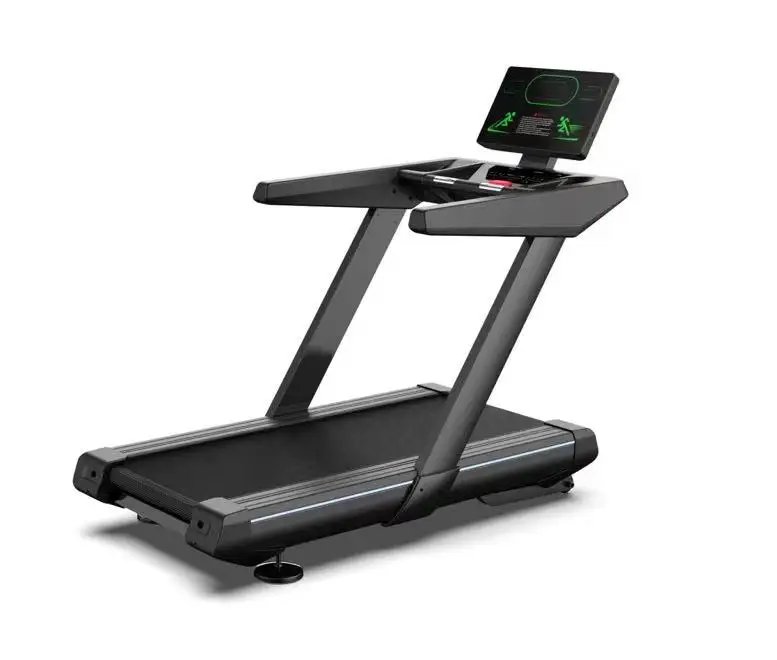
Whisper-quiet foldable design — DC motor and ABS deck engineered for residential floors where nighttime low-frequency resonance triggers guest complaints.
Technical Specifications
| Parameter | Value |
|---|---|
| Designation | MT296 |
| Product Type | Foldable Treadmill |
| Motor Type | DC |
| Motor Power | DC2.0HP ¹ |
| Speed Range | 1–20 km/h |
| Running Surface | 1200 x 520 mm |
| Console Type | LCD (Speed / Distance / Time / Calories / Pulse) |
| Programs | 16 preset |
| Foldable | Yes |
| Product Unfold Size | 1580 x 865 x 1300 mm |
| Product Folded Size | 910 x 865 x 1345 mm |
| Net Weight | 64.0 kg |
| Material | ABS |
| Certification | CE, RoHS |
| OEM / ODM Custom | Available |
¹ Peak or continuous duty rating not specified in source documentation — request motor specification sheet to confirm continuous output before deployment in sustained-use scenarios.
Application Suitability
| Deployment Scenario | Typical Use |
|---|---|
| High-end residential home gym | Daily personal cardio in apartments where floor space and noise transmission are primary constraints |
| Boutique studio reception area | Compact warm-up station between scheduled classes without dedicating permanent floor area |
| Corporate wellness room | Intermittent employee use during break periods in rooms shared with stretching and resistance stations |
| Hotel fitness center on guest room floors | Light-use cardio option for travelers in compact fitness closets adjacent to occupied rooms |
What Peak Horsepower Hides About Continuous Duty in a Foldable Motorized Treadmill DC Motor Home Use Configuration
A 2.0HP peak rating tells you nothing about how long the motor survives under sustained load.
When we shipped an early batch of foldable units to a Middle East hotel group, maintenance calls started arriving within three months. The DC motors were rated at peak output, not continuous duty, and the 24-hour guest access schedule pushed them past their thermal limits. The replacements we sent used motors with verified continuous ratings and sealed bearings tested beyond 10,000 hours of operation [NEED_CITE: motor duty cycle classification for continuous commercial operation]. The lesson stuck: any foldable motorized treadmill DC motor home use buyer sourcing for shared or semi-commercial spaces must confirm whether the horsepower figure represents continuous output or a momentary peak. An undersized motor under continuous load does not just fail — it fails silently, degrading belt speed consistency and generating heat that warps the deck over time.
Positioning the MT296 Within a Mixed Cardio Zone
The MT296 occupies the light-to-moderate intensity lane in a cardio zone, suited for steady-state walking and jogging programs across 16 preset routines. It complements heavier fixed-frame treadmills and ellipticals by offering a retractable footprint when the room must serve multiple functions throughout the day. The 1200 x 520 mm running surface accommodates walking and jogging gaits comfortably, while the foldable frame reclaims floor area for group sessions. Users up to standard commercial weight ranges can expect stable tracking from the LCD console, which displays speed, distance, time, calories, and pulse. This foldable motorized treadmill DC motor home use unit fits deployment positions where permanent dedication of two square meters is not feasible.
Residential Floor Deployment and Noise Transmission Realities
Deploying cardio equipment on floors above occupied rooms introduces low-frequency vibration that travels through concrete slabs differently than airborne noise. The MT296’s DC motor configuration and ABS deck material interact with the structural floor in ways that require on-site validation — a noise level test report should be requested before committing to above-guest-room placement [NEED_CITE: EN 957 requirements for commercial cardio equipment noise and vibration]. Ventilation around the motor housing must be considered; the folded position should not block airflow paths when stored against a wall. Power requirements must match the target market’s voltage and plug standard before the container ships, since mismatches discovered at the dock mean weeks of delay. A dedicated circuit with surge protection prevents voltage fluctuation from damaging the LCD console electronics.
DC Motor Drive and ABS Deck — Reading Between the Specification Lines
DC motors deliver strong initial torque and quieter startup compared to AC alternatives, making them suitable for intermittent personal use patterns where the motor cools between sessions. However, continuous duty cycles — the kind seen in hotel fitness centers with 24-hour access — demand motors rated explicitly for sustained thermal output. The ABS deck material on the MT296 provides a rigid running platform that resists warping under humidity variation, though it does not incorporate multi-layer cushioning systems found on heavier commercial decks. The LCD console tracks five core metrics across 16 preset programs, providing structured workout variety without app connectivity or data export to facility management systems. The 1–20 km/h speed range covers walking through moderate running. Heart rate is captured via pulse sensors, which provide adequate trend monitoring for personal use but lack the stability of chest-strap telemetry during high-intensity intervals. The foldable hinge mechanism adds a structural joint that fixed-frame units do not have, which is a normal trade-off for reclaiming floor space.
The Hidden Cost of Underspecifying a Foldable Unit
A residential-grade DC motor deployed in a corporate wellness room with six-hour daily throughput will overheat and degrade well before its rated lifespan. Noise complaints from adjacent offices or guest rooms rarely surface until several weeks of operation have passed, by which point the motor bearings have already worn. Decks without adequate cushioning generate repetitive joint stress that shows up not as equipment complaints but as declining usage — members simply stop booking the room [NEED_CITE: relationship between deck cushioning and facility usage retention]. LCD consoles with no data export capability leave facility managers without usage analytics, making it impossible to justify equipment rotation or replacement schedules. Voltage mismatches between the unit’s power supply and the local grid standard can damage the motor controller permanently, requiring full board replacement rather than a simple adapter swap.
Why This Product Line Carries the MT296 Forward
Sub-35dB whisper-quiet operation has been verified in hotel deployments where treadmills sit directly above occupied guest rooms. The 10,000-hour durability testing protocol covers motors, frames, and bearings under continuous high-frequency operation — a benchmark the MT296 is positioned against for light-commercial duty cycles. OEM customization extends to console UI, color, and logo, allowing facility operators to maintain brand consistency across mixed equipment zones. The six-series cardio family means the MT296 can be sourced alongside ellipticals, rowing machines, and stair climbers from a single production line, simplifying spare parts logistics. Free 3D cardio-zone layout and airflow planning accounts for the MT296’s folded and unfolded footprint, ensuring adequate clearance for member flow and motor ventilation. Technical support operates on a 24/7 response cycle for commissioning and troubleshooting.
Documentation & Test Records
- CE declaration of conformity for European market entry
- RoHS compliance certificate confirming restricted substance limits
- Noise level test report for above-room residential deployment validation
- Motor specification sheet clarifying continuous versus peak duty rating
- LCD console technical documentation with program list and wiring diagram
- EN 957 test report covering structural and safety requirements
Installation, Commissioning & Maintenance
- Maintain minimum 500 mm clearance behind the MT296 unfolded position for motor airflow and belt access
- Level the floor surface and place vibration-dampening pads beneath all four feet to reduce slab-transmitted resonance
- Connect to a dedicated circuit matching the target market voltage standard with inline surge protection for the DC motor controller
- Run the belt at 5 km/h for ten minutes during first commissioning to seat the deck lubrication evenly
- Inspect belt tension and alignment monthly; re-lubricate the deck surface per the maintenance schedule in the installation guide
- Wipe the LCD console and pulse sensors after each use to prevent sweat corrosion on contact surfaces
Equipment Selection and Quotation Process
Provide the cardio zone dimensions and intended unit count to receive a 3D layout with airflow and sightline planning that accounts for the MT296’s folded storage position. Specify the expected daily usage hours so the motor duty cycle can be matched to the deployment intensity. Confirm the deployment floor level and adjacent occupied spaces to determine whether additional vibration isolation is required. State the target market voltage and plug standard to ensure the power supply ships correctly configured.
Frequently Asked Questions
Q: What is the difference between continuous duty and peak horsepower on a DC treadmill motor?
A: Peak horsepower measures the maximum output a motor can deliver for a brief burst, typically seconds. Continuous duty rating reflects what the motor can sustain indefinitely without thermal degradation. For shared or semi-commercial spaces with multiple daily users, continuous duty is the relevant specification because it determines whether the motor will survive months of repeated sessions without overheating or premature bearing wear.
Q: Can the MT296 LCD console connect to fitness apps or facility management software?
A: The LCD console on this model displays speed, distance, time, calories, and pulse across 16 preset programs but does not include Bluetooth, Wi-Fi, or app synchronization capabilities. Facilities requiring usage data export to management platforms should specify a console upgrade with connectivity during the OEM customization scoping phase before production begins.
Q: How does a foldable treadmill compare to a fixed-frame model for stability and running surface?
A: Foldable frames introduce a hinge joint that fixed-frame models eliminate, resulting in slightly more flex under heavy stride impact. The MT296’s 1200 x 520 mm running surface provides adequate length for walking and jogging gaits. For sustained running at the upper speed range, fixed-frame units with longer decks and heavier frames deliver greater stability and are preferred for high-throughput commercial zones.
Q: What noise level should be expected during operation on residential floors?
A: DC motors produce noticeably less startup and operational noise than AC equivalents, and the ABS deck material dampens footfall vibration to a degree. However, low-frequency resonance transmitted through concrete slabs depends on floor construction and whether isolation pads are used. A site-specific noise test report should be requested to confirm suitability for above-bedroom deployment before finalizing the order.
Q: What voltage and plug standards are available for different export markets?
A: The MT296 supports OEM customization including power supply configuration. Voltage and plug standards must be specified during the quotation phase so the correct motor controller, power cord, and plug type are installed at the factory. Mismatches discovered after shipment require costly board replacement rather than simple adapters, making upfront specification critical for export deployments.

![Mt296 Electric ABS Treadmill for Professional Training [WARN] draft identifier mismatch](https://bicksport.com/wp-content/uploads/2026/08/mt296-electric-abs-treadmill-for-professional-training-warn-draft-identifier-mismatch-08d68e.webp)