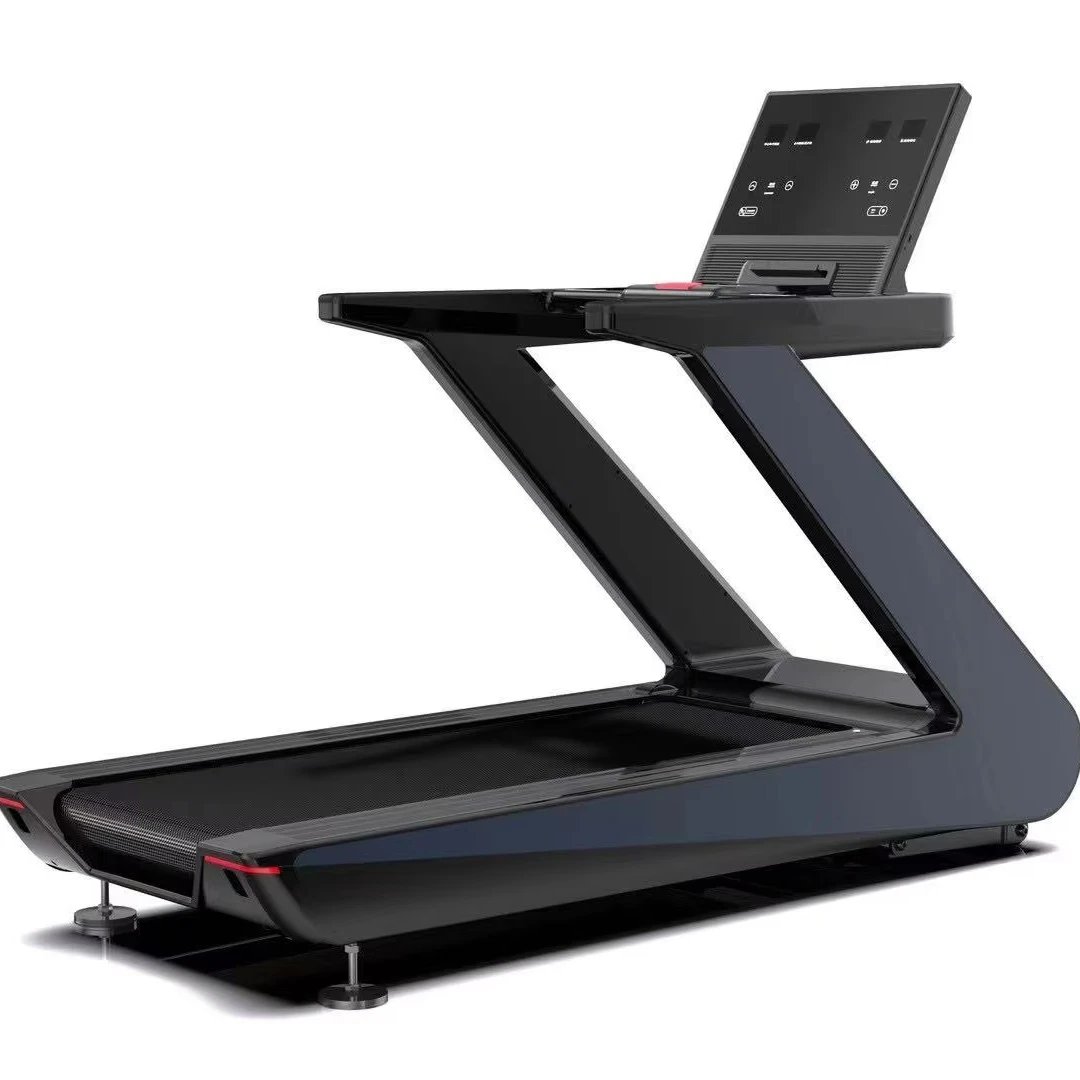
![Mt296 Commercial Motorized Treadmill ABS Anti-Slip for Speed Training [WARN] draft identifier mismatch](https://bicksport.com/wp-content/uploads/2026/08/mt296-commercial-motorized-treadmill-abs-anti-slip-for-speed-training-warn-draft-identifier-mismatch-c20082.webp)
Quiet Deployment Ready — DC2.0HP motor paired with a foldable chassis keeps acoustic output manageable when positioned above occupied rooms or beside shared corridors.
Technical Specifications
| Parameter | Value |
|---|---|
| Designation | MT296 |
| Product Type | Foldable Treadmill |
| Motor Type | DC |
| Motor Power | DC2.0HP (peak or continuous not specified in source) |
| Speed Range | 1–20 km/h |
| Running Surface | 1200 × 520 mm |
| Console Type | LCD (Speed / Distance / Time / Calories / Pulse) |
| Programs | 16 preset programs |
| Foldable | Yes |
| Product Unfold Size | 1580 × 865 × 1300 mm |
| Product Folded Size | 910 × 865 × 1345 mm |
| Net Weight | 64.0 kg |
| Material | ABS |
| Color Options | Multicolor (OEM/ODM available) |
| Certification | CE, RoHS |
Application Suitability
| Deployment Scenario | Typical Use |
|---|---|
| Boutique hotel guest fitness center with limited floor area | Folded between scheduled guest sessions to reclaim corridor or lounge space |
| High-end residential home gym or multi-use room | Stowed vertically when the room serves non-fitness functions |
| Corporate wellness room shared across departments | Deployed during wellness hours and folded to clear floor for meetings |
| Light-use personal training studio | Positioned beside strength racks for warm-up and conditioning blocks |
What Peak Horsepower Masks in a Foldable Treadmill Frame
A motor rated only at peak output will overheat and degrade long before its label suggests.
When a facility installs a foldable motorized treadmill with an underspecified DC motor, the first symptom is rarely a complete failure — it is thermal throttling during the third or fourth consecutive session. Guests or residents notice the belt stutter, then they stop booking the room. Maintenance logs fill with intermittent fault codes that resolve after a cool-down, masking the real problem: the motor was never rated for the duty cycle it faces. [NEED_CITE: motor duty cycle classification for continuous commercial operation]
Where the MT296 Fits Inside a Mixed Cardio Zone
The MT296 occupies a specific slot in a space-constrained cardio layout: moderate-intensity steady-state work and interval sessions at speeds up to 20 km/h. Its 1200 × 520 mm running surface accommodates walking through mid-tempo running, positioning it beside ellipticals and upright bikes rather than replacing a full-deck commercial treadmill. The foldable motorized treadmill DC motor design lets operators place it in corners or against walls where a fixed-frame unit would block sightlines and airflow. Users up to the rated weight limit can access the 16 preset programs through the LCD console, which displays speed, distance, time, calories, and pulse in real time.
Noise Transfer and Placement Rules for Shared Floors
A DC motor running at moderate load generates less acoustic energy than an AC counterpart of equivalent peak rating, but noise transfer depends as much on the floor assembly as on the motor itself. Deploying this unit on an upper hotel floor or above occupied residential space requires a vibration-isolation pad beneath the frame to decouple structure-borne transmission. The foldable mechanism introduces an additional contact point at the hinge; confirming that the hinge lock seats fully before each session prevents the micro-rattle that guests report as a hum through the ceiling below. Cross-ventilation around the motor housing matters — enclosing the unit in an alcove without clearance restricts airflow and raises internal temperature. [NEED_CITE: acoustic isolation requirements for cardio equipment on suspended floor slabs]
Reading the DC Motor and Drive Specs Correctly
The distinction between peak and continuous horsepower determines whether a DC motor survives daily use. Peak rating describes the output the motor can sustain for seconds during acceleration; continuous rating describes what it delivers indefinitely at operating temperature. When the source specifies DC2.0HP but does not confirm continuous duty, treat it as a peak figure until the motor specification sheet arrives. The 1–20 km/h speed range covers walking through fast running, and the DC drive type typically pairs with PWM speed control, which adjusts voltage pulses to the motor rather than varying voltage continuously — this reduces heat buildup at lower speeds. The LCD console provides basic biometric readout through pulse sensors; whether that data can be exported to an external facility management system depends on connectivity options not listed in the current specs. The ABS frame material keeps the unit at 64.0 kg net weight, manageable for relocation when the foldable chassis is engaged.
The Hidden Cost of Specifying Below the Duty Cycle
A foldable treadmill specified for light home use but deployed in a shared commercial setting accumulates run-hours at a rate the motor and bearings were not designed for. Within months, the belt deck loses its original damping character, and users report joint discomfort they attribute to the facility rather than the equipment. Noise complaints follow as worn bearings transmit vibration through the frame into the floor structure. The entire zone then faces a replacement cycle that costs more than specifying correctly at the outset. [NEED_CITE: bearing fatigue life under continuous commercial treadmill operation]
Why Operators Source This Product Line
The MT296 benefits from the same engineering discipline applied across our six-series cardio range: sub-35dB acoustic targets, motor and bearing testing extending to 10,000 hours of continuous operation, and frame validation at up to 180 kg user weight on the commercial models. For this foldable unit, the compact folded footprint of 910 × 865 × 1345 mm lets our 3D layout service place it in zones where fixed-frame treadmills cannot fit, while maintaining the service-clearance distances our technicians specify. OEM and ODM customization covers console UI, color, and logo — relevant when a hotel group wants the LCD interface to match its brand palette. Documentation ships with every unit: motor spec sheet, noise test data, and installation guide covering the hinge-lock and power-circuit requirements specific to this chassis.
Documentation & Test Records
- CE declaration of conformity for the MT296 electrical safety and emissions scope
- EN 957 test report covering mechanical safety and stability under load
- RoHS compliance certificate for restricted substances in electronic assemblies
- Motor specification sheet clarifying peak and continuous duty ratings
- Noise level test record measured at standardized distance and load
- Installation and commissioning guide with foldable hinge calibration steps
Installation, Commissioning & Maintenance
- Maintain minimum clearance of 500 mm behind and 300 mm on each side for safe fold-out and ventilation around the motor housing.
- Level the floor or add a vibration-isolation pad to prevent the 64.0 kg frame from transmitting resonance into upper-floor structures.
- Connect to a dedicated circuit matching the voltage standard of the target market; confirm plug type before shipment.
- Verify hinge lock engagement and belt tracking during first power-on before releasing the unit for user access.
- Inspect belt tension and deck lubrication at intervals specified in the commissioning guide to preserve the running surface character.
- Wipe the LCD console and pulse sensors after each session to prevent sweat residue from degrading contact conductivity.
Equipment Selection Next Steps
Share your cardio zone floor area, ceiling height, and intended unit count so we can generate a 3D layout that accounts for the MT296’s folded and unfolded footprints alongside airflow paths. Specify the average daily run-hours per unit to confirm whether the DC motor duty cycle aligns with your traffic pattern. Identify the deployment floor and adjacent occupied spaces to determine whether additional acoustic isolation is required. State your target market voltage and plug standard, and indicate whether the LCD console data must integrate with your existing facility management software.
Frequently Asked Questions
Q: What is the difference between peak and continuous horsepower in a DC treadmill motor?
A: Peak horsepower describes the maximum output a DC motor can deliver for short bursts during acceleration or incline changes. Continuous horsepower describes what the motor sustains at operating temperature without thermal degradation. A unit rated at DC2.0HP peak may deliver considerably less continuous output, so requesting the motor specification sheet before purchase prevents duty-cycle mismatches in commercial settings.
Q: How does a foldable frame affect long-term structural durability?
A: A foldable hinge introduces an additional mechanical joint that must seat precisely each time the unit is deployed. Over repeated fold-unfold cycles, any play in the hinge mechanism can generate vibration and noise. Specifying a unit with a positive-lock hinge and inspecting it during routine maintenance preserves frame rigidity comparable to a fixed chassis under normal use.
Q: Can the LCD console data be exported to facility management software?
A: The MT296 LCD console displays speed, distance, time, calories, and pulse in real time. Whether that data can be transmitted externally depends on connectivity options not confirmed in the current specification sheet. Buyers requiring integration with access-control or member-tracking systems should request console technical documentation to verify available data-output interfaces before finalizing the order.
Q: What noise level does this treadmill produce on an upper hotel floor?
A: A DC motor under moderate load typically produces less airborne noise than an equivalently rated AC motor, but structure-borne vibration through the frame into the floor slab is the primary guest complaint path. Deploying the unit with a vibration-isolation pad and confirming the foldable hinge lock is fully engaged reduces transmission. A site-specific noise test report confirms suitability for noise-sensitive deployments.
Q: How does the 1200 × 520 mm running surface compare to full commercial decks?
A: Full commercial treadmill decks typically measure 1400–1500 mm in length and 500–560 mm in width, accommodating tall users at sprint speeds. The MT296 deck suits walking through steady-state running at moderate pace, making it appropriate for space-constrained zones where a full-length deck cannot fit. Users taller than average or performing high-speed intervals should be directed to a full-commercial unit in the same facility.

![HSM Fashion Manual Incline Household Treadmill MT23B for Home Use [WARN] draft identifier mismatch](https://bicksport.com/wp-content/uploads/2026/08/hsm-fashion-manual-incline-household-treadmill-mt23b-for-home-use-warn-draft-identifier-mismatch-dfc649.webp)