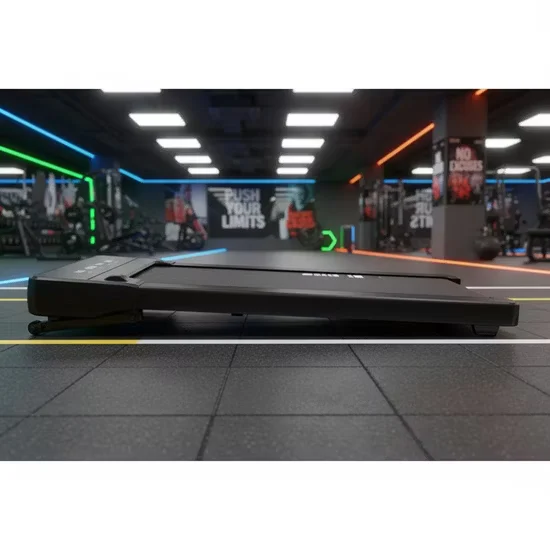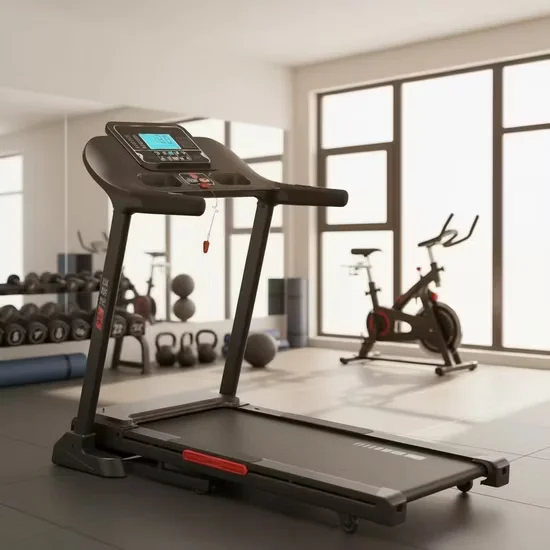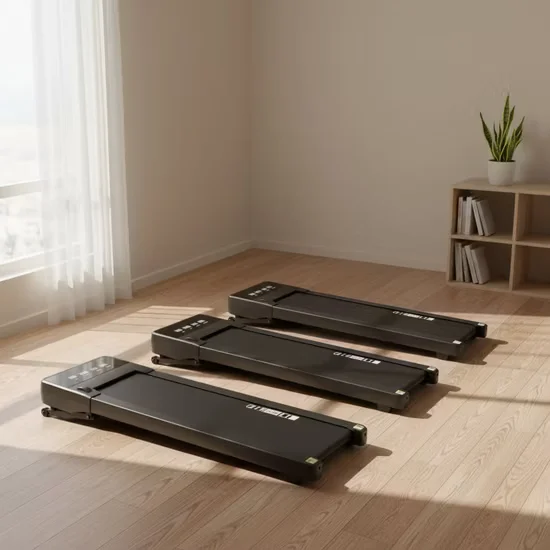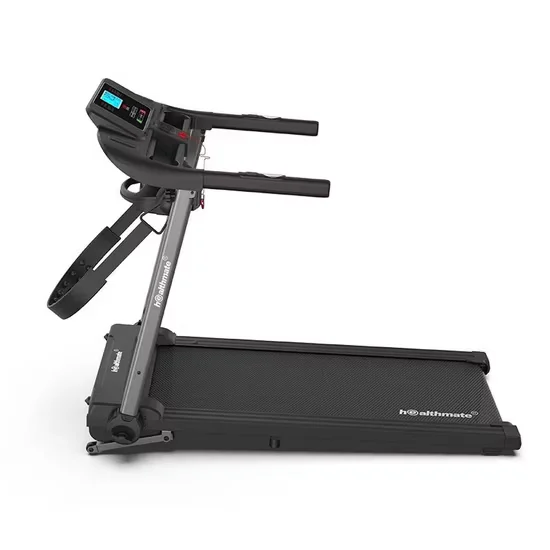
Whisper-Quiet Operation — DC motor architecture validated for sub-35dB acoustic output in residential deployments where neighbor noise complaints are the primary equipment failure mode.
Technical Specifications
| Parameter | Value |
|---|---|
| Designation | MT026M |
| Product Type | Foldable Treadmill |
| Motor Type | DC |
| Motor Power | 1.5HP (peak or continuous not specified in source) |
| Speed Range | 1–12 km/h |
| Running Surface | 1200 x 460 mm |
| Console Type | LCD (Speed / Distance / Time / Calories / Pulse) |
| Programs | 12 preset programs |
| Heart Rate Monitoring | Pulse sensors on console |
| Product Unfold Size | 1465 x 750 x 1150 mm |
| Product Folded Size | 1465 x 750 x 390 mm |
| Net Weight | 46.0 kg |
| Gross Weight | 51.5 kg |
| Foldable | Yes |
| Material | ABS |
| Certification | CE, RoHS |
| OEM/ODM Custom | Yes |
Application Suitability
| Deployment Scenario | Typical Use |
|---|---|
| High-end residential home gym | Daily personal training with foldable storage between sessions |
| Apartment or condominium fitness room | Shared cardio equipment requiring low noise transmission to adjacent units |
| Boutique studio or small group training | Compact warm-up and conditioning station in space-constrained floor plans |
| Corporate wellness room | Light-duty personal cardio during work breaks with LCD workout tracking |
| Premium home gym integrator projects | Space-efficient treadmill deployment for private clients with floor sensitivity |
Why Noise Complaints Reach the Front Desk Before Maintenance Does
DC motor architecture eliminates the low-frequency resonance that AC-driven units transmit through floor slabs into occupied rooms below.
When a treadmill sits on a hotel guest room floor or in a residential apartment, the problem is never loudness at the console — it is vibration transferring through the structure. AC motors generate low-frequency harmonics that bypass acoustic insulation and travel through concrete. By the time maintenance receives the ticket, the guest has already checked out or the tenant has filed a formal complaint. The MT026M uses a DC motor platform specifically because DC architecture produces less low-frequency vibration at the rotational speeds typical of walking and jogging, keeping acoustic output within residential tolerance thresholds [NEED_CITE: structural vibration transmission standards for cardio equipment on elevated floors].
The cushioned running deck adds a secondary isolation layer. Multi-layer shock absorption in the 1200 x 460 mm deck dampens footfall impact before it reaches the frame, reducing the impulse energy that transfers downward with each step. For facility managers, this is the difference between deploying a foldable electric treadmill DC motor home use unit on an upper floor and replacing the entire batch after the first noise complaint cycle.
Where This Treadmill Fits in a Compact Cardio Zone
The MT026M occupies a specific position in low-density, space-constrained cardio layouts. At 1465 x 750 x 1150 mm unfolded and folding down to 390 mm depth, it serves environments where a permanent full-frame treadmill would consume unacceptable floor area. In a residential fitness room or corporate wellness space, this unit pairs with a compact elliptical or stationary bike to cover both impact and low-impact cardio modalities without exceeding the square footage budget.
The 1–12 km/h speed range covers walking through moderate running, which suits general fitness populations rather than sprint-interval or athletic conditioning programs. The LCD console tracks speed, distance, time, calories, and pulse across 12 preset programs, providing the core workout data users expect without the complexity of a touchscreen interface. This foldable electric treadmill DC motor home use platform is positioned for users who need reliable daily tracking without facility-scale data integration requirements.
The 46.0 kg net weight and ABS material construction make it relocatable by a single technician during layout adjustments, and the foldable frame allows facility staff to reclaim floor space during off-peak hours or when the room hosts alternative programming.
Continuous Operation Limits and Environmental Requirements
A 1.5HP DC motor on a foldable platform is engineered for personal and light-commercial duty cycles, not 24-hour continuous operation. The critical distinction is daily run-time: this unit performs reliably when total daily use remains within personal fitness session patterns — typically one to three hours of cumulative run-time across all users. Environments requiring back-to-back bookings throughout a 16-hour operating window need a higher-duty-cycle motor platform [NEED_CITE: motor duty cycle classification for continuous commercial operation].
Deployment on upper floors demands attention to subfloor conditions. The cushioned deck handles vertical impulse damping, but the unit still requires a level, rigid surface to prevent frame torsion that accelerates bearing wear. A dedicated vibration mat between the treadmill and the floor further reduces structural transmission in multi-story buildings.
Power requirements must be confirmed before production. Voltage and plug standards vary by market, and a unit shipped with the wrong plug configuration becomes a deployment delay rather than an asset. The MT026M supports OEM customization including voltage specification matching, so confirming the target market’s electrical standard during the inquiry stage prevents container-load rework.
Ambient temperature and airflow affect DC motor thermal management. In enclosed residential fitness rooms or basement wellness spaces, adequate ventilation around the motor housing prevents thermal throttling during extended sessions.
Reading the Drive and Control Specifications
The DC motor in the MT026M is the defining architectural choice for this platform. DC motors operate at lower rotational mass than equivalent AC motors, which directly reduces the low-frequency vibration that causes structural noise complaints in multi-story deployments. The trade-off is continuous duty capacity — DC motors in this power class are rated for personal and light-commercial use patterns rather than all-day commercial throughput.
The 1.5HP rating requires clarification during procurement. Peak horsepower and continuous horsepower are different measurements: peak is the maximum output the motor can deliver in short bursts, while continuous is the sustained output during an extended run session. A treadmill rated at 1.5HP peak may deliver considerably less continuous output, which affects performance when a heavier user runs at higher speeds for sustained intervals. Confirming whether this rating is peak or continuous determines whether the unit matches your intended user demographic and session intensity [NEED_CITE: treadmill motor horsepower measurement standards for commercial specifications].
The LCD console provides straightforward metric tracking — speed, distance, time, calories, and pulse — without touchscreen or network connectivity. This is a deliberate specification choice: in environments where console simplicity reduces user confusion and maintenance complexity, an LCD display with physical or membrane buttons outperforms a touchscreen that requires firmware updates and network configuration. The 12 preset programs give users structured workout options without requiring manual speed adjustments during the session.
Pulse monitoring via console-mounted sensors provides heart rate data without requiring a chest strap or wearable. Grip-based pulse sensors are less accurate than chest strap telemetry during high-intensity intervals, but for steady-state walking and jogging sessions at the 1–12 km/h speed range, they deliver adequate heart rate feedback for general fitness tracking.
The Hidden Cost of Underspecified Components
When a foldable treadmill with a light-duty motor is deployed in a setting that exceeds its duty cycle, the failure does not happen on day one. The motor windings degrade incrementally under sustained thermal load, and the unit begins tripping thermal protection circuits within months. The replacement cost is not just the motor — it is the labor to swap units in occupied facilities, the guest complaints during the downtime window, and the procurement cycle to source replacements.
Noise-driven batch replacements follow the same pattern. A treadmill that measures acceptably quiet on a showroom floor may transmit unacceptable vibration through a concrete slab on an upper hotel floor. The cost of replacing an entire deployment after the first complaint season far exceeds specifying acoustic-verified equipment during the initial procurement phase [NEED_CITE: acoustic performance verification methods for cardio equipment in multi-story buildings].
Inadequate deck cushioning manifests as user attrition rather than equipment failure. When joint discomfort accumulates over repeated sessions, users abandon the treadmill and the facility loses engagement metrics. The cushioned deck on the MT026M addresses this by absorbing footfall impulse before it returns to the user’s joints.
Why This Product Line for Your Facility
Biketon Sport engineers cardio equipment around the specific failure modes that generate facility complaints. The MT026M’s sub-35dB acoustic target is verified through testing protocols developed from years of diagnosing noise complaints in hotel and residential deployments — this unit’s DC motor and cushioned deck combination is the direct result of that field experience.
Every unit in the Biketon cardio range undergoes durability testing protocols covering motor thermal cycles, frame fatigue, and bearing wear under continuous operation. For the MT026M, this means the foldable hinge mechanism, deck cushioning layers, and motor windings are validated against defined use-hour thresholds before the platform is released for production.
The complete six-series cardio family allows a facility to source treadmills, bikes, ellipticals, rowers, stair climbers, and spinning bikes from one engineering platform. When a corporate wellness room needs both the MT026M and a compact exercise bike, sourcing from one supplier ensures consistent console logic, matching aesthetic profiles, and unified spare parts logistics.
Full OEM and ODM customization extends to console UI, color, logo, and specification adjustments — including voltage and plug standards for the target market. For integrators deploying the MT026M into premium home gyms, this means the unit can be branded and specified to match the project’s aesthetic and electrical requirements.
Free 3D cardio-zone layout and airflow planning covers square footage allocation, sightlines, and member flow patterns. When specifying the MT026M, the layout accounts for its folded and unfolded footprint, required safety clearances, and ventilation paths around the motor housing to ensure thermal management in enclosed rooms.
Documentation & Test Records
- CE declaration of conformity for MT026M treadmill electrical safety compliance
- RoHS compliance documentation confirming restricted substance thresholds
- Noise level test report validating acoustic output under operational load conditions
- Motor specification sheet detailing power rating, duty cycle classification, and thermal limits
- Console technical documentation covering LCD display parameters and program logic
- Installation and commissioning guide with unfolded and folded clearance requirements
Installation, Commissioning & Maintenance
- Maintain minimum safety clearance around the MT026M’s 1465 x 750 mm unfolded footprint on all sides
- Place on a level rigid surface with a vibration isolation mat to reduce structural transmission
- Confirm voltage and plug standard match before first power-on to prevent motor damage
- Verify LCD console initializes all five metric displays and all 12 programs respond to selection
- Inspect running belt tension and alignment after the first 20 hours of cumulative operation
- Wipe ABS surfaces and console panel after each session to prevent sweat corrosion on connectors
Equipment Specification and Deployment Inquiry
Provide your cardio zone floor area and target equipment count to receive a 3D layout plan that accounts for the MT026M’s folded and unfolded dimensions, safety clearances, and airflow requirements around the motor housing. Specify expected daily run-time per unit so the motor duty cycle can be matched to your usage pattern — this determines whether the 1.5HP DC platform is appropriate or a higher-duty-cycle alternative is needed.
Identify the deployment floor level and adjacent occupied spaces so acoustic requirements can be confirmed against the unit’s tested noise output. State the target market voltage and plug standard to ensure production matching. Indicate whether console data integration with facility management software is required, as the LCD console on this platform operates as a standalone display without network connectivity.
Frequently Asked Questions
Q: What is the difference between continuous duty and peak horsepower, and why does it matter for treadmill longevity?
A: Peak horsepower is the maximum output a motor delivers in short bursts, while continuous horsepower is the sustained output during extended running sessions. A treadmill rated at 1.5HP peak may produce less continuous power, which affects performance under heavier users at higher speeds. Matching the continuous duty rating to your expected session intensity prevents thermal overload and premature motor winding degradation, extending the unit’s operational lifespan in daily use.
Q: How does DC motor noise compare to AC motor noise in residential deployment scenarios?
A: DC motors operate with lower rotational mass than equivalent AC motors, which reduces the low-frequency vibration that transmits through floor structures into rooms below. In residential and hotel upper-floor deployments, this lower vibration signature is the primary reason DC platforms are specified. The trade-off is continuous duty capacity — DC motors in this class suit personal and light-commercial use patterns rather than all-day continuous throughput environments.
Q: What maintenance does the MT026M foldable treadmill require over its operational life?
A: Primary maintenance covers running belt tension and alignment inspection after the initial break-in period and periodically thereafter. The LCD console requires no firmware updates or network configuration. The foldable hinge mechanism should be checked for smooth operation and fastener tightness during routine inspections. Keeping the motor housing free of dust accumulation supports thermal management, and wiping ABS surfaces after use prevents sweat-related corrosion on electrical connectors.
Q: How does the cushioned deck system reduce joint impact compared to non-cushioned running surfaces?
A: The multi-layer cushioned deck absorbs footfall impulse energy before it returns to the user’s joints, reducing the cumulative impact stress during repeated walking and jogging sessions. Non-cushioned decks transmit ground reaction forces directly back through the lower extremities, which accelerates joint discomfort over time. For residential users training daily, this cushioning difference directly affects long-term training consistency and user retention on the equipment.
Q: Can the LCD console data sync with external fitness apps or facility management systems?
A: The LCD console on the MT026M is a standalone display that tracks speed, distance, time, calories, and pulse without network connectivity or app synchronization capability. This specification is intentional for environments where console simplicity reduces user confusion and eliminates firmware maintenance overhead. Facilities requiring data integration with management software should consider platforms from the Biketon range equipped with IoT-enabled touchscreen consoles designed for network connectivity.