

Solid Wood Damping — Maple wood frame absorbs carriage vibration inherently, eliminating metallic resonance in multi-story studio deployments.
Technical Specifications
| Parameter | Value |
|---|---|
| Product Type | Pilates Reformer |
| Designation | SRY-02 |
| Material | Solid Maple Wood |
| Color | Solid Color |
| Accessory | Long Box / Jump Board / Platform |
| Max User Weight | 100 kgs |
| Product Dimensions | 2460 × 730 × 680 mm |
| Net Weight | 100 kgs |
| Warranty | 3 Years |
| Customization | Available (logo, color allowed) |
| Production Capacity | 80 Pieces/Month |
Application Suitability
| Deployment Scenario | Typical Use |
|---|---|
| Boutique Pilates studio | Group reformer classes with uniform fleet aesthetics and OEM branding |
| Five-star hotel wellness floor | Whisper-quiet sessions adjacent to guest rooms and spa zones |
| Rehabilitation and physiotherapy center | Precise low-impact resistance control for post-injury protocols |
| High-end residential home gym | Full repertoire training in shared-wall living spaces |
Why Carriage Noise Travels Through Floors Before Instructors Notice It
Wood-frame construction eliminates the metallic resonance path that steel reformers broadcast into occupied rooms below.
When a boutique studio or hotel wellness center installs steel-frame reformers on upper floors, every carriage return sends vibration through the rail system into the floor slab. Guests in the room below hear a rhythmic clatter that no amount of rubber matting fully absorbs. I have seen entire fleets pulled from hotel deployments after a single noise complaint escalates to management [NEED_CITE: acoustic transmission standards for fitness equipment on suspended floor slabs]. The maple wood pilates reformer commercial frame breaks that path because solid wood naturally damps vibration at the source rather than transmitting it downward.
Where This Reformer Sits in a Multi-Unit Studio Layout
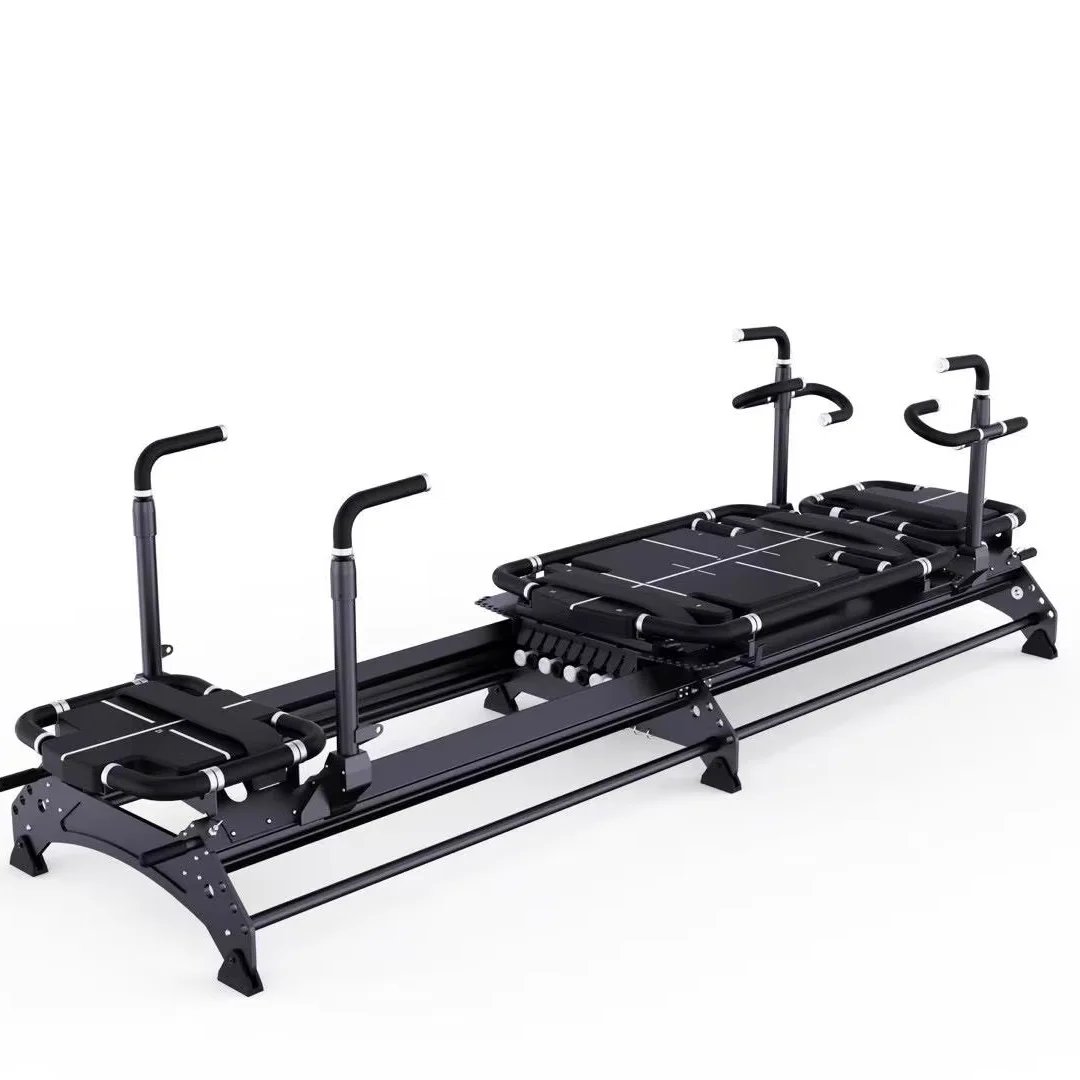
The SRY-02 covers the full reformer repertoire — footwork, long stretch, short spine, and jump board sequences — within a single footprint. In a studio running group classes, it pairs naturally with Cadillac and chair units for circuit-style programming. The maple wood pilates reformer commercial unit accommodates users up to 100 kgs across a 2460 mm rail length, handling both introductory sessions and advanced spring-loaded work. Its solid-color finish and available logo customization let operators maintain visual uniformity across a fleet without sourcing from multiple suppliers.
Continuous Scheduling Demands and Floor-Level Noise Constraints
A studio running six back-to-back group classes per day puts each reformer through roughly eight hours of loaded carriage cycling. The sealed wheel system on this unit must maintain smooth glide under that schedule without generating squeak or lateral wobble. Deployments above occupied spaces — hotel guest floors, residential towers, medical clinic waiting areas — depend on the wood frame’s damping to keep rail noise below the threshold that triggers complaints [NEED_CITE: acceptable noise transfer criteria for wellness equipment in mixed-use buildings]. Level floor installation and periodic rail cleaning remain essential to preserving long-term glide performance.
Spring Stack Behavior and Rail Precision Under Daily Studio Loads
The progressive spring configuration delivers smooth resistance transitions during controlled eccentric phases — the lowering portion of a movement where friction-based systems tend to grab or stutter. Precision-machined rails paired with sealed wheels determine whether the carriage glides consistently or develops dead spots after months of high-frequency use. Solid maple wood contributes natural vibration absorption that steel cannot replicate; where a steel frame rings like a tuning fork with each carriage stop, the wood dissipates that energy internally. The integrated mounting points for the long box, jump board, and platform eliminate the need for third-party adapters, keeping accessory swaps fast between class segments.
What Happens When Rail Precision Is Sacrificed for Unit Cost
A reformer with loosely toleranced rails feels acceptable on the showroom floor but develops lateral play within weeks of daily loaded cycling. That play introduces carriage wobble, accelerates wheel wear, and generates the kind of rhythmic knocking that travels through floor structures. I have watched studios replace entire fleets after six months because the original rails could not hold alignment under continuous class scheduling [NEED_CITE: rail tolerance specifications for commercial Pilates equipment]. The cost of pulling machines from a live studio — lost class revenue, member frustration, reinstallation labor — far exceeds the unit-price difference of a precision-built frame.
Why This Product Line Holds Up Under Studio Scheduling
Solid maple wood construction provides inherent vibration damping verified across multi-story hotel wellness deployments. The rail and carriage system undergoes loaded cycling tests to confirm glide smoothness before release. Full accessory integration — long box, jump board, platform — supports complete programming from a single unit, reducing the floor area needed per practitioner. OEM customization covers logo placement, wood finish, and upholstery color to match studio branding. Our 3D layout planning accounts for reformer spacing, instructor sightlines, and airflow in the studio zone. Technical support remains available around the clock for alignment checks and spring replacement guidance.
Documentation & Test Records
- CE declaration of conformity for Pilates reformer equipment
- EN 957 test report covering structural load and rail safety
- ISO 9001 certificate for manufacturing quality management
- Wood species and moisture treatment specification sheet
- Spring fatigue cycle test record for commercial-duty durability
- Installation and commissioning guide with spare parts list
Installation, Commissioning & Maintenance
- Allow 2460 × 730 mm footprint plus 600 mm clearance on each side for carriage access
- Level the maple wood frame on a flat surface; use shims if the floor slab deviates
- Inspect sealed carriage wheels monthly and clean rails with a dry cloth to preserve glide
- Calibrate spring tension on first assembly and verify resistance transitions across all levels
- Check long box and jump board mounting hardware after the first 50 hours of use
- Wipe upholstery after each session to prevent sweat residue from degrading material
Planning Your Studio Fleet Procurement
Provide your studio floor area and intended unit count so we can generate a 3D layout covering spacing, sightlines, and ventilation. Specify whether the deployment sits above occupied rooms so we can confirm noise compatibility. Indicate your target market and any OEM branding requirements — logo, finish, upholstery — for sample approval.
Frequently Asked Questions
Q: How does a maple wood frame compare to steel for noise and long-term durability?
A: Solid maple wood absorbs carriage vibration internally, preventing the metallic resonance that steel frames transmit through floor structures. Under continuous studio scheduling, wood also resists the fatigue-related micro-fractures that can develop at welded steel joints. Maintenance focuses on rail cleanliness and humidity control rather than weld inspection.
Q: What makes spring resistance preferable to rope-and-pulley systems for group class scheduling?
A: Progressive springs deliver smooth resistance transitions without the friction points that rope systems develop after repeated use. Instructors can adjust load quickly between exercises without re-threading cables. Springs also provide consistent eccentric resistance during controlled lowering phases, which is critical for rehabilitation protocols and advanced studio programming.
Q: How can I verify the rail system will stay smooth under high-frequency class use?
A: Request the loaded carriage cycling test record, which documents glide performance over thousands of repetitions. Check the rail machining tolerance specification and confirm that sealed wheels are used rather than open bearings. On-site, monitor for lateral carriage play after the first month of daily use.
Q: Do the included accessories require third-party adapters for mounting?
A: No. The long box, jump board, and platform mount directly to integrated attachment points on the SRY-02 frame. This eliminates compatibility issues and ensures each accessory aligns correctly with the carriage travel path during dynamic exercises like jump board sequences.
![Factory Pilates Reformer Trapeze Machine for Studio Core Timber Training [WARN] draft identifier mismatch](https://bicksport.com/wp-content/uploads/2026/08/factory-pilates-reformer-trapeze-machine-for-studio-core-timber-training-warn-draft-identifier-mismatch-8c45e6.webp)

![Custom Hot Sale EVA Foam Yoga Block with Soft Non-Slip Surface for Studio Use [WARN] draft identifier mismatch](https://bicksport.com/wp-content/uploads/2026/08/custom-hot-sale-eva-foam-yoga-block-with-soft-non-slip-surface-for-studio-use-warn-draft-identifier-mismatch-0542c9.webp)