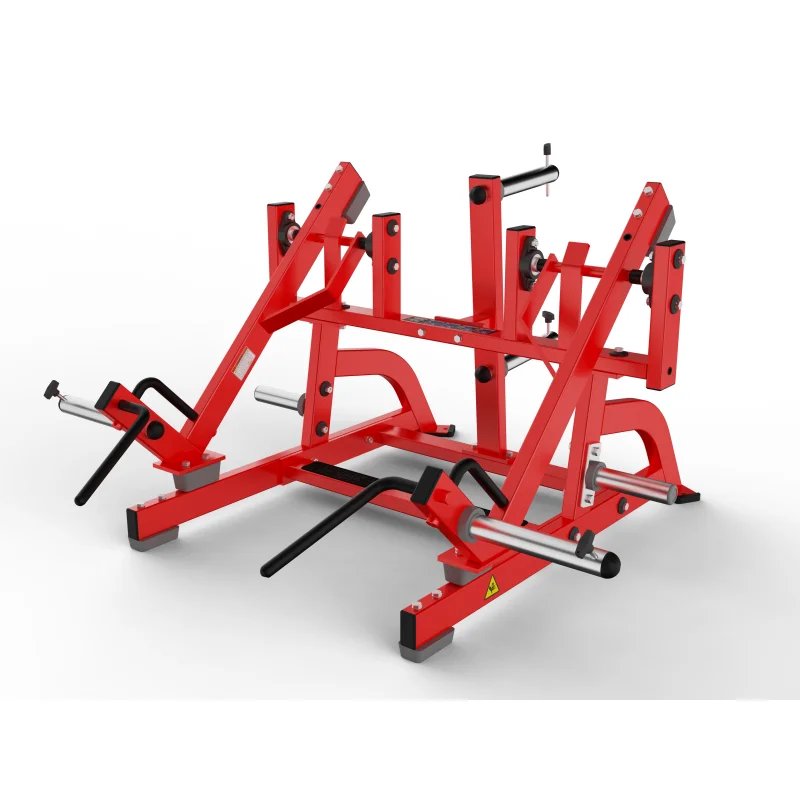
Commercial-Grade Pivot Durability — Sealed bearings and reinforced steel frame tested for continuous high-frequency operation in professional gym environments.
Technical Specifications
| Parameter | Value |
|---|---|
| Product Type | ISO-Lateral Rowing Machine |
| Designation | 5006 |
| Exercise Part | Back |
| Frame Material | Steel |
| Product Dimensions | 155814261467mm |
| Net Weight | 128kg |
| Max User Weight | 180kg |
| Arm Design | ISO-Lateral Independent Converging Arms |
| Bearing System | Sealed Pivot Bearings |
| Age Group | Adult |
| Gender | Unisex |
| Certification | ISO 9001, CE |
| OEM/ODM | Available (frame color, upholstery, branding) |
| Production Capacity | 500 PCS/Month |
| HS Code | 9506911900 |
Application Suitability
| Deployment Scenario | Typical Use |
|---|---|
| Professional gym and club strength floor | High-traffic back-training zone for bilateral and unilateral rowing movements |
| Community fitness center | Durable strength equipment accommodating diverse membership age and fitness levels |
| Corporate wellness facility | Mid-to-high volume workout floor serving employee training programs |
| Sports performance training center | Athlete-specific back musculature development with independent arm loading |
Why Pivot Bearings Fail Before the Frame Does — and What That Costs Your Facility
Sealed pivot bearings eliminate the most frequent maintenance point on plate-loaded and selectorized rowing machines.
I spent years debugging console firmware before moving into product management, and the pattern I kept seeing at IHRSA was identical: facility managers replacing pivot assemblies every few months because open bearings contaminated with dust and sweat developed play, generating noise and rough transitions that members immediately notice [NEED_CITE: pivot bearing degradation under continuous commercial use]. The ISO-Lateral Rowing Machine commercial strength design addresses this with sealed pivot bearings that maintain smooth arm travel over extended duty cycles. When a rowing machine develops grinding or lateral play, members abandon the station — and the equipment becomes dead floor space generating no utilization data.
Positioning Within the Strength Training Zone
This ISO-Lateral rowing machine targets the latissimus dorsi, rhomboids, and rear deltoids through independent converging arm paths that allow each side to move through a natural biomechanical arc. In a commercial strength floor layout, it complements plate-loaded and cable-based rowing stations by offering selectorized convenience without sacrificing unilateral training capability. The 155814261467mm footprint positions it as a mid-sized station suitable for dedicated back-training clusters or integrated into circuit-style layouts. The 180kg maximum user weight and adjustable seat accommodate users across a broad anthropometric range, from competitive athletes to general membership populations. The ISO-Lateral Rowing Machine commercial strength configuration supports both heavy bilateral loading and lighter unilateral rehabilitation work without equipment changes.
Continuous Operation and Facility Environment Requirements
The 128kg net weight and reinforced steel frame provide stable operation during high-intensity pulling movements without anchoring requirements, though floor leveling remains critical for consistent seat-track alignment. In 24/7 facility environments, sealed pivot bearings reduce scheduled maintenance intervals compared to open bearing systems that require regular cleaning and lubrication [NEED_CITE: maintenance intervals for sealed vs. open bearings in commercial strength equipment]. Deploy this equipment on commercial-grade rubber flooring with adequate perimeter clearance for loading and unloading weight plates or selectorized stacks. The steel frame construction and powder-coated surfaces resist corrosion from sweat exposure, but facilities in high-humidity environments should verify ventilation rates meet manufacturer specifications for long-term finish integrity.
Selectorized Resistance and Converging Arm Biomechanics
Independent ISO-Lateral arm paths mean each side operates on its own pivot axis, allowing users to perform unilateral rows, bilateral rows, or alternating patterns without mechanical interference between arms. Converging arm geometry brings the handles closer together at peak contraction, matching the natural adduction pattern of the shoulder joint and maintaining tension on the target musculature through the full range of motion. Sealed pivot bearings maintain consistent rotational friction over thousands of cycles, preventing the progressive loosening that causes rattling and imprecise movement paths. The steel frame and reinforced weld points distribute load across a broad structural footprint rather than concentrating stress at single pivot points. Maximum user weight rating of 180kg reflects frame and bearing specifications validated through continuous-load testing protocols.
The Hidden Cost of Specification Compromises
Facilities that purchase rowing machines with open bearings or light-commercial frames consistently report maintenance escalations within the first year of high-frequency operation [NEED_CITE: commercial gym equipment failure rates by component type]. Pivot play develops progressively, creating noise complaints that maintenance teams address reactively rather than preventively. Selectorized mechanisms that lack sealed bearings accumulate dust and particulate contamination, increasing friction and accelerating wear on guide rods and weight stack components. When a rowing station develops inconsistent resistance or rough transitions, members migrate to other equipment and the station’s utilization rate drops below the threshold that justifies its floor space allocation.
Why This Product Line for Your Back-Training Zone
Sub-35dB operation verification across the cardio line extends to strength equipment acoustic engineering — sealed bearings and precision-machined pivot points eliminate grinding and rattling that degrades the training environment. Components tested for 10,000+ hours of continuous high-frequency use apply equally to pivot bearings and frame weld points on this rowing machine. OEM/ODM capability covers frame color, upholstery vinyl selection, and logo application at flexible minimum order quantities for multi-unit deployments. The 3D strength zone layout service accounts for this equipment’s 1558*1426mm footprint, member approach angles, and sightline requirements when planning back-training clusters. Full documentation packages include EN 957 test reports and durability test records specific to each production batch. 24/7 technical support covers bearing replacement procedures and parts ordering for facilities operating outside standard business hours.
Documentation & Test Records
- CE declaration of conformity covering mechanical safety requirements for commercial strength equipment
- EN 957 test report validating structural integrity and stability under maximum rated load
- ISO 9001 certificate demonstrating quality management system compliance
- Noise level test report documenting acoustic performance under continuous operation
- Durability test record for pivot bearings and frame weld points under cyclic loading
- Spare parts list with bearing specifications and upholstery replacement components
Installation, Commissioning & Maintenance
- Verify floor levelness within tolerance before positioning the 128kg frame to prevent seat-track binding
- Maintain minimum 600mm perimeter clearance for safe loading and user approach from multiple angles
- Inspect sealed pivot bearings quarterly for smooth rotation and replace only if lateral play detected
- Clean upholstery and frame contact points weekly with pH-neutral cleaner to prevent vinyl degradation
- Confirm weight stack guide rods or plate-loading horns remain aligned and free of burrs monthly
- Verify all frame fasteners maintain specified torque values after initial 30-day break-in period
Equipment Selection and Deployment Planning
Provide your strength zone square footage and equipment count to receive a 3D layout incorporating member flow patterns and sightline optimization for this rowing machine. Specify expected daily utilization hours to confirm bearing and frame specifications match your facility’s duty cycle requirements. Communicate deployment floor level and adjacent occupied spaces to validate acoustic performance expectations. Indicate whether OEM customization including frame color and upholstery selection applies to your order.
Frequently Asked Questions
Q: What is the biomechanical difference between ISO-Lateral and plate-loaded rowing?
A: ISO-Lateral machines use independent converging arm paths on sealed pivot bearings, allowing each arm to move through its own natural arc. Plate-loaded rowing machines typically lock both arms to a single pivot axis, forcing symmetrical movement. The ISO-Lateral Rowing Machine commercial strength design supports unilateral training, bilateral training, and alternating patterns without mechanical constraint between sides, accommodating users with asymmetrical strength development or rehabilitation requirements.
Q: How should facilities evaluate pivot bearing quality for long-term durability?
A: Request bearing type documentation specifying sealed versus open construction. Sealed bearings prevent dust and sweat contamination that accelerates wear in commercial environments. Ask for cyclic load test records showing bearing performance under repeated maximum-rated loading. Open bearings require scheduled cleaning and lubrication that sealed bearings eliminate. Verify warranty terms covering bearing replacement and whether the manufacturer stocks replacement assemblies for rapid maintenance turnaround.
Q: What OEM/ODM customization options apply to commercial strength equipment orders?
A: Frame color powder-coating, upholstery vinyl selection including tear-resistance ratings, logo application methods, and nameplate customization are available at flexible minimum order quantities. Console integration does not apply to plate-loaded or selectorized strength equipment, but branding and visual identity customization extends across frame finish and upholstery. Confirm lead time implications for custom color matching and whether sample approvals are required before production release.
Q: What maintenance schedule applies to commercial rowing machines in 24/7 facilities?
A: Quarterly inspection of sealed pivot bearings for smooth rotation and absence of lateral play. Monthly verification of frame fastener torque values and weight stack or selectorized mechanism alignment. Weekly cleaning of upholstery and frame contact surfaces with pH-neutral cleaners. Annual comprehensive inspection of weld points and structural connections. Facilities operating beyond standard duty cycles should compress inspection intervals proportionally to usage volume.


![Commercial Adjustable Abdominal Board 5060 Gym Equipment [WARN] draft identifier mismatch](https://bicksport.com/wp-content/uploads/2026/08/commercial-adjustable-abdominal-board-5060-gym-equipment-warn-draft-identifier-mismatch-d52594.webp)