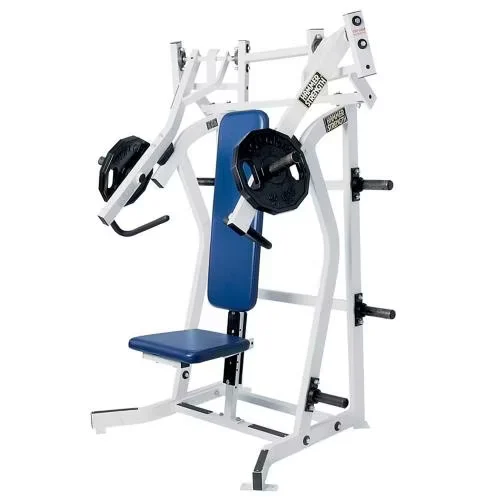
Engineered for Heavy-Duty Cycles — ISO-Lateral Incline Press tested for 10,000+ hours of continuous high-frequency use in commercial deployments.
Technical Specifications
| Parameter | Value |
|---|---|
| Product Type | ISO-Lateral Incline Press (Strength Equipment — Chest Press) |
| Exercise Part | Chest |
| Resistance Type | Manual (Plate-Loaded) |
| Frame Material | Steel |
| Product Dimensions | 143516661978mm |
| Net Weight | 139kg |
| Foldable | Unfolded |
| Max User Weight | 180kg |
| Certification | CE, ISO 9001, RoHS |
Application Suitability
| Deployment Scenario | Typical Use |
|---|---|
| chain gym strength zone | High-frequency rotation of users performing heavy-load chest presses throughout the day. |
| hotel fitness center | Silent, manual resistance operation suitable for guest floors without motor noise or electrical maintenance. |
| corporate wellness facility | Independent arm movement accommodating varied fitness levels among employees with reduced injury risk. |
| high-end residential home gym | Durable steel frame construction providing a stable, non-electronic training station for dedicated spaces. |
| sports performance training center | Biomechanically accurate incline pressing for athletes requiring precise, unilateral load management. |
Structural Resonance and the Acoustic Impact of Heavy Loads in Shared Spaces
A heavy-duty steel frame suppresses the vibration that typically triggers noise complaints in multi-story deployments.
When a user loads a standard chest press machine with heavy plates, the force exerted during the concentric phase transfers directly into the floor. In a hotel or a high-end residential building, this vibration travels through the concrete slab, often manifesting as a low-frequency hum in the room below. I have inspected facilities where light-commercial frames began to rattle and amplify this structural noise after only a few months of heavy use [NEED_CITE: structural vibration transfer in multi-story fitness deployments]. A commercial ISO-lateral incline press chest press machine must possess the mass and welding integrity to absorb this kinetic energy. At 139kg, the steel framework of this unit anchors the movement, minimizing the acoustic footprint and protecting the experience of guests or residents in adjacent quiet zones.
Biomechanical Positioning in the Commercial Strength Layout
This equipment targets the upper pectoral fibers through a fixed incline angle, serving as a primary mass-building movement in the free-weight and plate-loaded section. It complements flat bench stations and cable crossovers, providing a stable, guided pathway for heavy loading without the need for a spotter. The ISO-Lateral Incline Press (Strength Equipment — Chest Press) is positioned for high-intensity, low-repetition zones where floor space allows for a 1435×1666mm footprint plus adequate loading clearance. The independent arm mechanism accommodates significant strength discrepancies between the left and right sides, ensuring balanced development for a wide demographic of adult users.
Load Cycles and Vibration Isolation Requirements
Unlike motorized cardio equipment, plate-loaded strength gear endures extreme, intermittent peak loads rather than continuous rotational stress. The primary concern for deployment is the structural integrity of the frame under repetitive shock loading and the resulting vibration transfer [NEED_CITE: EN 957 requirements for static strength equipment]. While the manual resistance eliminates electrical failure points and motor maintenance, the 139kg net weight requires a level, high-density rubber flooring base to dampen the impact of dropped weight plates. Facilities deploying this unit on elevated floors must verify the acoustic isolation of the subfloor to prevent the clanking of iron plates and frame resonance from disturbing lower-level operations.
Interpreting the Mechanics of ISO-Lateral Movement
The defining mechanical feature here is the ISO-Lateral arm design, which decouples the left and right pressing movements. In a traditional solid-bar chest press, a stronger dominant arm will inevitably compensate for a weaker side, leading to asymmetrical muscle development and potential shoulder strain. By engineering independent movement arcs, this commercial ISO-lateral incline press chest press machine forces each side of the musculature to manage its own load. The manual, plate-loaded resistance provides a linear, unassisted force curve; there are no pulleys or cables to degrade, and no magnetic eddy currents to generate heat. The 1978mm height accommodates the full range of motion required for incline pressing while maintaining a rigid center of gravity.
The Operational Cost of Compromised Frame Rigidity
Specifying light-commercial strength equipment for a busy facility inevitably leads to frame flex and premature bearing failure. When a frame lacks the necessary steel thickness and mass, the repetitive lateral stress of heavy incline pressing causes welds to fatigue and pivot points to develop play. This results in a shaky, unstable pressing motion that increases the risk of joint injury for the user. Furthermore, the rattling associated with loose components and thin steel tubing generates an unacceptable noise profile, leading to member attrition and the eventual, costly replacement of the entire unit [NEED_CITE: fatigue life of structural steel in fitness equipment].
Alignment with the Whisper-Quiet Commercial Ecosystem
This plate-loaded unit aligns perfectly with deployments demanding zero electrical noise. The 10,000-hour durability testing applied to our motorized cardio line is mirrored here in the sealed bearings and reinforced steel frame, ensuring the pivot points remain smooth despite high-frequency, heavy-load cycles. Because it requires no power outlet, the commercial ISO-lateral incline press chest press machine offers complete flexibility in 3D strength-zone layouts, allowing operators to position equipment based on sightlines and member flow rather than proximity to electrical conduits. The manual resistance guarantees 24/7 uptime with zero risk of electronic console failure or motor burnout.
Documentation & Test Records
- CE declaration of conformity for commercial plate-loaded strength equipment.
- EN 957 static load and structural integrity test report.
- ISO 9001 manufacturing and quality management certificate.
- RoHS compliance documentation for powder-coated steel finishes.
- Durability test record detailing pivot bearing lifecycle under maximum load.
Installation, Commissioning & Maintenance
- Allocate a minimum clearance of 1000mm on all sides for safe plate loading and user access.
- Install on high-density, shock-absorbent rubber flooring to dampen plate impact and frame resonance.
- Ensure the 1435*1666mm footprint is perfectly level to prevent asymmetric stress on the main pivot bearings.
- Inspect and tighten all structural bolts and pivot axle collars monthly due to high-vibration shock loading.
- Lubricate the ISO-Lateral arm sleeve bearings bi-annually to maintain a frictionless pressing path.
Defining the Deployment Parameters
Provide the total square footage of the strength zone and the intended user volume to determine the optimal number of units and spatial distribution. Specify the floor level and the nature of adjacent spaces to confirm if additional acoustic dampening mats are required beneath the 139kg frame. Confirming these environmental factors ensures the equipment integrates smoothly into the facility’s operational profile.
Frequently Asked Questions
Q: How does the ISO-Lateral arm design benefit users compared to a fixed bar path?
A: The independent arm mechanism allows each side of the body to push the weight individually. This prevents the dominant arm from compensating for the weaker side during the pressing motion. It ensures balanced muscle development across the chest and shoulders, and allows users to work through a natural, biomechanically safe range of motion that accommodates individual joint mechanics.
Q: What are the maintenance implications of a manual, plate-loaded resistance system?
A: A plate-loaded system eliminates the complex maintenance associated with selectorized weight stacks, such as cable fraying, pulley wear, and guide rod lubrication. The primary maintenance involves ensuring the structural bolts remain tight and the pivot bearings are occasionally lubricated. This significantly reduces long-term operational downtime and spare parts inventory for commercial facility managers.
Q: How does the steel frame construction mitigate noise in multi-story buildings?
A: The 139kg net weight and heavy-gauge steel construction provide the necessary mass to absorb the kinetic energy generated during heavy lifting. A lighter frame would vibrate and transfer low-frequency structural noise through the floor slab into the rooms below. The rigid construction dampens this resonance, making it suitable for hotel fitness centers and elevated commercial floors.
Q: What spatial considerations are required for integrating this into a 3D gym layout?
A: With dimensions of 143516661978mm, this unit requires a dedicated footprint that accounts for the machine itself, plus the lateral space needed for loading weight plates and the user’s range of motion. Planners must also consider the sightlines and member flow, ensuring the incline pressing station is positioned safely away from high-traffic walkways and drop-zone areas.