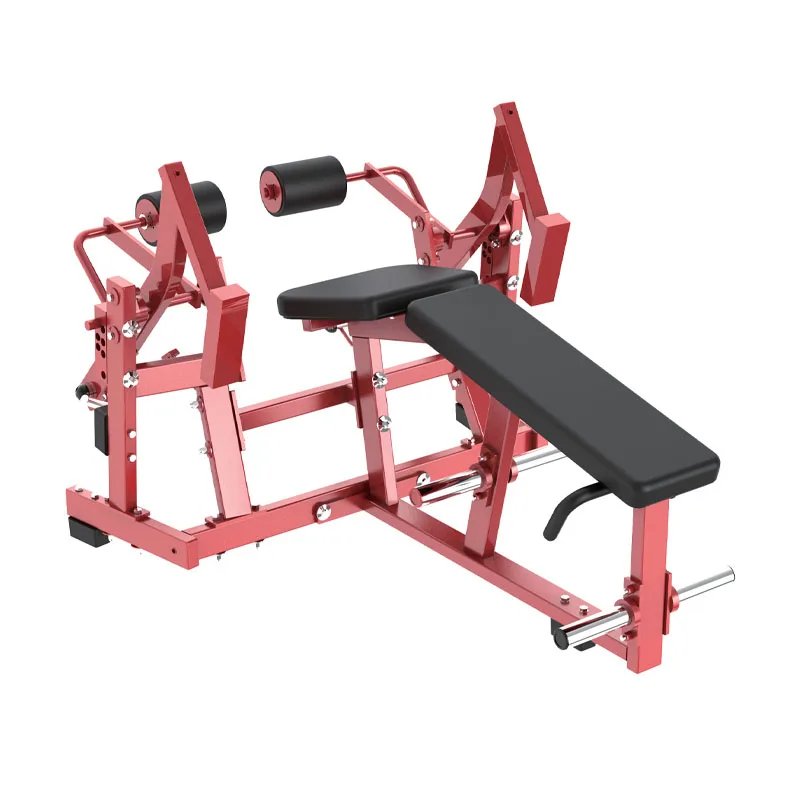
![Incline Bench 5063 Commercial Gym Equipment 30 Degree Chest Press Exercise Machine for Professional Club Use [WARN] draft identifier mismatch](https://bicksport.com/wp-content/uploads/2026/08/incline-bench-5063-commercial-gym-equipment-30-degree-chest-press-exercise-machine-for-professional-club-use-warn-draft-identifier-mismatch-53c244.webp)
Whisper-Quiet Stability — A 30-degree fixed incline angle eliminates mechanical adjustment points that typically wear out under continuous gym use, ensuring consistent biomechanical positioning for every user.
Technical Specifications
| Parameter | Value |
|---|---|
| Product Type | Incline Bench |
| Designation | 5063 |
| Exercise Part | Chest |
| Material | Steel |
| Product Dimensions | 1225 549 960 mm |
| Net Weight | 36 kg |
| Max User Weight | 180 kg |
| Fixed Incline Angle | 30 Degree |
| Appliance | Community, Gymnasium |
| Certification | ISO 9001, CE |
Application Suitability
| Deployment Scenario | Typical Use |
|---|---|
| Professional Gym and Club | Dedicated station for incline dumbbell and barbell presses in free weight zones |
| Community Fitness Center | High-traffic chest isolation work during peak hours |
| Corporate Wellness Room | Low-maintenance strength training for employee fitness programs |
Why Fixed Angles Outlast Adjustable Mechanisms in Commercial Free Weight Zones
Mechanical simplicity is the ultimate reliability feature in a high-volume commercial incline bench chest press 30 degree station.
Adjustable benches with pin-selector mechanisms and pivot hinges are common on retail floors, but they rarely survive the relentless daily traffic of a professional gym. When a facility deploys adjustable units into a 24/7 free weight zone, the moving parts become the first failure points. Pins shear, pivot bushings develop play, and the frame welds around the adjustment ladder fatigue from the asymmetric loading patterns that occur when members load heavy dumbbells on one side before the other [NEED_CITE: structural fatigue patterns in adjustable vs fixed commercial benches]. A fixed 30-degree unit removes every single one of those failure points from the equation.
Positioning Within the Free Weight Zone Architecture
This unit occupies a specialized role in the strength training ecosystem. The 30-degree fixed incline targets the upper pectoral fibers with a consistent angle that does not vary between users, making it the dedicated station for incline dumbbell presses and incline barbell work. In a properly planned free weight zone, this commercial incline bench chest press 30 degree complements flat benches and adjustable units by providing a fixed station that never requires members to search for the correct pin setting or wait for someone to reconfigure the angle. The 180 kg maximum user weight accommodates the full range of member body types, and the 1225 mm length provides adequate support for tall users performing heavy pressing movements.
Floor Loading and Spatial Requirements for Deployment
At 36 kg net weight, this unit sits firmly on the floor without requiring anchor bolts, but it does demand proper placement planning. The 1225 * 549 mm footprint requires adequate clearance on all sides — particularly at the head end where spotters need standing room during heavy sets. Facilities deploying on upper floors must consider the combined live load of the bench, the user, and the dumbbells or barbell being pressed; steel frame construction transmits vibration directly to the floor structure without dampening [NEED_CITE: live load calculation standards for commercial gym equipment on suspended floors]. Rubber matting beneath the unit protects flooring surfaces and provides minor vibration isolation. The 549 mm width keeps the footprint compact enough to fit into multi-station free weight bays without consuming excessive linear floor space.
Steel Frame Construction and Load Path Engineering
The 1225 549 960 mm specification tells only part of the engineering story. What matters for commercial durability is how the steel frame manages the load path during heavy incline pressing. When a member presses 50 kg dumbbells overhead at a 30-degree angle, the force vectors travel through the backrest support structure and into the base frame — and every weld joint along that path must handle not just the static load but the dynamic shock of each repetition. Fixed-angle construction means the support structure is triangulated for one specific load geometry, allowing the welding pattern to be optimized for that exact force distribution rather than compromised to accommodate multiple angles. The 36 kg net weight indicates substantial steel mass in the frame, which correlates with tube wall thickness and cross-section dimensions sufficient for the 180 kg user capacity. The heavy-duty padding density on the backrest and seat must maintain compression resistance over thousands of loading cycles without bottoming out, which directly affects user comfort and joint protection during heavy sets [NEED_CITE: foam compression testing standards for commercial bench upholstery].
The Real Cost of Deploying Light-Commercial Benches in Professional Facilities
The purchase price difference between a light-commercial adjustable bench and a purpose-built fixed incline unit seems modest on a spreadsheet. The operational cost tells a different story. When adjustable mechanisms fail in a busy gym, the bench becomes unusable until the part is sourced and replaced — and during that downtime, members migrate to other equipment, creating congestion and dissatisfaction. Weld failures on under-specified frames can create liability exposure if a member is injured during a heavy set. Padding that compresses and loses support within months generates complaints about back and shoulder discomfort, which facility operators often misattribute to member technique rather than equipment degradation [NEED_CITE: member complaint correlation with bench padding compression over time]. These are the hidden costs that make the fixed-angle, heavy-gauge steel approach the lower total-cost-of-ownership choice for any facility where the free weight zone sees continuous daily traffic.
Why This Product Line Addresses the Durability Gap
Every unit in this cardio and strength family undergoes 10,000-hour durability testing on frames, bearings, and moving components — and the fixed-angle design of this incline bench means the testing focuses entirely on weld integrity and padding compression rather than wasting cycles on adjustment mechanisms that will eventually fail. The sub-35dB operational standard that defines the cardio line also informs the bench design: heavy-gauge steel frames with proper triangulation do not develop the rattle and creak that plague lighter benches as weld joints fatigue. The OEM/ODM capability extends to upholstery color and logo integration, so facility branding remains consistent across the entire equipment fleet. The free 3D layout and airflow planning service covers this bench’s footprint and clearance requirements alongside the cardio zone, ensuring the free weight area receives the same spatial planning rigor as the treadmill and elliptical deployments. Full vertical integration from the CNC machining workshop through final assembly means frame specifications are controlled in-house rather than outsourced to suppliers who may substitute thinner tubing to cut costs.
Documentation & Test Records
- CE declaration of conformity verifying compliance with European machinery safety directives for this bench model
- EN 957 test report documenting static and dynamic load testing results for the 180 kg user capacity rating
- ISO 9001 certificate covering manufacturing quality management systems across all production facilities
- Steel frame material specification sheet detailing tube wall thickness, grade, and welding standards
- Padding density and compression test record confirming long-term cushioning retention under repeated loading
- Installation and commissioning guide with floor placement recommendations and clearance specifications
Installation, Commissioning & Maintenance
- Position the 1225 * 549 mm footprint with minimum 600 mm clearance at the head end for spotter access during heavy pressing movements
- Place on level flooring with rubber matting beneath the base frame to protect surfaces and provide minor vibration dampening
- Inspect all weld joints visually upon delivery and re-inspect quarterly for any signs of cracking or deformation under load
- Clean upholstery with non-solvent cleaner weekly to prevent sweat and skin oil degradation of the padding surface
- Check base frame stability monthly and tighten any floor-contact rubber feet if the unit develops lateral play
- Rotate bench position within the free weight zone annually to distribute floor wear patterns evenly across the facility
Equipment Selection and Deployment Planning
Provide the total free weight zone square footage and planned equipment count to receive a 3D layout that positions this incline station with correct clearance spacing and sightline integration. Specify the expected daily user volume and peak-hour traffic patterns so the frame and padding specifications can be verified against the facility’s actual duty cycle requirements. Confirm the deployment floor level and adjacent room occupancy to determine whether additional vibration isolation matting is recommended beneath the unit. Indicate whether upholstery color matching or logo embroidery is required for facility branding consistency across the equipment fleet.
Frequently Asked Questions
Q: What is the durability advantage of a fixed 30-degree incline bench compared to an adjustable model in commercial settings?
A: A fixed 30-degree bench eliminates the pivot mechanisms, selector pins, and ladder adjustment points that become the primary failure sources in adjustable benches under continuous use. With no moving parts in the frame structure, the welded steel construction handles dynamic pressing loads without developing play or fatigue at adjustment joints. This translates to fewer maintenance interventions, less equipment downtime, and a longer functional service life in high-traffic free weight zones where the bench sees continuous daily rotation.
Q: How does padding density affect long-term user comfort and joint protection on a commercial incline bench?
A: High-density foam padding maintains its compression resistance over thousands of loading cycles, preventing the backrest from bottoming out during heavy incline presses. When padding degrades and loses support, the user’s spine and shoulders absorb more of the pressing force directly, leading to discomfort and potential injury over time. Commercial-grade padding specifications require compression testing that simulates years of repeated loading to confirm the foam retains adequate thickness and firmness throughout the equipment’s expected service life.
Q: What steel frame construction standards should be verified when procuring incline benches for a professional gym?
A: Frame tube wall thickness, welding penetration depth, and the triangulation pattern of the support structure all determine whether a bench can handle repeated dynamic loading safely. Procurement specifications should require documentation of steel grade, weld inspection results, and static plus dynamic load testing to the stated user capacity. The 180 kg rating must be verified under dynamic pressing conditions, not just static weight, because the impact forces generated during each repetition significantly exceed the static load of the user plus the dumbbells or barbell being pressed.
Q: What OEM customization options are available for facility branding on commercial incline benches?
A: Upholstery color selection allows the bench to match the facility’s interior design palette and existing equipment fleet. Logo embroidery or screen printing on the backrest vinyl provides brand visibility without compromising padding integrity. Custom frame powder-coat colors are available to coordinate with other equipment lines in the facility. These customization options are integrated during production rather than applied as aftermarket modifications, ensuring the branding remains durable through years of cleaning and use.
![Heavy Duty Power Rack Equipment for Commercial Gym Strength Training [WARN] draft identifier mismatch](https://bicksport.com/wp-content/uploads/2026/08/heavy-duty-power-rack-equipment-for-commercial-gym-strength-training-warn-draft-identifier-mismatch-5a606a.webp)
![Factory Direct Plate Loaded ISO-Lateral Low Row Fitness Gym Equipment [WARN] draft identifier mismatch](https://bicksport.com/wp-content/uploads/2026/08/factory-direct-plate-loaded-iso-lateral-low-row-fitness-gym-equipment-warn-draft-identifier-mismatch-343b1e.webp)