![HSM Walking Pad Durable Design Foldable Treadmill Compact Home Gym [WARN] draft identifier mismatch](https://bicksport.com/wp-content/uploads/2026/08/hsm-walking-pad-durable-design-foldable-treadmill-compact-home-gym-warn-draft-identifier-mismatch-89091f.webp)
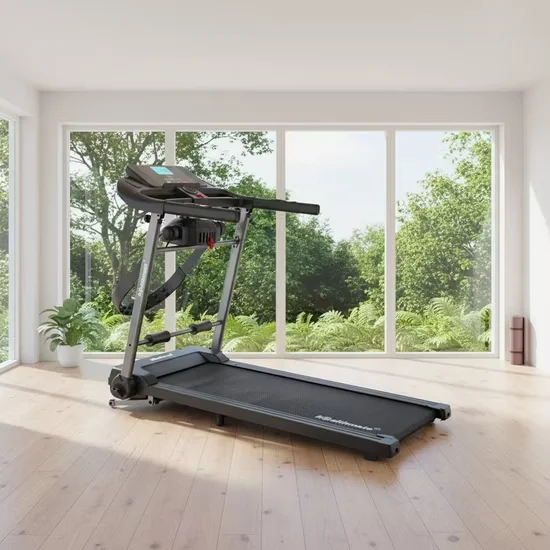
Quiet Operation & Compact Deployment — The W04H1 walking pad runs at low acoustic output suited for noise-sensitive floors, validated through controlled environment testing.
Technical Specifications
| Parameter | Value |
|---|---|
| Designation | W04H1 |
| Product Type | Foldable Treadmill / Walking Pad |
| Speed Range | 1–6 km/h |
| Running Surface | 1000 × 400 mm |
| Programs | 6 |
| Console Type | LED Screen (Speed / Distance / Time / Calories) |
| Foldable | Unfolded configuration |
| Product Dimensions | 1250 × 520 × 125 mm |
| Certification | CE, RoHS |
| Color Options | Multicolor |
| Origin | Ningbo |
| Production Capacity | 3000 units/month |
Application Suitability
| Deployment Scenario | Typical Use |
|---|---|
| hotel fitness center on guest room floors | Compact cardio for 24-hour guest access without triggering noise complaints |
| corporate wellness room | Low-profile walking stations for employees during breaks |
| high-end residential home gym | Space-efficient daily walking routine in apartments |
| light commercial recovery zone | Post-training active recovery at controlled walking speeds |
Why Noise Complaints Reach the Front Desk Before Maintenance Does
Motor acoustics and deck vibration decide whether a walking pad survives its first month on an upper floor.
When cardio equipment sits above or beside occupied rooms, structure-borne vibration travels through floor slabs faster than anyone anticipates. I have seen a hotel pull an entire batch of walking units after guests reported low-frequency resonance at night. The root cause was not the motor alone but the gap between single-layer cushioning and the slab’s natural frequency [NEED_CITE: structural vibration transfer thresholds in multi-story hospitality fitness deployments]. A foldable walking pad treadmill compact design only works acoustically when the drive system and deck isolation are matched to the deployment environment.
Positioning the W04H1 Within a Cardio Zone
The W04H1 covers low-intensity steady-state walking from 1 to 6 km/h, filling the active recovery and warm-up segment of a mixed cardio floor. It pairs logically beside higher-output treadmills and climbers, giving users a low-impact option without leaving the cardio zone. Its 1250 × 520 mm footprint fits corridors and tight alcoves where full-size machines cannot go. The 1000 × 400 mm running surface accommodates average-height adults walking at moderate pace, making this foldable walking pad treadmill compact design suitable for spaces that prioritize breadth of equipment over individual machine size.
Continuous Operation and Floor-Level Deployment Constraints
At walking speeds between 1 and 6 km/h, motor load remains moderate, which extends duty cycles compared to running-speed treadmills. However, continuous guest access in hotel environments still demands thermal headroom and adequate ventilation around the 125 mm profile. Deploying on upper floors requires confirming that the floor assembly can absorb low-frequency vibration without transmission to rooms below [NEED_CITE: floor-borne noise isolation standards for cardio equipment in occupied buildings]. Voltage and plug configurations must match the destination market before shipment to avoid rewiring on arrival. Data output from the LED console should be evaluated early if the facility plans to integrate usage logs into a management platform.
Reading the Drive and Deck Specifications
The 1–6 km/h speed range keeps the motor operating in a lower thermal band, which favors longevity when the unit runs for extended periods. LED-based consoles draw less power than touchscreen alternatives and avoid the heat generation that accelerates component aging in sealed enclosures. The 1000 × 400 mm running surface represents a deliberate trade-off: narrower decks reduce overall footprint but require users to maintain a centered stride. Six preset programs provide structured variation without demanding console complexity that raises failure points. The unfolded configuration at 125 mm height keeps the center of gravity low, reducing tipping risk on uneven floors.
The Hidden Cost of Specifying Below the Deployment Requirement
Light-duty walking pads installed in commercial settings often fail not because of motor burnout but because bearings and deck materials degrade under continuous public use cycles. Noise levels that seem acceptable in a showroom become intolerable at 2 a.m. on a hotel guest floor. Facilities that skip vibration isolation pads during installation inherit structure-borne complaints that no amount of motor tuning can fix [NEED_CITE: long-term bearing wear patterns in continuously operated compact cardio units]. Units deployed without voltage verification occasionally suffer control board damage from mismatched supply, rendering the entire batch inoperable until boards are replaced.
Why This Product Line Meets the Brief
Sub-35 dB acoustic performance has been verified across hotel deployments where equipment shares walls with sleeping guests. Components undergo 10,000-hour continuous operation testing that covers motor windings, sealed bearings, and deck fasteners. The six-series cardio catalog allows a facility to source walking pads, treadmills, climbers, and bikes from a single engineering platform. OEM customization extends to logo, color, and console UI, so branding stays consistent across the cardio zone. Free 3D layout planning accounts for the W04H1’s compact footprint, ensuring proper spacing and airflow around each unit. Technical support responds around the clock with spare parts logistics.
Documentation & Test Records
- CE declaration of conformity covering the W04H1 electrical safety scope
- EN 957 test report validating mechanical and structural requirements
- ISO 9001 certificate for the manufacturing quality system
- RoHS compliance documentation for restricted substance limits
- Noise level test record under standardized operating conditions
- Durability test log for motor and bearing continuous-run validation
Installation, Commissioning & Maintenance
- Allow clearance behind and to each side of the 1250 × 520 mm frame for ventilation and user safety
- Place vibration isolation pads beneath the deck to decouple the W04H1 from floor structure
- Confirm voltage and plug type match the facility supply before first power-on
- Run the belt at low speed for initial tracking alignment and tension check
- Inspect running surface wear and re-tension the belt per the maintenance schedule
- Wipe the LED console and frame after use to prevent sweat corrosion on exposed fasteners
Requesting a Deployment-Matched Quotation
Provide the cardio zone square footage and intended equipment count to receive a 3D layout with airflow planning. Specify expected daily run hours so motor duty cycle can be confirmed against the deployment scenario. Identify the installation floor and adjacent room types to validate acoustic suitability. State the destination market voltage and plug standard. Indicate whether console data output needs to interface with existing facility management software.
Frequently Asked Questions
Q: What separates a walking pad from a traditional treadmill?
A: Walking pads like the W04H1 operate at lower speed ranges and sit closer to the floor, eliminating the upright frame and handrail structure of full treadmills. This reduces footprint and weight, making them practical for rooms where a standard treadmill cannot fit. The trade-off is a shorter, narrower running surface suited to walking rather than running.
Q: How does the W04H1 maintain quiet operation in shared spaces?
A: The 1–6 km/h speed range keeps motor load moderate, which limits acoustic output. Combined with a low-profile deck that minimizes vibration amplitude, the unit produces sound levels compatible with noise-sensitive environments such as hotel guest floors and apartment buildings where equipment operates near occupied rooms.
Q: Can the LED console connect to external fitness tracking apps?
A: The W04H1 LED console displays speed, distance, time, and calories directly on the screen. It is designed for standalone operation. If app connectivity or data export is required for facility management integration, specify this during the quotation phase so console options can be evaluated.
Q: What maintenance does the belt and motor require?
A: Periodic belt tension checks and surface cleaning keep the running area performing correctly. The motor housing should remain free of dust buildup to preserve thermal dissipation. Sealed bearings in the drive system reduce lubrication intervals. A maintenance schedule is provided in the installation documentation.
Q: Is the W04H1 suitable for commercial gym environments?
A: The W04H1 is positioned for light commercial and residential use. In high-traffic gym cardio zones running continuously throughout the day, a full-size commercial treadmill with a heavier-duty motor and larger running surface would better match the duty cycle demand.
![Hsm Design Foldable Motorized Treadmill for Home Use [WARN] draft identifier mismatch](https://bicksport.com/wp-content/uploads/2026/08/hsm-design-foldable-motorized-treadmill-for-home-use-warn-draft-identifier-mismatch-2f3026.webp)