
![Hsm MT23B Foldable Treadmill with Transport Wheels for Home Gym Use [WARN] draft identifier mismatch](https://bicksport.com/wp-content/uploads/2026/08/hsm-mt23b-foldable-treadmill-with-transport-wheels-for-home-gym-use-warn-draft-identifier-mismatch-aa6efa.webp)
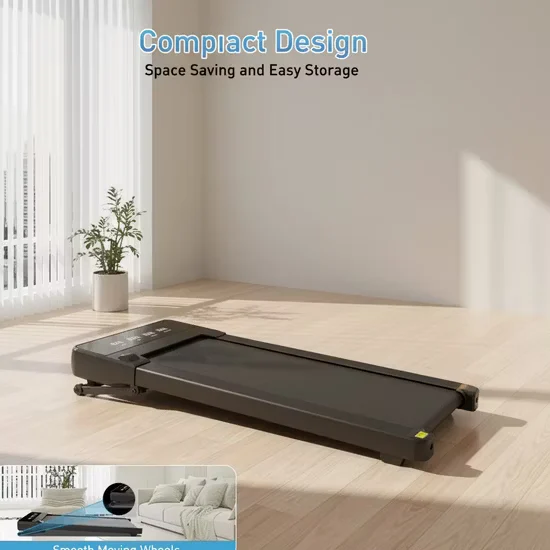
Quiet Residential Operation — DC motor drive and foldable frame engineered for apartment-level noise tolerance and space-constrained home gym layouts.
Technical Specifications
| Parameter | Value |
|---|---|
| Designation | MT23B |
| Motor Type | DC |
| Motor Power | 1.5/DC2.0HP* |
| Speed Range | 1-12 km/h |
| Running Surface | 1200 x 420 mm |
| Console Type | LCD (Speed / Distance / Time / Calories / Pulse) |
| Programs | 12 programs |
| Foldable | Yes |
| Transport Wheels | Yes |
| Product Dimensions (unfolded) | 1490 x 720 x 1100 mm |
| Net Weight | 37 kg |
| Certification | CE, RoHS |
| Color Options | Multicolor / Customized |
*Peak or continuous horsepower not specified in source; verify against manufacturer catalog before continuous-duty deployment.
Application Suitability
| Deployment Scenario | Typical Use |
|---|---|
| High-end residential home gym | Daily personal cardio in limited floor space with fold-away storage |
| Apartment and shared living space fitness | Low-noise walking and light jogging without disturbing adjacent units |
| Corporate wellness room | Intermittent use by rotating staff during break periods |
| Hotel guest room in-room fitness | Compact footprint enabling temporary deployment in suite rooms |
What Peak Horsepower Hides About Continuous Duty in Household Treadmills
A 2.0HP peak rating does not guarantee sustained output under continuous running loads.
Home users and residential operators browsing for a foldable motorized treadmill DC motor household option rarely see the distinction between peak and continuous horsepower. Peak horsepower measures the maximum burst the motor can deliver for a few seconds before thermal protection kicks in. Continuous horsepower reflects what the motor sustains across a full session. When a treadmill spec sheet lists only a combined figure like 1.5/DC2.0HP without clarifying which is which, the buyer assumes the higher number applies to their entire workout [NEED_CITE: motor duty cycle classification for continuous residential operation]. In reality, a DC motor rated at 1.5HP continuous will handle walking and light jogging adequately but will strain under sustained running at higher speeds, particularly with users approaching the upper weight threshold.
The DC motor architecture itself is appropriate for intermittent household use cycles. Unlike AC motors built for gym floors running ten hours daily, DC motors are lighter, more compact, and generate less heat at moderate duty cycles. That makes them suitable for a foldable frame weighing 37 kg, where a heavier AC motor would compromise portability and folding mechanism balance. The trade-off is thermal headroom: a DC motor in a residential foldable motorized treadmill DC motor household unit must cool between sessions rather than running back-to-back all day.
Positioning the MT23B Within a Residential Cardio Zone
The MT23B covers walking through moderate jogging at speeds up to 12 km/h across a 1200 x 420 mm running surface. That belt length suits stride patterns of users under approximately 175 cm in height; taller users will find the deck limiting during sustained running. In a home gym layout, this foldable motorized treadmill DC motor household unit pairs with a stationary bike or elliptical for cross-training variety without dominating the room. The 1200 mm deck length positions it as a personal-use machine rather than a shared family treadmill handling multiple daily sessions at high intensity.
The LCD console tracks speed, distance, time, calories, and pulse, providing essential workout metrics without the connectivity layer that smart consoles offer. Users who want app-synced training data will need a separate wearable or phone-based tracking solution. For residential deployments where the priority is quiet operation and space efficiency rather than integrated data capture, this configuration keeps cost and complexity proportional to actual use patterns.
Residential Deployment and Environmental Requirements
The foldable design with transport wheels allows the unit to be repositioned against a wall when not in use, requiring approximately 1490 x 720 mm of floor space when unfolded and considerably less when stored vertically. Operators deploying this equipment on upper floors of residential buildings should verify floor loading capacity and consider a vibration-dampening mat beneath the unit to limit structure-borne noise transmission to units below [NEED_CITE: residential floor vibration transmission standards for fitness equipment]. The DC motor draws power through a standard household circuit; facilities in markets with 110V/60Hz supply must confirm the unit ships with the correct motor winding and plug configuration before deployment.
Ventilation around the motor housing matters even at household duty cycles. Positioning the treadmill with at least 30 cm clearance on the sides and rear prevents heat accumulation during longer sessions. The folding hinge mechanism should be inspected periodically for wear, particularly in households where multiple users fold and unfold the unit daily.
Interpreting the DC Drive and LCD Console Specifications
The DC motor in this unit is typical of foldable residential treadmills where weight and compact packaging take priority over continuous thermal capacity. DC motors deliver smooth acceleration at lower speeds, making the 1-12 km/h range responsive for walking and jogging transitions. The trade-off compared to AC motors is sustained thermal performance: DC motors rely on internal fans and passive cooling rather than forced-air systems, which limits their ability to handle consecutive hour-long sessions without cooldown intervals.
The LCD console displays speed, distance, time, calories, and pulse readings. Pulse is typically captured through handlebar-mounted sensors, which provide adequate resting and recovery heart rate data but are prone to motion artifact during active running. Users conducting interval training or heart rate zone work will find chest strap or optical wrist sensors more reliable. The 12 pre-programmed workout routines offer structured variety without requiring external app connectivity, which suits users who prefer standalone operation without subscription-based content platforms.
The 1200 x 420 mm running surface is compact enough to fit the foldable chassis but constrains stride length at higher speeds. Users transitioning from outdoor running will notice the narrower belt width requires more deliberate foot placement compared to commercial decks measuring 500 mm or wider.
The Hidden Cost of Specification Ambiguity
When a treadmill lists motor power as a combined peak-and-continuous figure without separating the two, buyers deploying in shared residential environments face unexpected limitations. A motor that performs adequately for one thirty-minute walking session may trigger thermal shutoff when a second household member attempts a running session immediately afterward. This pattern generates warranty claims that are technically operating within stated specifications but fail to meet actual household usage expectations [NEED_CITE: residential treadmill motor thermal failure patterns].
Noise complaints follow a similar trajectory. A foldable motorized treadmill DC motor household unit deployed on a hardwood floor without isolation padding will transmit low-frequency vibration through the structure, generating complaints from neighboring units even when airborne noise from the motor itself remains moderate. The issue is not the motor’s acoustic output but the mechanical coupling between the deck, the frame, and the building structure. Operators who discover this after installation face the cost of retrofitting isolation solutions or relocating the equipment.
Why This Product Line Fits Residential Deployments
The MT23B’s foldable chassis with transport wheels addresses the primary constraint in residential fitness: floor space that must serve multiple purposes throughout the day. The DC motor keeps unit weight at 37 kg, making repositioning feasible for a single user without mechanical lifting aids. The 1200 x 420 mm deck footprint fits room layouts where a full-length commercial treadmill would obstruct furniture or doorways.
Biketon Sport’s commercial cardio engineering background informs the sub-35dB noise target across the product range, and while the MT23B operates in a different duty class than hotel-grade units, the acoustic design principles carry through to residential deployments where neighbor tolerance is the limiting factor. The OEM/ODM capability extends to console UI customization, color options, and branding for operators integrating treadmills into furnished residential properties. Free 3D cardio-zone layout planning covers sightline and airflow considerations for residential rooms where ventilation is often an afterthought [NEED_CITE: residential cardio zone layout and airflow planning methodology].
Documentation & Test Records
- CE declaration of conformity for European market compliance
- RoHS compliance certificate for restricted substance verification
- EN 957 test report covering safety and performance requirements
- Motor specification sheet detailing continuous and peak output ratings
- Noise level test report documenting acoustic output under load
- Installation guide with foldable mechanism safety procedures
Installation, Commissioning & Maintenance
- Maintain minimum 50 cm rear clearance for deck folding and motor ventilation airflow
- Install vibration isolation mat beneath the 1490 x 720 mm footprint to limit structure-borne transmission
- Confirm voltage and plug standard match target market before connecting the DC motor circuit
- Inspect folding hinge pins and locking mechanism monthly for wear under repeated daily use
- Lubricate the 1200 x 420 mm belt deck surface per manufacturer interval schedule
- Clean LCD console surface with non-solvent cleaner to prevent display degradation
Inquiry Guidance for Equipment Selection
Provide the available floor area and ceiling height to determine whether the foldable configuration suits the deployment space and to receive a 3D layout accounting for door clearances and traffic flow. Specify the expected daily session count and average duration per user to confirm the DC motor duty cycle aligns with actual usage patterns rather than peak ratings. Identify the target market voltage standard to ensure the unit ships with the correct motor winding and plug configuration. Clarify whether console data integration with existing facility management software is required, or whether standalone LCD operation meets the deployment objective.
Frequently Asked Questions
Q: What is the difference between peak and continuous horsepower on this treadmill?
A: Peak horsepower measures the maximum output the DC motor can sustain for a few seconds during acceleration or incline transitions. Continuous horsepower reflects sustained output across an entire workout session. The MT23B lists a combined 1.5/DC2.0HP figure; buyers should request the manufacturer specification sheet to confirm which value applies to continuous duty before planning usage patterns.
Q: Is the DC motor suitable for multiple users per day?
A: DC motors are designed for intermittent residential use cycles with cooldown periods between sessions. Multiple short walking sessions throughout the day are manageable, but consecutive extended running sessions may exceed the thermal capacity of a DC motor in this weight class. Specify expected daily usage volume during inquiry to receive appropriate duty-cycle guidance.
Q: How much floor space does the foldable treadmill require when stored?
A: The unfolded footprint measures 1490 x 720 mm. When folded vertically using the hinge mechanism, the unit occupies significantly less floor area, though exact folded dimensions should be confirmed from the manufacturer specification sheet. Transport wheels enable single-user repositioning against a wall or into a storage area.
Q: What noise level should I expect on residential upper floors?
A: DC motors generate lower airborne noise than AC equivalents, but structure-borne vibration transmitted through the deck and frame to the building floor is often the primary complaint source in multi-unit residential buildings. A vibration isolation mat beneath the unit reduces transmission. Request the noise level test report to review measured acoustic output under load.
Q: Can the LCD console sync with third-party fitness apps?
A: The LCD console displays speed, distance, time, calories, and pulse readings locally but does not include Bluetooth or Wi-Fi connectivity for app synchronization. Users requiring integrated data capture should use a separate wearable device or phone-based tracking solution alongside the treadmill console.
![Mt026m Electric Fold Treadmill for Bedroom Workout OEM [WARN] draft identifier mismatch](https://bicksport.com/wp-content/uploads/2026/08/mt026m-electric-fold-treadmill-for-bedroom-workout-oem-warn-draft-identifier-mismatch-f09fce.webp)

![Hsm Motorized Treadmill for Elderly Use [WARN] draft identifier mismatch](https://bicksport.com/wp-content/uploads/2026/08/hsm-motorized-treadmill-for-elderly-use-warn-draft-identifier-mismatch-8bee3e.webp)