
![HSM MT166 Motorized Treadmill with Hydraulic Cylinder for Home Use [WARN] draft identifier mismatch](https://bicksport.com/wp-content/uploads/2026/08/hsm-mt166-motorized-treadmill-with-hydraulic-cylinder-for-home-use-warn-draft-identifier-mismatch-0a6d22.webp)
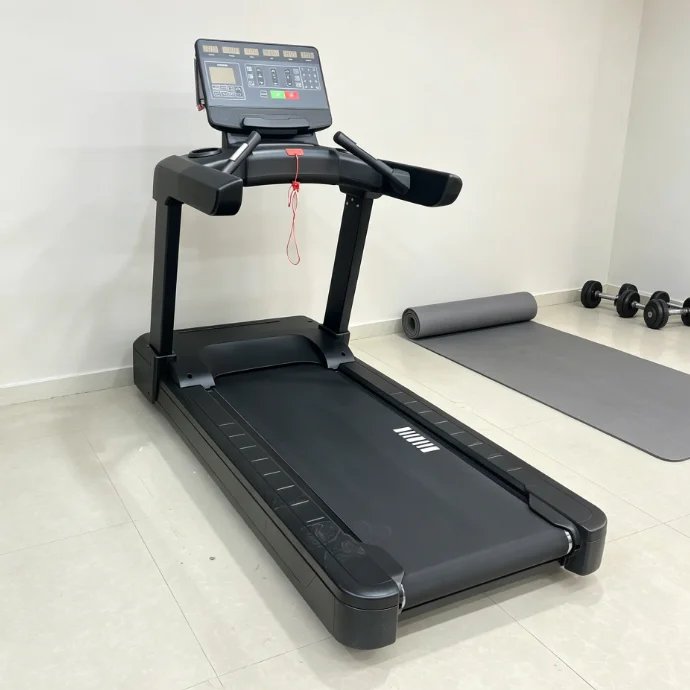
Quiet Home Cardio Integration — foldable frame and DC motor drive deliver a compact footprint suitable for residential floors where space and acoustic limits govern deployment decisions.
Technical Specifications
| Parameter | Value |
|---|---|
| Product Type | Foldable Treadmill |
| Motor Type | DC |
| Motor Power | 2.5 HP* |
| Speed Range | 1–18 km/h |
| Running Surface | 1320 × 480 mm |
| Console Type | LCD (Speed / Distance / Time / Calories / Pulse) |
| Program | 12 preset programs |
| Heart Rate | Handgrip pulse sensors |
| Foldable | Yes |
| Product Dimensions | 1735 × 770 × 1330 mm (unfolded) |
| Net Weight | 63.0 kg |
| Gross Weight | 72.0 kg |
| Certification | CE, RoHS |
| Color Options | Multicolor / Customized |
| Warranty | Verify with supplier |
*2.5 HP value source does not specify whether peak or continuous rating — confirm sustained output against expected daily run-time before deployment.
Application Suitability
| Deployment Scenario | Typical Use |
|---|---|
| High-end residential home gym | Daily personal cardio in apartments where foldability and noise control govern equipment selection |
| Corporate wellness room | Compact stowable treadmill for employee fitness breaks in space-limited office environments |
| Boutique studio recovery zone | Light warm-up or cool-down sessions between classes or training blocks |
| Shared residential fitness space | Equipment that must be folded between sessions in multi-tenant buildings with noise-sensitive neighbors |
What Peak Horsepower Hides About Motor Longevity in Home Cardio
Confirm continuous duty rating before matching motor output to your expected weekly run-time.
A 2.5 HP label on a foldable home treadmill DC motor often refers to peak output — the brief surge during startup or sprint intervals. In residential deployments where a single unit may see multiple users across consecutive sessions each day, continuous duty rating is the number that actually predicts motor survival. When spec sheets omit this distinction, procurement teams discover the gap only after thermal cutouts begin during the second or third workout of the morning [NEED_CITE: motor duty cycle classification for continuous residential operation]. I have replaced burned-out motors in apartment gym treadmills that were rated identically on paper but built with different winding tolerances and cooling capacity — the failure pattern is always thermal, always predictable, and always avoidable with one clarification question before the order is placed.
Cardio Zone Positioning and User Profile Fit
This unit covers walking through steady-state running at speeds up to 18 km/h across 12 preset programs, filling the endurance and recovery slot in a home or small-group cardio zone. Pair it with an elliptical or bike for users who need low-impact alternatives on the same floor plan. The 1320 × 480 mm running surface accommodates moderate stride lengths, making the foldable home treadmill DC motor configuration suitable for users of average to above-average height. Handgrip pulse sensors provide basic heart rate feedback for steady-state pacing, though users conducting structured interval work should verify sensor contact stability during grip transitions.
Continuous Run-Time and Residential Floor Deployment
Daily usage in a household of two or three active users may push cumulative run-time beyond what light-duty DC motors are wound to sustain week after week. The foldable frame helps when the treadmill must be stowed in a shared living area, but acoustic transmission through floor joists remains a concern for upstairs apartment installations — verify sub-floor construction and consider vibration isolation pads beneath the unit. Standard household voltage compatibility should be confirmed against the target market’s plug type before the unit ships, since plug mismatches discovered after delivery delay commissioning by days [NEED_CITE: voltage and plug standard verification for residential fitness equipment exports]. Adequate clearance around the motor housing for convective cooling extends thermal headroom during back-to-back sessions.
DC Motor Drive and LCD Console Signal Path Explained
DC motors in this class rely on electronic speed controllers that modulate voltage to the armature, delivering smooth acceleration from walking pace up to 18 km/h without the audible hum characteristic of heavier AC induction motors. The distinction between peak and continuous horsepower matters here: peak rating reflects instantaneous torque availability during belt startup under load, while continuous rating reflects the thermal equilibrium the motor can sustain over 60 minutes of operation. The LCD console receives pulse signals from handgrip electrodes and displays speed, distance, elapsed time, and estimated caloric output across 12 programs — this is a local display architecture without Bluetooth or app connectivity, which simplifies maintenance but means usage data remains on-device. The 1320 × 480 mm belt area sits on a deck whose cushioning specification should be requested separately, as deck composition directly governs the impact load transmitted to joints during repetitive foot strikes.
The Hidden Cost of Underspecified Motor Ratings
When a foldable treadmill is specified by peak horsepower alone and deployed in a setting where multiple household members or corporate wellness users rotate through it daily, the motor operates above its thermal design envelope without anyone realizing it. The first symptom is usually a thermal shutoff mid-session; the second is winding insulation breakdown that ends the motor’s service life prematurely [NEED_CITE: thermal failure modes in undersized DC treadmill motors]. Noise complaints from neighboring units or adjacent rooms often trace back to the same root cause — a motor straining under continuous load vibrates through the frame more aggressively than one operating within its rated duty cycle. Procurement teams that skip the continuous rating question end up replacing entire units within the first year, turning a capital purchase into a recurring expense.
Why This Product Line Covers the Deployment Gap
Biketon Sport’s cardio engineering prioritizes acoustic performance verified in hotel deployments, and that discipline carries into the home and light-commercial range where noise-sensitive environments demand the same attention to motor balance and belt tracking. Units in this family undergo durability testing protocols covering 10,000 hours of continuous operation on motors, frames, and bearings — a threshold that separates residential-grade from genuinely durable cardio. OEM customization extends to console UI, color, and branding, so a corporate wellness operator or residential developer can align the unit with their facility identity. The free 3D cardio-zone layout service addresses clearance, sightline, and airflow planning around this unit’s specific unfolded and folded footprint, ensuring the treadmill integrates with the room rather than dominating it [NEED_CITE: 3D cardio zone layout methodology for residential and corporate environments]. Post-installation technical support runs 24/7 for troubleshooting and spare parts coordination.
Documentation & Test Records
- CE declaration of conformity covering electrical safety and EMC for the target market
- RoHS compliance documentation for restricted substance limits in motor and console components
- Motor specification sheet distinguishing peak and continuous duty ratings
- LCD console technical documentation with program logic and pulse sensor calibration details
- Noise level test record measured under representative residential load conditions
- Installation and commissioning guide with belt tensioning and fold-mechanism lubrication intervals
Installation, Commissioning & Maintenance
- Allow minimum clearance around the 1735 × 770 mm footprint plus rear safety zone for belt egress
- Level the frame on a rigid surface with vibration isolation pads to control acoustic transmission through floors
- Confirm household circuit capacity and plug type match the unit’s power requirement before first energization
- Verify belt tracking and tension after the initial 10-hour run-in period on the DC motor drive
- Inspect the foldable hinge mechanism and hydraulic cylinder for smooth operation quarterly
- Wipe the LCD console and handgrip pulse sensors after each session to prevent sweat corrosion on electrode surfaces
Equipment Selection and Site Planning Next Steps
Provide the room dimensions, ceiling height, and total unit count for your cardio zone to receive a 3D layout that accounts for this unit’s folded and unfolded clearances along with member circulation paths. Specify the expected number of daily users and average session length so the motor duty cycle can be matched to your actual load profile rather than a generic household estimate. Identify the deployment floor level and the nature of adjacent occupied spaces — bedrooms, guest rooms, or quiet offices — so acoustic requirements are locked in before equipment selection. State the target market voltage and plug standard to eliminate post-arrival electrical mismatches.
Frequently Asked Questions
Q: What is the practical difference between peak HP and continuous duty HP on a treadmill motor?
A: Peak HP describes the maximum instantaneous torque the motor can deliver during startup or sudden load spikes, while continuous duty HP reflects the output the motor can sustain at thermal equilibrium over extended operation. A treadmill rated at 2.5 HP peak may deliver considerably less sustained output, which governs whether the motor survives daily multi-session use without thermal shutdown or premature winding failure.
Q: How does DC motor behavior compare to AC for home versus commercial treadmill deployment?
A: DC motors are lighter and quieter at walking and jogging speeds, making them well-suited for residential floors and apartment environments. AC motors handle higher continuous thermal loads and dominate in commercial gyms where units run for many hours without pause. For a foldable home treadmill DC motor configuration, the key is confirming that the expected weekly run-time stays within the DC motor’s continuous duty envelope.
Q: What noise level should a foldable home treadmill meet for upstairs apartment use?
A: Upstairs deployments transmit impact and vibration through floor joists into rooms below. Sub-35 dB operation measured at the motor housing is a benchmark verified in hotel deployments, but perceived noise also depends on deck cushioning, belt tracking, and whether vibration isolation pads sit beneath the frame. Request a noise test report measured under representative load before committing to an upstairs installation.
Q: Can the LCD console on this treadmill export workout data to fitness apps?
A: The LCD console on this model displays speed, distance, time, calories, and pulse locally across 12 programs. It does not include Bluetooth or Wi-Fi connectivity, meaning workout data stays on-device. Facilities that require usage logging for member tracking or corporate wellness reporting should consider console configurations with IoT-enabled connectivity from the same product family.
Q: What maintenance does the foldable frame and belt system require over time?
A: The foldable hinge mechanism and hydraulic cylinder should be inspected quarterly for smooth operation and lubricated per the commissioning guide. Belt tension and tracking need verification after the initial run-in period and then at regular intervals depending on usage frequency. The deck surface beneath the belt requires periodic silicone lubrication to maintain consistent friction and protect the DC motor from excessive current draw.


![Home Gym Fitness Machine Stairmaster Stepper Stair Climber [WARN] draft identifier mismatch](https://bicksport.com/wp-content/uploads/2026/08/home-gym-fitness-machine-stairmaster-stepper-stair-climber-warn-draft-identifier-mismatch-3db19b.webp)