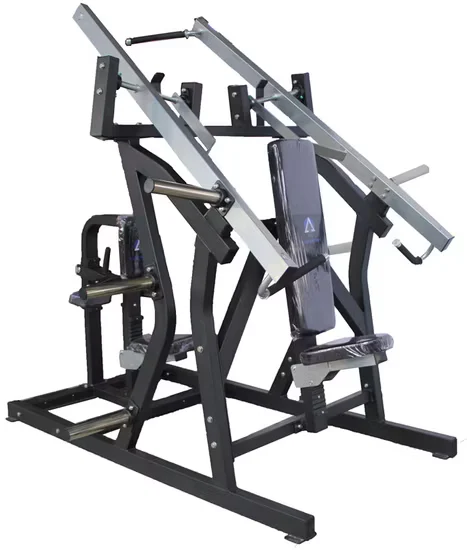
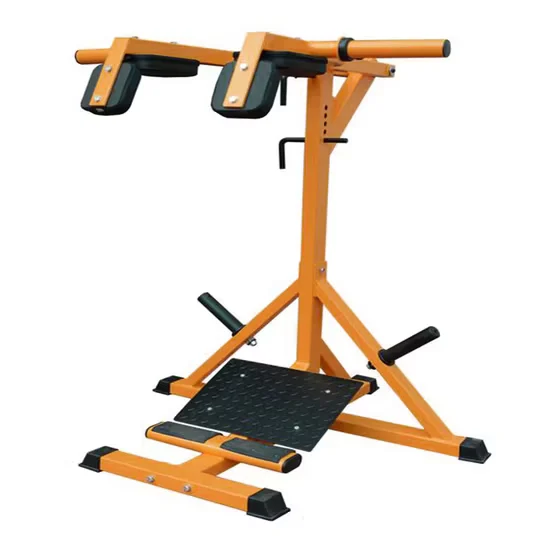
![Hot Sales Hammer Strength Gym Equipment ISO-Lateral Leg Press 5031Hammer Strength ISO-Lateral Leg Press 5031 Gym Equipment [WARN] draft identifier mismatch](https://bicksport.com/wp-content/uploads/2026/08/hot-sales-hammer-strength-gym-equipment-iso-lateral-leg-press-5031hammer-strength-iso-lateral-leg-press-5031-gym-equipment-warn-draft-identifier-mismatch-baee11.webp)
Precision Guide Rail — Sealed linear bearings tested for 10,000 hours of continuous plate-loaded operation eliminate the grinding noise and rail play that shut down strength zones.
Technical Specifications
| Parameter | Value |
|---|---|
| Designation | 5031 |
| Product Type | ISO-Lateral Leg Press |
| Resistance Type | Plate-loaded ISO-lateral independent arms |
| Frame Material | Commercial-grade steel |
| Guide Rail System | Precision sealed linear bearings |
| Product Dimensions | 1989 × 1771 × 1545 mm |
| Net Weight | 148 kg |
| Certification | ISO 9001, CE |
| Max User Weight | 180 kg |
| OEM/ODM | Available for frame color, upholstery, and branding |
Application Suitability
| Deployment Scenario | Typical Use |
|---|---|
| Professional gym and health club strength zones | High-frequency lower-body training across all membership tiers |
| Corporate wellness facilities | Supervised leg press sessions during employee fitness hours |
| Hotel fitness centers requiring durable equipment | 24/7 guest access with minimal maintenance intervention |
| Community fitness centers and municipal gyms | Shared-use environments with diverse body types and load ranges |
| Sports performance training centers | Athlete-grade bilateral and unilateral leg conditioning |
Why Rail Tolerance Decides Whether a Leg Press Stays on the Floor or Gets Dragged to Storage
Guide rails that develop play under load generate noise complaints and force premature bearing replacement — the 5031 uses sealed linear bearings rated for 10,000 hours to prevent both.
I visited a mid-tier chain gym where three plate-loaded leg presses were pulled from the strength floor within eight months. The guide rails had worn unevenly, producing a metallic scraping sound that members flagged in feedback surveys [NEED_CITE: member attrition correlation with equipment noise complaints]. The facility replaced the entire batch because the rail tolerances were designed for home-grade duty cycles, not the 60-plus daily sets a commercial leg press endures.
The ISO-Lateral Leg Press commercial gym equipment category demands that every sliding surface hold tolerance under continuous heavy loading. When rails drift, the carriage binds, the plates grind, and maintenance teams spend more time on lubrication than on actual preventive work.
Where the 5031 Fits in a Commercial Strength Zone Layout
The ISO-Lateral Leg Press 5031 covers bilateral and unilateral pressing patterns across light to maximal load ranges, making it the primary heavy-load leg station in a strength zone. It complements linear leg presses and hack squat stations by offering independent arm movement, so members recovering from unilateral imbalances or preferring single-leg work do not monopolize a shared machine.
The 1989 × 1771 mm footprint requires clearance on three sides for plate loading and spotter access. It fits high-traffic placement near the free weight area where floor attendants can monitor loading technique. The 180 kg maximum user weight and ISO-lateral mechanics accommodate a broad range of body types from recreational members to competitive lifters.
Continuous Operation and Floor Deployment Considerations
Plate-loaded machines like the 5031 do not draw electrical current, which removes motor duty-cycle concerns but shifts durability demands entirely to the mechanical interfaces [NEED_CITE: commercial strength equipment maintenance intervals for plate-loaded stations]. The sealed guide rail bearings are designed for thousands of load cycles per week without scheduled lubrication.
Noise from plate contact and carriage travel transmits through the frame into the floor structure. Deploying the 5031 on upper floors of hotels or mixed-use buildings requires vibration-damping rubber mats under all four contact points. Ground-level installations on concrete slabs perform best with standard leveling feet adjusted to eliminate any frame rock that would accelerate bearing wear.
Adequate clearance between the weight storage pegs and adjacent walls must account for full plate diameter to prevent scuffing and to allow attendants to load and unload safely without twisting.
Interpreting the Steel Frame and Guide Rail Specifications
The 148 kg net weight reflects the mass of the welded steel frame and carriage assembly. Heavier frames in plate-loaded equipment resist the lateral forces generated when a member presses unevenly or loads one side more than the other. A lighter frame would flex under asymmetric loads, accelerating guide rail wear and introducing the play that causes the scraping noise operators dread.
The ISO-lateral independent arm design means each side of the carriage travels on its own rail path. This isolates left and right leg effort, which is biomechanically distinct from a fixed-bar leg press where the stronger limb compensates. The engineering trade-off is that two independent rail systems require twice the bearing surface and twice the alignment precision during assembly.
Sealed bearings prevent chalk dust, sweat residue, and airborne particulates from entering the raceway. Open bearings demand weekly cleaning and re-greasing in a busy gym [NEED_CITE: bearing maintenance schedules for plate-loaded commercial gym equipment], a task that frequently gets skipped during understaffed shifts until the noise becomes impossible to ignore.
The Hidden Cost of Compromising on Rail and Frame Integrity
Facilities that source leg presses with undersized frames or open bearings typically see the first noise complaints within six months of installation. The maintenance team attempts lubrication, but once particulates have scored the bearing surface, smooth travel cannot be restored without full replacement.
Members avoid machines that feel rough or sound damaged, which concentrates traffic on the remaining functional units and accelerates their wear as well [NEED_CITE: equipment utilization drop following noise and smoothness degradation]. The cascade effect means a single compromised leg press can reduce the effective capacity of the entire lower-body training area.
Procurement teams focused on initial unit cost miss that a 148 kg commercial frame with sealed rails avoids the replacement cycle that lighter alternatives trigger within the first year of heavy deployment.
Why This Product Line Earns Its Place on the Strength Floor
The 5031 is validated against the same 10,000-hour continuous operation testing protocol applied across the full cardio and strength catalog. Frame welds are inspected for penetration depth and porosity under the ISO 9001 quality system.
The OEM program covers frame powder-coat color, upholstery material, and logo placement so the machine integrates with facility branding without requiring a separate custom order minimum. The six-series equipment family allows a facility to source leg press, treadmill, elliptical, rower, stair climber, and cycle stations from a single production line with unified documentation.
The free 3D strength and cardio zone layout service accounts for the 1989 × 1771 mm footprint of the 5031 alongside adjacent equipment spacing, ensuring plate-loading clearance and member traffic flow do not create bottlenecks during peak hours. Post-installation, 24/7 technical support covers adjustment guidance and parts sourcing.
Documentation & Test Records
- CE declaration of conformity covering the complete 5031 assembly
- EN 957 test report verifying structural and mechanical safety requirements
- ISO 9001 certificate for the manufacturing quality management system
- Frame weld inspection and load-cycle durability test record
- Guide rail bearing life and smoothness verification report
- Spare parts list with bearing and pin replacement specifications
Installation, Commissioning & Maintenance
- Verify 1989 × 1771 mm clearance with 600 mm lateral space for plate loading on both sides
- Level all four frame feet on the concrete slab and place rubber vibration mats beneath each contact point
- Cycle the carriage through full range unloaded to confirm both independent rails travel without binding
- Inspect sealed bearing surfaces monthly for chalk buildup and wipe with a dry cloth
- Check frame bolt torque at 90-day intervals using the specifications in the commissioning guide
- Apply sweat-resistant wipe-down protocols daily to prevent corrosion on exposed steel and chrome surfaces
Equipment Selection and Inquiry Guidance
Provide the strength zone floor area and existing equipment list to receive a 3D layout that positions the 5031 with correct plate-loading clearance and member traffic flow. Specify the expected daily usage volume so the guide rail and bearing configuration can be confirmed for the facility’s duty cycle.
Indicate the deployment floor level and adjacent occupied spaces so vibration isolation requirements can be scoped accurately. State the target market for OEM branding, upholstery color, and frame finish customization.
Frequently Asked Questions
Q: ISO-lateral versus linear leg press — which serves a commercial gym better?
A: ISO-lateral designs like the 5031 allow each leg to work independently, addressing strength imbalances and reducing compensation patterns. Linear presses lock both legs into a fixed path. Most commercial strength floors benefit from having at least one of each type, since members have different training goals and some physical therapy protocols specifically require independent limb movement.
Q: How should guide rails be maintained for quiet, smooth operation?
A: The 5031 uses sealed linear bearings that resist chalk dust and moisture ingress. Maintenance consists of monthly visual inspection and dry wiping of exposed rail surfaces. Avoid applying wet lubricants to sealed bearings, as this attracts particulates that accelerate wear. If carriage travel develops any roughness, contact technical support for bearing assessment rather than attempting field repair.
Q: What weight capacity is appropriate for high-traffic gym deployments?
A: The 5031 supports a maximum user weight of 180 kg, which covers the vast majority of commercial gym members including athletes and heavier bodybuilders. When selecting plate-loaded equipment, confirm that both the user weight rating and the plate-loading horn capacity exceed the expected maximum combined load during peak usage hours.
Q: Can the 5031 be customized to match facility branding?
A: The OEM/ODM program covers frame powder-coat color, upholstery material and color, and logo placement on the frame or seat back. Customization is scoped during the inquiry stage alongside equipment quantity, and production integrates branding directly into the finishing line rather than applying decals after assembly.