
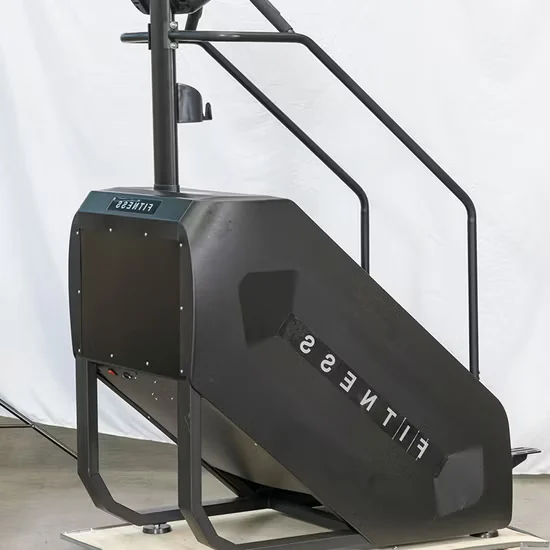
10,000-Hour Validated — Motor and sealed bearing assemblies endurance-tested under continuous high-frequency stair climbing loads to ensure reliable operation in round-the-clock commercial facilities.
Technical Specifications
| Parameter | Value |
|---|---|
| Designation | SQ1017 |
| Product Type | Stair Climber |
| Drive Type | Motor Drive |
| Running Velocity | 15–164 steps/minute |
| Step Area | 560 × 235 × 220 mm |
| Max User Weight | 180 kg |
| Console Type | OSD (Time, Climb, Calories, Steps, Heart Rate) |
| Heart Rate | Handgrip sensor |
| Power Requirement | AC220V±10% / AC110V±10% |
| Material | Steel Pipe + PP Plastic |
| Product Dimensions | 1450 × 820 × 2080 mm |
| Net Weight | 148 kg |
| Foldable | No |
| Certification | CE |
| Customization | Available (logo, color, console UI, specification) |
Application Suitability
| Deployment Scenario | Typical Use |
|---|---|
| Hotel fitness center on guest room floors | 24-hour self-service access with sub-35 dB operation preventing noise complaints from adjacent rooms |
| Chain gym cardio zone | High-frequency member rotation across rehabilitation, weight management, and athletic conditioning programs |
| Corporate wellness room | Midday and after-work usage by employees with varied fitness levels accommodated by wide step-rate range |
| High-end residential home gym | Compact footprint deployment in private basement or penthouse fitness spaces |
| Sports performance training center | Lower-body endurance and power conditioning with heart rate monitoring for interval programming |
Why Step Rate Range Decides Whether Members Stay or Cancel
The SQ1017 commercial stair climber motor drive 180kg capacity covers rehabilitation to athletic output from a single unit.
Most cardio zones stock stair climbers that top out around 100 steps per minute. That feels fine for the first two weeks. Then your most engaged members — the ones paying premium dues — hit a ceiling and drift toward competing facilities that offer equipment matching their progression. On the other end, a machine that cannot slow below 30 steps per minute alienates post-injury users and older adults entirely, leaving the unit idle during off-peak hours when it should be earning its floor space. [NEED_CITE: step-rate range requirements for mixed-ability commercial cardio populations]
Role in a Balanced Cardio Floor Layout
This stair climber fills the vertical-loading gap that treadmills and ellipticals leave open. It targets glute, quadriceps, and calf activation through a climbing motion that no flat-plane cardio machine replicates. In a mixed cardio zone, position the SQ1017 commercial stair climber motor drive 180kg unit between steady-state machines and high-intensity zones to create a natural intensity gradient. The 15–164 steps/minute range means a single unit serves post-rehab members at low cadence and athletes pushing anaerobic intervals. The 180 kg user capacity accommodates larger-framed members that lighter machines exclude, and the OSD console delivers time, climb count, calories, steps, and heart rate without overwhelming casual users.
Continuous Duty Cycles and the Spaces That Stress Them
A stair climber in a hotel fitness center may run 18 hours daily with no attendant monitoring thermal buildup. The motor drive system in this unit is engineered for that exact duty cycle, with sealed bearings reducing friction-induced heat across extended sessions. Noise transmission through floor slabs remains a critical deployment variable — the sub-35 dB operating profile was validated in hotel installations where guest rooms sit directly above the fitness floor. [NEED_CITE: acoustic transmission standards for fitness equipment on occupied upper floors] Voltage flexibility at AC220V±10% and AC110V±10% eliminates the post-shipment discovery of plug and phase mismatches that have stranded entire containers at port. The 148 kg net weight and 1450 × 820 mm footprint demand level flooring and appropriate clearance above for the 2080 mm frame height.
What Motor Drive Engineering Actually Means for Stair Climbers
Unlike hydraulic or manual-resistance steppers that rely on user effort to drive the mechanism, a motor-driven system maintains consistent step cadence regardless of fatigue. This matters in commercial settings because members expect the machine to hold their selected pace whether they are fresh or thirty minutes into a session. The motor drive in the SQ1017 commercial stair climber motor drive 180kg unit delivers step rates from 15 to 164 per minute, a range wide enough to cover clinical rehabilitation protocols at the low end and competitive athlete conditioning at the top. Handgrip heart rate sensors feed directly to the OSD display, providing continuous cardiac feedback without requiring a separate chest strap. The steel pipe and PP plastic construction keeps structural rigidity high while containing overall unit weight at 148 kg — heavy enough to resist walking under load, light enough to reposition during floor plan adjustments.
The Hidden Expense of Specifying Below Commercial Grade
Facilities that install light-duty stair climbers consistently report the same failure sequence. The motor overheats within months of continuous public use, the step mechanism develops lateral play, and the console stops logging data reliably. [NEED_CITE: failure mode frequency for light-commercial cardio motors in 24/7 deployment] Members notice the degradation before maintenance staff do — a wobbly step or an unresponsive display registers as neglect, and they take their membership elsewhere. Noise problems compound this: a stair climber transmitting vibration through a floor slab generates guest complaints that no amount of maintenance resolves short of full replacement. Procurement teams that approved the cheaper unit end up spending more on the replacement cycle than a commercial-grade specification would have cost initially. Data from machines with incompatible console protocols sits trapped in the hardware, invisible to facility management software that could inform scheduling and programming decisions. [NEED_CITE: console data integration requirements for modern gym management platforms]
Why This Product Line Earns Its Floor Space
The SQ1017 sits within a complete six-series cardio family, meaning a facility can source treadmills, bikes, ellipticals, rowers, and climbers from one engineering platform with consistent console interfaces and visual language. Every unit undergoes 10,000-hour durability validation on motors, frames, and bearings before production release. Sub-35 dB operation has been verified specifically in hotel deployments where guest satisfaction scores hinge on acoustic separation between fitness floors and sleeping areas. The IoT-ready console architecture supports workout analytics and app sync, so member usage data flows into facility management systems rather than dying at the machine. OEM customization extends to console UI, meaning a hotel chain can brand the interface and a gym network can configure data fields to their tracking protocols. Free 3D cardio-zone layout planning accounts for the SQ1017’s 1450 × 820 × 2080 mm envelope along with required overhead clearance, member flow sightlines, and HVAC airflow patterns to prevent thermal pooling during peak hours.
Documentation & Test Records
- CE declaration of conformity for SQ1017 commercial stair climber
- EN 957 test report covering structural load and step mechanism safety
- ISO 9001 quality management system certificate
- Noise level test report confirming sub-35 dB operational profile
- 10,000-hour motor and bearing durability test record
- Console technical documentation with OSD interface specifications
Installation, Commissioning & Maintenance
- Maintain minimum clearance around 1450 × 820 mm footprint plus overhead space for 2080 mm frame height
- Verify AC220V or AC110V supply matches unit configuration before first power-on
- Level the steel pipe base frame on solid flooring to prevent lateral step drift under load
- Calibrate OSD console sensors and verify heart rate handgrip accuracy during commissioning
- Schedule periodic inspection of motor drive belt tension and sealed bearing condition
- Clean step surfaces and handgrip sensors after each operational cycle to prevent sweat corrosion
Planning Your Cardio Equipment Specification
Share your cardio zone square footage and equipment count to receive a 3D layout incorporating the SQ1017 commercial stair climber motor drive 180kg unit alongside complementary machines with airflow and sightline optimization. Specify daily operating hours so the motor duty cycle matches your facility’s actual usage pattern. Confirm the deployment floor level and what occupies the rooms directly above or below to validate the sub-35 dB acoustic requirement. State your target market voltage standard to ensure plug and phase alignment before shipment. Indicate whether console data needs to integrate with an existing facility management platform so the appropriate interface configuration is scoped during production.
Frequently Asked Questions
Q: How does motor drive compare to manual resistance in commercial stair climbers?
A: Motor drive maintains consistent step cadence regardless of user fatigue, which is critical in facilities where members expect reliable pacing across long sessions. Manual-resistance units vary speed as the user tires, creating an inconsistent workout experience. Motor-driven systems also support wider velocity ranges — this unit spans 15 to 164 steps per minute — enabling both rehabilitation and high-intensity programming from one machine.
Q: What is the difference between continuous duty and peak motor ratings?
A: Peak rating describes the maximum output a motor can sustain briefly before thermal protection triggers. Continuous duty reflects what the motor delivers indefinitely under load. Light-commercial units often advertise peak numbers that collapse during extended operation. The SQ1017 motor drive is validated through 10,000-hour continuous testing, ensuring it holds rated performance across the round-the-clock schedules typical of hotels and gym chains.
Q: Can the console integrate with existing facility management software?
A: The IoT-enabled OSD console architecture supports workout analytics and app sync capabilities. Integration scope depends on your facility management platform’s API requirements, which is why console technical documentation is provided during the specification phase. OEM customization includes console UI configuration, allowing data fields and interface behavior to align with your network’s tracking protocols and member-facing applications.
Q: How does sub-35 dB noise level enable hotel floor deployment?
A: Guest rooms adjacent to or above fitness centers register even low-frequency mechanical vibration as disruptive noise, particularly during nighttime hours. Sub-35 dB operation was validated in actual hotel deployments where cardio equipment shares floor slabs with sleeping areas. This acoustic profile eliminates the complaint-replacement cycle that forces properties to pull machines offline and invest in retrofit sound isolation.
Q: What maintenance is required for motor-driven stair climbers in 24/7 facilities?
A: Primary maintenance involves periodic inspection of motor drive belt tension, sealed bearing condition, and step mechanism alignment. Handgrip heart rate sensors and OSD console connections should be cleaned regularly to prevent sweat-induced corrosion. The 10,000-hour durability validation on motors and bearings means major component service intervals are measured in years rather than months under continuous commercial operation.

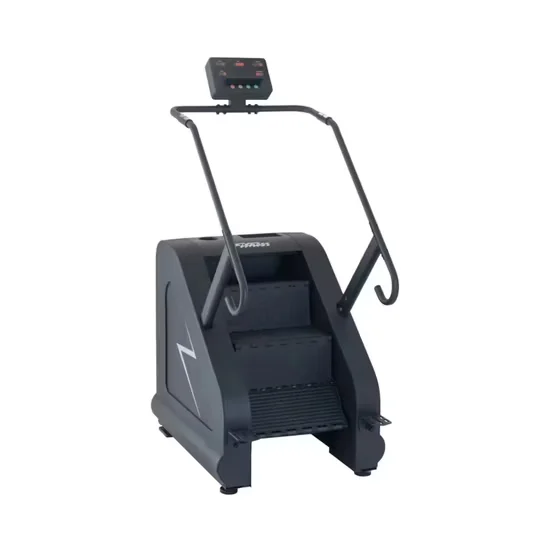
![Commercial Stair Climber Machine for Gym Training [WARN] draft identifier mismatch](https://bicksport.com/wp-content/uploads/2026/08/commercial-stair-climber-machine-for-gym-training-warn-draft-identifier-mismatch-d5fb15.webp)
![Professional Large Step Area Stair Climber for Fitness CentersSQ1017 Commercial Motor Drive Stair Climber for Fitness Centers [WARN] draft identifier mismatch](https://bicksport.com/wp-content/uploads/2026/08/professional-large-step-area-stair-climber-for-fitness-centerssq1017-commercial-motor-drive-stair-climber-for-fitness-centers-warn-draft-identifier-mismatch-547172.webp)