![Hammer Strength ISO-Lateral D. Y. Row Machine 5003 for Commercial Gyms [WARN] draft identifier mismatch](https://bicksport.com/wp-content/uploads/2026/08/hammer-strength-iso-lateral-d-y-row-machine-5003-for-commercial-gyms-warn-draft-identifier-mismatch-02baf9.webp)
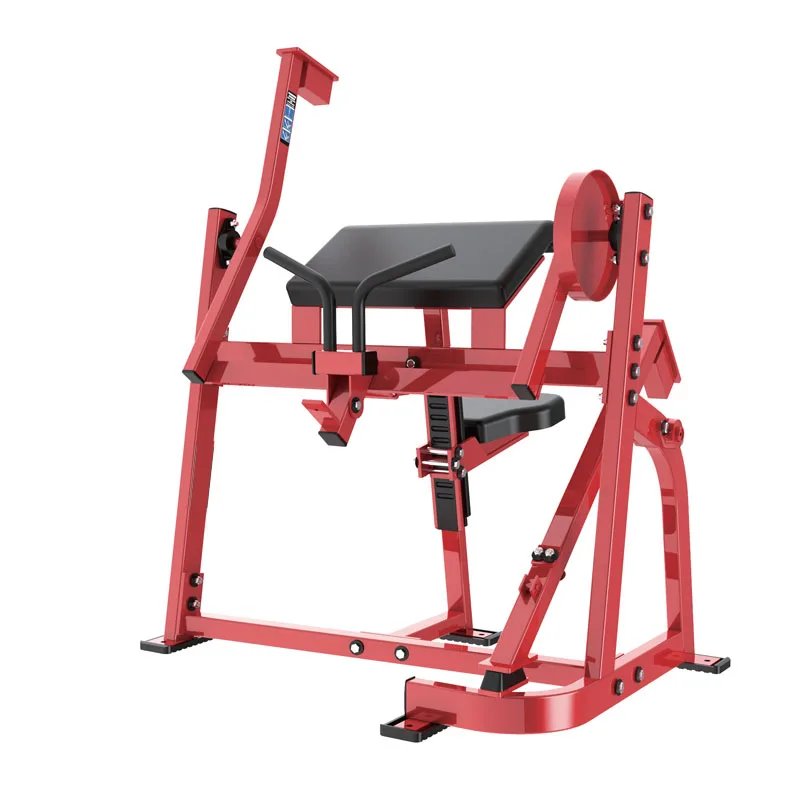
Hammer Strength ISO-Lateral D. Y. Row Machine 5003 for Commercial Gyms
Reinforced Pivot Engineering — sealed bearings and steel-reinforced pivot points on the ISO-Lateral D. Y. Row Machine 5003 sustain smooth articulation through thousands of daily cycles in high-traffic strength zones.
Technical Specifications
| Parameter | Value |
|---|---|
| Designation | 5003 |
| Product Type | ISO-Lateral Strength Machine |
| Exercise Part | Back |
| Frame Material | Steel |
| Product Dimensions | 1455 × 1476 × 2133 mm |
| Net Weight | 135 kg |
| Resistance Type | ISO-Lateral independent arms |
| Movement Path | Diverging / Converging (D.Y.) |
| Max User Weight | 180 kg |
| Grip Options | Multiple handle positions |
| Seat Adjustment | Adjustable |
| Frame Finish | Powder-coated |
| Certification | ISO 9001, CE |
| OEM / ODM | Available with logo, color and specification customization |
| Appliance | Community, Gymnasium |
| Fit Area | Professional Gym and Club |
| Age Group | Adult |
| Gender | Unisex |
Application Suitability
| Deployment Scenario | Typical Use |
|---|---|
| Chain gym strength zone | High-frequency back training across peak and off-peak hours |
| Hotel fitness center | Durable back development station accessible to guests around the clock |
| Corporate wellness room | Space-efficient ISO-lateral row station for employee strength programs |
| Sports performance training center | Targeted back and scapular work for athlete conditioning blocks |
| Community fitness center | Heavy-duty row machine handling diverse member traffic daily |
What Frame Rigidity Means When Members Load Heavy
A strength machine is only as stable as its frame allows under progressive loading.
Facility operators learn the hard way that rowing machines with insufficient structural rigidity develop lateral play at the pivot after months of heavy use. Members notice the wobble, adjust their form to compensate, and eventually gravitate toward machines that feel solid through the full range of motion. The ISO-Lateral D. Y. Row Machine 5003 addresses this with a steel frame and reinforced pivot architecture designed for continuous commercial loading [NEED_CITE: frame deflection thresholds for commercial strength equipment under cyclic loading]. When independent arms move through diverging and converging paths simultaneously, torque distribution across the frame becomes asymmetrical — a condition that separates light-duty frames from units built for professional gym environments.
Positioning This Row Station Within a Commercial Strength Floor
The ISO-Lateral D. Y. Row Machine 5003 occupies a specific niche in back-training equipment selection. Its independent diverging and converging arm paths allow users to perform unilateral or bilateral rowing motions, engaging the latissimus dorsi, rhomboids and rear deltoids through a biomechanically natural arc. In a commercial strength zone, it complements plate-loaded pulldown stations and cable rows by offering a fixed-path alternative that requires less setup time between users. The 1455 × 1476 mm footprint fits standard strength equipment spacing grids, while the 180 kg user weight capacity covers the full spectrum of commercial gym membership demographics from general fitness members to trained athletes.
Deployment Environment and Continuous Use Considerations
Strength machines in high-traffic facilities operate under cyclic loading patterns that differ significantly from home-use duty cycles. A machine positioned in a chain gym cardio-adjacent strength zone may see usage from early morning through late evening, with peak-hour intervals between sets dropping to under two minutes. The sealed bearing specification on this ISO-Lateral D. Y. Row Machine 5003 reduces maintenance frequency in such environments where sweat, chalk dust and floor-cleaning chemicals accelerate bearing wear [NEED_CITE: bearing seal integrity requirements for high-frequency commercial strength equipment]. Floor leveling within tolerance is essential — an uneven base transfers asymmetric loads to the frame over time, accelerating wear at pivot contact points. Facilities on upper floors should verify structural load capacity for the 135 kg net weight plus dynamic loading during use.
Reading the Bearing and Frame Specifications
The 135 kg net weight of this machine reflects the steel mass concentrated in the frame and arm assemblies. Heavier frame construction in ISO-lateral machines serves a functional purpose: it raises the resonant frequency of the structure above the frequencies generated during loaded rowing movements, preventing perceptible vibration during use. The sealed bearing specification at each pivot point eliminates the need for periodic lubrication — a maintenance task that light-commercial machines with open bearings require at regular intervals. Multiple handle positions allow grip-width variation without mechanical adjustment, meaning fewer moving parts subject to wear. The ISO-lateral independent arm design introduces a biomechanical advantage over fixed-bar machines: each arm tracks independently, accommodating natural scapular movement and reducing the compensatory torso rotation that fixed-path machines can encourage [NEED_CITE: independent arm biomechanics in ISO-lateral back training equipment].
The Cost of Specifying Below Commercial Duty
Operators who select row machines rated for light-commercial or home use in professional gym environments face a predictable failure sequence. Pivot bearings develop play within the first year, manifesting as lateral wobble that members interpret as equipment unreliability. Frame welds at high-stress junctions develop fatigue cracks under cyclic asymmetric loading from independent-arm machines — a failure mode that light-gauge steel frames cannot resist over thousands of cycles. Machines that fail in-service create a cascading operational problem: the unit must be removed from the floor, a replacement sourced and shipped, and the gap in the strength zone covered temporarily [NEED_CITE: equipment downtime impact on member retention in commercial fitness facilities]. These outcomes are avoidable when procurement specifications match actual deployment conditions from the start.
Why This Product Line Fits Commercial Procurement
The ISO-Lateral D. Y. Row Machine 5003 belongs to a product family engineered around verified commercial performance criteria. Sub-35 dB whisper-quiet operation matters in hotel fitness centers where strength zones share walls with guest corridors. Components tested for 10,000 hours of continuous high-frequency use provide a measurable durability baseline that procurement teams can reference against projected facility traffic. Full OEM and ODM capability extends to frame color, logo application and specification customization, allowing chain gym networks to maintain brand consistency across locations. Free 3D layout planning covering equipment spacing, sightlines and member flow ensures the 1455 × 1476 mm footprint integrates into the strength zone without congestion. The complete six-series cardio and strength family means a facility can source multiple equipment categories from a single production source, simplifying logistics and spare parts management.
Documentation & Test Records
- CE declaration of conformity for European market placement
- EN 957 test report validating commercial strength equipment safety
- ISO 9001 certificate covering manufacturing quality management
- Noise level test report confirming sub-35 dB operation
- Durability test record documenting 10,000-hour component verification
- Frame welding inspection and material grade documentation
Installation, Commissioning & Maintenance
- Verify floor levelness within tolerance across the 1455 × 1476 mm footprint before anchoring
- Allow clearance on all sides per EN 957 spacing requirements for safe member access
- Inspect all pivot bearings and fastener torque after the first 500 usage cycles
- Clean powder-coated steel surfaces with pH-neutral agents to prevent finish degradation
- Check seat adjustment mechanism monthly for smooth travel and secure lock positions
- Lubricate only manufacturer-specified points per the installation guide schedule
Requesting a Deployment Assessment
Provide your strength zone floor area and planned equipment count to receive a 3D layout with spacing optimization and member flow analysis. Specify whether the machine deploys on an upper floor adjacent to occupied rooms so that acoustic isolation requirements can be confirmed. Indicate your target market and any OEM customization needs including frame color or branding to streamline the quotation process.
Frequently Asked Questions
Q: How does ISO-lateral independent arm design differ from fixed-bar row machines?
A: ISO-lateral arms move independently along diverging and converging paths, allowing each side of the back to work through its natural range without the torso compensating for the stronger side. Fixed-bar machines lock both hands into one path, which can encourage rotational compensation during heavy sets. The independent design accommodates bilateral strength imbalances common in athletic populations.
Q: What frame construction standards apply to machines in high-traffic commercial gyms?
A: Commercial strength equipment must withstand cyclic loading far beyond home-use duty cycles. Frame material grade, welding quality and pivot bearing specification all determine how long a machine maintains structural integrity under continuous member use. Procurement specifications should reference EN 957 requirements and documented durability test records rather than relying on weight capacity ratings alone.
Q: What bearing maintenance does a sealed-bearing ISO-lateral machine require?
A: Sealed bearings eliminate periodic lubrication, which is the primary maintenance task on machines with open bearing designs. The seal prevents ingress of sweat, chalk dust and cleaning chemicals that degrade bearing surfaces over time. Facility maintenance teams should inspect seals visually during routine floor checks and flag any unit where lateral play becomes perceptible during use.
Q: What OEM customization options are available for facility branding?
A: OEM and ODM customization covers frame color, logo application and specification adjustments at flexible minimum order quantities. Chain gym networks and hotel groups can match equipment finish to interior design standards. Customization scoping occurs during the quotation phase before production, with samples available for approval on larger orders.

![Professional Plate Loaded ISO-Lateral Leg Curl Machine for Commercial Gyms [WARN] draft identifier mismatch](https://bicksport.com/wp-content/uploads/2026/08/professional-plate-loaded-iso-lateral-leg-curl-machine-for-commercial-gyms-warn-draft-identifier-mismatch-c75aee.webp)