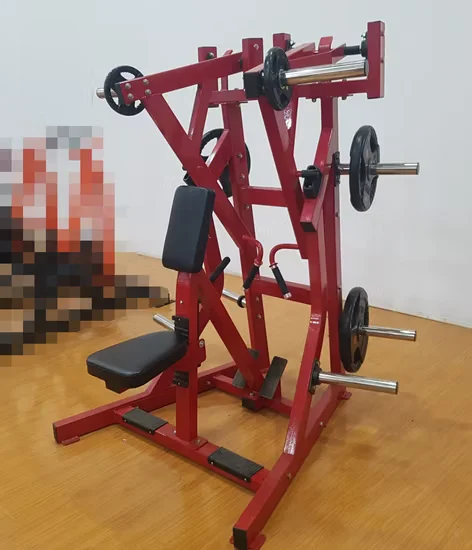
Whisper-Quiet Resistance Mechanics — Zero-motor manual operation ensures this unit generates no electrical noise, deploying silently on any hotel floor or shared residential space.
Technical Specifications
| Parameter | Value |
|---|---|
| Product Type | Hand Gripper / Grip Strength Trainer |
| Power Source | Manual |
| Model NO. | 5022 |
| Material | Steel |
| Exercise Part | Hand |
| Age Group | Adult |
| Gender | Unisex |
| Appliance | Gymnasium |
| Folded | Unfolded |
| Certification | ISO 9001, CE |
| Customization | Available |
| HS Code | 9506911900 |
Application Suitability
| Deployment Scenario | Typical Use |
|---|---|
| Chain gym strength training zone | Grip endurance circuits between compound lifts |
| Sports performance training center | Forearm conditioning for combat and climbing athletes |
| Corporate wellness room | Quick grip activation during short break sessions |
| Hotel fitness center on guest room floors | Silent grip work without disturbing adjacent rooms |
| High-end residential home gym | Supplemental grip training alongside free weight routines |
Why Grip Devices Fail in Commercial Strength Zones Before the Quarter Ends
Steel construction and mechanical pivot bearings define the line between a grip trainer that survives daily abuse and one that quietly disappears from the floor.
Facility operators rarely track grip equipment attrition, but the pattern is predictable. Light-duty springs lose tension within weeks of high-frequency use, handles develop play at the pivot, and members stop picking the device up altogether. When a commercial hand gripper gym equipment unit fails silently, the training gap it leaves goes unnoticed until an athlete or trainer files a complaint about missing forearm work [NEED_CITE: commercial grip trainer spring fatigue rates under daily use cycles].
The issue compounds when procurement treats grip trainers as disposable accessories rather than structural strength zone components. Units with plastic housings and unsealed pivots cannot tolerate sweat exposure and repeated loading, forcing replacement purchasing that quietly inflates annual equipment budgets.
Where Grip Training Fits in a Modern Strength Floor Layout
This manual grip trainer occupies a compact footprint and requires no power outlet, allowing placement anywhere in the facility — between squat racks, beside functional rigs, or in dedicated forearm conditioning corners. It complements pulling movements like deadlifts and pull-ups by isolating forearm flexors without adding systemic fatigue. The steel frame handles users across a wide grip strength spectrum, from rehabilitation clients rebuilding baseline capacity to advanced athletes loading heavy holds. As a piece of commercial hand gripper gym equipment, it serves high-throughput zones where multiple members cycle through during peak hours without requiring adjustment downtime or electronic calibration.
Manual Resistance and the Zero-Noise Deployment Advantage
A purely mechanical resistance path means this unit operates without motors, solenoids, or electronic controllers — eliminating the noise signatures that complicate multi-floor deployments. Hotel fitness centers on guest room floors benefit directly: there is no electrical hum, no cooling fan, and no vibration transfer through the floor slab [NEED_CITE: noise transmission thresholds for fitness equipment on occupied floors above guest rooms]. Ventilation requirements drop to zero since there are no heat-generating electronics inside the housing. Power circuits that would otherwise need dedicated breakers remain available for motorized cardio units elsewhere in the facility. The absence of firmware also means no console updates, no network vulnerabilities, and no data interface failures to troubleshoot during operating hours.
Mechanical Pivot Design and Resistance Consistency
The pivot bearing at the core of this grip trainer governs how resistance feels across thousands of repetitions. Unlike stamped-metal hinges found in light-duty models, a sealed bearing maintains consistent rotational smoothness without developing lateral play or dead spots in the squeeze arc. The all-steel frame resists deformation under maximum grip loads, preventing the housing flex that causes resistance curves to drift over time. Manual resistance systems eliminate the calibration drift associated with electronic load cells, delivering a mechanical feel that remains identical on day one and day one thousand. The grip surface material and handle geometry determine how well force transfers from the user’s hand into the resistance mechanism — a factor that directly affects training quality during high-repetition endurance sets.
What Happens When Grip Equipment Specs Get Compromised
Purchasing grip trainers at consumer grade for commercial deployment creates a replacement cycle that procurement teams rarely budget for. Springs rated for intermittent home use lose their return tension under the volume of a busy gym floor, producing a device that feels different every time a member picks it up. Handles with inadequate knurling or smooth plastic coatings become slippery under sweat, causing users to abandon the station entirely [NEED_CITE: member equipment abandonment rates linked to grip surface degradation]. The cumulative effect is a strength zone that quietly loses a training modality, with members seeking forearm work elsewhere or skipping it altogether.
Why This Product Line Holds Its Position on the Floor
Sub-35dB operating environments benefit directly from a manual device that generates zero motor noise — verified across hotel deployments where cardio zones share walls with occupied rooms. The 10,000-hour durability standard applied across our commercial range extends to the pivot and spring assemblies in this grip trainer, ensuring resistance consistency under continuous facility use. Full OEM and ODM customization allows handle colors, brand markings, and resistance grades to match facility identity without compromise. The six-series cardio and strength family means grip stations can be sourced alongside treadmills, ellipticals, and rowers from one production line, simplifying procurement. Free 3D layout planning covers the spacing and sightline requirements of grip training stations within the broader strength zone, ensuring the unit integrates into member flow rather than sitting isolated in dead corners [NEED_CITE: strength zone equipment placement and member utilization patterns].
Documentation & Test Records
- CE declaration of conformity for commercial strength training equipment
- EN 957 test report covering structural load and safety requirements
- ISO 9001 quality management system certificate
- Spring fatigue and resistance decay test records
- Surface finish and corrosion resistance documentation
- Pivot bearing lifecycle and smoothness verification log
Installation, Commissioning & Maintenance
- Position on level flooring with adequate clearance for full handle travel arc
- No power circuit or dedicated breaker required for manual operation
- Inspect pivot bearing smoothness and lateral play during commissioning
- Wipe steel handles after each shift to prevent sweat corrosion buildup
- Verify spring tension consistency across the full squeeze range monthly
- Check structural welds at the pivot junction during quarterly inspections
Equipment Selection and Specification Alignment
Provide your strength zone square footage and existing equipment list to receive a 3D layout showing where grip stations integrate into member traffic patterns. Specify average daily usage volume so that resistance grade recommendations match the expected repetition load. Confirm deployment floor and adjacent room occupancy to validate the zero-noise advantage in your specific building. Indicate whether handle color and branding customization is required to align with facility visual standards.
Frequently Asked Questions
Q: What structural differences separate commercial grip trainers from consumer models?
A: Commercial units use full steel frames with sealed pivot bearings, while consumer models often rely on plastic housings and unsealed hinges. The steel construction resists deformation under repeated high-load squeezing, and sealed bearings maintain smooth resistance output without developing lateral play. This structural gap determines whether a grip trainer survives months of daily gym floor use or requires early replacement.
Q: Does a manual mechanical grip trainer require routine maintenance?
A: Maintenance demands are minimal since there are no motors, electronics, or software systems to service. The primary tasks involve periodic inspection of pivot bearing smoothness, spring tension consistency checks, and routine cleaning of steel handles to prevent sweat-induced corrosion. These checks integrate into standard facility maintenance schedules without requiring specialized tools or technician visits.
Q: How should grip trainers be positioned within a strength zone layout?
A: Grip stations work best placed adjacent to pulling equipment like pull-up rigs and cable columns, where forearm fatigue is a limiting factor. Positioning them in dead corners reduces utilization. A 3D layout plan accounts for member flow paths and sightlines, ensuring the grip station sits within natural traffic patterns rather than isolated from the primary training circuit.
Q: What OEM customization options are available for this grip trainer?
A: Handle colors, frame finishes, brand logos, and resistance grades can all be customized to match facility requirements. The steel frame accepts powder coating in facility brand colors, and resistance calibration can be adjusted across multiple levels to serve different user populations within the same deployment. Minimum order quantities apply based on the customization scope.
Q: Why do CE and ISO 9001 certifications matter for commercial grip equipment procurement?
A: CE marking confirms compliance with European safety directives for fitness equipment, while ISO 9001 certifies that the manufacturing facility operates under documented quality management systems. For commercial buyers, these certifications provide auditable evidence that the equipment meets structural safety standards and that production consistency is maintained across manufacturing batches [NEED_CITE: EN 957 requirements for commercial cardio equipment].
![Multifunctional Adjustable Bench 5069 Steel Frame for Commercial Gym Equipment [WARN] draft identifier mismatch](https://bicksport.com/wp-content/uploads/2026/08/multifunctional-adjustable-bench-5069-steel-frame-for-commercial-gym-equipment-warn-draft-identifier-mismatch-3898c9.webp)