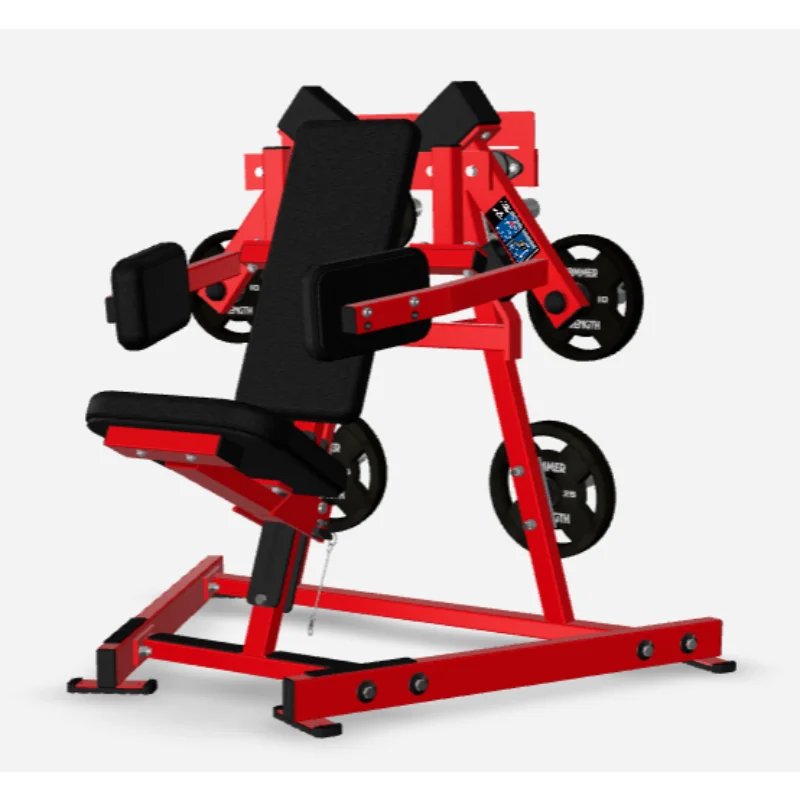
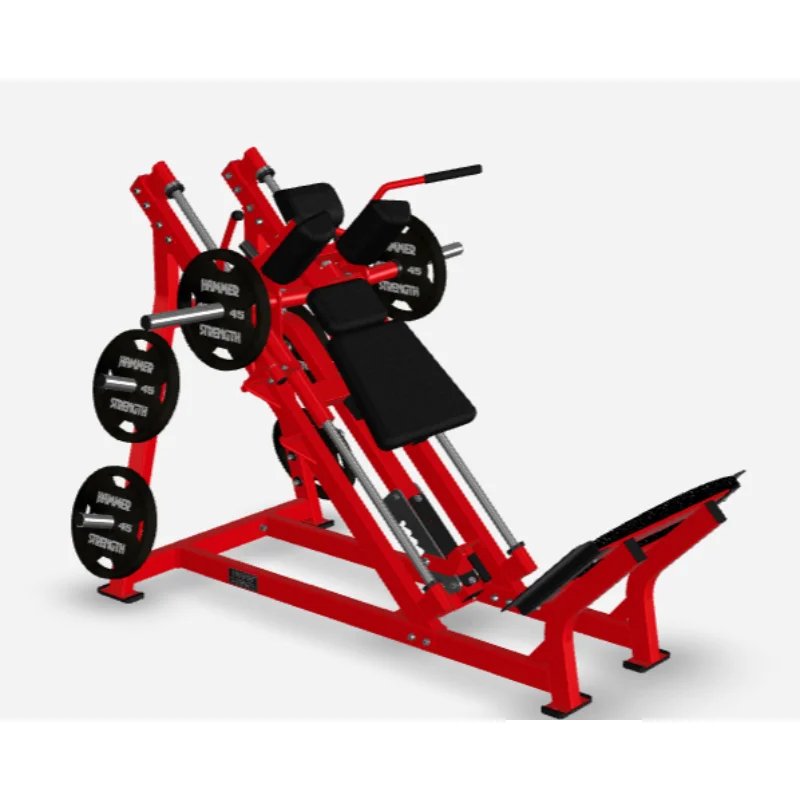
Steel Frame Rigidity — Plate Loaded Hammer Strength Seated Standing Shrug Machine delivers stable resistance under heavy loading for high-frequency commercial deployments.
Technical Specifications
| Parameter | Value |
|---|---|
| Product Type | Plate Loaded Strength Machine (Shrug) |
| Exercise Part | Arm |
| Resistance Type | Manual (Plate Loaded) |
| Material | Steel |
| Product Dimensions | 1060 × 1550 × 1190 mm |
| Net Weight | 86 kg |
| Folded | Unfolded |
| Age Group | Adult |
| Gender | Unisex |
| Appliance | Community, Gymnasium |
| Certification | ISO 9001, CE |
| Customization | Available |
| Production Capacity | 500 PCS/Month |
| Transport Package | Plywood Box |
Application Suitability
| Deployment Scenario | Typical Use |
|---|---|
| hotel fitness center strength corner | dual seated and standing shrug routines for guests with varied training preferences |
| chain gym free weight zone | high-frequency plate loaded shrug training alongside other hammer strength stations |
| corporate wellness room | compact plate loaded strength station for employees during short breaks |
| community fitness center | shared shrug machine accommodating members of different strength levels |
| sports performance training center | trapezius and upper back loading for athlete conditioning programs |
Why Frame Rigidity Separates Commercial Shrugs from the Rest
A warped frame under load turns a shrug station into a safety hazard.
When members load heavy plates on a plate loaded hammer strength shrug machine commercial, any torsional flex in the frame transfers directly into the handles and the user’s shoulder girdle. Over months of repeated loading cycles, marginal welds develop micro-cracks that compromise structural integrity long before visual inspection catches them. Facility operators then face emergency equipment swaps that leave training zones incomplete and members frustrated [NEED_CITE: EN 957 structural fatigue testing for plate loaded equipment]. The difference between a machine that holds its geometry under full load and one that deflects comes down to steel gauge, weld penetration depth, and the triangulation of the load path from handle grip to plate horn.
Positioning the Shrug Station Within the Strength Zone
The plate loaded hammer strength shrug machine commercial covers trapezius and upper-back loading in both seated and standing configurations, filling a gap that cable columns and free-weight barbells cannot replicate with the same movement isolation. In a typical strength floor layout, this unit sits between free-weight racks and the plate loaded lever row or lat pull stations, letting members progress through a pulling chain without crossing the gym. The dual-position design means one footprint serves two exercise variations, which matters when operators allocate square footage to each discipline. Users from lighter recreational members to heavier athletes load plates incrementally, so the station handles the full spectrum of a commercial membership without requiring selectorized weight stacks.
Continuous Loading Cycles and Floor Planning Requirements
A plate loaded shrug machine does not draw electrical current, but its deployment still demands attention to floor loading, member flow, and adjacent equipment spacing. The 1060 × 1550 mm footprint requires clearance on at least three sides for safe plate loading and unloading — operators should plan for plate storage racks or tree stands within reach so members are not carrying bumpers across the strength zone [NEED_CITE: commercial gym floor layout safety clearance standards]. Concrete subfloors must be level to prevent frame twist under asymmetric loading, and rubber flooring at least 15 mm thick absorbs the impact when members set loaded plates down beside the unit. Ventilation is less critical than on a cardio floor, but overhead air movement still matters in the free-weight zone where exertion levels are high and chalk dust circulates.
Decoding the Load Path and Structural Specifications
The 86 kg net weight of this plate loaded hammer strength shrug machine commercial signals a substantial steel frame rather than a lightweight tube assembly. Plate loaded equipment transfers force directly from the user through the handles and the pivot axis into the main uprights and base rails, so every joint in that load path must be fully welded rather than bolted. The manual resistance system means there is no cable, pulley, or selectorized pin mechanism to maintain — the only wear points are the pivot bushings and the plate horn sleeves. Steel gauge selection determines how much the frame deflects under maximum loading; commercial-grade units typically use rectangular tube with wall thickness sufficient to prevent visible flex during heavy shrug sets. The seated and standing positions share the same main upright, so the frame must resist bending moments from two different force vectors without compromise.
The Hidden Cost of Underspecified Strength Stations
Operators who source plate loaded shrug machines on net weight alone discover the consequences within the first year of commercial use. Lightweight frames that save on shipping cost begin to develop visible weld cracks at the pivot and handle junctions, forcing warranty claims that leave training zones short a station. Handles with inadequate knurling or poor grip diameter cause members to grip harder than necessary, shifting load away from the trapezius and into forearm fatigue — members then abandon the machine and the operator is left wondering why utilization numbers are low [NEED_CITE: member retention correlation with equipment usability in commercial gyms]. When the plate horns are too short to accommodate a full set of bumper plates, members stack plates insecurely, creating a drop hazard that exposes the facility to liability.
Why This Product Line Holds Up Under Commercial Demand
Every unit from this cardio and strength manufacturing line undergoes the same structural validation regardless of discipline, and the plate loaded hammer strength shrug machine commercial benefits from that shared quality discipline. The ISO 9001-certified production process controls weld penetration and frame alignment from raw tube cutting through final assembly. The dual seated and standing configuration was engineered to give operators one footprint that covers two movement patterns, which directly reduces per-discipline square footage costs on the strength floor. OEM customization extends to powder coat color and logo placement, so the shrug station can match the rest of a facility’s plate loaded family visually. The 3D layout service covers strength zone flow and plate storage positioning alongside cardio zone planning, so the entire floor comes together in a single review cycle. Technical support responds around the clock for commissioning questions and spare part coordination.
Documentation & Test Records
- CE declaration of conformity covering the full plate loaded strength range
- EN 957 structural and safety test report for plate loaded shrug configuration
- ISO 9001 quality management system certificate for manufacturing facility
- Frame weld inspection and load test record per unit batch
- Material specification sheet detailing steel grade and tube dimensions
- Spare parts list covering pivot bushings, plate horns, and grip sleeves
Installation, Commissioning & Maintenance
- Position the 1060 × 1550 mm footprint with at least 800 mm clearance on three sides for plate handling
- Level the steel base frame on concrete subfloor using adjustable feet before bolting to rubber matting
- Inspect all pivot bushings and plate horn welds after the first 30 days of commercial use
- Wipe down knurled handles and steel uprights daily to prevent sweat-induced corrosion
- Re-grease pivot bearings every six months under continuous high-frequency gym operation
- Verify plate horn sleeve diameter matches the facility’s standard Olympic plate bore size
Requesting a Strength Zone Equipment Match
Provide your strength floor square footage and the list of existing plate loaded stations so we can map where this shrug machine fits within the pulling movement chain. Specify whether your membership profile skews toward seated or standing preference to confirm the dual-position design serves both segments. Share the target market so plate horn dimensions align with locally sourced bumper and iron plate standards. Confirm whether powder coat color and logo customization are needed to match the rest of your plate loaded family.
Frequently Asked Questions
Q: What is the difference between plate loaded and selectorized shrug machines?
A: Plate loaded shrug machines require members to add and remove weight plates manually, offering unlimited incremental loading without the cost and maintenance of a selectorized weight stack and cable system. Selectorized units provide faster weight changes but cap maximum resistance and introduce pulley wear points. Commercial facilities with experienced lifters typically prefer plate loaded for its simplicity and higher load ceiling.
Q: How should I plan floor space for a plate loaded shrug station?
A: The 1060 × 1550 mm footprint requires surrounding clearance for safe plate loading and member movement. Plan for a plate storage tree or rack within arm’s reach so members do not carry heavy plates across the strength zone. Allow at least 800 mm on three sides, and position the station near other plate loaded units to concentrate heavy loading in one reinforced floor area.
Q: What maintenance does a plate loaded shrug machine require in a commercial gym?
A: Maintenance focuses on the pivot bushings, plate horn sleeves, and handle surfaces. Inspect weld joints monthly for stress cracks, re-grease pivot points every six months, and wipe down steel surfaces daily to prevent sweat corrosion. Unlike selectorized or cable-based equipment, there are no pulleys, belts, or weight stack guide rods to service, which keeps ongoing maintenance costs minimal.
Q: Can this shrug machine be customized to match existing plate loaded equipment?
A: OEM customization covers powder coat color, logo application, and grip material selection to match a facility’s existing plate loaded strength family. Console customization does not apply to manual plate loaded units, but the visual finish and branding can be aligned with the rest of the line so the strength floor presents a unified appearance to members and visitors.
Q: How do seated and standing positions on one machine affect training programming?
A: The dual-position design lets members perform shrugs in both configurations without moving to a second station, which reduces congestion in the free-weight zone during peak hours. Seated shrugs isolate the upper trapezius with less lower-body involvement, while standing shrugs engage the full posterior chain. Operators benefit from offering both movement options within a single equipment footprint.
![Commercial Adjustable Bench Gym Equipment for Professional Gym and Club Use [WARN] draft identifier mismatch](https://bicksport.com/wp-content/uploads/2026/08/commercial-adjustable-bench-gym-equipment-for-professional-gym-and-club-use-warn-draft-identifier-mismatch-58d3ea.webp)