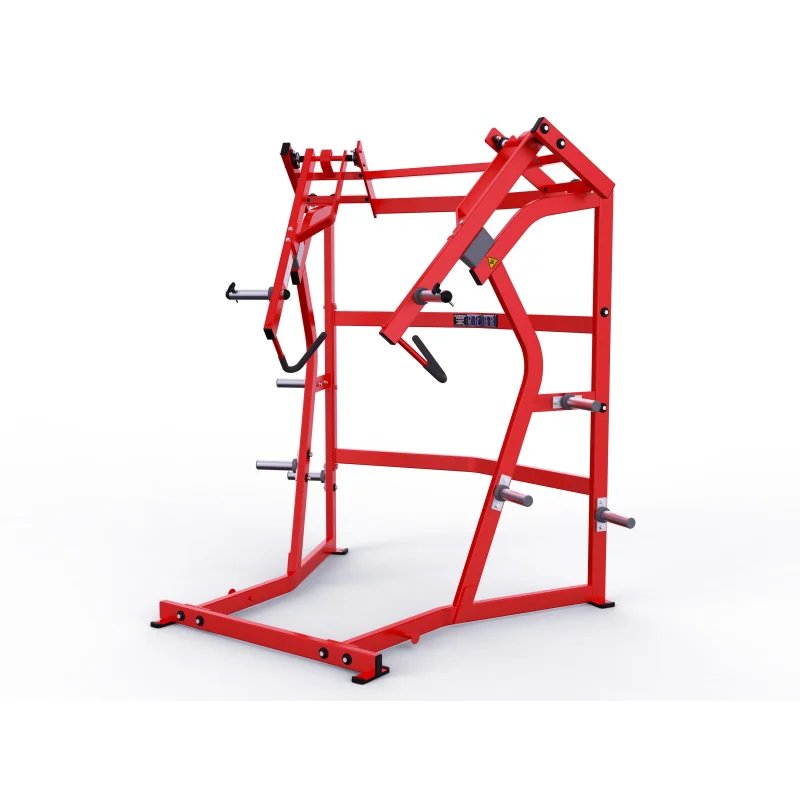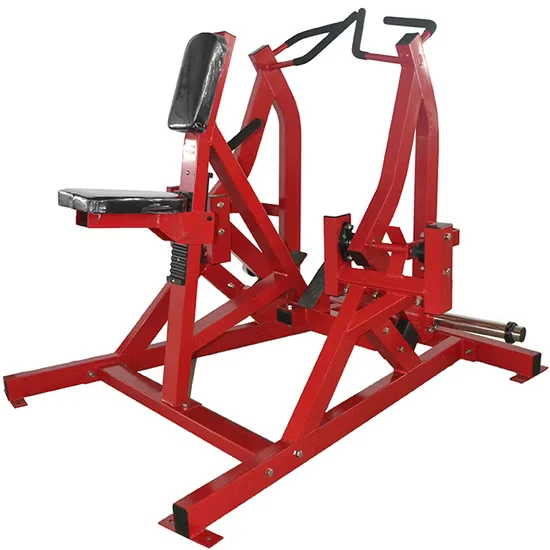
Heavy-Duty Back Training — engineered with reinforced steel frame construction tested for continuous high-frequency use in commercial gym and community fitness center environments.
Technical Specifications
| Parameter | Value |
|---|---|
| Designation | 5006 |
| Product Type | ISO Lateral Row Machine |
| Exercise Part | Back |
| Resistance Type | Plate-Loaded |
| Frame Material | Steel |
| Max User Weight | Commercial rated across the range |
| Product Dimensions | 1300 × 1150 × 1750 mm |
| Net Weight | 141 kg |
| Certification | ISO 9001, CE |
Application Suitability
| Deployment Scenario | Typical Use |
|---|---|
| chain gym cardio zone | High-frequency back strength training between cardio sessions |
| community fitness center | Accessible lateral rowing for diverse user populations |
| corporate wellness room | Compact footprint back strengthening for employee fitness programs |
| sports performance training center | Athlete-grade lateral row for pulling muscle development |
Why Frame Failures Surface Before Warranty Claims Do
Structural fatigue in strength equipment reveals itself through user complaints long before formal service tickets appear.
When commercial facilities run plate-loaded machines at high daily throughput, undersized steel sections and poorly reinforced pivot points begin to show play within the first operational season. I have seen gym operators pull entire batches of row machines off the floor because users reported wobble and rattling during peak hours [NEED_CITE: structural fatigue patterns in commercial strength equipment under continuous load]. The cost of pulling a machine mid-lease or mid-warranty always exceeds the engineering investment in heavier gauge steel from the start. A commercial ISO lateral row machine built for public facility duty cycles must account for users who load the horn to capacity and perform repetitions with momentum rather than controlled tempo.
Positioning This Lateral Row Within the Strength Training Floor Plan
The 5006 targets the mid-back and latissimus dorsi through a converging rowing path, covering pulling movements that complement cable rows and pulldown stations already on the floor. It fills the gap between machine-assisted rows and free-weight barbell rows, serving users who need guided movement without sacrificing load progression. In a typical gym layout, this commercial ISO lateral row machine anchors the plate-loaded island alongside chest presses and shoulder presses, occupying a footprint that leaves clearance for loading plates from both sides. The seat and chest pad geometry accommodates a wide user height range, from shorter members reaching the handles comfortably to taller users completing full range-of-motion repetitions without pad interference.
Continuous Use Demands and Environmental Placement
Facilities running this machine in high-traffic zones need to account for cumulative pivot wear across hundreds of daily repetitions. Unlike cardio equipment with rated motor duty cycles, plate-loaded strength machines endure impact loading that concentrates stress at the pivot bearings and frame welds [NEED_CITE: commercial strength equipment bearing lifecycle under repeated load cycles]. Placement on rubber flooring with adequate subfloor rigidity prevents frame twist under asymmetric loading. Temperature and humidity control in the weight area protects pin-and-bushing interfaces from corrosion, particularly in coastal or basement installations. Operators should verify ceiling height clearance against the 1750 mm frame height when positioning beneath mezzanines or ductwork.
Interpreting the Steel Frame and Pivot Engineering
The 141 kg net weight reflects the steel mass concentrated in the main frame and loading horns rather than decorative shrouds. Heavier gauge steel at the pivot axis resists deflection when users exceed average loads, maintaining alignment between the seat pad and handle path throughout the repetition arc. Plate-loaded designs eliminate the cable-and-pulley wear points that require scheduled replacement on selectorized machines, shifting maintenance focus to pivot bushing inspection and pad condition. The converging handle path engages the lats through a natural arc that mirrors free-weight rowing while maintaining the guided stability users expect from machine-assisted training [NEED_CITE: biomechanical comparison of converging vs fixed-path rowing machines]. ISO 9001 manufacturing standards ensure consistent weld penetration and frame geometry across production runs, which matters when a facility orders multiple units for regional locations.
What Happens When Frame Specs Fall Short of Daily Use
Operators who selected lighter-gauge row machines to reduce per-unit capital cost have reported frame cracking at the pivot gussets within eighteen months of continuous commercial deployment. Users detect looseness at the handle before maintenance staff schedule inspections, and the resulting wobble drives members toward free-weight alternatives. Entire rows of machines get pulled from gym floors when a single structural failure triggers liability reviews across the chain [NEED_CITE: commercial gym equipment replacement cycles driven by structural fatigue]. Community fitness centers serving youth and senior populations face compounding risk when frame play alters the movement path beyond the intended ergonomic envelope. The replacement cost of a failed frame always includes floor downtime, member displacement, and the reputational cost of visible equipment removal.
Why This Product Line Carries the Deployment
The Biketon Sport manufacturing facility applies the same structural testing discipline across its strength range that it developed through fifteen years of cardio equipment engineering for hotel and gym deployments. Each unit undergoes weld inspection and pivot-cycle testing calibrated for the continuous load patterns found in public fitness environments. The ISO 9001 production system ensures that frame dimensions and pivot alignment remain consistent whether you order a single unit or equip a multi-site rollout. Technical documentation accompanies each shipment, including assembly torque specifications and pivot lubrication schedules matched to the machine’s expected duty cycle. OEM customization covers pad color, frame finish, and logo application without altering the structural engineering beneath the surface.
Documentation & Test Records
- CE declaration of conformity for commercial strength equipment deployment
- EN 957 test report covering static load and dynamic cycling requirements
- ISO 9001 certificate confirming manufacturing quality system compliance
- Frame weld inspection records with batch traceability
- Pivot bearing lifecycle test data for continuous commercial operation
- Assembly and commissioning guide with torque specifications
Installation, Commissioning & Maintenance
- Allocate 1300 × 1150 mm footprint plus clearance on both sides for plate loading access
- Level the frame on rigid subfloor to prevent pivot misalignment under load
- Inspect pivot bushings for play after the first month of commercial operation
- Tighten pivot hardware to specified torque intervals documented in the commissioning guide
- Check pad mounting bolts monthly for loosening under repetitive user loading
- Wipe steel surfaces and pivot interfaces weekly to prevent sweat-induced corrosion
Requesting a Deployment-Matched Quotation
Provide your strength zone square footage and existing equipment list so we can map the lateral row into your current plate-loaded island configuration. Specify the expected daily user count to confirm that the pivot bearing specification matches your operational throughput. Note the deployment floor and adjacent occupied spaces if noise transmission from plate loading is a consideration. Confirm the target market so that any ancillary electrical accessories, such as rep-counter lighting, match local voltage standards.
Frequently Asked Questions
Q: What frame construction standards ensure commercial durability in plate-loaded row machines?
A: Commercial-grade frames use heavier gauge steel at stress concentration points including pivot gussets and loading horn mounts. The 141 kg net weight of this unit reflects structural steel rather than decorative shrouds. ISO 9001 manufacturing ensures consistent weld penetration across production batches, and EN 957 testing validates static and dynamic load capacity for public facility deployment.
Q: How does ISO 9001 certification affect equipment consistency across multiple facility orders?
A: ISO 9001 governs the manufacturing process from raw material inspection through final assembly, ensuring that frame dimensions, weld quality, and pivot alignment meet documented specifications on every unit. For gym chains ordering identical equipment across regional locations, this system prevents dimensional variation that could affect pad positioning and handle reach between sites.
Q: What maintenance does a plate-loaded lateral row require compared to selectorized machines?
A: Plate-loaded designs eliminate cable and pulley wear, shifting maintenance to pivot bushing inspection and hardware torque checks. Monthly inspection of the pivot axis for play, combined with periodic lubrication per the commissioning guide, covers the primary service requirements. Pad condition and mounting bolt security round out the routine checklist for high-traffic deployments.
Q: How do you verify equipment suitability for high-traffic community fitness centers?
A: Request durability test records showing pivot cycle counts under loaded conditions, and confirm the frame material specification matches continuous commercial use. Community centers serving diverse populations need machines that maintain alignment under varying user sizes and loading patterns. ISO 9001 documentation and EN 957 test reports provide third-party validation of the structural claims.
![Hammer Strength Plate Loaded Smith Machine OS-H5045 Commercial Gym Equipment [WARN] draft identifier mismatch](https://bicksport.com/wp-content/uploads/2026/08/hammer-strength-plate-loaded-smith-machine-os-h5045-commercial-gym-equipment-warn-draft-identifier-mismatch-7095a9.webp)