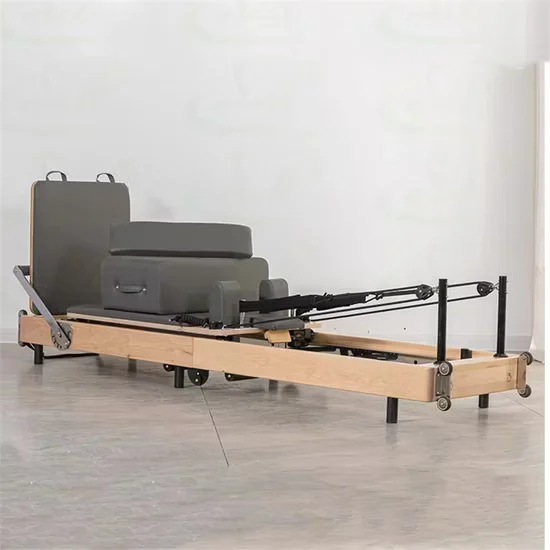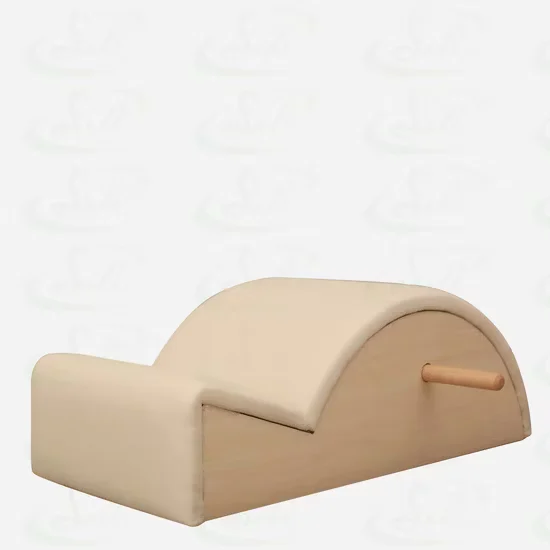
Self-Anchoring Mass — The 20kg solid wood frame eliminates floor-borne vibration during dynamic spinal articulation, verified in multi-tenant wellness facility deployments.
Technical Specifications
| Parameter | Value |
|---|---|
| Product Type | Pilates Spine Corrector |
| Dimensions | 960470360mm |
| Net Weight | 20kgs |
| Construction | Solid Wood |
| Finish | Solid Color |
| Accessory Compatibility | Long Box, Jump Board, Platform |
| User Profile | Adult, Unisex |
| Logo | Customized Is Allowed |
| Warranty | 3 Years |
Application Suitability
| Deployment Scenario | Typical Use |
|---|---|
| Pilates and reformer studio | Spinal articulation sequences integrated into group or private sessions |
| Physical therapy and rehabilitation clinic | Controlled thoracic and lumbar extension during recovery protocols |
| Boutique fitness and wellness center | Dedicated mobility station complementing reformer and mat zones |
| High-end residential home gym | Compact footprint mobility work in shared living spaces |
Why Vibration Complaints Surface Before Equipment Failure Does
Structural mass eliminates resonance where lightweight barrels amplify it.
Lightweight or hollow-core Pilates barrels shift on hard studio floors during dynamic movements. The resulting floor-borne vibration travels through ceiling assemblies to occupied rooms below. In multi-tenant wellness facilities, these disturbances generate complaints long before any structural component fails [NEED_CITE: structural acoustics for fitness equipment on suspended floors]. A commercial Pilates spine corrector wooden back barrel must anchor itself through mass rather than fasteners.
Mobility Station Positioning in a Pilates Studio Layout
This unit addresses thoracic and lumbar extension across full articulation ranges. In a reformer-dominant studio, it functions as a dedicated mobility station between apparatus-based sessions. The footprint accommodates placement against walls or between reformers without disrupting member circulation paths. Users ranging from beginners to advanced practitioners find consistent support through the ergonomic arc profile.
Continuous Deployment Without Floor Penetration
Daily studio rotations demand equipment that remains stationary under repetitive loading. The 20kg net weight provides self-anchoring stability on hardwood, vinyl, and rubber flooring without bolts or adhesive pads [NEED_CITE: commercial fitness equipment stability standards for leased spaces]. No electrical requirements eliminate dedicated circuit planning. Ambient humidity and temperature fluctuations in wellness environments require wood finishes that resist dimensional changes.
Solid Wood Density and Resonance Control
Engineered wood and hollow-core alternatives transmit impact energy directly to floor assemblies. Solid wood construction absorbs dynamic loads through material density, converting kinetic energy into negligible thermal dissipation. The 20kg mass distributes point loads across the base footprint, preventing concentrated pressure on floating floor systems. This approach preserves flooring integrity in leased facilities where permanent modifications violate lease terms.
The Hidden Cost of Substituting Engineered Wood
Engineered wood barrels delaminate under repetitive moisture exposure from sweat and cleaning protocols. Hollow-core designs amplify floor-borne noise through internal air cavities. Facilities that initially purchased lighter alternatives frequently report replacement cycles measured in months rather than years [NEED_CITE: material degradation rates for Pilates equipment in high-turnover studios]. The procurement cost difference narrows when annualized across deployment lifespan.
Why This Product Line Addresses Deployment Friction
The solid wood mass approach derives from years resolving noise complaints in hotel fitness centers above guest room floors. Six complete cardio series allow facilities to source every discipline from one production line with consistent material standards. OEM customization covers logo placement and solid color finish without compromising structural specifications. Free 3D cardio-zone layout planning addresses airflow and member circulation specific to this unit’s footprint requirements. Technical support response covers structural warranty claims during the 3-year coverage period.
Documentation & Test Records
- CE declaration of conformity for commercial Pilates apparatus
- EN 957 test report covering structural load and stability
- ISO 9001 certificate for manufacturing process control
- Noise level test report for floor-borne vibration transmission
- Durability test record under repetitive dynamic loading cycles
- Wood species and finish specification sheet
Installation, Commissioning & Maintenance
- Position on level flooring with 500mm clearance on all sides for user access
- Verify floor load capacity supports 20kg static weight plus dynamic user loading
- Inspect wood finish integrity upon delivery; report transit damage before deployment
- Clean surfaces with pH-neutral cleaners; avoid solvent-based products that degrade wood finish
- Inspect arc padding adhesion quarterly; reattach loose edges before they propagate
- Rotate unit position annually to distribute wear patterns across studio traffic zones
Equipment Selection and Deployment Planning
Provide studio square footage and equipment inventory to receive 3D layout with airflow planning. Specify deployment floor level and adjacent occupied spaces to confirm vibration transmission requirements. Clarify target market wood finish preferences and logo placement specifications. State whether accessory bundling with long box, jump board, or platform is required for integrated programming.
Frequently Asked Questions
Q: How does solid wood compare to engineered wood for commercial Pilates equipment longevity?
A: Solid wood resists delamination under repetitive moisture exposure from sweat and cleaning protocols. Engineered alternatives separate at adhesive layers when subjected to humidity fluctuations in high-turnover studios. The structural integrity difference becomes apparent within months of deployment, particularly in facilities operating extended hours with continuous class schedules.
Q: What role does unit weight play in floor protection for shared studio spaces?
A: The 20kg mass distributes dynamic loading across the base footprint without concentrated pressure points. This prevents indentation on vinyl and rubber flooring while eliminating fastener requirements that violate lease terms. Lighter units shift during use, creating friction damage and floor-borne noise transmission to occupied spaces below.
Q: How does the arc profile affect spinal support range across different user sizes?
A: The 960470360mm dimensions provide consistent thoracic and lumbar extension support for adult anthropometry ranges. The curvature radius accommodates beginners requiring gentle mobilization and advanced practitioners performing deeper articulation sequences. Incorrect arc geometry concentrates pressure on specific vertebrae rather than distributing support across the full spinal column.
Q: What customization options exist for logo placement and finish color?
A: Logo application covers visible frame surfaces without compromising structural integrity or creating moisture ingress points. Solid color finish options use sealants compatible with commercial cleaning protocols and sweat exposure. Customization scope includes finish selection to match studio aesthetics while maintaining the protective properties required for high-turnover deployment environments.
Q: What maintenance does the wood finish require in high-humidity environments?
A: pH-neutral cleaners preserve finish integrity without degrading protective sealant layers. Quarterly inspections identify moisture damage or finish wear before structural wood becomes exposed. Facilities in tropical climates or spaces with inadequate ventilation should increase inspection frequency to prevent dimensional changes that affect arc geometry stability.
![Pilates Equipment Studio Essence Black Aluminum Reformer Machine [WARN] draft identifier mismatch](https://bicksport.com/wp-content/uploads/2026/08/pilates-equipment-studio-essence-black-aluminum-reformer-machine-warn-draft-identifier-mismatch-2dda82.webp)
![Hot Selling Maple Wood Pilates Reformer Bed Machine for Pilates Studio [WARN] draft identifier mismatch](https://bicksport.com/wp-content/uploads/2026/08/hot-selling-maple-wood-pilates-reformer-bed-machine-for-pilates-studio-warn-draft-identifier-mismatch-4f3601.webp)
![Commercial Beech Wood Pilates Reformer Machine for Home & Studio Use [result]Commercial Beech Wood Pilates Reformer Machine for Home & Studio Use[/result]](https://bicksport.com/wp-content/uploads/2026/08/commercial-beech-wood-pilates-reformer-machine-for-home-studio-use-resultcommercial-beech-wood-pilates-reformer-machine-for-home-studio-use-result-c5fa52.webp)