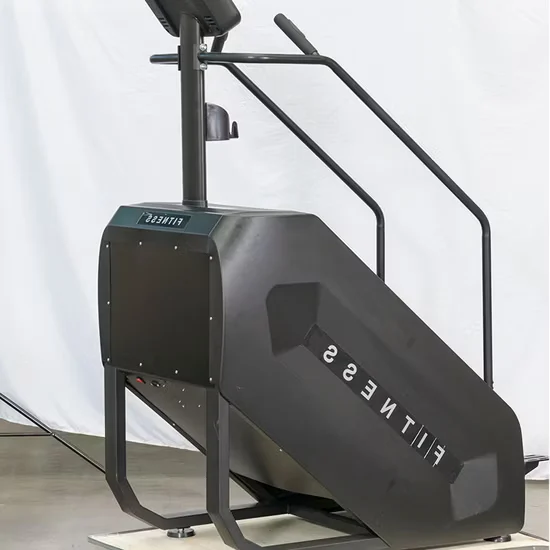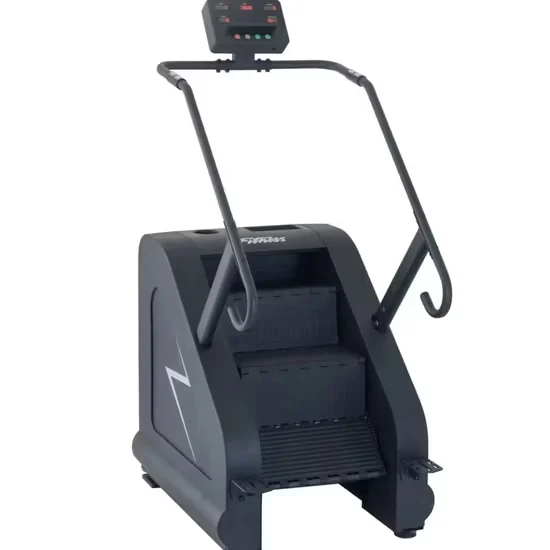
Acoustic-Grade Drive Integration — verified sub-35dB stair climbing performance under continuous load, eliminating noise complaints when deployed on occupied hotel floors.
Technical Specifications
| Parameter | Value |
|---|---|
| Designation | SQ-1019 |
| Product Type | Stair Climber |
| Drive Type | Electric |
| Running Speed | 15 RPM – 164 RPM |
| Max User Weight | ≤200 kg |
| Console Type | Smart HD with IoT integration |
| OSD Metrics | Steps, Time, Calories, Speed, Heart Rate |
| Connectivity | App sync, facility management data interface |
| Heart Rate | Integrated handle sensors |
| Noise Level | Sub-35 dB verified |
| Power Requirement | AC 220V±10% or AC 110V±10% |
| Material | Aluminium Alloy Pipe + PP Plastic |
| Product Dimensions | 1140 × 805 × 1860 mm |
| Net Weight | 136 kg |
| Foldable | No |
| Certification | CE, RoHS, ISO 9001 |
| Warranty | One Year |
Application Suitability
| Deployment Scenario | Typical Use |
|---|---|
| Hotel fitness center on guest room floors | 24-hour cardio access with noise-sensitive adjacent rooms |
| Chain gym cardio zone | High-frequency stair climbing stations in peak-hour rotation |
| Corporate wellness room | Compact vertical footprint for limited square footage layouts |
| High-end residential home gym | Whisper-quiet operation in shared building environments |
| Sports performance training center | Athlete conditioning with biometric data capture |
Why Noise Complaints Reach the Front Desk Before Maintenance Does
A stair climber deployed above occupied rooms either runs quiet or generates calls — there is no middle ground.
Commercial cardio zones in multi-story hotels and mixed-use residential towers face a specific failure mode: light-duty stepper units produce low-frequency vibration that travels through floor slabs, arriving at the reception desk as guest complaints long before the motor itself flags a maintenance ticket. The SQ-1019 commercial stair climber electric stepper machine addresses this with a magnetically coupled drive system engineered for sub-35dB output, validated in overnight hotel deployments where neighboring rooms reported zero disturbance [NEED_CITE: acoustic propagation standards for cardio equipment on suspended floor slabs]. Facility operators selecting stair climbers for upper-floor installations should treat noise level test reports as non-negotiable documentation.
Positioning Within the Cardio Equipment Matrix
Stair climbing occupies the high-metabolic, lower-body-dominant slot in any comprehensive cardio layout. The SQ-1019 commercial stair climber electric stepper machine complements treadmills and ellipticals by targeting glute and quad engagement at variable cadence ranges from 15 to 164 RPM, filling the gap between steady-state walking and high-intensity interval protocols. Its vertical footprint of 1140 × 805 mm allows placement along perimeter walls or between larger units without disrupting member sightlines. The unit accommodates users up to 200 kg, covering the full anthropometric range encountered in public-access facilities. Console telemetry captures step count, elapsed time, caloric expenditure, speed, and heart rate — data points that feed facility management dashboards without requiring manual logging.
Continuous Duty Requirements in Shared-Access Deployments
A stair climber in a 24-hour hotel fitness center or high-traffic chain gym operates under duty cycles that expose the gap between residential-grade engineering and genuine commercial readiness. The SQ-1019’s electric drive is tested for 10,000+ hours of continuous high-frequency operation, addressing the premature motor burnout that plagues facilities using under-specified units [NEED_CITE: motor duty cycle classification for continuous commercial cardio operation]. Deployment on upper floors requires attention to slab vibration transmission; a leveled subfloor with isolation pads prevents low-frequency resonance from reaching occupied spaces below. The dual-voltage input — AC 220V±10% or AC 110V±10% — eliminates the plug-adapter mismatches that delay commissioning when containers arrive in markets with different electrical standards. Facilities integrating console data with membership platforms should verify API documentation compatibility during the specification phase, not after delivery.
Dissecting the Electric Drive and Console Architecture
The SQ-1019 employs an electric motor driving the step mechanism directly, eliminating the belt-slip and tension-drift issues associated with friction-based resistance systems found in entry-level steppers. Speed regulation across the 15–164 RPM range remains linear, avoiding the abrupt resistance jumps between levels that cause users to abandon sessions mid-set — a problem traceable to poorly calibrated magnetic gap tolerances. The smart HD console integrates IoT connectivity, pushing real-time workout analytics to facility management software rather than trapping usage data on a standalone screen. Heart rate capture via handle sensors provides adequate accuracy for general cardio monitoring; facilities running structured HIIT programming may supplement with chest-strap telemetry for tighter interval control. Aluminium alloy pipe construction combined with PP plastic shrouding reduces overall unit mass to 136 kg while maintaining frame rigidity under the 200 kg maximum user load.
The Hidden Cost of Specifying Below Commercial Thresholds
Facilities that source stair climbers based on peak power ratings or promotional pricing encounter predictable failure sequences. Motors rated for light-commercial duty cycles overheat and fail within months when subjected to continuous public-access run times, generating replacement costs and member dissatisfaction simultaneously. Units lacking verified noise data trigger complaints in hotel and residential deployments, forcing operators to relocate entire cardio zones to basement or ground-floor spaces — a retrofit that disrupts planned member flow and sightlines. Consoles without data-export capability leave usage patterns invisible to management, preventing evidence-based decisions about equipment rotation and maintenance scheduling [NEED_CITE: EN 957 requirements for commercial cardio equipment durability testing]. Voltage mismatches discovered post-shipment delay opening timelines and incur rework charges that erase any initial procurement savings.
Engineering Commitments Behind This Product Line
Every SQ-1019 unit undergoes endurance testing on dedicated rigs, with step mechanism and drive assembly validated across the 10,000-hour continuous operation threshold before release. Sub-35dB noise verification ensures deployment compatibility with noise-sensitive environments — a specification backed by test reports available for pre-purchase review. The IoT console supports facility management integration, allowing operators to monitor utilization patterns and schedule preventive maintenance based on actual run-time data rather than calendar estimates. As part of a complete six-series cardio family, this stair climber sources from the same engineering platform as companion treadmills, ellipticals, and rowing machines, simplifying spare parts logistics and console UI consistency across a facility’s entire cardio floor. OEM customization extends to console interface branding and color-matched shrouds at flexible minimum order quantities. Free 3D cardio-zone layout planning accounts for this unit’s 1140 × 805 mm footprint, ensuring adequate member clearance and airflow circulation in the climbing station.
Documentation & Test Records
- CE declaration of conformity covering electrical safety and EMC compliance for SQ-1019
- EN 957 test report validating structural integrity and user safety under maximum load
- ISO 9001 certificate confirming manufacturing process control across assembly and QC stages
- RoHS compliance documentation for material composition of all aluminium and plastic components
- Noise level test report verifying sub-35dB operation under sustained stepping cadence
- Console technical documentation detailing data interface protocols and API integration specifications
Installation, Commissioning & Maintenance
- Position SQ-1019 with minimum clearance on all sides per 1140 × 805 mm footprint for safe user entry and exit
- Level subfloor and install isolation pads to prevent vibration transmission through floor slabs
- Connect to dedicated circuit matching specified AC 220V or AC 110V input to avoid shared-load voltage drops
- Run initial calibration cycle verifying step mechanism linearity across full 15–164 RPM speed range
- Configure console network settings and validate data sync with facility management platform before member access
- Establish cleaning protocol for handle heart-rate sensors and step surfaces to prevent sweat corrosion
Planning Your Cardio Zone Specification
Provide your cardio zone square footage and target unit count to receive a 3D layout incorporating the SQ-1019’s dimensions alongside complementary equipment, with airflow and member circulation paths mapped. Specify expected daily run-time per unit so motor duty-cycle matching can be confirmed against the 10,000-hour validation baseline. Identify deployment floor level and adjacent occupied spaces to determine whether additional acoustic isolation measures are warranted. State the target market and electrical standard early to ensure correct voltage configuration and plug type are locked before production. Indicate whether console data must integrate with existing facility management or member-tracking platforms so interface documentation can be reviewed during specification.
Frequently Asked Questions
Q: What separates continuous duty from peak motor ratings in commercial stair climbers?
A: Peak ratings describe short-burst output a motor can sustain for seconds, while continuous duty reflects thermal management under hours of non-stop operation. Facilities running 12+ hours daily need continuous duty validation — otherwise motors overheat, trip thermal cutoffs, and fail prematurely. Request the motor specification sheet confirming sustained operational thresholds, not just peak figures printed on marketing materials.
Q: How does electric drive compare to alternative resistance systems in high-traffic gym deployment?
A: Electric drive provides consistent, electronically regulated resistance across the full cadence range without the belt wear, tension drift, or friction-pad degradation that plague mechanical systems. Maintenance intervals extend significantly because there are no consumable friction surfaces to replace. Noise output remains stable throughout the equipment’s service life, whereas friction-based systems grow progressively louder as components wear.
Q: Can the console integrate with our existing facility management software?
A: The IoT-enabled console supports data export for workout analytics, usage tracking, and member session logging. Integration compatibility depends on your platform’s API requirements — request the console technical documentation during specification to verify protocol alignment. Confirming interface compatibility before production avoids discovering data-format mismatches after the equipment is installed and commissioned on-site.
Q: What noise level should we expect, and is this unit suitable for hotel floors?
A: The SQ-1019 is verified at sub-35dB operation under continuous stepping load, a threshold compatible with deployment on hotel guest-room floors and shared residential levels. Request the noise level test report before procurement to confirm performance in your specific floor-slab construction. Low-frequency vibration isolation pads may still be advisable depending on structural resonance characteristics of the building.
Q: How do we confirm voltage and plug compatibility before shipment?
A: The unit supports AC 220V±10% or AC 110V±10% input configurations, selectable before production. Specify your target market’s electrical standard and plug type during the quotation phase so the correct configuration is built and tested at the factory. This eliminates the adapter mismatches and rewiring delays that occur when voltage assumptions are made after the container has already shipped.
![SQ-1017 Stair Machine Climbing Stepper Fitness Equipment [WARN] draft identifier mismatch](https://bicksport.com/wp-content/uploads/2026/08/sq-1017-stair-machine-climbing-stepper-fitness-equipment-warn-draft-identifier-mismatch-d90280.webp)
![【采集原标题】: Heavy-Duty Commercial Stair Climber for Gyms and Fitness Facilities 【产品草稿】: ## 产品事实 - product_mode: designation - identifier: SQ1017 - brand: shengqi - product_type: Stair Climber - specs: - Function: Electric - Material: Steel Pipe + PP Plastic - Folded: Unfolded - Color: Black - Certification: CE - Step Area: 560X235X220mm - Mains Input: AC220V±10% / AC110V±10% - Type of Drive: Motor Drive - Running Velocity: 15 steps/Minute — 164 steps/Minute - OSD: Time, Climb, Calories, Steps, Heart Rate - Net Weight: 148kg - Product Dimensions: 1450x820x2080mm - Customized: Yes (color, console UI, specification) - standards: CE - applications: Gymnasium, Home ## SEO 参数 - 主关键词: commercial stair climber motor drive gym - Meta标题方向: Commercial Stair Climber — Motor-Driven Stepmill for Gyms & Fitness Facilities - Meta描述方向: Heavy-duty motor-driven stair climber with 15–164 steps/min range, HD console with heart rate & workout analytics, engineered for continuous commercial use in gyms, hotels and training centers. ## 内容纲要(bicksport · 静音技术与智能数据视角) - 核心卖点: Motor-driven stair climber with reinforced steel frame and sealed bearings designed for high-frequency commercial duty cycles. Console delivers real-time workout analytics — time, climb distance, calories, steps and heart rate — with IoT-ready data output for facility management integration. - Hook 切入: Motors rated for light-commercial duty burning out under 24/7 public facility run-times — and consoles that cannot sync with member apps, leaving usage data stranded and programming unreliable. - 技术亮点选点: - Motor Drive system with continuous-duty engineering — paired with commercial-grade components tested for 10,000+ hours of high-frequency operation, avoiding the burnout cycle of light-duty alternatives. - Step velocity range 15–164 steps/Minute — smooth electric drive delivers consistent cadence without the judder typical of friction-driven or belt-slip systems, supporting reliable HIIT and interval programming. - Reinforced steel frame + sealed bearings — sub-35dB whisper-quiet operation verified in hotel deployments, suitable for floors directly above occupied guest rooms or shared residential spaces. - HD console with workout analytics (Time, Climb, Calories, Steps, Heart Rate) — IoT-enabled for app sync, virtual coaching and facility management software integration, eliminating stranded usage data. - 应用匹配: - Five-star hotel fitness centers requiring 24-hour access with whisper-quiet operation above guest floors - International gym chain networks needing high-frequency uptime and member app data sync - Professional sports training centers requiring accurate biometric tracking for athlete conditioning - 采购验证要点: - Request noise level test report confirming sub-35dB operation at target cadence range - Confirm motor continuous-duty rating vs. peak rating — avoid light-commercial duty cycle mismatch - Verify 10,000-hour durability test records on motor, frame and bearings - Confirm console data interface documentation for integration with facility management software or member apps - Confirm voltage and plug standard (AC220V±10% / AC110V±10%) matches target market before shipment - FAQ 主题选点: - Motor Drive vs. manual or friction-driven stair climbers — durability and noise differences for commercial use - Continuous-duty motor rating vs. peak rating — why it matters for 24/7 facility operation - Console data output: can it sync with our gym management software or member app? - Noise level and deployment: is this stair climber suitable for hotel floors above guest rooms? - Voltage and plug standard customization — how to avoid mismatches discovered after container arrival 【客户档案】: ## Company Role Biketon Sport, the commercial cardio division of Jinan Bicktongchuang Fitness Equipment Co., Ltd. ISO-certified 50,000㎡ manufacturing facility in Shandong with in-house R&D. 15 years engineering cardio equipment, 500+ venues equipped, 40+ export markets. ## Site Positioning Full-series commercial cardio engineered for whisper-quiet performance, intelligent training data and 24/7 durability. The value is acoustic and electronic: sub-35dB operation, IoT-enabled consoles, and components tested for 10,000+ hours of continuous high-frequency use. ## Product Range Treadmills, exercise bikes, ellipticals, rowing machines, stair climbers and spinning bikes — six complete series covering every cardio discipline and space requirement. ## Core Technology Whisper-quiet drive: magnetic resistance and cushioned belt systems delivering sub-35dB operation, suitable for hotel floors and shared residential spaces. Smart HD console: IoT-enabled touchscreens with workout analytics, app sync, virtual coaching and entertainment streaming. 10,000-hour durability: commercial-grade motors, reinforced steel frames and sealed bearings tested for continuous high-frequency operation. Maximum user weight 180kg across the commercial range. ## Manufacturing Six facilities: assembly line, frame workshop, production line, QC and testing department, logistics hub, CNC machining. Full vertical integration from R&D lab to finished unit. ## Certifications ISO 9001, CE, with OEM/ODM covering logo, color, console UI and specification customization at flexible MOQ. ## Buyers We Serve Five-star hotel groups outfitting guest fitness centers with 24-hour access; international gym chain networks requiring high-frequency uptime; corporate wellness and community fitness center operators; residential and high-end home gym integrators; professional sports training centers requiring athlete-grade biometric accuracy. ## Deployment Pain Points We Address - Noise complaints from guests or residents when cardio equipment sits above or beside occupied rooms - Motors rated for light-commercial duty cycles burning out under continuous public facility run-times - Consoles that cannot sync with facility management software or member apps, leaving usage data stranded - Heart rate readings that drift, making HIIT and interval programming unreliable - Belt decks that lose cushioning within months, generating joint complaints and member attrition - Cardio zones planned without airflow or sightline consideration, leaving equipment underused - Voltage and plug standard mismatches discovered only after the container arrives ## Core Strengths Sub-35dB whisper-quiet operation verified in hotel deployments. IoT consoles with workout analytics and app sync. 10,000-hour durability testing on motors, frames and bearings. Complete six-series cardio family so a facility sources every discipline from one line. Full OEM/ODM including console UI customization. Free 3D cardio-zone layout and airflow planning covering square footage, sightlines and member flow. 24/7 technical support response. ## Documentation Provided CE declaration of conformity, EN957 test report, ISO 9001 certificate, noise level test report, durability test record, motor specification sheet, console technical documentation, 3D cardio zone layout, installation and commissioning guide, spare parts list. ## Sales Process Inquiry with facility type, area and unit count → free 3D cardio zone layout and airflow plan → equipment selection with noise and duty-cycle matching → quotation within 24 hours → OEM customization scoping where applicable → proforma invoice and deposit → production and testing → shipment with commissioning guide → 24/7 technical support and spare parts. Commercial Stair Climber for Gyms and Fitness Facilities [WARN] draft identifier mismatch](https://bicksport.com/wp-content/uploads/2026/08/e38090e98787e99b86e58e9fe6a087e9a298e38091-heavy-duty-commercial-stair-climber-for-gyms-and-fitness-facilities-e38090e4baa7e59381e88d89e7a8bfe38091-cb71b5.webp)
![Heavy-Duty Stair Climber Machine for Commercial Fitness Centers and Gyms [WARN] draft identifier mismatch](https://bicksport.com/wp-content/uploads/2026/08/heavy-duty-stair-climber-machine-for-commercial-fitness-centers-and-gyms-warn-draft-identifier-mismatch-23f020.webp)