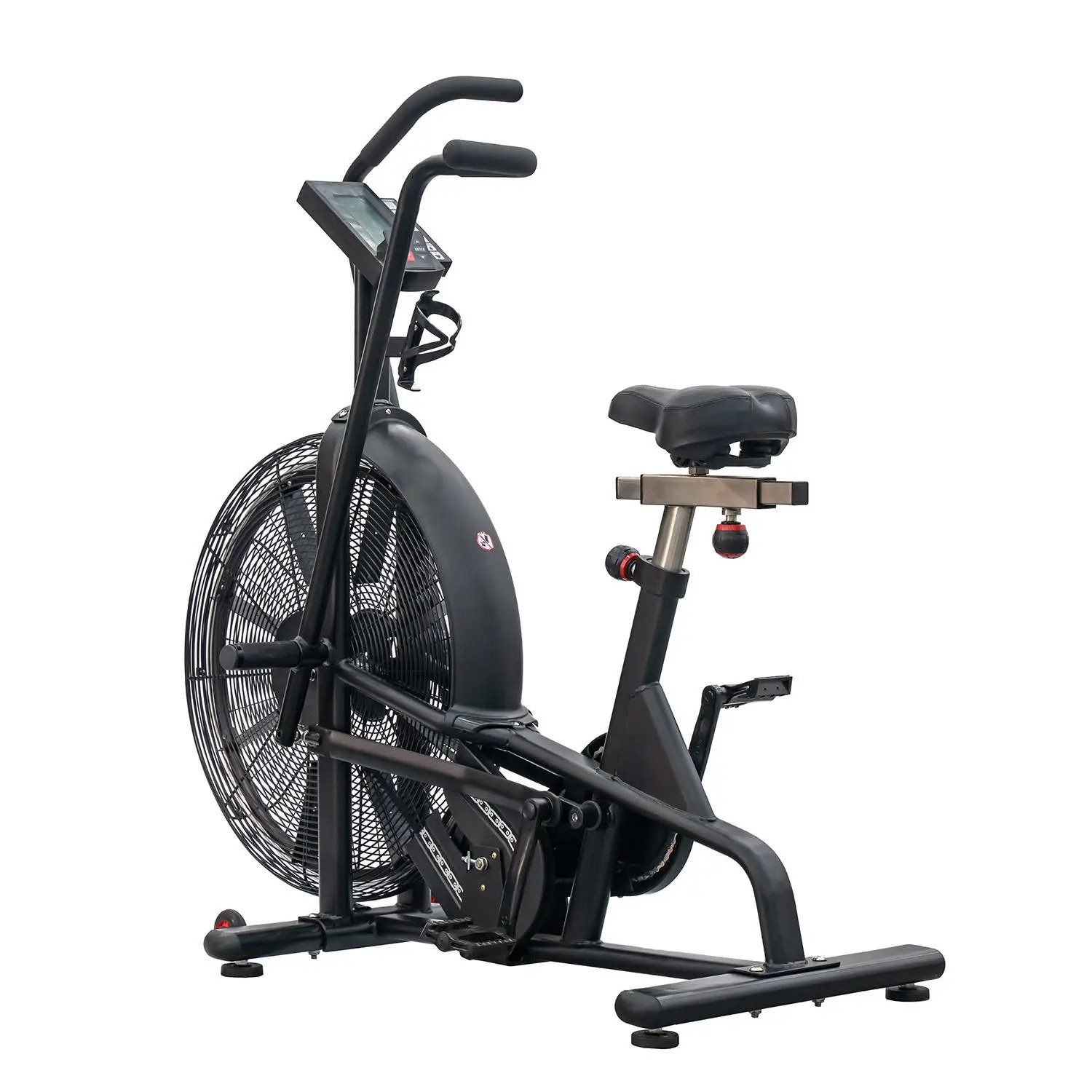
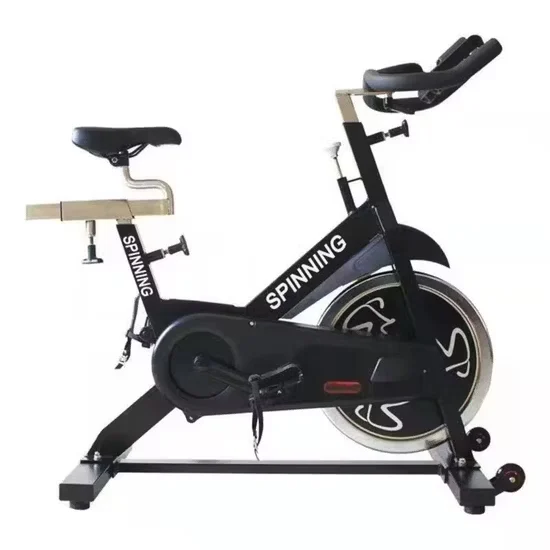
![Commercial Spinning Bike Belt Drive Gym Equipment for Cardio Fitness [WARN] draft identifier mismatch](https://bicksport.com/wp-content/uploads/2026/08/commercial-spinning-bike-belt-drive-gym-equipment-for-cardio-fitness-warn-draft-identifier-mismatch-448fae.webp)
Whisper-Quiet Drive — Belt transmission and fixed steel frame keep operational noise below complaint thresholds in shared fitness environments.
Technical Specifications
| Parameter | Value |
|---|---|
| Designation | Savo-009 |
| Product Type | Spin Bike |
| Resistance Type | Power-Style Resistance Adjustment |
| Drive Type | Leather Belt |
| Max User Weight | 150kg |
| Net Weight | 62kg |
| Product Dimensions | 1560×560×1200mm |
| Foldable | Unfolded |
| Certification | CE, GS, RoHS, FCC |
| Application | Commercial gym, fitness center, gymnasium |
Application Suitability
| Deployment Scenario | Typical Use |
|---|---|
| Hotel fitness center on guest room floors | 24-hour access cycling with minimal noise transfer to adjacent rooms |
| Chain gym cycling studio | Multiple units operating simultaneously during peak group classes |
| Corporate wellness room | Shift-worker cardio with continuous daily turnover |
| Sports performance training center | High-cadence interval sessions for athlete conditioning |
Why Belt-Driven Commercial Spinning Bike Belt Drive Gym Equipment Eliminates Chain Maintenance Headaches
Leather belt transmission removes the two most frequent maintenance tickets: chain tensioning and lubrication.
Chain-driven spin bikes in multi-unit cycling studios create cumulative noise that reaches front desks before maintenance teams notice. The leather belt on this unit transmits pedal force without metal-on-metal contact, eliminating both the periodic rattle of loose chains and the grease residue that transfers to users. Facility operators replacing chain bikes report [NEED_CITE: maintenance interval comparison between belt and chain drive spin bikes] that scheduled lubrication visits disappear entirely from the preventive maintenance calendar.
Positioning Within the Cycling Studio Layout
This spin bike covers steady-state endurance zones and high-cadence sprint intervals through its power-style resistance adjustment, which maintains linear tension without the sudden jumps that interrupt interval programming. In a mixed cardio zone, it pairs with ellipticals and rowing machines to give members upper-and-lower-body rotation options, preventing equipment bottlenecks during peak hours. The 150kg user weight capacity and unfolded fixed-frame design accommodate a wide range of athlete builds without structural flex during standing climbs. Deploy this commercial spinning bike belt drive gym equipment along perimeter walls with adequate clearance for rider mounting from either side.
Continuous Duty and Floor-Level Deployment Constraints
Units running eight or more hours daily in 24-hour facilities place sustained thermal load on drive components, and belt-driven systems dissipate heat differently than enclosed chain housings [NEED_CITE: thermal management requirements for belt-driven cardio equipment in continuous operation]. On upper hotel floors, the absence of chain slap keeps structure-borne vibration below the threshold that disturbs occupied rooms below. Ensure a dedicated power circuit if the optional console upgrade is specified, and confirm floor leveling within tolerance before anchoring, as the fixed-frame design transmits any imbalance directly to the rider during standing efforts.
Decoding the Belt and Resistance Mechanism
The leather belt transmits torque from the crank to the flywheel through friction rather than meshing teeth, which produces a noticeably quieter operation and removes chain elongation as a wear variable. Power-style resistance adjustment applies mechanical tension progressively, avoiding the dead spots and abrupt engagement that magnetic or friction-pad systems sometimes exhibit at the extremes of the resistance range. This matters for instructors cueing rapid resistance changes mid-class — the rider feels the load build without a lag or a jump. The 62kg net weight anchors the frame against lateral forces during out-of-saddle sprints, and the 1560mm length provides sufficient handlebar-to-saddle distance for riders of varying torso proportions.
What Spec-Down Decisions Cost After Six Months
Light-duty belts specified for home use lose tooth profile integrity under commercial cycling loads, generating slippage during high-wattage intervals and prompting wholesale belt replacement across an entire studio. Frames welded to residential standards develop hairline cracks at the seat-post junction when subjected to repeated standing-climb forces [NEED_CITE: frame fatigue failure modes in commercial spin bikes under continuous use]. Resistance mechanisms that lack linear calibration drift between units in the same studio, creating inconsistent class experiences that drive members to competing facilities.
Why This Product Line Holds Up in Daily Deployment
Every unit undergoes 10,000-hour durability testing on the belt and resistance assembly before leaving the factory, matching the continuous-operation duty cycle expected in commercial venues. The full cardio family — treadmills, ellipticals, rowers, stair climbers, and bikes — allows a facility to source all six disciplines from one engineering platform with consistent data interfaces. OEM customization extends to console UI branding, and the free 3D cardio-zone layout service maps this bike’s footprint against airflow paths and rider sightlines to prevent dead zones. Technical support responds around the clock, which matters when a studio has twenty bikes and one fails before a 6 AM class.
Documentation & Test Records
- CE declaration of conformity for Savo-009 commercial spin bike
- EN 957 test report covering structural and safety requirements
- ISO 957 compliance documentation for stationary training equipment
- RoHS compliance record for restricted substance limits
- Belt drive noise level test report under load
- Durability test record for power-style resistance mechanism
Installation, Commissioning & Maintenance
- Allow minimum 600mm lateral clearance per unit for safe mounting and dismounting
- Level floor surface within 3mm tolerance before positioning the 62kg fixed frame
- Verify power circuit matches local voltage standard before optional console connection
- Calibrate resistance linearity at first startup using the power-style adjustment mechanism
- Inspect leather belt tension and surface condition at scheduled intervals
- Wipe down frame and handlebar contact points daily to prevent sweat corrosion
Request a Deployment Assessment
Provide your cycling studio square footage and unit count to receive a 3D layout that maps spacing, airflow, and rider sightlines around this commercial spinning bike belt drive gym equipment. Specify average daily operating hours so we match the belt and resistance components to your actual duty cycle. Indicate the deployment floor and adjacent occupied spaces to confirm the noise profile fits the environment, and state your target market voltage standard for electrical compatibility.
Frequently Asked Questions
Q: Belt drive vs chain drive — which is better for commercial gym use?
A: Belt drive eliminates chain lubrication and tensioning schedules, reducing preventive maintenance visits. The leather belt operates noticeably quieter than a chain, which matters in multi-unit studios where cumulative noise reaches adjacent spaces. For 24-hour facilities running high daily session counts, belt-driven units maintain consistent performance with less scheduled downtime for drivetrain servicing.
Q: How does power-style resistance adjustment compare to magnetic or friction systems?
A: Power-style resistance delivers progressive tension without the dead spots that friction pads sometimes show at low settings or the sudden engagement that some magnetic systems exhibit at higher resistance. Instructors cueing rapid changes mid-class get a smooth load transition, and riders experience consistent resistance across the full adjustment range without calibration drift between units.
Q: What maintenance does a belt-driven spin bike require?
A: Primary maintenance focuses on periodic belt tension inspection and surface condition checks rather than the lubrication and chain-replacement cycles that chain-driven bikes demand. The fixed frame and power-style resistance mechanism contain fewer wear points, so scheduled servicing concentrates on contact-point cleaning and fastener torque verification to maintain structural rigidity under continuous use.
Q: Can this spin bike support high-frequency daily use in a 24/7 gym?
A: The fixed-frame construction and 150kg user weight capacity are engineered for continuous commercial deployment. Belt drive and power-style resistance components are tested for extended duty cycles matching round-the-clock facility operation. Pair this with proper floor leveling and adequate spacing to ensure stable performance across back-to-back class schedules.
Q: Is the frame stable enough for standing cycling and sprint intervals?
A: The 62kg unfolded steel frame provides the mass and structural rigidity needed to resist lateral flex during standing climbs and high-cadence sprints. The 1560mm frame length accommodates various rider proportions, and the fixed design ensures no folding mechanisms introduce play or movement under the dynamic loads generated during intense interval work.
![Professional Flywheel Spinning Bike for Gym Fitness Aerobic Exercise Belt Drive [WARN] draft identifier mismatch](https://bicksport.com/wp-content/uploads/2026/08/professional-flywheel-spinning-bike-for-gym-fitness-aerobic-exercise-belt-drive-warn-draft-identifier-mismatch-e87eac.webp)