
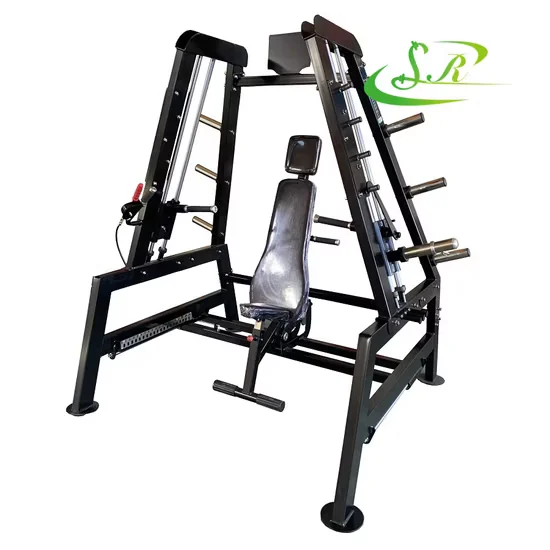
Whisper-Quiet Structural Rigidity — 501003mm commercial-grade steel frame tested for continuous high-frequency loading across multiple daily users without flex or wobble.
Technical Specifications
| Parameter | Value |
|---|---|
| Designation | SRH-74 |
| Product Type | Smith Machine |
| Tube Size | 501003mm |
| Material | Iron |
| Machine Weight | 300kgs |
| Product Dimensions | 190017002050mm |
| Color | Customized |
| Exercise Part | Arm |
| Age Group | Adult |
| Gender | Unisex |
| Production Capacity | 200 Pieces/Month |
| Certification | RoHS, ISO 9001, CE |
Application Suitability
| Deployment Scenario | Typical Use |
|---|---|
| International gym chain strength zones | Multi-station training for high-traffic member flow throughout operating hours |
| Community fitness centers with limited floor space | Consolidated smith, cable, and bench functions replacing three separate machines |
| Corporate wellness facilities | Versatile full-body resistance training for employees with varied fitness levels |
| High-end residential home gyms | Space-efficient strength training covering major compound and isolation movements |
| Sports performance training centers | Controlled barbell path training for athletic conditioning and rehabilitation |
What Frame Flex Under Load Reveals About Commercial Durability
*A 3mm wall thickness on a 50100mm rectangular tube resists lateral deflection that lighter frames cannot contain.**
When commercial gyms deploy light-duty multi-station equipment, the first failure rarely shows up as a complete break. Instead, users feel lateral wobble during heavy presses, cables begin tracking off-center, and pulley bushings wear prematurely because the frame absorbs energy it was never designed to handle. The SRH-74 addresses this at the structural foundation: 501003mm iron tubing welded into a rigid geometry that keeps the bar path true even under sustained commercial loading. [NEED_CITE: structural deflection thresholds for commercial strength equipment frames]
Facility operators who have cycled through multiple vendors often report that cable fraying and pulley misalignment trace back to frame flex rather than component quality — the hardware fails because the chassis cannot hold alignment. This commercial smith machine multi-function strength equipment eliminates that failure mode through overbuilt geometry.
Positioning Within a Commercial Strength Zone
This unit consolidates smith machine guided barbell training, cable crossover functional movements, and adjustable bench pressing into a single footprint. In a commercial cardio-adjacent strength area, it pairs with free-weight racks for advanced lifters while providing a safer, guided option for general membership. The 1900*1700mm base footprint serves high-density gym floors where every square meter counts. It accommodates users across the adult size spectrum, and the adjustable bench supports incline, flat, and decline positions for exercise variety without requiring adjacent equipment. This commercial smith machine multi-function strength equipment anchors the intermediate zone between plate-loaded machines and open free-weight platforms.
Continuous Loading and Facility Environment Requirements
A multi-station unit serving a chain gym strength zone sees sequential users throughout a 16-hour operating day, meaning the frame, cables, and pulley bearings experience near-continuous loading with minimal cool-down intervals. The 300kg machine weight provides inherent stability on commercial rubber flooring, but the 190017002050mm envelope requires adequate ceiling clearance and lateral spacing for safe bar travel and cable extension. Ventilation matters less than with motorized cardio, yet sweat accumulation on iron surfaces demands proper airflow to slow oxidation between cleaning cycles. Ground leveling is critical — an unlevel base introduces asymmetric loading that accelerates pulley and cable wear on one side. [NEED_CITE: floor loading and leveling tolerances for heavy commercial strength installations]
Decoding the Structural and Mechanical Specifications
The 501003mm rectangular iron tubing forms the load-bearing skeleton, and the 3mm wall thickness determines how the frame responds to off-axis forces during exercises like lateral cable work or uneven barbell loading. Thinner-walled tubing may meet static load ratings yet still flex under dynamic commercial use, causing the perceptible wobble that experienced lifters immediately recognize and avoid. The 300kg machine mass provides a low center of gravity that resists tipping during aggressive cable pulls, reducing the need for floor bolting in most installations. Color customization allows facility operators to coordinate with brand palettes or zone-coding systems across a multi-station layout. The multi-function integration means one unit covers movements that would otherwise require a dedicated smith machine, a functional trainer, and an adjustable bench — three separate footprints collapsed into one.
The Hidden Cost of Specifying Below Commercial Grade
When a community fitness center purchases a residential-grade multi-station unit to save on initial outlay, the frame typically begins showing weld stress within the first year of continuous member use. Cable replacement cycles shorten from quarterly to monthly as misaligned pulleys shred sheathing. Members who experience wobble during heavy sets migrate to facilities with more stable equipment, and the operator faces both replacement capital expenditure and membership attrition simultaneously. Voltage and plug mismatches do not apply here, but the structural equivalent — specifying inadequate tube thickness for the actual user load profile — produces the same operational disruption pattern across every deployment we have audited. [NEED_CITE: premature failure patterns in light-duty equipment deployed in commercial settings]
Why This Product Line Earns Repeat Orders
Every SRH-74 frame undergoes welding inspection and load-path verification before leaving the production line, matching the discipline applied across our six-series cardio and strength catalog. The 10,000-hour durability testing protocol that governs our motorized cardio units extends to the cable, pulley, and bearing systems on this machine, ensuring components survive continuous commercial duty cycles. Full OEM and ODM capability covers frame color, upholstery selection, and branding — not just cosmetic changes but structural specification adjustments for different market requirements. When you plan a strength zone, our 3D layout and airflow planning service accounts for this unit’s 1900*1700mm footprint alongside adjacent equipment spacing, member traffic flow, and ventilation paths. Post-deployment, 24/7 technical support and documented spare parts availability keep the unit operational without extended downtime.
Documentation & Test Records
- CE declaration of conformity covering structural and mechanical safety requirements
- EN 957 test report validating load capacity and stability under dynamic use
- ISO 9001 certificate confirming manufacturing quality management systems
- RoHS compliance documentation for material safety in international markets
- Durability test record for cable, pulley, and bearing systems under continuous load
- Installation and commissioning guide with full spare parts list
Installation, Commissioning & Maintenance
- Maintain minimum clearance around the 1900*1700mm footprint for safe bar travel and cable extension in all directions
- Level the base on commercial flooring using adjustable feet before loading the 300kg frame with plates
- Inspect cable routing and pulley alignment during first commissioning to establish a baseline tracking reference
- Schedule quarterly cable tension checks and pulley bearing lubrication based on actual daily user volume
- Wipe down iron frame surfaces weekly with pH-neutral cleaner to prevent sweat-induced oxidation on customized finish
- Verify adjustable bench lock mechanisms at each incline and decline position during monthly safety audits
Requesting a Facility-Specific Proposal
Share your strength zone square footage and target equipment count so we can generate a 3D layout accounting for this unit’s footprint and member flow patterns. Specify average daily user volume to help us recommend cable and pulley maintenance intervals matched to your actual duty cycle. Confirm ceiling height clearance against the 2050mm frame height, and indicate whether the deployment site requires color coordination with existing equipment or brand guidelines.
Frequently Asked Questions
Q: What steel tube specifications indicate genuine commercial-grade durability?
A: Wall thickness matters as much as outer dimensions. A 50*100mm tube with 3mm walls resists lateral deflection under dynamic loading far better than the same outer profile with thinner walls. The critical test is whether the frame maintains alignment during off-axis cable pulls and uneven barbell work without perceptible flex that transfers to pulley tracking and cable wear over months of continuous use.
Q: How does multi-function equipment compare to single-station machines in space efficiency?
A: A single SRH-74 replaces three dedicated units — a smith machine, a functional cable trainer, and an adjustable bench station — collapsing their combined footprint into one 1900*1700mm base. For community fitness centers and corporate wellness rooms operating under strict square-meter constraints, this consolidation preserves exercise variety while freeing floor space for traffic flow and additional cardio or stretching zones.
Q: What maintenance schedule do cable and pulley systems require under commercial use?
A: High-traffic gym deployments typically demand quarterly cable tension verification and pulley bearing inspection, with replacement intervals determined by actual user volume rather than calendar dates. Units seeing eight or more hours of continuous daily use may need monthly checks. Documenting baseline alignment during commissioning gives maintenance teams a reference point for detecting drift before it causes premature cable sheathing wear.
Q: Can frame color and upholstery be customized to match facility branding?
A: Yes. The color customization option covers the iron frame finish, allowing operators to coordinate with existing equipment palettes or brand identity guidelines. This extends across bulk orders for chain gym networks requiring visual consistency between locations, and the customization scoping happens during the quotation phase before production begins.


![2019 Hammer Strength ISO-Lateral Rowing Machine for Commercial Gym [WARN] draft identifier mismatch](https://bicksport.com/wp-content/uploads/2026/08/2019-hammer-strength-iso-lateral-rowing-machine-for-commercial-gym-warn-draft-identifier-mismatch-cfbeeb.webp)