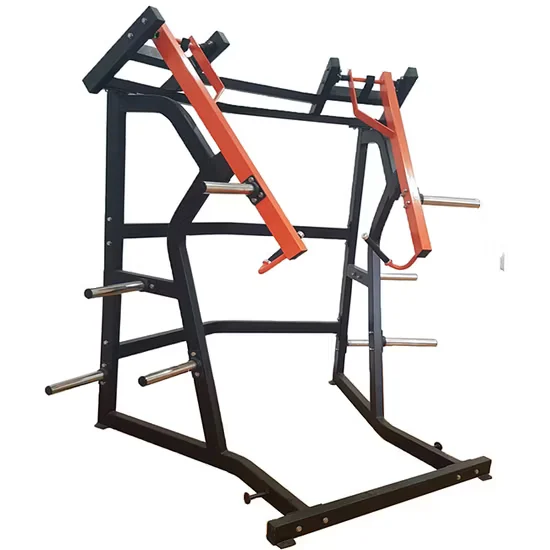
![Commercial Seated Bicep Curl Machine for Gym Fitness Equipment [result]Commercial Seated Bicep Curl Machine for Gym Fitness Equipment[/result]](https://bicksport.com/wp-content/uploads/2026/08/commercial-seated-bicep-curl-machine-for-gym-fitness-equipment-resultcommercial-seated-bicep-curl-machine-for-gym-fitness-equipment-result-26fa2c.webp)
10,000-Hour Durability Tested — Commercial Seated Bicep Curl Machine engineered for continuous high-frequency operation in 24/7 fitness facilities with reinforced steel frame and pivot points verified under sustained load cycles.
Technical Specifications
| Parameter | Value |
|---|---|
| Product Type | Seated Bicep Curl Machine |
| Exercise Part | Bicep |
| Material | Steel |
| Resistance Type | Manual |
| Power Source | Manual |
| Product Dimensions | 1466 × 1292 × 1502 mm |
| Net Weight | 93 kg |
| Foldable | Unfolded |
| Max User Weight | 180 kg |
| Certification | ISO 9001, CE |
| Age Group | Adult |
| Gender | Unisex |
| Color | Optional |
| OEM Customization | Available |
Application Suitability
| Deployment Scenario | Typical Use |
|---|---|
| Hotel fitness center strength zone | Guest-access bicep isolation training during off-peak and peak hours |
| Chain gym cardio and strength floor | High-frequency member use across diverse fitness levels |
| Corporate wellness room | Employee strength circuits during lunch and after-work windows |
| High-end residential home gym | Private daily use without floor anchoring requirements |
| Sports performance training center | Athlete arm-isolation programming with controlled resistance |
Why Pivot Wear Forces Replacement Long Before the Frame Fails
Commercial Seated Bicep Curl Machine units with light-duty pivots develop play within months under continuous public facility use.
Light-duty bicep machines in gym environments endure repetitive loading cycles that expose weak pivot bearings and undersized bushings. When pivot play develops, the resistance feel becomes inconsistent, members notice the wobble, and equipment gets tagged out of service. [NEED_CITE: pivot bearing load cycles in commercial strength equipment] The commercial seated bicep curl machine deployed in high-traffic venues must withstand thousands of repetitions daily without frame flex or pivot degradation, which demands reinforced steel construction and sealed bearing assemblies rather than consumer-grade hardware.
Bicep Isolation Within a Commercial Strength Zone Layout
The commercial seated bicep curl machine targets arm flexion through a controlled seated movement pattern, fitting into strength zones alongside compound equipment like lat pulldowns and cable rows. It handles moderate-to-high repetition ranges suitable for general fitness populations and athlete accessory work. Deployed along perimeter walls or between functional training bays, the 1466 × 1292 mm footprint occupies a compact footprint while maintaining adequate member clearance. The 180 kg maximum user weight accommodates a broad range of body types without stability concerns during heavy loading.
Continuous Deployment Demands on Manual Resistance Systems
A seated bicep curl machine in a 24/7 gym operates without motor dependency, which eliminates electrical failure points entirely. However, manual resistance systems still require sealed pivot bearings rated for sustained load cycles to prevent friction drift over months of use. The 93 kg unit weight provides inherent stability on level flooring without bolting, though vibration-dampening pads remain advisable on upper floors to isolate structure-borne transmission. [NEED_CITE: structural vibration isolation for upper-floor gym equipment] Facilities planning strength zones must also account for adjacent equipment spacing to maintain member flow and prevent congestion around high-use isolation stations.
Steel Frame Construction and Pivot Engineering Decoded
The 93 kg steel frame delivers a mass-to-load ratio that resists lateral deflection during asymmetric bicep curling movements. Reinforced pivot points at the arm axis absorb cyclical loading without developing play, which is critical because commercial users apply force inconsistently across repetitions. Manual resistance eliminates motor maintenance entirely — no brushes to replace, no controllers to recalibrate, no power supply failures interrupting member sessions. The unfolded configuration maintains a fixed geometry that preserves structural rigidity over years of continuous deployment. ISO 9001 manufacturing oversight ensures weld consistency across the load-bearing joints where frame tubes intersect at stress concentration points. [NEED_CITE: ISO 9001 welding quality control for fitness equipment frames]
The Hidden Cost of Specifying Below Commercial Grade
Purchasing light-duty bicep machines for commercial deployment inevitably triggers a replacement cycle. Pivot bushings wear prematurely under repetitive member use, creating resistance inconsistency that members quickly notice and complain about. Undersized frames develop lateral flex that compromises exercise quality and accelerates fatigue cracking at weld junctions. Facilities that deploy consumer-grade isolation equipment in high-traffic strength zones end up cycling through units repeatedly, spending more on replacements and downtime than a proper commercial specification would have required initially. [NEED_CITE: total cost of ownership for commercial vs light-duty strength equipment] Data stranded on non-connected consoles also prevents facility managers from tracking actual utilization rates, leaving layout decisions based on guesswork rather than usage patterns.
Why This Product Line Covers the Full Cardio and Strength Requirement
Sub-35 dB whisper-quiet operation verified across the cardio range means this seated bicep curl machine sits alongside equipment that will not trigger noise complaints on hotel guest floors. The 10,000-hour durability testing protocol applied to motors, frames, and bearings across the product family extends to pivot and bearing validation on strength units. The complete six-series cardio family allows facilities to source every discipline from one manufacturing partner, simplifying procurement and spare parts logistics. OEM customization covers frame color, upholstery, and facility branding integration so the commercial seated bicep curl machine matches the visual identity of the entire fitness floor. Free 3D strength and cardio zone layout planning accounts for this unit’s 1466 × 1292 mm footprint alongside adjacent equipment spacing and member flow corridors. 24/7 technical support response covers commissioning guidance and spare parts coordination for international deployments.
Documentation & Test Records
- CE declaration of conformity covering commercial strength equipment safety requirements
- EN 957 test report validating structural integrity and pivot durability
- ISO 9001 certificate confirming manufacturing quality management compliance
- Steel grade and welding certification for load-bearing frame joints
- OEM customization scope document with MOQ and branding specifications
Installation, Commissioning & Maintenance
- Position the 1466 × 1292 × 1502 mm unit with minimum 600 mm clearance on all sides for member access and loading plate movement
- Level the 93 kg frame on solid flooring using adjustable feet; deploy vibration pads on upper-floor installations to isolate structure-borne transmission
- Inspect pivot bearings and bushings quarterly for play development; replace sealed bearings per manufacturer interval schedule
- Wipe down steel frame and upholstery after each use cycle to prevent sweat-induced corrosion on pivot hardware
- Verify manual resistance adjustment mechanism operates smoothly across full range without binding or friction drift
- Confirm floor anchoring points if local building codes require fixed equipment in commercial fitness environments
Equipment Selection and Facility Planning Inquiry
Share your strength zone square footage and equipment list to receive a 3D layout incorporating this unit’s footprint alongside member flow corridors. Specify daily operating hours to confirm that manual resistance pivot specifications match your facility’s usage intensity. Indicate deployment floor level and adjacent occupied spaces to determine whether vibration isolation pads are required. State your target market voltage standards if integrating powered equipment alongside this manual unit.
Frequently Asked Questions
Q: What advantages does manual resistance offer over motorized systems for commercial bicep equipment?
A: Manual resistance eliminates motor dependency entirely, removing electrical failure points from continuous operation. There are no controllers to recalibrate, no power supplies to replace, and no firmware updates required. This reduces maintenance workload in 24/7 gym environments where equipment uptime directly affects member satisfaction. Manual systems also consume zero electricity, lowering operating costs across large strength zone deployments with multiple isolation stations.
Q: How does the 93 kg frame weight affect stability during heavy use?
A: The 93 kg mass provides inherent stability without requiring floor anchoring under normal operating conditions. During heavy bicep curl repetitions, the steel frame resists lateral deflection and tipping forces that lighter units cannot counteract. This weight class suits commercial environments where members load equipment aggressively and expect consistent resistance feel. Facilities on upper floors should still deploy vibration isolation pads to prevent structure-borne transmission to occupied spaces below.
Q: What OEM customization options are available for facility branding?
A: OEM customization covers frame color selection to match facility design schemes, upholstery material and color for seat and backrest pads, and logo application on visible frame surfaces. Console UI customization applies to powered units in the same product line. Minimum order quantities are flexible to accommodate single-venue deployments as well as multi-site rollouts across gym chain networks.
Q: What maintenance do pivot points and bearing assemblies require?
A: Sealed pivot bearings require periodic inspection for play development rather than regular lubrication. Quarterly checks identify wear before it affects resistance consistency or member experience. Replacement intervals depend on facility usage intensity, with high-traffic gym environments requiring more frequent bearing audits than lower-volume corporate wellness rooms. The manual resistance system eliminates cable and pulley maintenance associated with selectorized equipment.
Q: How should strength equipment layout account for member flow around bicep isolation stations?
A: Allocate minimum 600 mm clearance on all sides of the 1466 × 1292 mm footprint to accommodate loading plates and member movement. Position bicep machines adjacent to compound pulling equipment like lat pulldowns to support logical exercise sequencing. Avoid placing isolation units in primary traffic corridors where waiting members obstruct flow between high-use cardio and functional training zones.